

Ezra F. Vogel (1930–2020)
Author of Deng Xiaoping and the Transformation of China
About the Author
Ezra F. Vogel is the author of Deng Xiaoping and the Transformation of China, a finalist for the National Book Critics Circle Award and winner of the Lionel Gelber Prize, and of the international bestseller Japan as Number One. He was Henry Ford II Professor of the Social Sciences Emeritus at show more Harvard University. show less
Image credit: Ezra Vogel in National Library of China,Beijing. He just gove a speech on his study of Chinese leader Deng Xiaoping. The simplified chinese version of his work Deng Xiaoping and the Transformation of China just published. By 用心阁 - Own work, CC BY 3.0, https://commons.wikimedia.org/w/index.php?curid=24024123
Works by Ezra F. Vogel
Japan's New Middle Class: The Salary Man and His Family in a Tokyo Suburb, Second edition (1971) 40 copies, 1 review
Living with China: U.S.-China Relations in the Twenty-First Century (American Assembly) (1997) 25 copies
Associated Works
The Chrysanthemum and the Sword: Patterns of Japanese Culture (1946) — Foreword, some editions — 1,411 copies, 17 reviews
My First Trip to China: Scholars, Diplomats, and Journalists Reflect on their First Encounters with China (2012) — Contributor — 18 copies
Tagged
Common Knowledge
- Legal name
- Vogel, Ezra Feivel
- Birthdate
- 1930-07-11
- Date of death
- 2020-12-20
- Gender
- male
- Education
- Ohio Wesleyan University
Harvard University
United States Army
Yale University - Cause of death
- complications from surgery
- Nationality
- USA
- Birthplace
- Delaware, Ohio, USA
- Place of death
- Cambridge, Massachusetts, USA
- Associated Place (for map)
- USA
Members
Reviews
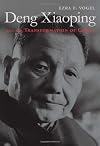
One after reading this book wonders why he's (Deng) isn't called Deng 'The GOAT' Xiaoping. Then one remembers he died 30ish years ago. One kids (mostly).
Ok sincere apologies to any Chinese person or any relatives of Deng if you (somehow??) read that introduction- I'll get serious now:
My aim with this book was to get to know my neighbors and Mao seemed a bit.. off (no wonder lol I rated the commie mannifesto 1-star). Deng seemed better-headed and more rational (regardless he had his show more allegiance to the govt/country and not to the people). Perhaps I just came to like him after listening for 33 hours about his life.
The book is a great starting point about the environment pre-Xi Jinping and post-Mao allowing me to understand what roughly happened in-between but what I didn't expect was lessons in it too from Deng.
I think the biggest one I've learnt is to embrace change in your own way. Sometimes it may be seen as something negative (Deng going from the cheery type to later becoming quieter during- I believe the civil war) or positive (Deng opening up the country, making allies in the right places, etc).
Stagnancy is caused by fear and ego- get rid of both. Try because practice is the sole criterion of truth ey? Thanks Deng (Yes I'm aware of the standoff on '86) show less
Ok sincere apologies to any Chinese person or any relatives of Deng if you (somehow??) read that introduction- I'll get serious now:
My aim with this book was to get to know my neighbors and Mao seemed a bit.. off (no wonder lol I rated the commie mannifesto 1-star). Deng seemed better-headed and more rational (regardless he had his show more allegiance to the govt/country and not to the people). Perhaps I just came to like him after listening for 33 hours about his life.
The book is a great starting point about the environment pre-Xi Jinping and post-Mao allowing me to understand what roughly happened in-between but what I didn't expect was lessons in it too from Deng.
I think the biggest one I've learnt is to embrace change in your own way. Sometimes it may be seen as something negative (Deng going from the cheery type to later becoming quieter during- I believe the civil war) or positive (Deng opening up the country, making allies in the right places, etc).
Stagnancy is caused by fear and ego- get rid of both. Try because practice is the sole criterion of truth ey? Thanks Deng (Yes I'm aware of the standoff on '86) show less
An enormous, fascinating view of the man who had, after a century and a half of agony, brought China into the modern age, and brought hundreds of millions out of poverty.
Deng is not an easy man to write about, due to the nature of his work, his government, and the fact that he didn't take notes and instead memorized everything. Many Chinese government archives also remain off-limits.
After spending less then a hundred pages on the first fifty years of his life, the next six hundred are show more devoted to his rise to power, diplomatic relations, and economic reforms. His leadership and reforms were not wholly certain - he had to outmaneuver the bloodthirsty 'Gang of Four', and one of Mao's chosen successors in order to gain power. But then, he took a collaborative approach, and refused to recreate a personality cult.
Deng did not merely throw open the gates and declare 'free markets' as Gorbachev did. Instead, he prepared his power base, experimented on a small scale with cities, worked carefully with foreign governments to create favorable conditions and a well-trained and equipped workforce. His most famous quote, taken from a country proverb, that the color of the cat doesn't matter so long as it catches mice, is a signature of his leadership. Pragmatism before ideology. "Don't argue, try it. If it works, let it spread."
Deng brought China prosperity, but not democracy. It is disconcerting to note that Deng was a key figure in some of Mao's worst excesses. The most unfortunate blot on his memory is the Student Uprisings and Tiananmen. He retired soon after. But he is not unique in that regard. Nearly every Asian country in the 20th century (to say nothing of any country) has had its own troubles.
But a more firm testament to his memory came later - when he went to visit the cities of the Special Economic Zones he helped create, as a sort of post-retirement vacation, he was still spontaneously welcomed as a hero and an 'uncle/grandfather' to the people. After all, one can give his policies the credit of saving hundreds of millions of people from poverty.
There is still much to be done, and the continued monolithic power of the CCP is by no means certain - its economic rise is continuing. It has surpassed Germany and Japan with ease, and now is second only to the United States in GDP. Deng brought China forward and made it prosperous. It will be seen if someone as visionary as him makes it free. show less
Deng is not an easy man to write about, due to the nature of his work, his government, and the fact that he didn't take notes and instead memorized everything. Many Chinese government archives also remain off-limits.
After spending less then a hundred pages on the first fifty years of his life, the next six hundred are show more devoted to his rise to power, diplomatic relations, and economic reforms. His leadership and reforms were not wholly certain - he had to outmaneuver the bloodthirsty 'Gang of Four', and one of Mao's chosen successors in order to gain power. But then, he took a collaborative approach, and refused to recreate a personality cult.
Deng did not merely throw open the gates and declare 'free markets' as Gorbachev did. Instead, he prepared his power base, experimented on a small scale with cities, worked carefully with foreign governments to create favorable conditions and a well-trained and equipped workforce. His most famous quote, taken from a country proverb, that the color of the cat doesn't matter so long as it catches mice, is a signature of his leadership. Pragmatism before ideology. "Don't argue, try it. If it works, let it spread."
Deng brought China prosperity, but not democracy. It is disconcerting to note that Deng was a key figure in some of Mao's worst excesses. The most unfortunate blot on his memory is the Student Uprisings and Tiananmen. He retired soon after. But he is not unique in that regard. Nearly every Asian country in the 20th century (to say nothing of any country) has had its own troubles.
But a more firm testament to his memory came later - when he went to visit the cities of the Special Economic Zones he helped create, as a sort of post-retirement vacation, he was still spontaneously welcomed as a hero and an 'uncle/grandfather' to the people. After all, one can give his policies the credit of saving hundreds of millions of people from poverty.
There is still much to be done, and the continued monolithic power of the CCP is by no means certain - its economic rise is continuing. It has surpassed Germany and Japan with ease, and now is second only to the United States in GDP. Deng brought China forward and made it prosperous. It will be seen if someone as visionary as him makes it free. show less
A first-rate biography of not just one of the great men of the 20th Century, but of the age he shaped in China. It is readable, readable at times to the point of gripping me like a good novel would. He makes clear the complexity of the governance of China. That governing China is complex is an obvious concept, but to this point - I am no China scholar - it always appeared to be Mao running the show then a bunch of other guys, with no back-ups. In fact the interplay of idea and personality is show more fascinating.
The author does not address one interesting moral question in detail. The massacre of at least 400 students and others during the 4 June 1989 incident was clearly morally reprehensible. If China was actually at risk of breakup, with a return to the clashes of right and left, I wonder what would have, could have, been the human cost. This is a form of algebra that western countries don't normally use, but it was certainly one uppermost in Deng's mind.
Grand read. show less
The author does not address one interesting moral question in detail. The massacre of at least 400 students and others during the 4 June 1989 incident was clearly morally reprehensible. If China was actually at risk of breakup, with a return to the clashes of right and left, I wonder what would have, could have, been the human cost. This is a form of algebra that western countries don't normally use, but it was certainly one uppermost in Deng's mind.
Grand read. show less

Mr.Vogel has done us a favor by joining the histories of China and Japan; sometimes painting large periods of history in broad strokes. If each country's history was done separately the dynamics of the region, including Korea, would have lost important emphasis and vitality and would have been harmful. So amid the destructiveness and tension between the societies are periods when then one or the other side was most beneficial, critical to the other. One of the main intentions of this book show more seems to be break through current tensions to get the two countries working more closely together. Here I am not sure Mr.Vogel has succeeded(China's current arrogance) as I am not sure he has succeeded in resurrecting the reputation of Chiang KaiShek (underestimating the venality, ruthlessness and small mindlessness of Chiang).
Quotes: (pages 46-47) “After becoming shogun in 1603, Tokugawa Ieyasu continued the anti-piracy policies of his predecessor and the use of the red seals to promote legal trade, thus reducing the need for merchants to resort to piracy. Pirates learned that if they attacked ships that carried the red seal, they would face active reprisals from Japanese officials....
When piracy was at its peak, Europeans---first the Portuguese and then the Spanish, Dutch, English---began to play a greater role in Asian trade. From the time the Portuguese established a base in Macao in 1557 until their expulsion from Japan in 1639, the Portuguese provided a legitimate channel for Japanese silver to be traded for Chinese silk and gold. The Portuguese profits from this trade cut into profitability for the wokou and, along with the Japanese crackdowns, contributed to the decline of piracy.
The combination of Japan's clamping down on piracy during the Tokugawa after 1603 and China's more open trade policy contributed to reducing piracy. Later during the Qing dynasty, China permitted more open trade with Japan and, as Xu Guangxi had argued this further reduced the need for piracy.
Even though Japanese piracy finally ended, stories of so-called cunning and bloodthirsty Japanese pirates remained popular in Chinese literature.”
(page 282) “The Japanese invasion had led the Chinese people in each region to recognize that to resist the invader it was necessary to cooperate with people in other regions. The invasion and occupation by Japan led to the spread of a strident nationalism, which had blossomed among the urban educated elite in major cities during World War I and then spread to residents of smaller inland cities and peasants in the countryside. Resisting the Japanese required local groups to subordinate themselves to those who represented broader national interests. The war thus strengthened the Nationalists compared with the warlords. The war enabled the Communists to transform themselves from a small group of rebels into a large group of patriots poised to compete for the right to govern China. It gave them time and space to develop plans for fighting the Civil War and the outlines of programs they would use for governing China. It provided an opportunity for the Communists to expand their key organizations, the army and the party, which would later serve as a basis for unifying all of China.”
(pages 424-425) “As the top leader of China from December 1978 until October 1992, Deng Xiaoping introduced policies of reform and opening that transformed China and, within four decades, enabled its development from a poor backward economy into the largest economy in the world, as measured by purchasing power parity. In 1978 China'a per capita income was less than $200 in U.S. Dollars. By 2018 it was more that $ 8,000.
...By the time Mao allowed Deng to return to office in 1973, Zhou Enlai was suffering from cancer and Deng became Zhou's understudy in conducting foreign policy and meeting foreign leaders.
Japan normalized relations with China in 1972, and between 1973 and 1976,as the leader responsible for foreign policy, Deng received more than forty Japanese delegations to China, more than he received from any other country. Deng was convinced that, in spite of fifty years of antagonism between China and Japan, the two countries should develop good, peaceful relations that would enable Japan to help China in its modernization efforts. Because he had fought the Japanese during the Sino-Japanese War, he could espouse this new policy without being criticized for being to soft on Japan.”
published 2019 show less
Quotes: (pages 46-47) “After becoming shogun in 1603, Tokugawa Ieyasu continued the anti-piracy policies of his predecessor and the use of the red seals to promote legal trade, thus reducing the need for merchants to resort to piracy. Pirates learned that if they attacked ships that carried the red seal, they would face active reprisals from Japanese officials....
When piracy was at its peak, Europeans---first the Portuguese and then the Spanish, Dutch, English---began to play a greater role in Asian trade. From the time the Portuguese established a base in Macao in 1557 until their expulsion from Japan in 1639, the Portuguese provided a legitimate channel for Japanese silver to be traded for Chinese silk and gold. The Portuguese profits from this trade cut into profitability for the wokou and, along with the Japanese crackdowns, contributed to the decline of piracy.
The combination of Japan's clamping down on piracy during the Tokugawa after 1603 and China's more open trade policy contributed to reducing piracy. Later during the Qing dynasty, China permitted more open trade with Japan and, as Xu Guangxi had argued this further reduced the need for piracy.
Even though Japanese piracy finally ended, stories of so-called cunning and bloodthirsty Japanese pirates remained popular in Chinese literature.”
(page 282) “The Japanese invasion had led the Chinese people in each region to recognize that to resist the invader it was necessary to cooperate with people in other regions. The invasion and occupation by Japan led to the spread of a strident nationalism, which had blossomed among the urban educated elite in major cities during World War I and then spread to residents of smaller inland cities and peasants in the countryside. Resisting the Japanese required local groups to subordinate themselves to those who represented broader national interests. The war thus strengthened the Nationalists compared with the warlords. The war enabled the Communists to transform themselves from a small group of rebels into a large group of patriots poised to compete for the right to govern China. It gave them time and space to develop plans for fighting the Civil War and the outlines of programs they would use for governing China. It provided an opportunity for the Communists to expand their key organizations, the army and the party, which would later serve as a basis for unifying all of China.”
(pages 424-425) “As the top leader of China from December 1978 until October 1992, Deng Xiaoping introduced policies of reform and opening that transformed China and, within four decades, enabled its development from a poor backward economy into the largest economy in the world, as measured by purchasing power parity. In 1978 China'a per capita income was less than $200 in U.S. Dollars. By 2018 it was more that $ 8,000.
...By the time Mao allowed Deng to return to office in 1973, Zhou Enlai was suffering from cancer and Deng became Zhou's understudy in conducting foreign policy and meeting foreign leaders.
Japan normalized relations with China in 1972, and between 1973 and 1976,as the leader responsible for foreign policy, Deng received more than forty Japanese delegations to China, more than he received from any other country. Deng was convinced that, in spite of fifty years of antagonism between China and Japan, the two countries should develop good, peaceful relations that would enable Japan to help China in its modernization efforts. Because he had fought the Japanese during the Sino-Japanese War, he could espouse this new policy without being criticized for being to soft on Japan.”
published 2019 show less
Lists
Awards


You May Also Like


Associated Authors
Statistics
- Works
- 15
- Also by
- 2
- Members
- 790
- Popularity
- #32,236
- Rating
- 3.8
- Reviews
- 12
- ISBNs
- 66
- Languages
- 4
