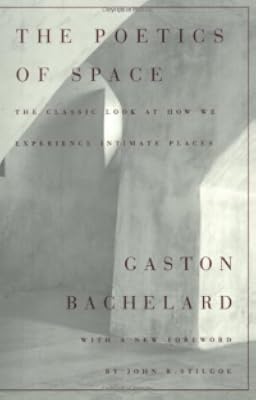
The Poetics of Space
by Gaston Bachelard
On This Page
Description
A beloved multidisciplinary treatise comes to Penguin Classics Since its initial publication in 1958, The Poetics of Space has been a muse to philosophers, architects, writers, psychologists, critics, and readers alike. The rare work of irresistibly inviting philosophy, Bachelard’s seminal work brims with quiet revelations and stirring, mysterious imagery. This lyrical journey takes as its premise the emergence of the poetic image and finds an ideal metaphor in the intimate spaces of show more our homes. Guiding us through a stream of meditations on poetry, art, and the blooming of consciousness itself, Bachelard examines the domestic places that shape and hold our dreams and memories. Houses and rooms; cellars and attics; drawers, chests, and wardrobes; nests and shells; nooks and corners: No space is too vast or too small to be filled by our thoughts and our reveries. In Bachelard’s enchanting spaces, “We are never real historians, but always near poets, and our emotion is perhaps nothing but an expression of a poetry that was lost.” This new edition features a foreword by Mark Z. Danielewski, whose bestselling novel House of Leaves drew inspiration from Bachelard’s writings, and an introduction by internationally renowned philosopher Richard Kearney who explains the book’s enduring importance and its role within Bachelard’s remarkable career. For more than sixty-five years, Penguin has been the leading publisher of classic literature in the English-speaking world. With more than 1,500 titles, Penguin Classics represents a global bookshelf of the best works throughout history and across genres and disciplines. Readers trust the series to provide authoritative texts enhanced by introductions and notes by distinguished scholars and contemporary authors, as well as up-to-date translations by award-winning translators. show lessTags
Recommendations




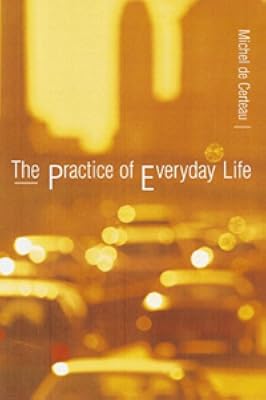
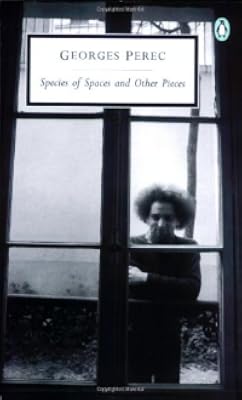
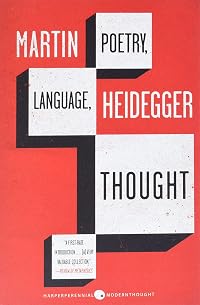

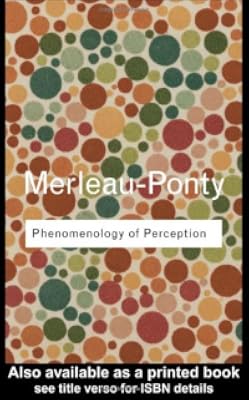











Member Recommendations
Member Reviews
Gaston Bachelard's The Poetics of Space is enigmatic, infuriating, bold, poetic, dense, far-reaching, and ultimately craves a second reading. The central conceit is to work through how intimate spaces can be described philosophically, phenomenologically, and poetically, treating each of those fields as theoretically equivalent. Passages in poems referencing corners contribute to a philosophy of corners which informs a phenomenology of those spaces. It's all very mid-century French, and as such, is unapologetic in its forthright-ness. In a way, it's Bachelard's righteousness that keeps the book moving forward. Any doubt on his end, and the whole thing falls apart. It's a tough read to be sure, but not unpleasant.
It's one of those great books with the rare ability to put into words everything I've always known. *
* Wittgenstein says "About what one can not speak, one must remain silent." Of course, as a philosopher, he was right. But what is unspeakable is also exactly where poets must venture forth a primitive utterance. Not to fill it up brashly with idle talk, but to consecrate it with voices which will increase the silence. This is why phenomenology as practiced by Bachelard, though a branch of philosophy, is more akin to poetry. He whispers to you everything you've always known, intimate knowledge that we all share wordlessly, yet he increases its mystery by speaking about it in a hush of clarity that does not defile the subject matter as show more psychologists, philosophers, or psychoanalysts do. It makes sense then
that he uses poets and writers as the basis for his study of intimate spaces. More specifically, the poet's image, which arises purely, in a realm before thought or language, springing forth without history or context or reason. The image is Bachelard's tool for studying the essence of safe places in which (and for which) daydreaming takes place, like the house, the drawer, and the shell. The phenomenologist, like the poet, is interested entirely in the essence of a thing, which often has only weak ties to the actual physical reality of a thing. Since I also live almost entirely in the imagination,
this book had the odd effect of feeling at once familiar and new. For once, someone does not miss the whole point! Bachelard does not analyze. What he does instead is set the tongues of these various images to ringing at harmonic frequencies, then invite you in to hear the resonances. It's like going to church. There is awe here, and play, and love that comes only after intense immersion. Many of my own poems are rooted in this same seeing/hearing, especially my In the Sea, There Are a Million Things in There poems and my chapbook A Reduction (yes, shameless self promotion!), both of which start with the inextricably linked worlds of large and small as a realm for daydreaming. show less
* Wittgenstein says "About what one can not speak, one must remain silent." Of course, as a philosopher, he was right. But what is unspeakable is also exactly where poets must venture forth a primitive utterance. Not to fill it up brashly with idle talk, but to consecrate it with voices which will increase the silence. This is why phenomenology as practiced by Bachelard, though a branch of philosophy, is more akin to poetry. He whispers to you everything you've always known, intimate knowledge that we all share wordlessly, yet he increases its mystery by speaking about it in a hush of clarity that does not defile the subject matter as show more psychologists, philosophers, or psychoanalysts do. It makes sense then
that he uses poets and writers as the basis for his study of intimate spaces. More specifically, the poet's image, which arises purely, in a realm before thought or language, springing forth without history or context or reason. The image is Bachelard's tool for studying the essence of safe places in which (and for which) daydreaming takes place, like the house, the drawer, and the shell. The phenomenologist, like the poet, is interested entirely in the essence of a thing, which often has only weak ties to the actual physical reality of a thing. Since I also live almost entirely in the imagination,
this book had the odd effect of feeling at once familiar and new. For once, someone does not miss the whole point! Bachelard does not analyze. What he does instead is set the tongues of these various images to ringing at harmonic frequencies, then invite you in to hear the resonances. It's like going to church. There is awe here, and play, and love that comes only after intense immersion. Many of my own poems are rooted in this same seeing/hearing, especially my In the Sea, There Are a Million Things in There poems and my chapbook A Reduction (yes, shameless self promotion!), both of which start with the inextricably linked worlds of large and small as a realm for daydreaming. show less
[W]e are never real historians, but always near poets, and our emotion is perhaps nothing but an expression of a poetry that was lost.
This is not what I expected. The Poetics of Space is not some rigorous discussion of the concept of home or the distinction between inside and outside. This is a meditation. Bachelard prefers "daydream". As one reads, one takes shorthand from the philosopher's imagination. The text is steeped in whimsy and speculation. The citations refer to the poetic, not the philosophical. Heidegger is not mentioned. I suspect that is political.
Borrowing Bachelard's seminal point of contact, his Poetics remains half-open. The idea of the house and dwelling is only explored on the hoof; broader issues of the miniature show more and the vast are extended the lengthier chew. I loved the sections on nests and wardrobes, each dizzying with references to Rimbaud and insularity. I simply felt the wider thrust of the book abandoned the thesis of the Home.
This then is my ancestral forest. And all the rest is fiction. show less
This is not what I expected. The Poetics of Space is not some rigorous discussion of the concept of home or the distinction between inside and outside. This is a meditation. Bachelard prefers "daydream". As one reads, one takes shorthand from the philosopher's imagination. The text is steeped in whimsy and speculation. The citations refer to the poetic, not the philosophical. Heidegger is not mentioned. I suspect that is political.
Borrowing Bachelard's seminal point of contact, his Poetics remains half-open. The idea of the house and dwelling is only explored on the hoof; broader issues of the miniature show more and the vast are extended the lengthier chew. I loved the sections on nests and wardrobes, each dizzying with references to Rimbaud and insularity. I simply felt the wider thrust of the book abandoned the thesis of the Home.
This then is my ancestral forest. And all the rest is fiction. show less
Finally done with this bad boy! A challenging but ultimately rewarding read. Bachelard’s idea about a phenomenology of the imagination, one that tries to examine images with a primal, immemorial source, is utterly mesmerising and fertile (though I do believe poetry/art consists of more than that which Bachelard values most in this book). A lot of it went over my head - it’s super dense - definitely down for a re-read. I don’t think I’ll look at poetry (or elements of reality) in the same way again.
Gentle closing calls for gentle opening, and we should want life always to be well oiled.
The imagination is what keeps life well-oiled, and poetry is nourishment for the imagination. It is always more enriching to imagine than to experience, and a poet will always be more suggestive than a philosopher. Why should the actions of the imagination not be as real as those of perception?
The imagination is what keeps life well-oiled, and poetry is nourishment for the imagination. It is always more enriching to imagine than to experience, and a poet will always be more suggestive than a philosopher. Why should the actions of the imagination not be as real as those of perception?
This book seemed so promising. The title sounds exactly in my interest area. The table of contents is this tempting list: "The House, from Cellar to Garret, The Significance of the Hut", "House and Universe", "Drawers, Chests and Wardrobes", "Nests", "Shells", "Corners", "Miniature", "Intimate Immensity", "The Dialectics of Outside and Inside", "The Phenomenology of Roundness". I should have been warned by the last one though.
The book was wretched. It had very little to do with actual spaces and instead was a philosophical analysis of a random spattering of literary passages having, sometimes ever so vaguely, to do with physical space. To help you experience my pain, I will share a sadly representative passage:
Ugh. show less
The book was wretched. It had very little to do with actual spaces and instead was a philosophical analysis of a random spattering of literary passages having, sometimes ever so vaguely, to do with physical space. To help you experience my pain, I will share a sadly representative passage:
And quite paradoxically,show more
even cubic dimensions have no more meaning, for the reason that a new dimension -- the dimension of intimacy -- has just opened up.and
I should like to quote a marvelously perceptive fragment ... which offers a veritable theorem of the topo-analysis of intimate space.and finally,
Since it is my endeavor to multiply all the dialectical shadings by which the imagination confers life upon the simplest images, I should like to note a few references to the offensive capacity of shells.
Ugh. show less
I'm guessing I would rate this more like a 3.5. Initially, I loved the book, but it grew to feel more and more like something out of the Romantic canon, and I was finally glad to be done with it. That said, there are moments of brilliance here, and it's definitely worth the read.
Members
- Recently Added By
Lists

SantaThing 2014 Gifts
299 works; 17 members

The Great Courses: Visual Literacy Skills
53 works; 1 member

Mustich's 1000 Books to Read Before You Die: A Life Changing List
1,001 works; 19 members

Books I've Read More Than Once
602 works; 49 members
Author Information

65+ Works 5,858 Members
Born in Bar-sur-Aube, France, in 1884, Gaston Bachelard received his doctorate in 1927. He became professor of philosophy at the University of Dijon in 1930, and held the chair in the history and philosophy of science at the University of Paris from 1940 to 1954. In epistemology and the philosophy of science, Bachelard espoused a dialectical show more rationalism, or dialogue between reason and experience. He rejected the Cartesian conception of scientific truths as immutable; he insisted on experiment as well as mathematics in the development of science. Bachelard described the cooperation between the two as a philosophy of saying no, of being ever ready to revise or abandon the established framework of scientific theory to express the new discoveries. In addition to his contributions to the epistemological foundations of science, Bachelard explored the role of reverie and emotion in the expressions of both science and more imaginative thinking. His psychological explanations of the four elements-earth, air, fire, water-illustrate this almost poetic aspect of his philosophy. (Bowker Author Biography) show less
Some Editions
Awards and Honors
Notable Lists
Series
Belongs to Publisher Series
Work Relationships
Has as a student's study guide
Common Knowledge
- Canonical title*
- Поэтика пространства
- Original title
- La Poétique de l'Espace
- Original language
- French
*Some information comes from Common Knowledge in other languages. Click "Edit" for more information.
Classifications
Statistics
- Members
- 3,031
- Popularity
- 5,862
- Reviews
- 24
- Rating
- (4.09)
- Languages
- 17 — Catalan, Chinese, Czech, Danish, English, Estonian, Finnish, French, German, Greek, Italian, Japanese, Portuguese, Russian, Spanish, Swedish, Turkish
- Media
- Paper, Ebook
- ISBNs
- 46
- UPCs
- 1
- ASINs
- 15