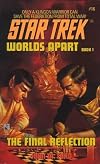
The Final Reflection
by John M. Ford
Worlds Apart (Star Trek) (1), Star Trek (novels) (1984.05), Star Trek: The Original Series (16), Star Trek (1984.05)
On This Page
Description
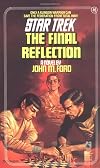
Klingon Captain Krenn is a ruthless war strategist, but on a mission to Earth Krenn learns a lesson in peace. Suddenly he must fight a secret battle of his own for his empire has a covert plan to shatter the Federation. Only Krenn can prevent a war, at the risk of his own life.Tags
Recommendations






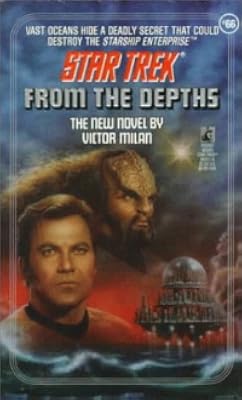

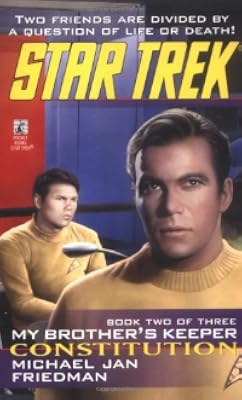


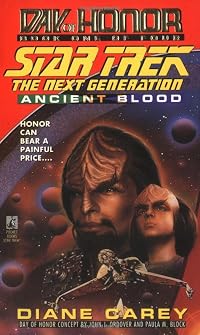
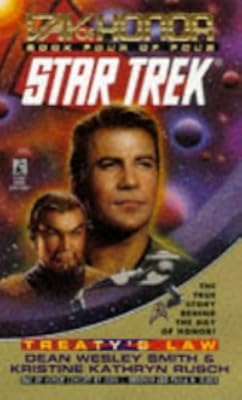






Member Recommendations
aulsmith Okrand and Ford revealed the true Klingon, not the stupid Federation stereotype shown in the original series.
Member Reviews
I picked this up a while back because I had read one Star Trek novel, and one Mike Ford novel, but never any of Ford's Trek novels and I'd heard they were good. And then this happened right after I found it, so it was meant to be. And sure enough, this was a lot of fun.
I'm still probably not the best audience for this, because even though I like Trek a lot, "do some extra world-building in someone else's universe and hope it'll somehow match up with all the stuff other writers are making up" just isn't my favorite kind of writing. I can't help reading this like I would a stand-alone novel, and it doesn't really work that way: even though there are almost no familiar faces (there's the thinnest possible frame story to get Kirk, Spock, show more and McCoy into it for 10 seconds), it does kind of assume that you'll automatically be interested in questions like "What did people on Earth think about the Federation in its early days?" or "Would Klingons ever tolerate Vulcans in their midst?" or "Who invented the transporter first?".
That said, I can see why Ford's version of this stuff has such a good reputation. The world-building, though it's just as shaggy and hand-wavey as Trek always is because of the need to fit with a not-very-planned-out '60s TV show, is way more elaborate and immersive than anyone would've really demanded for Ford to do. He goes above and beyond with making up Klingon cultural details, most of which did not end up being accepted as canon in the shows and movies, because he clearly enjoys it and because no one's stopping him (you can really see this in the early scenes where he spends a lot of time on a complicated gladiatorial chess game—he describes it well enough that a careful reader could probably figure out what this is supposed to look like, but I doubt he expected most people to bother, he just wanted himself to understand the rules). That's cool, but I still wouldn't be so into it if it weren't also just plain good engaging prose with a good sense of drama and character. It's not easy to take a setting where everyone is a super-violent asshole who's obsessed with honor and revenge, and make the protagonist and his friends consistently interesting if not necessarily sympathetic; Ford manages to do that with his Klingons in a way that the shows and movies only intermittently did, giving us characters who aren't out of sync with their ultra-belligerent culture at all (as for instance Worf is) but are still practical in their own way and can even have a sense of humor about their behavior. That falters a little near the end when the Klingons encounter a human who's a brilliant pacifist, and we get a bit of the "aliens don't understand this wisdom that humans have" tone that was so common in earlier SF—it's overdetermined that the protagonist will come to respect this guy and that'll save the day (although it helps that most of the humans don't understand the guy either). And the political back-stabbing subplots are still kind of tedious, but in the action scenes there's a great sense of legitimately brave people improvising under pressure; where another writer might have taken a screenplay-like approach to those scenes and just narrated who was shooting what, Ford makes those details clear enough but focuses on keeping the characters vivid and giving us enjoyable sentences.
I would totally recommend this to anyone who's curious about what a licensed property looks like when it's done in an eccentric fan-fiction mode by someone who is a massive nerd and also has a way with words. show less
I'm still probably not the best audience for this, because even though I like Trek a lot, "do some extra world-building in someone else's universe and hope it'll somehow match up with all the stuff other writers are making up" just isn't my favorite kind of writing. I can't help reading this like I would a stand-alone novel, and it doesn't really work that way: even though there are almost no familiar faces (there's the thinnest possible frame story to get Kirk, Spock, show more and McCoy into it for 10 seconds), it does kind of assume that you'll automatically be interested in questions like "What did people on Earth think about the Federation in its early days?" or "Would Klingons ever tolerate Vulcans in their midst?" or "Who invented the transporter first?".
That said, I can see why Ford's version of this stuff has such a good reputation. The world-building, though it's just as shaggy and hand-wavey as Trek always is because of the need to fit with a not-very-planned-out '60s TV show, is way more elaborate and immersive than anyone would've really demanded for Ford to do. He goes above and beyond with making up Klingon cultural details, most of which did not end up being accepted as canon in the shows and movies, because he clearly enjoys it and because no one's stopping him (you can really see this in the early scenes where he spends a lot of time on a complicated gladiatorial chess game—he describes it well enough that a careful reader could probably figure out what this is supposed to look like, but I doubt he expected most people to bother, he just wanted himself to understand the rules). That's cool, but I still wouldn't be so into it if it weren't also just plain good engaging prose with a good sense of drama and character. It's not easy to take a setting where everyone is a super-violent asshole who's obsessed with honor and revenge, and make the protagonist and his friends consistently interesting if not necessarily sympathetic; Ford manages to do that with his Klingons in a way that the shows and movies only intermittently did, giving us characters who aren't out of sync with their ultra-belligerent culture at all (as for instance Worf is) but are still practical in their own way and can even have a sense of humor about their behavior. That falters a little near the end when the Klingons encounter a human who's a brilliant pacifist, and we get a bit of the "aliens don't understand this wisdom that humans have" tone that was so common in earlier SF—it's overdetermined that the protagonist will come to respect this guy and that'll save the day (although it helps that most of the humans don't understand the guy either). And the political back-stabbing subplots are still kind of tedious, but in the action scenes there's a great sense of legitimately brave people improvising under pressure; where another writer might have taken a screenplay-like approach to those scenes and just narrated who was shooting what, Ford makes those details clear enough but focuses on keeping the characters vivid and giving us enjoyable sentences.
I would totally recommend this to anyone who's curious about what a licensed property looks like when it's done in an eccentric fan-fiction mode by someone who is a massive nerd and also has a way with words. show less
John M. Ford’s Star Trek: The Final Reflection focuses on the crew of the U.S.S. Enterprise under Captain Kirk encountering a novelized history of the Klingon Empire and the Federation that has demoralized much of Starfleet. Kirk getting the novel and his reaction to it serve as a framing device, with the majority of the book focusing on the Klingon narrative itself. The Klingon story follows the life and career of Krenn, a captain who begins life as a piece in a living chess match and advances through the ranks when a Thought Admiral, seeing Krenn’s tactical skill, adopts him. One of Krenn’s missions is to ferry a Federation ambassador to the Klingon homeworld as part of negotiations, establishing conflict within the Klingon show more military between an older generation who want war and a new generation who seek to negotiate peace in order to avoid defeat against the Federation. Linking the Klingon narrative back to Kirk and the Enterprise, Ford describes Krenn meeting Dr. Tom J. McCoy, the grandfather of Bones from the U.S.S. Enterprise, as well as a young Spock, Sarek, and Amanda Grayson during his time on Earth to meet the Federation ambassador and other Federation delegates (pgs. 146-149; 157-159).
Ford originally published this novel in 1984, so parts of his history of the Klingon Empire’s early encounter with the Federation were later retconned out by Star Trek VI: The Undiscovered Country, Star Trek: The Next Generation, and Enterprise. Further, Marc Okrand began developing the Klingon language for Star Trek III: The Search for Spock around the same time Ford wrote this story, so his klingonaase words do not match up with the later language, though this novel does reference the trefoil emblem for the Klingon empire that Matt Jefferies designed for The Original Series episode “Elaan of Troyius” and which later became a standard insignia (pg. 49). Ford also refers to the homeworld as “Klinzhai,” though later stories established it as Qo’noS, translated as Kronos in English (pg. 103). Finally, in liking this story to themes of The Original Series, Ford foreshadows the show’s Cold War-era allegories, even referencing the episode “Balance of Terror” – though that episode featured the Romulans rather than the Klingons (pg. 227). Like his portrayal of the Klingons, Ford’s depiction of Earth differs from how subsequent shows and films portrayed it during this early period of the Federation, but his “Back to Earth” movement resembles the ”Terra Prime” movement seen in Enterprise. Despite subsequent series retconning this novel from canon, it inspired Ronald D. Moore when he wrote about the Klingons while working on The Next Generation and Deep Space Nine as well as Kenneth Mitchell, who portrayed Kol in Discovery. Three years after writing this, Ford wrote a second novel centered on the Klingons – though not a direct sequel – titled How Much for Just the Planet?, thereby creating the Worlds Apart duology.
I purchased this volume from the Klingon Language Institute, who sell it in addition to Michael Jan Friedman’s Star Trek: The Next Generation – Kahless and various Klingon translations of classic texts as an example of Klingon culture in order to better understand the context of the language, much like how J.R.R. Tolkien’s legendarium informs the historical context of his constructed languages. Though subsequent work retconned much of this away, Ford deserves credit for portraying the Klingons as a more diverse, well-rounded people as opposed to the one-note villains that appeared in The Original Series. His story itself is one of the strongest, and most original, novels based on Star Trek: The Original Series. show less
Ford originally published this novel in 1984, so parts of his history of the Klingon Empire’s early encounter with the Federation were later retconned out by Star Trek VI: The Undiscovered Country, Star Trek: The Next Generation, and Enterprise. Further, Marc Okrand began developing the Klingon language for Star Trek III: The Search for Spock around the same time Ford wrote this story, so his klingonaase words do not match up with the later language, though this novel does reference the trefoil emblem for the Klingon empire that Matt Jefferies designed for The Original Series episode “Elaan of Troyius” and which later became a standard insignia (pg. 49). Ford also refers to the homeworld as “Klinzhai,” though later stories established it as Qo’noS, translated as Kronos in English (pg. 103). Finally, in liking this story to themes of The Original Series, Ford foreshadows the show’s Cold War-era allegories, even referencing the episode “Balance of Terror” – though that episode featured the Romulans rather than the Klingons (pg. 227). Like his portrayal of the Klingons, Ford’s depiction of Earth differs from how subsequent shows and films portrayed it during this early period of the Federation, but his “Back to Earth” movement resembles the ”Terra Prime” movement seen in Enterprise. Despite subsequent series retconning this novel from canon, it inspired Ronald D. Moore when he wrote about the Klingons while working on The Next Generation and Deep Space Nine as well as Kenneth Mitchell, who portrayed Kol in Discovery. Three years after writing this, Ford wrote a second novel centered on the Klingons – though not a direct sequel – titled How Much for Just the Planet?, thereby creating the Worlds Apart duology.
I purchased this volume from the Klingon Language Institute, who sell it in addition to Michael Jan Friedman’s Star Trek: The Next Generation – Kahless and various Klingon translations of classic texts as an example of Klingon culture in order to better understand the context of the language, much like how J.R.R. Tolkien’s legendarium informs the historical context of his constructed languages. Though subsequent work retconned much of this away, Ford deserves credit for portraying the Klingons as a more diverse, well-rounded people as opposed to the one-note villains that appeared in The Original Series. His story itself is one of the strongest, and most original, novels based on Star Trek: The Original Series. show less
brilliant, like so much of John M Ford's work, and i so wish there was more. written after TOS and influential, especially on later series like DS9. told from the perspective of a Klingon Captain, and steeped in game theory. out of this story, in time, came a whole new view of the Klingons, the Federation, and the Star Trek Universe. also, the fact that the book exists, simply by being so good and so influential, makes an argument against suppressing original work that isn't canon.
In my experience, the best Star Trek book ever! Hard to believe it's by the same guy who wrote [b:How Much for Just the Planet|268442|How Much for Just the Planet? (Star Trek, No 36)|John M. Ford|http://photo.goodreads.com/books/1173289688s/268442.jpg|209995]. Set around the time of the Enterprise series, but written before it aired, I believe, so happily unencumbered. A great look into the depths of the Klingon world and psyche.
It's been a couple years since I read it, but I will definitely read it again.
It's been a couple years since I read it, but I will definitely read it again.
The Final Reflection is a Star Trek novel written by John M. Ford. Its the first Star Trek novel I've ever read, and from my understanding its pretty atypical. Ford, like the Enterprise liked to go where no man has gone before. Even himself. He actually wrote a second Star Trek novel, How Much for Just the Planet, which is a musical if you can believe it.
The main twist in this book, is it doesn't follow the adventures of Kirk, Spock, and McCoy, but rather it has a Klingon as the main protagonist. Vrenn, is a houseless orphan who was trained to play the live version of the game klin zha, a much more complicated form of chess. During a match he gains the notice of a prominent Klingon admiral, and ends up being adopted into his line. Vrenn show more is now able to fulfill his dreams of becoming a naval officer. Vrenn eventually is forced to take the name of Krenn, as a political expediency, and is made captain of his own ship. Part of the price of this is he must travel to Earth to bring back a delegate from the Federation. Kreen becomes a key figure in a plot to bring about a war between the Klingon Empire and the Federation. He must determine who he can trust in order to prevent a needless, honorless war.
Ford does masterful work in representing the Klingons as noble , honorable characters, not the hated barbarians they had always been portrayed as. Keep in mind this was written in 1984, well before The Next Generation introduced us to Worf, and the concept that Klingons were anything other than "the enemy". Ford takes a universe all of us are familiar with, and makes it his own. The trouble with so many tie-in novels is that the authors have little room for original creation, but Ford never seems constrained by those limits.
I really enjoyed this book. Any fan of either Star Trek books, or Ford's work should definitely pick this up. I will be moving his other Star Trek book up in my to be read pile.
8.5 out of 10 show less
The main twist in this book, is it doesn't follow the adventures of Kirk, Spock, and McCoy, but rather it has a Klingon as the main protagonist. Vrenn, is a houseless orphan who was trained to play the live version of the game klin zha, a much more complicated form of chess. During a match he gains the notice of a prominent Klingon admiral, and ends up being adopted into his line. Vrenn show more is now able to fulfill his dreams of becoming a naval officer. Vrenn eventually is forced to take the name of Krenn, as a political expediency, and is made captain of his own ship. Part of the price of this is he must travel to Earth to bring back a delegate from the Federation. Kreen becomes a key figure in a plot to bring about a war between the Klingon Empire and the Federation. He must determine who he can trust in order to prevent a needless, honorless war.
Ford does masterful work in representing the Klingons as noble , honorable characters, not the hated barbarians they had always been portrayed as. Keep in mind this was written in 1984, well before The Next Generation introduced us to Worf, and the concept that Klingons were anything other than "the enemy". Ford takes a universe all of us are familiar with, and makes it his own. The trouble with so many tie-in novels is that the authors have little room for original creation, but Ford never seems constrained by those limits.
I really enjoyed this book. Any fan of either Star Trek books, or Ford's work should definitely pick this up. I will be moving his other Star Trek book up in my to be read pile.
8.5 out of 10 show less
One of my favorite TOS books, with clear and intelligent cold war era presentation, excellent characterization, and solid plotting.
A fine and unusual Star Trek novel, in which the major figures only play a minor role as they read a popular new historical novel, "The Final Reflection", which tells the tale of a Klingon captain who finds he must decide whether to fight against his superiors' plan to shatter the Federation in a galactic war. This story about a principled Klingon's unfamiliar quest for peace is avidly read by the crew, and with good reason. It's a page-turner which reveals more about Klingon culture than had been previously known. It also includes a chess encounter with a seven-year-old Spock (a nicely done bit), and an infant McCoy. A good one.
Members
- Recently Added By
Lists

Nonhuman Protagonists
243 works; 35 members
Author Information

70+ Works 6,019 Members
John M. Ford is the author of eight novels and dozens of short stories. He lives in Minneapolis, Minnesota
Some Editions
Series

Worlds Apart (Star Trek)
2 works (1)

Star Trek (novels)
626 works (1984.05)

Star Trek: The Original Series
97 works (16)

Star Trek
1004 works (1984.05)
Belongs to Publisher Series
Work Relationships
Is contained in
Common Knowledge
- Canonical title
- The Final Reflection
- Original title
- The Final Reflection
- Alternate titles
- Star Trek: The Final Reflection; Star Trek: Der letzte Schachzug
- Original publication date
- 1984-05 (eng.) (eng.); 1988 (deu.) (deu.)
- People/Characters
- Krenn (A Klingon); Kahless; Spock; Vrenn; Dr. Tagore
- Dedication
- For J.B. after fifteen years, the genuine article.
- First words
- Enterprise, dormant for nearly a week now, was waking up.
- Last words
- (Click to show. Warning: May contain spoilers.)End entry.
Classifications
Statistics
- Members
- 968
- Popularity
- 27,269
- Reviews
- 12
- Rating
- (3.90)
- Languages
- 5 — Czech, English, French, German, Japanese
- Media
- Paper, Ebook
- ISBNs
- 18
- ASINs
- 5