
Lee Correy (1928–1997)
Author of The Abode of Life
About the Author
G. Harry Stine was born March 26, 1928. He graduated with a degree in physics from Colorado College. He worked as a civilian scientist at White Sands Proving Grounds and then at the U.S. Naval Ordnance Missile Test Facility as head of the Range Operations Division from 1955-1957. He was a founder show more of the American Model Rocketry Association and many of his pioneering rockets are displayed in the Smithsonian's Air and Space Museum. He wrote science fiction using the pseudonym Lee Correy. His works included Starship Through Space, Rocket Man, Contraband Rocket, Shuttle Down, Space Doctor, Manna, A Matter of Metalaw, and in the Star Trek series The Abode of Life. Writing under G. Harry Stine, his works included Warbots, Judgment Day, and Starsea Invaders: First Action. He died of a stroke on November 2, 1997. (Bowker Author Biography) show less
Disambiguation Notice:
Actual name George Harry Stine. Wrote as Lee Correy, G. Harry Stine.
Series
Works by Lee Correy
Associated Works
Arthur C. Clarke's July 20, 2019: Life in the 21st Century (Omni Book) (1986) — Contributor — 194 copies, 5 reviews
SF: The Year's Greatest Science-Fiction and Fantasy: 3rd Annual Volume (1958) — Contributor — 66 copies, 2 reviews
Great Science Fiction Stories By the World's Greatest Scientists (1985) — Author — 56 copies, 2 reviews
Analog Science Fiction/Science Fact: Vol. XC, No. 3 (November 1972) (1972) — Contributor — 27 copies
Analog Science Fiction/Science Fact: Vol. XCII, No. 2 (October 1973) (1973) — Contributor — 24 copies
Analog Science Fiction/Science Fact: Vol. XC, No. 6 (February 1973) (1973) — Contributor — 23 copies
Analog Science Fiction/Science Fact: Vol. LXXXVI, No. 2 (October 1970) (1970) — Contributor — 20 copies
Tagged
Common Knowledge
- Legal name
- Stine, George Harry
- Other names
- Stine, G. Harry
Stine, G. H. - Birthdate
- 1928-03-26
- Date of death
- 1997-11-02
- Gender
- male
- Education
- Colorado College
- Occupations
- science fiction writer
science writer - Organizations
- National Association of Rocketry (founder)
- Nationality
- USA
- Places of residence
- Phoenix, Arizona, USA
Colorado Springs, Colorado, USA - Place of death
- Phoenix, Arizona, USA
- Disambiguation notice
- Actual name George Harry Stine. Wrote as Lee Correy, G. Harry Stine.
- Associated Place (for map)
- Arizona, USA
Members
Reviews
I don't ask for much from Star Trek novels, just familiar characters and a bit of humour. Exciting plots and original extraterrestrials are bonuses, but not required. That said, I think I downloaded the wrong book after trawling through the TOS novels on Amazon, because this is terrible. Flatter than flat - a depression, in fact - repetitive language ('This spin-off fiction was brought to you by the words data and snapped'), but worst of all, bland and unrecognisable mockeries of the main show more crew. Kirk is all over the place - 'Yeoman, how about your input from the woman's point of view?' - and then decides, in the words of one of the alien characters, to 'take a chance that you would destroy a whole planet, a whole people, a whole culture' for the sake of repairing the Enterprise. Correy has the captain agonising over the Prime Directive - which Kirk never held by anyway - only to turn around and basically say, 'Planet schmanet, we need spare parts'. Doctor McCoy is continuously referred to as 'Bones' , despite the fact that only Kirk ever used that nickname, Scotty's favourite phrase appears to be 'dinna ken' (so the reader can tell he's supposed to be Scottish), and Janice Rand is made to sound halfway intelligent in the early chapters, only to be relegated to taking notes in the rest of the book. All in all, in a complete amateurish waste of time, and I have read quite a range of TOS novels by now. Don't bother. show less

Part of the fun for me in reading Ace Doubles is the pleasure of sampling science fiction written by people who had different perspectives and views from those of writers today. This is most obvious in the plot-driven nature of the novels, in which character development takes a back seat (if not escorted out of the room altogether) in favor of the premise and the resulting action. It's also interesting to read them as artifacts reflecting the concerns of their times, which may seem dated and show more quaint to us today but were very real to them. In that respect their very datedness can make them worthwhile reading.
This datedness emerges in ways that are not as quaint or appealing, however, as most of these novels about the future embody the social attitudes of the authors' time. This was especially evident in the latest pair I read, which offered two very different adventures. The first one was G. Harry Stine's Contraband Rocket. Published under Stine's pseudonym "Lee Corey"), it's about a group of near-future rocket enthusiasts who decide to refurbish a decommissioned rocket and travel to the moon. As a rocket engineer who played a major role in model rocketry, Stine's novel captures well the passion of a group of enthusiasts for the dream of flying in space and makes for interesting for this reason alone. Yet Stine's subplot, in which the wife of one of the central characters leaves him over his obsession with the project, absolutely grates today. What could have added a sense of emotional drama becomes instead a vehicle for taking some Scientology-esque digs at psychiatry (in Stine's future, divorce proceedings are a pretense for court-mandated brainwashing) culminating n an end in which the wife realizes that it's really her problem and not his. Once again, the Fifties-era patriarchy emerges triumphant.
Ironically, the issue of datedness was less evident in the other novel, even though it was the older of the two works. Murray Leinster's The Forgotten Planet was a fix-up of three short stories two of which were written in the early 1920s. In it a terraforming project is unintentionally abandoned midway through its centuries-long process due to a lost record, leaving a planet seeded by Terran plants and insects that without the presence of other animals grow unchecked. After a space liner crashes on the planet, the savage descendants of its survivors must cope with swarms of foot-long ants, wasps the size of sofas, and spiders that would barely fit comfortably in a garage. Like the writers of the "big-bug" movies of the 1950s Leinster glosses over the impossibility of insect physiology at that size, preferring to focus on his tale of a human (male, of course), who gradually rediscovers the value of tools and leads his tribe to survival. It's a gripping adventure (if a bit monotonous) but it ends with a casual embrace of hunting that is increasing at odds with our ethical development today. Like Stine Leinster is reflecting the attitudes of his class and time, but it's still jarring to see supposedly advanced humans embrace the slaughtering of unique species so eagerly. show less
This datedness emerges in ways that are not as quaint or appealing, however, as most of these novels about the future embody the social attitudes of the authors' time. This was especially evident in the latest pair I read, which offered two very different adventures. The first one was G. Harry Stine's Contraband Rocket. Published under Stine's pseudonym "Lee Corey"), it's about a group of near-future rocket enthusiasts who decide to refurbish a decommissioned rocket and travel to the moon. As a rocket engineer who played a major role in model rocketry, Stine's novel captures well the passion of a group of enthusiasts for the dream of flying in space and makes for interesting for this reason alone. Yet Stine's subplot, in which the wife of one of the central characters leaves him over his obsession with the project, absolutely grates today. What could have added a sense of emotional drama becomes instead a vehicle for taking some Scientology-esque digs at psychiatry (in Stine's future, divorce proceedings are a pretense for court-mandated brainwashing) culminating n an end in which the wife realizes that it's really her problem and not his. Once again, the Fifties-era patriarchy emerges triumphant.
Ironically, the issue of datedness was less evident in the other novel, even though it was the older of the two works. Murray Leinster's The Forgotten Planet was a fix-up of three short stories two of which were written in the early 1920s. In it a terraforming project is unintentionally abandoned midway through its centuries-long process due to a lost record, leaving a planet seeded by Terran plants and insects that without the presence of other animals grow unchecked. After a space liner crashes on the planet, the savage descendants of its survivors must cope with swarms of foot-long ants, wasps the size of sofas, and spiders that would barely fit comfortably in a garage. Like the writers of the "big-bug" movies of the 1950s Leinster glosses over the impossibility of insect physiology at that size, preferring to focus on his tale of a human (male, of course), who gradually rediscovers the value of tools and leads his tribe to survival. It's a gripping adventure (if a bit monotonous) but it ends with a casual embrace of hunting that is increasing at odds with our ethical development today. Like Stine Leinster is reflecting the attitudes of his class and time, but it's still jarring to see supposedly advanced humans embrace the slaughtering of unique species so eagerly. show less

There's an episode in the fifth season of Mad Men when the pretentious Paul Kinsey (who had left the ad agency a couple of years previously) reappears and asks Harry Crane, the head of the firm's television operations, to use his Hollywood connections to get NBC to look at his Star Trek spec script entitled "The Negron Complex" about a world in which a group called the Negrons are enslaved by people of different skin color. When Harry reads it he is appalled by how terrible it is, show more particularly with the clumsiness of its parallels to civil rights issues. "The twist is that the Negron is white!" he marvels sarcastically.
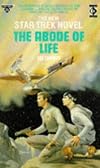
Ever since I laughed at Harry's deadpan declaration, I keep coming back to it when I encounter other heavy-handed examples of the franchise's commentary on contemporary society, as it came to mind again as I read this book. Written by "Lee Correy" (the pen name for G. Harry Stine), it transports the Enterprise crew to the planet Mercan, where a priest-like leadership known as the Guardians exploit the periodic radiation outbursts from their sun to maintain control over the population. Resisting them are the Technics who, in addition to developing prohibited technologies, are promoting the heretical idea that the Mercans are not the only beings in the universe.
You can guess how that turns out once the Enterprise shows up. And that for me was the big problem with this book, as the author is more focused on criticizing intellectual oppression than he is on developing distinctive characters or writing a suspenseful novel, At no point is there any real sense of narrative tension; the danger to the crew is minimal (the Guardians are very lackadaisical in their handling of Kirk and company), and all it takes to expand the civilization's horizons is a quick trip to the ship. Perhaps if Stine was focused less on setting up such flimsy straw men he might have done more with some of the more interesting ideas he introduces, such as the concept of a teleporter-based civilization. Instead all we have is another weak example of a Star Trek writer who prioritizes their opinionating over telling a good story. show less
Ever since I laughed at Harry's deadpan declaration, I keep coming back to it when I encounter other heavy-handed examples of the franchise's commentary on contemporary society, as it came to mind again as I read this book. Written by "Lee Correy" (the pen name for G. Harry Stine), it transports the Enterprise crew to the planet Mercan, where a priest-like leadership known as the Guardians exploit the periodic radiation outbursts from their sun to maintain control over the population. Resisting them are the Technics who, in addition to developing prohibited technologies, are promoting the heretical idea that the Mercans are not the only beings in the universe.
You can guess how that turns out once the Enterprise shows up. And that for me was the big problem with this book, as the author is more focused on criticizing intellectual oppression than he is on developing distinctive characters or writing a suspenseful novel, At no point is there any real sense of narrative tension; the danger to the crew is minimal (the Guardians are very lackadaisical in their handling of Kirk and company), and all it takes to expand the civilization's horizons is a quick trip to the ship. Perhaps if Stine was focused less on setting up such flimsy straw men he might have done more with some of the more interesting ideas he introduces, such as the concept of a teleporter-based civilization. Instead all we have is another weak example of a Star Trek writer who prioritizes their opinionating over telling a good story. show less

A somewhat less than stellar Star Trek book but a pretty decent sci-fi story. It's as if the author had a good idea for a science fiction plot and then sort of man-handled it into a Trek tale. Details of the operation of the ship and the fleet seem slightly off and the interactions between the characters don't really have that Trek feel to them (Kirk hardly seems to be friends with Spock and McCoy most of the time). And I have issues with some of the writing. (Dialogue tags. Oh my head, the show more dialogue tags. "Kirk wanted to know" is not a dialogue tag. "Said" is a dialogue tag. "Asked" is a dialogue tag. "Whispered" is a dialogue tag. Dialogue tags are verbs. They can be modified, on occasion, with great care and restraint. While "snapped" is a dialogue tag, it's generally a bad one and in Kirk's case is indicative of a mode of speaking Kirk would only use rarely. To have him "snap" every other time he speaks is bad writing and reveals a poor understanding of his character. . . . . I might be done now.) But. There are some really neat science-y ideas here of a caliber one doesn't often run across in Trek, and overall the story was satisfying. Recommended if you can stand some writing ticks and accept that this won't feel like Trek. show less
Lists
Awards


You May Also Like


Associated Authors
Statistics
- Works
- 62
- Also by
- 22
- Members
- 2,190
- Popularity
- #11,712
- Rating
- 3.4
- Reviews
- 16
- ISBNs
- 78
- Languages
- 4
- Favorited
- 1