
James White (1) (1928–1999)
Author of Hospital Station
For other authors named James White, see the disambiguation page.
Series
Works by James White
The Secret Visitors / Master of Life and Death (Vintage Ace Double, D-237) (1957) 46 copies, 1 review
Custom fitting (short story) 2 copies
The Interpreters 2 copies
Hospital Station [part 2] 1 copy
Short Fiction Collected 1 copy
Sector General Omnibus 1 copy
Sector General {short story} 1 copy
Grapeliner [short story] 1 copy
Tableau 1 copy
Associated Works
The Big Book of Science Fiction: The Ultimate Collection (2016) — Contributor — 522 copies, 8 reviews
Menace of the Monster: Classic Tales of Creatures from Beyond (2019) — Contributor — 44 copies, 2 reviews
Spaceworlds (British Library Science Fiction Classics): Stories of Life in the Void: 17 (2021) — Contributor — 30 copies, 1 review
Analog Science Fiction/Science Fact: Vol. XCV, No. 10 (October 1975) (1975) — Contributor — 26 copies, 2 reviews
Analog Science Fiction/Science Fact: Vol. CII, No. 1 (January 1982) (1982) — Contributor — 20 copies
The Magazine of Fantasy and Science Fiction March 1987, Vol. 72, No. 3 (1987) — Contributor — 15 copies
Galaxy Science Fiction 1973 November, Vol. 34, No. 2 (1973) — Contributor, some editions — 12 copies
Das Science Fiction Jahr 1994. Ein Jahrbuch für den Science Fiction Leser (1994) — Contributor — 10 copies
Astronavi maledette: [tre romanzi di J. White, G. R. Dickson, M. Leinster] — Contributor — 3 copies
Gateway to the Stars: A Science Fiction Anthology — Contributor — 2 copies
Galaxy Science Fiction No. 11 - British Release (Nov. 1973) — Contributor — 1 copy
Tagged
Common Knowledge
- Birthdate
- 1928-04-07
- Date of death
- 1999-08-23
- Gender
- male
- Education
- St. John's Primary School (1935-41)
St. Joseph's Technical Secondary School (1942-43) - Occupations
- science fiction writer
- Organizations
- Science Fiction and Fantasy Writers of America
- Awards and honors
- Guest of Honour, Eastercon, UK (1983)
E.E. Smith Memorial Award for Imaginative Fiction (1998)
Hugo Nominee (Fan Writer, Retro-Hugo, [1951], 2001)
Hugo Nominee (Fan Artist, Retro-Hugo, [1951], 2001)
Hugo Nominee (Fan Writer, Retro-Hugo, [1954], 2004) - Short biography
- James White (1928-1999) is the science fiction author from Northern Ireland, who wrote the Sector General series including Hospital Station .
- Nationality
- UK
- Birthplace
- Belfast, County Antrim, Northern Ireland, UK
- Places of residence
- Belfast, County Antrim, Northern Ireland, UK
Canada
Portstewart, Belfast, County Antrim, Northern Ireland, UK - Place of death
- Portstewart, Belfast, County Antrim, Northern Ireland, UK
- Map Location
- Northern Ireland, UK
Members
Discussions
90's Sci-Fi Two Humans "Unfit" to move to Utopian Plane world work as ambassadors to recruit other aliens in Name that Book (April 2019)
Reviews

Star Surgeon starts off with Conway treating an alien of a sort he’s never seen or heard of before. It turns out that his newest patient’s species is seen as somewhat godlike by those aliens that know of them. They’re purported to be immortal, and they have a habit of gradually making themselves the supreme ruler of a world, solving its problems (I was left with so many questions), and then leaving. They are always accompanied by a companion of a different species.
Conway’s efforts show more to treat his patient, Lonvellin, impress it so much that it later insists he help it and the Monitor Corps with a problem it’s having on the planet Etla, which is part of a larger Empire made up of several planets. Etla used to have a thriving population before it was hit by one horrible illness after another. To make matters worse, Etla’s natives are deeply suspicious of beings that look different from them, so they refuse to accept help from anyone except the Empire’s Imperial Representative, who rarely stops by. Earth humans and Etlans just happen to look very much alike, so Conway and the Monitor Corpsmen are able to sneak in, assess the situation, and try to help. Unfortunately, the situation is much worse than anyone realizes and deteriorates to such a degree that Sector General finds itself caught up in an interstellar war.
I think this is my second full-length Sector General novel, although I’ve read a bunch of Sector General short stories. So far it looks like one of the nice things about the full-length novels is that they gave the author the time and space to show readers things that weren’t directly related to solving medical mysteries. Star Surgeon shows readers one of Sector General’s recreational areas (as Conway tries to convince Murchison to take their relationship from “friends, sort of” to “dating and maybe even having sex”), and I learned that there are apparently 218 human (or at least DBDG) women at Sector General, not that we ever learn the names of any of them besides Murchison.
Unfortunately, Star Surgeon turned out to be less focused on medical mysteries and more of a war book. Lonvellin’s medical issues were dealt with fairly quickly, and Etla’s problems were revealed to be less medical and more political (and absolutely horrifying). That left the interstellar war, with Sector General at its heart.
This book’s tone and message reminded me strongly of the story “Accident,” available in the Sector General omnibus Alien Emergencies. The specifics of how Sector General was evacuated were fascinating - in addition to concerns about moving sick or injured patients, every species’ general physical needs (gravity, atmosphere, temperature, and more) also had to be taken into account.
Unfortunately, Sector General’s evacuation and the events that happened afterward were also a bit emotionally draining. Sector General was intended to be a hospital capable of catering to any and every alien species. The evacuation and Sector General’s transformation into “what amounted to a heavily armed military base” (104) were both painful.
Once again, I can’t help but wonder about the economics of the Sector General universe. Money still seems to exist and be necessary, because it took great gobs of money to build Sector General in the first place. The damage Sector General sustained during the battle and the hospital’s evacuation and repurposing should probably have financially wrecked it. And yet it apparently recovered just fine, because there are many Sector General stories and books that come after this one.
As much as I like the idea behind the Sector General series, the books and stories have several recurring problems. One of those problems kept rearing its ugly head in Star Surgeon: sexism. Since the series is usually careful not to assign a gender to any of its aliens, except in one instance where a particular alien species cycles through genders during the course of its life, that means that most of the more blatant sexism involves Murchison, the series’ only named human woman (that I know of).
If Murchison ever appeared on-page without some mention of her appealing physical form or features, it was rare. Also, just like in Star Healer, Murchison requested to be allowed to use an educator tape, only to be shot down by O’Mara.
"'As for the girls [he means the nurses],' [O'Mara] went on, a sardonic edge in his voice, 'you have noticed by this time that the female Earth-human DBDG has a rather peculiar mind. One of its peculiarities is a deep, sex-based mental fastidiousness. No matter what they say they will not, repeat not, allow alien beings to apparently take over their pretty little brains. If such should happen, severe mental damage would result.'" (132)
And then there was this, said by Murchison to Conway:
"'I...I asked him to give me [an educator tape], earlier, to help you out. But he said no because...' She hesitated, and looked away. '...because he said girls are very choosey who they let take possession of them. Their minds, I mean...'" (141)
Am I the only one who thinks that explanation sounds uncomfortably sexual? At any rate, while I’m thankful that at least one Sector General fix fic exists, it doesn’t stop the burst of anger I feel whenever I come across things like this in the original books and stories.
Well, even though I hate the series’ sexism, I love its “doctors in space” focus. Unfortunately, this particular book was grimmer and had less in the way of medical mysteries than I preferred. It wasn’t a bad entry in the series, but it wasn’t quite what I was hoping for when I started reading.
(Original review posted on A Library Girl's Familiar Diversions.) show less
Conway’s efforts show more to treat his patient, Lonvellin, impress it so much that it later insists he help it and the Monitor Corps with a problem it’s having on the planet Etla, which is part of a larger Empire made up of several planets. Etla used to have a thriving population before it was hit by one horrible illness after another. To make matters worse, Etla’s natives are deeply suspicious of beings that look different from them, so they refuse to accept help from anyone except the Empire’s Imperial Representative, who rarely stops by. Earth humans and Etlans just happen to look very much alike, so Conway and the Monitor Corpsmen are able to sneak in, assess the situation, and try to help. Unfortunately, the situation is much worse than anyone realizes and deteriorates to such a degree that Sector General finds itself caught up in an interstellar war.
I think this is my second full-length Sector General novel, although I’ve read a bunch of Sector General short stories. So far it looks like one of the nice things about the full-length novels is that they gave the author the time and space to show readers things that weren’t directly related to solving medical mysteries. Star Surgeon shows readers one of Sector General’s recreational areas (as Conway tries to convince Murchison to take their relationship from “friends, sort of” to “dating and maybe even having sex”), and I learned that there are apparently 218 human (or at least DBDG) women at Sector General, not that we ever learn the names of any of them besides Murchison.
Unfortunately, Star Surgeon turned out to be less focused on medical mysteries and more of a war book. Lonvellin’s medical issues were dealt with fairly quickly, and Etla’s problems were revealed to be less medical and more political (and absolutely horrifying). That left the interstellar war, with Sector General at its heart.
This book’s tone and message reminded me strongly of the story “Accident,” available in the Sector General omnibus Alien Emergencies. The specifics of how Sector General was evacuated were fascinating - in addition to concerns about moving sick or injured patients, every species’ general physical needs (gravity, atmosphere, temperature, and more) also had to be taken into account.
Unfortunately, Sector General’s evacuation and the events that happened afterward were also a bit emotionally draining. Sector General was intended to be a hospital capable of catering to any and every alien species. The evacuation and Sector General’s transformation into “what amounted to a heavily armed military base” (104) were both painful.
Once again, I can’t help but wonder about the economics of the Sector General universe. Money still seems to exist and be necessary, because it took great gobs of money to build Sector General in the first place. The damage Sector General sustained during the battle and the hospital’s evacuation and repurposing should probably have financially wrecked it. And yet it apparently recovered just fine, because there are many Sector General stories and books that come after this one.
As much as I like the idea behind the Sector General series, the books and stories have several recurring problems. One of those problems kept rearing its ugly head in Star Surgeon: sexism. Since the series is usually careful not to assign a gender to any of its aliens, except in one instance where a particular alien species cycles through genders during the course of its life, that means that most of the more blatant sexism involves Murchison, the series’ only named human woman (that I know of).
If Murchison ever appeared on-page without some mention of her appealing physical form or features, it was rare. Also, just like in Star Healer, Murchison requested to be allowed to use an educator tape, only to be shot down by O’Mara.
"'As for the girls [he means the nurses],' [O'Mara] went on, a sardonic edge in his voice, 'you have noticed by this time that the female Earth-human DBDG has a rather peculiar mind. One of its peculiarities is a deep, sex-based mental fastidiousness. No matter what they say they will not, repeat not, allow alien beings to apparently take over their pretty little brains. If such should happen, severe mental damage would result.'" (132)
And then there was this, said by Murchison to Conway:
"'I...I asked him to give me [an educator tape], earlier, to help you out. But he said no because...' She hesitated, and looked away. '...because he said girls are very choosey who they let take possession of them. Their minds, I mean...'" (141)
Am I the only one who thinks that explanation sounds uncomfortably sexual? At any rate, while I’m thankful that at least one Sector General fix fic exists, it doesn’t stop the burst of anger I feel whenever I come across things like this in the original books and stories.
Well, even though I hate the series’ sexism, I love its “doctors in space” focus. Unfortunately, this particular book was grimmer and had less in the way of medical mysteries than I preferred. It wasn’t a bad entry in the series, but it wasn’t quite what I was hoping for when I started reading.
(Original review posted on A Library Girl's Familiar Diversions.) show less
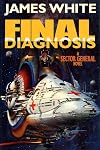
Patient Hewlitt has been admitted to Sector General with an unexplained general allergy to all medication, but apart from that he seems to be in peak physical and mental condition. Once and for all, is he a hypochondriac with an overactive imagination or is there something more unsettling at work here?
The medical puzzle was very intriguing and I really liked Patient Hewlett himself, so I hope we see him again in the regrettably few books left in the series. And the habit of the medical show more personnel addressing and talking about all patients as Patient Name or Registration Number as culturally appropriate and having 'it' as a pronoun for 'sentient but not of my species' were nice touches. show less
The medical puzzle was very intriguing and I really liked Patient Hewlett himself, so I hope we see him again in the regrettably few books left in the series. And the habit of the medical show more personnel addressing and talking about all patients as Patient Name or Registration Number as culturally appropriate and having 'it' as a pronoun for 'sentient but not of my species' were nice touches. show less

I first read Jim White's 'Sector General' stories, about a gigantic multi-species hospital in a distant part of the Galaxy, back in the early 1970s in John Carnell's 'New Writings in SF' anthologies. I was just discovering science fiction; everything was new to me then. I had hardly seen them since, but remembered them fairly clearly, especially the very first story, 'Medic', about a disgraced construction worker on the (then) unfinished Sector General having to care for an orphaned and show more injured alien, and figuring out for himself what to do. I also recollected the four-character species classification employed in the hospital, and one of the supporting characters, who was a giant empathic insect.
Time, however, has erased many of the details, so I was a bit in anticipation to see what I'd find when I went back into these stories. I needn't have worried. Certainly, the majority of the stories in this first volume are quite old - 'Hospital Station' dates from 1961 (and was a 'fix-up' novel from earlier short stories) and 'Star Surgeon' from 1962 - and in places it shows. Dialogue is firmly in mid-Atlantic, and some attitudes firmly in the 1960s, almost to the point where it begins to sound like a pastiche of itself (be prepared to come across the phrase "your pretty little head"; my mouth rather dropped open at that one). (Now, if Dr Conway had used it to address an alien nurse, that would have been a) funny, b) science-fictional, and c) probably more ironic than Jim usually managed.) And although the human medical staff acknowledge that women can be medical professionals, in this volume at least, none make their appearance until the third novel, 'Major Operation' (1971), where the main human character's love interest, a nurse (described in quite chauvinistic terms in the earlier books) is promoted to pathologist - I suspect that this may have been as much to keep her in the books when her man flies off to strange new worlds to tackle increasingly odd medical crises. And indeed, the empathic alien insect doctor I mentioned earlier, Prilicia, turned out to my surprise to be male, and not female as I remembered the character! (I don't know if that says more about me than it does about the books...)
Other aspects of the books are equally dated: the Educator Tapes (which implant knowledge about alien species directly into the minds of medical staff) are just that, tapes; the Translator computers are massive, single-purpose and centralised; the spaceships are distinctly rocket-shaped.
None of this matters. Because the overwhelming theme of the books is the focus on the medical profession, its ethics and its principles - "do no harm", "save life wherever possible" and "all sentient life is worth saving". This is so clear from the outset that it overrides all other considerations; indeed, the main point-of-view character, Doctor Conway, has more alien friends than human ones through the appreciation of alien viewpoints due to his use of the educator tapes (the catch is that they don't just impart knowledge, they are full personality recordings of top alien surgeons and physicians, so anyone using the tapes has the benefit of thinking and feeling like an alien whilever they have the tape implanted). These viewpoints make the whole 'Sector General' series a most refreshing and different take on the entire space opera subgenre.
This even extends to the extended Galactic Federation that Sector General is a part of. The military arm of the Federation, the Monitor Corps, is actually founded on the same basis as the medical service, and only acts as a police force rather than a military force of conquest. In 'Star Surgeon' and 'Major Operation', the Corps actually acts in subordination to Conway and the medical teams; any objections lodged by Monitor officers are operational, not ideological.
White also points out that running a hospital is a matter of a bigger and better bureaucracy, and there are times when the action consists of Conway reading reports, or co-ordinating plans for treatment with colleagues, or discussing the progress of cases. But don't run away with the idea that this is action-lite, worthy and dull story-telling. By this time, the reader is fully engaged in the intellectual problems of finding cures for aliens who haven't been encountered before and who we might not be able to communicate with. And some of these aliens are perhaps as strange as any you might come across in any other fiction . Dismiss any thoughts you might have of aliens as humanoids with rubber masks. Creatures of all shapes and sizes, breathing all sorts of atmospheres and taking in nourishment in a range of different ways all present their own problems. And given the scope for misunderstanding in any first contact situation, it should not come as a surprise when such first contact deteriorates into a shooting war. Later, in 'Major Operation', the medical treatment itself is hard to differentiate from a shooting war. Action abounds.
Almost fifty years since I first encountered them, and sixty years after some of them were first written, these three novels held me captivated. Yes, I cringed at some things that we just don't do now; and in a few instances, I mentally inserted my own witty ripostes to some of the comments passed by characters. (I met Jim White on a few occasions. He was a charming man, and I'm sure he would have approved.) But I emerged from this reading with a feeling of elation, that this is what science fiction is about - challenging viewpoints and exposing the reader to something new and different. Recommended. show less
Time, however, has erased many of the details, so I was a bit in anticipation to see what I'd find when I went back into these stories. I needn't have worried. Certainly, the majority of the stories in this first volume are quite old - 'Hospital Station' dates from 1961 (and was a 'fix-up' novel from earlier short stories) and 'Star Surgeon' from 1962 - and in places it shows. Dialogue is firmly in mid-Atlantic, and some attitudes firmly in the 1960s, almost to the point where it begins to sound like a pastiche of itself (be prepared to come across the phrase "your pretty little head"; my mouth rather dropped open at that one). (Now, if Dr Conway had used it to address an alien nurse, that would have been a) funny, b) science-fictional, and c) probably more ironic than Jim usually managed.) And although the human medical staff acknowledge that women can be medical professionals, in this volume at least, none make their appearance until the third novel, 'Major Operation' (1971), where the main human character's love interest, a nurse (described in quite chauvinistic terms in the earlier books) is promoted to pathologist - I suspect that this may have been as much to keep her in the books when her man flies off to strange new worlds to tackle increasingly odd medical crises. And indeed, the empathic alien insect doctor I mentioned earlier, Prilicia, turned out to my surprise to be male, and not female as I remembered the character! (I don't know if that says more about me than it does about the books...)
Other aspects of the books are equally dated: the Educator Tapes (which implant knowledge about alien species directly into the minds of medical staff) are just that, tapes; the Translator computers are massive, single-purpose and centralised; the spaceships are distinctly rocket-shaped.
None of this matters. Because the overwhelming theme of the books is the focus on the medical profession, its ethics and its principles - "do no harm", "save life wherever possible" and "all sentient life is worth saving". This is so clear from the outset that it overrides all other considerations; indeed, the main point-of-view character, Doctor Conway, has more alien friends than human ones through the appreciation of alien viewpoints due to his use of the educator tapes (the catch is that they don't just impart knowledge, they are full personality recordings of top alien surgeons and physicians, so anyone using the tapes has the benefit of thinking and feeling like an alien whilever they have the tape implanted). These viewpoints make the whole 'Sector General' series a most refreshing and different take on the entire space opera subgenre.
This even extends to the extended Galactic Federation that Sector General is a part of. The military arm of the Federation, the Monitor Corps, is actually founded on the same basis as the medical service, and only acts as a police force rather than a military force of conquest. In 'Star Surgeon' and 'Major Operation', the Corps actually acts in subordination to Conway and the medical teams; any objections lodged by Monitor officers are operational, not ideological.
White also points out that running a hospital is a matter of a bigger and better bureaucracy, and there are times when the action consists of Conway reading reports, or co-ordinating plans for treatment with colleagues, or discussing the progress of cases. But don't run away with the idea that this is action-lite, worthy and dull story-telling. By this time, the reader is fully engaged in the intellectual problems of finding cures for aliens who haven't been encountered before and who we might not be able to communicate with. And some of these aliens are perhaps as strange as any you might come across in any other fiction . Dismiss any thoughts you might have of aliens as humanoids with rubber masks. Creatures of all shapes and sizes, breathing all sorts of atmospheres and taking in nourishment in a range of different ways all present their own problems. And given the scope for misunderstanding in any first contact situation, it should not come as a surprise when such first contact deteriorates into a shooting war. Later, in 'Major Operation', the medical treatment itself is hard to differentiate from a shooting war. Action abounds.
Almost fifty years since I first encountered them, and sixty years after some of them were first written, these three novels held me captivated. Yes, I cringed at some things that we just don't do now; and in a few instances, I mentally inserted my own witty ripostes to some of the comments passed by characters. (I met Jim White on a few occasions. He was a charming man, and I'm sure he would have approved.) But I emerged from this reading with a feeling of elation, that this is what science fiction is about - challenging viewpoints and exposing the reader to something new and different. Recommended. show less

Senior Physician Conway is giving a bunch of trainees a tour of Sector General, a vast hospital in space, when he encounters his friend, the empathic and physically delicate Doctor Prilicla. Prilicla is acting oddly and encourages Conway to seek out Chief Psychologist O'Mara, who tells him the big news: Prilicla has been promoted to take over Conway's position as head of the ambulance ship Rhabwar, while Conway is being given the opportunity to try for Diagnostician. First, though, Conway is show more being sent away to the planet Goglesk to rest, think about his options, and observe the situation on Goglesk.
The Gogleskans are friendly but deeply afraid of physical contact, to the point where even doctors must avoid touching patients. Conway tries to figure out what's going on and what he might be able to do to help, but eventually has to go back to Sector General, where he is assigned many more cases, some of which look hopeless, than he's used to dealing with at once. He's sent to work in the Hudlar geriatric ward, and put in charge of a pregnant Protector (a mindlessly violent creature that must constantly be beaten in order to remain healthy, whose fetus is sentient and telepathic until the moment of its birth). He's also put in charge of several Hudlar patients injured in a horrific accident.
I had meant to read a new-to-me Sector General book but realized after a few pages that this was in the Alien Emergencies omnibus I read (and reviewed) several years ago. Still, I couldn't remember the details very well, so I decided to continue on.
As I said in my first review of this book, I liked that readers got to see Conway doing more than just working. Although, granted, even his rest periods tended to count as work - it's not uncommon for Sector General folks to talk shop during meals. At this point in the series, Conway and Murchison were married, so one of the things that frequently came up was the effect all those Educator tapes had on Conway's ability to interact with (and be attracted to, and have sex with) Murchison. I had forgotten how often sexual attraction was brought up in this book - I understood Conway's concern, and it made sense that his fellow Diagnosticians would want to give him advice and a sympathetic ear, but I still found the Diagnostician discussions about hot female Sector General employees to be irksome.
As much as I enjoy this series overall, its handling of female characters is terrible and very dated. Readers are told that Murchison is the second most knowledgeable pathologist at Sector General, and yet because she's a woman, she isn't allowed to take any Educator tapes, one of the most vital and helpful tools at Sector General. The argument (paraphrased) is that female minds would not be able to withstand sharing space with Educator tapes from donors that didn't share their same sexual interests. Never mind that Conway found himself attracted to a Hudlar female many times his own size and managed to adjust to that. And never mind that several of the aliens in the Sector General series don't have binary genders and therefore wouldn't be contributing Educator tapes based on male donors. Also, why not just have some of the Educator tape donors be female?
Anyway, back to the story. One of the other things I forgot about this book was that the Gogleskans would not be the primary focus. Just as I was getting involved in their story and wondering how White was going to resolve it, Conway was sent back to Sector General. He never returned to Goglesk, although there were indications that Khone, the Gogleskan doctor he encountered there, might eventually come to visit him at Sector General (and might be female? in which case, the reasoning for not allowing women to take Educator tapes becomes even weaker considering the effects of Conway and Khone's telepathic contact).
A bit of quick googling indicates that, if I continue reading the Sector General series, I should eventually encounter Khone again. I'm looking forward to it, but at the same time I'm hoping White doesn't mess it up. The way I saw it, the Gogleskan "problem" was a form of species-wide crippling anxiety, and I've found White's handling of psychological issues to be pretty terrible.
The Hudlar geriatric ward, Protector maternity case, and the aftermath of that accident were all fascinating to read about, although, again, I could see some of White's biases on display in the way he wrote about male vs. female Hudlar reactions after surgery. Also, I found it interesting that, in the Diagnostician discussion about the Hudlar geriatric ward, surgical intervention that might lead to a longer but miserable life was viewed as "doing something" and therefore better, whereas forgoing surgery and making the patient comfortable in its last days was viewed as "doing nothing."
Despite my complaints, I actually enjoyed this quite a bit. I love the premise of this series, and the various medical problems in this volume were interesting, despite my issues with some of White's biases.
(Original review posted on A Library Girl's Familiar Diversions.) show less
The Gogleskans are friendly but deeply afraid of physical contact, to the point where even doctors must avoid touching patients. Conway tries to figure out what's going on and what he might be able to do to help, but eventually has to go back to Sector General, where he is assigned many more cases, some of which look hopeless, than he's used to dealing with at once. He's sent to work in the Hudlar geriatric ward, and put in charge of a pregnant Protector (a mindlessly violent creature that must constantly be beaten in order to remain healthy, whose fetus is sentient and telepathic until the moment of its birth). He's also put in charge of several Hudlar patients injured in a horrific accident.
I had meant to read a new-to-me Sector General book but realized after a few pages that this was in the Alien Emergencies omnibus I read (and reviewed) several years ago. Still, I couldn't remember the details very well, so I decided to continue on.
As I said in my first review of this book, I liked that readers got to see Conway doing more than just working. Although, granted, even his rest periods tended to count as work - it's not uncommon for Sector General folks to talk shop during meals. At this point in the series, Conway and Murchison were married, so one of the things that frequently came up was the effect all those Educator tapes had on Conway's ability to interact with (and be attracted to, and have sex with) Murchison. I had forgotten how often sexual attraction was brought up in this book - I understood Conway's concern, and it made sense that his fellow Diagnosticians would want to give him advice and a sympathetic ear, but I still found the Diagnostician discussions about hot female Sector General employees to be irksome.
As much as I enjoy this series overall, its handling of female characters is terrible and very dated. Readers are told that Murchison is the second most knowledgeable pathologist at Sector General, and yet because she's a woman, she isn't allowed to take any Educator tapes, one of the most vital and helpful tools at Sector General. The argument (paraphrased) is that female minds would not be able to withstand sharing space with Educator tapes from donors that didn't share their same sexual interests. Never mind that Conway found himself attracted to a Hudlar female many times his own size and managed to adjust to that. And never mind that several of the aliens in the Sector General series don't have binary genders and therefore wouldn't be contributing Educator tapes based on male donors. Also, why not just have some of the Educator tape donors be female?
Anyway, back to the story. One of the other things I forgot about this book was that the Gogleskans would not be the primary focus. Just as I was getting involved in their story and wondering how White was going to resolve it, Conway was sent back to Sector General. He never returned to Goglesk, although there were indications that Khone, the Gogleskan doctor he encountered there, might eventually come to visit him at Sector General (and might be female? in which case, the reasoning for not allowing women to take Educator tapes becomes even weaker considering the effects of Conway and Khone's telepathic contact).
A bit of quick googling indicates that, if I continue reading the Sector General series, I should eventually encounter Khone again. I'm looking forward to it, but at the same time I'm hoping White doesn't mess it up. The way I saw it, the Gogleskan "problem" was a form of species-wide crippling anxiety, and I've found White's handling of psychological issues to be pretty terrible.
The Hudlar geriatric ward, Protector maternity case, and the aftermath of that accident were all fascinating to read about, although, again, I could see some of White's biases on display in the way he wrote about male vs. female Hudlar reactions after surgery. Also, I found it interesting that, in the Diagnostician discussion about the Hudlar geriatric ward, surgical intervention that might lead to a longer but miserable life was viewed as "doing something" and therefore better, whereas forgoing surgery and making the patient comfortable in its last days was viewed as "doing nothing."
Despite my complaints, I actually enjoyed this quite a bit. I love the premise of this series, and the various medical problems in this volume were interesting, despite my issues with some of White's biases.
(Original review posted on A Library Girl's Familiar Diversions.) show less
Lists
Tagged Doctors (1)
Awards


You May Also Like


Associated Authors
Statistics
- Works
- 63
- Also by
- 37
- Members
- 8,768
- Popularity
- #2,727
- Rating
- 3.7
- Reviews
- 184
- ISBNs
- 225
- Languages
- 10
- Favorited
- 28

