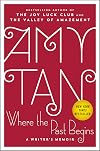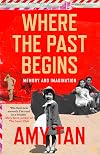
Where the Past Begins: A Writer's Memoir
by Amy Tan
On This Page
Description
"From New York Times bestselling author Amy Tan, a memoir on her life as a writer, her childhood, and the symbiotic relationship between fiction and emotional memory"--Tags
Recommendations

Member Reviews
I sought this book out after watching the gripping documentary based on it - An Unintended Memoir. Tan's unique history does more than fuel her writing - I was reminded of [[David Morrell]]'s [Lessons from a Lifetime of Writing], as he explained the therapeutic nature of his own writing experience and it bears a striking resemblance to Tan's, even though she doesn't characterize it quite that way.
A couple reviews here bemoan that the book isn't a straight memoir - just the facts, ma'am. But Tan makes it clear from the start she wasn't interested in that sort of a book. She was more interested in giving us a peek inside her head, and she does that more than most any other writer I've ever read. (A recent example of this kind of glimpse show more might be the back material of [[Chaim Potok]]'s book [The Chosen].) One section of her book actually has her transcribing a piece of music she's expanded into a fairytale; another section has her dipping into her linguistic knowledge and curiosities; and throughout, there are snippets of her journal. I felt like a tourist in a grand house, peeking into various rooms and enjoying the sights displayed.
All along, she lays out the bread crumbs of her life and history, always careful to explain how they affected her emotionally. Memory and emotion are really the thematic pillars of the book.
Anyone who considers themselves a writer would do well to read this one. show less
A couple reviews here bemoan that the book isn't a straight memoir - just the facts, ma'am. But Tan makes it clear from the start she wasn't interested in that sort of a book. She was more interested in giving us a peek inside her head, and she does that more than most any other writer I've ever read. (A recent example of this kind of glimpse show more might be the back material of [[Chaim Potok]]'s book [The Chosen].) One section of her book actually has her transcribing a piece of music she's expanded into a fairytale; another section has her dipping into her linguistic knowledge and curiosities; and throughout, there are snippets of her journal. I felt like a tourist in a grand house, peeking into various rooms and enjoying the sights displayed.
All along, she lays out the bread crumbs of her life and history, always careful to explain how they affected her emotionally. Memory and emotion are really the thematic pillars of the book.
Anyone who considers themselves a writer would do well to read this one. show less
I kept getting angry as I read the passages describing her mother's behavior during the author's childhood, until it clicked: her mother was mentally ill. Of course. Once the author explicitly named it for what it was, I began to understand. Suddenly this shifted from simply a memoir (albeit one written in a really interesting format) to a memoir about being raised by a mentally ill parent. Well then - onward.
The section containing the email exchange between the author and her editor was fun and interesting. I couldn't identify which book they were talking about, and that was good because it left me free to enjoy the behind-the-scenes look at how a book is born rather than try to reconcile the finished book with the potential variations show more they discussed.
Another highlight was the section describing the author's links to classical music, writing, and stories. It actually started out a little dull, but then the author takes the reader on a little adventure: she narrates the story that always forms in her mind's eye when she listens to one of her favorite pieces of classical music. She maps this story against the precise minute and second of the music, and this allows the reader to put her book down, pull up the specific version of the concerto on a streaming service, and then read the story set against the music that conjured it. The effect is fantastic.
And finally, there is the story of the author's grandmother, mother, and self, nestled together like Matryoshka dolls. show less
The section containing the email exchange between the author and her editor was fun and interesting. I couldn't identify which book they were talking about, and that was good because it left me free to enjoy the behind-the-scenes look at how a book is born rather than try to reconcile the finished book with the potential variations show more they discussed.
Another highlight was the section describing the author's links to classical music, writing, and stories. It actually started out a little dull, but then the author takes the reader on a little adventure: she narrates the story that always forms in her mind's eye when she listens to one of her favorite pieces of classical music. She maps this story against the precise minute and second of the music, and this allows the reader to put her book down, pull up the specific version of the concerto on a streaming service, and then read the story set against the music that conjured it. The effect is fantastic.
And finally, there is the story of the author's grandmother, mother, and self, nestled together like Matryoshka dolls. show less
I came to Amy Tan’s novels very late in her career despite having been aware of her almost from the moment that The Joy Luck Club hit the bookstores back in 1989. Even saying that “I came” to her novels is a bit misleading as, to this day, that’s the only one of her novels I’ve read – and I didn’t finally read that one until 2015. But still, Amy Tan fascinates me enough that I recently purchased a copy of her 2017 “writer’s memoir” Where the Past Begins in hardcopy and borrowed the audiobook version from the library in order to hear Tan read her own work. Let’s just say that I was not disappointed and that Tan continues to fascinate me.
Where the Past Begins: A Writer’s Memoir intimately explores the author’s show more family history, especially that of her mother. Those familiar with Tan’s novels will already be familiar with the basics of her family tree and how the family ended up in America; even those like me who have read only The Joy Luck Club will immediately recognize several of Tan’s relatives and episodes from their lives. But what they will be reading for the first time is how it really was for Tan to grow up with a mother who often used the threat of suicide to get her husband and children to do what she wanted them to do. Perhaps the most surprising thing about Where the Past Begins, however, is that Tan even decided to share the cathartic process of writing it with her readers, in the first place.
It all started for Tan when she decided to explore the contents of the seven plastic bins she kept in her office, bins containing photographs, letters, and miscellaneous memorabilia marking some of the “frozen moments in time” relating to her own past and to her family history (moments from before her own birth). During the process, she learned just how unreliable many of her childhood memories were, and she was forced to reconfigure and reassess the ones she had of her parents. Tan learned who her parents really were.
The author pulls no punches here. This is as honest a memoir as one could wish for, one in which its author reveals much about her mentally unstable mother (including one incident in which her mother came at her with a knife) and how the relationship shaped her into the writer she would became. Tan also shares frank details about her father and her two brothers and her relationship with each of them. Not awfully surprising, I suppose, she learns that her surviving brother’s memories of their childhood do not always mesh in detail or in content with those of her own. Amy Tan is figuring out here who she is and how she became that person – and she takes her readers along for the ride.
Equally intriguing and honest are the book’s segments on the writing process and how Tan works her way through it to produce her fiction. Tan is not one of those overconfident writers who can speed through the writing process with the full confidence that she will almost certainly produce something worth publishing. For her, almost the opposite seems to be the case, and it is an educational joy to read through the long email exchange she shares here between her and her trusted editor.
Bottom Line: Where the Past Begins will interest both Amy Tan admirers and general fans of the memoir genre who know relatively little about the author herself. The audiobook version of the memoir is read by the Tan (at a slow pace that can at times become a bit annoying), something else that will appeal to her already-fans. The drawback to reading this one via audiobook, however, is not being able to study the numerous family photos and documents that are available in the printed version (additions I only learned of because I have a hardcopy of the book). But whichever way you decide to experience Where the Past Begins, it is an interesting look into the life of one of this America’s most respected authors. show less
Where the Past Begins: A Writer’s Memoir intimately explores the author’s show more family history, especially that of her mother. Those familiar with Tan’s novels will already be familiar with the basics of her family tree and how the family ended up in America; even those like me who have read only The Joy Luck Club will immediately recognize several of Tan’s relatives and episodes from their lives. But what they will be reading for the first time is how it really was for Tan to grow up with a mother who often used the threat of suicide to get her husband and children to do what she wanted them to do. Perhaps the most surprising thing about Where the Past Begins, however, is that Tan even decided to share the cathartic process of writing it with her readers, in the first place.
It all started for Tan when she decided to explore the contents of the seven plastic bins she kept in her office, bins containing photographs, letters, and miscellaneous memorabilia marking some of the “frozen moments in time” relating to her own past and to her family history (moments from before her own birth). During the process, she learned just how unreliable many of her childhood memories were, and she was forced to reconfigure and reassess the ones she had of her parents. Tan learned who her parents really were.
The author pulls no punches here. This is as honest a memoir as one could wish for, one in which its author reveals much about her mentally unstable mother (including one incident in which her mother came at her with a knife) and how the relationship shaped her into the writer she would became. Tan also shares frank details about her father and her two brothers and her relationship with each of them. Not awfully surprising, I suppose, she learns that her surviving brother’s memories of their childhood do not always mesh in detail or in content with those of her own. Amy Tan is figuring out here who she is and how she became that person – and she takes her readers along for the ride.
Equally intriguing and honest are the book’s segments on the writing process and how Tan works her way through it to produce her fiction. Tan is not one of those overconfident writers who can speed through the writing process with the full confidence that she will almost certainly produce something worth publishing. For her, almost the opposite seems to be the case, and it is an educational joy to read through the long email exchange she shares here between her and her trusted editor.
Bottom Line: Where the Past Begins will interest both Amy Tan admirers and general fans of the memoir genre who know relatively little about the author herself. The audiobook version of the memoir is read by the Tan (at a slow pace that can at times become a bit annoying), something else that will appeal to her already-fans. The drawback to reading this one via audiobook, however, is not being able to study the numerous family photos and documents that are available in the printed version (additions I only learned of because I have a hardcopy of the book). But whichever way you decide to experience Where the Past Begins, it is an interesting look into the life of one of this America’s most respected authors. show less
I continue to vacillate between 3 and 5 stars on this one. It's another one of those reads that I just can't pin down. (Proust started this dilemma of indecision.)
I've been a long-time fan of Amy Tan's novels, starting with [b:The Joy Luck Club|7763|The Joy Luck Club|Amy Tan|https://images.gr-assets.com/books/1304978653s/7763.jpg|1955658], and delighting in her works ever since, so I thought this would be a natural extension of my Tan-fandom. I'm not sure that I gained much, despite enjoying this.
Sometimes, peeking behind the curtain doesn't reveal all that much. There is a sense, throughout, that Tan is withholding something, on a certain level, despite her open-book persona. She reveals many details of her life but it's as if we show more were seeing them through a veil; that is, she gives a "laundry list autobiography", without pinning much emotion to the actions. This distance created between her and the reader doesn't exist in her novels.
In her fiction, I found that Tan speaks things that are "truer than true" ... getting at the very essence of a thing: one of the best writers in modern fiction, in fact, to deal with complex mother-daughter relationships. Her memoirs, on the other hand, seem to only skim the very entangled relationship she has with her mother, creating a distance between what she knows and what she wants us to see. I'm not finding any fault in that, for it is not a writer's duty to bare the soul for the reader, but I just find it perplexing that one would write a "tell-all book" but in the end "tell only some of it".
I have an ambivalence, in any case, with autobiographies/memoirs: I don't read them all that often, because I think people often don't tell the truth in them -- and so what's the point of that? Perhaps the genre is really not for me, in the end: I find myself squirming just writing this review about how uncomfortable auto-bios make me feel, especially from writers.
This one hit a nerve in a very puzzling, complicated way: what I can seem to figure out is that I miss the Greater Truth in her novels that is somehow missing from this work.
Nonetheless, I enjoyed it on a certain level and I remain a staunch fan of her fiction.
This time, I think the expression, "It's not you, it's me" is especially apt. show less
I've been a long-time fan of Amy Tan's novels, starting with [b:The Joy Luck Club|7763|The Joy Luck Club|Amy Tan|https://images.gr-assets.com/books/1304978653s/7763.jpg|1955658], and delighting in her works ever since, so I thought this would be a natural extension of my Tan-fandom. I'm not sure that I gained much, despite enjoying this.
Sometimes, peeking behind the curtain doesn't reveal all that much. There is a sense, throughout, that Tan is withholding something, on a certain level, despite her open-book persona. She reveals many details of her life but it's as if we show more were seeing them through a veil; that is, she gives a "laundry list autobiography", without pinning much emotion to the actions. This distance created between her and the reader doesn't exist in her novels.
In her fiction, I found that Tan speaks things that are "truer than true" ... getting at the very essence of a thing: one of the best writers in modern fiction, in fact, to deal with complex mother-daughter relationships. Her memoirs, on the other hand, seem to only skim the very entangled relationship she has with her mother, creating a distance between what she knows and what she wants us to see. I'm not finding any fault in that, for it is not a writer's duty to bare the soul for the reader, but I just find it perplexing that one would write a "tell-all book" but in the end "tell only some of it".
I have an ambivalence, in any case, with autobiographies/memoirs: I don't read them all that often, because I think people often don't tell the truth in them -- and so what's the point of that? Perhaps the genre is really not for me, in the end: I find myself squirming just writing this review about how uncomfortable auto-bios make me feel, especially from writers.
This one hit a nerve in a very puzzling, complicated way: what I can seem to figure out is that I miss the Greater Truth in her novels that is somehow missing from this work.
Nonetheless, I enjoyed it on a certain level and I remain a staunch fan of her fiction.
This time, I think the expression, "It's not you, it's me" is especially apt. show less
Where The Past Begins by Amy Tan
Truly a “Writer’s Memoir” as it is a literary joy to read. I loved in the introduction, where when mentioning mementos kept & discarded, she relates “To be honest, I have discarded photos of people I would never want to be reminded of again.” .. “ people I once trusted and who did the equivalent of knocking me down to be the first in line at the ice cream truck.” How with relics of her youth that her “fingerprints overlap those I had left as a child.”
Told in vignettes of her life, entertaining tales of the early art, reading, seclusion, music and back history.
Growing up in the shadow of her older “genius” brother, with a mentally unstable mother, performance pressing father and all show more the basic insecurities of children. She suffers the early death of both her brother and father, which further sets off her mother’s exasperation at life.
There is lore ( “The Breaker of Combs” ) fascinating tidbits : that toons are set to classical music, the frontal lobe of the brain induces spontaneous creativity, what the vagus nerve is and does, tea rolling, caving (funny section), and what li hai means.
Snarky, self-deprecating in many ways, there were several laugh out loud lines. A lovely flow of words that should have been edited better (too much repetition, especially dealing with her mother’s depression and suicide attempts.) It was fun getting this backstage pass into this intelligent woman’s life and thoughts. show less
Truly a “Writer’s Memoir” as it is a literary joy to read. I loved in the introduction, where when mentioning mementos kept & discarded, she relates “To be honest, I have discarded photos of people I would never want to be reminded of again.” .. “ people I once trusted and who did the equivalent of knocking me down to be the first in line at the ice cream truck.” How with relics of her youth that her “fingerprints overlap those I had left as a child.”
Told in vignettes of her life, entertaining tales of the early art, reading, seclusion, music and back history.
Growing up in the shadow of her older “genius” brother, with a mentally unstable mother, performance pressing father and all show more the basic insecurities of children. She suffers the early death of both her brother and father, which further sets off her mother’s exasperation at life.
There is lore ( “The Breaker of Combs” ) fascinating tidbits : that toons are set to classical music, the frontal lobe of the brain induces spontaneous creativity, what the vagus nerve is and does, tea rolling, caving (funny section), and what li hai means.
Snarky, self-deprecating in many ways, there were several laugh out loud lines. A lovely flow of words that should have been edited better (too much repetition, especially dealing with her mother’s depression and suicide attempts.) It was fun getting this backstage pass into this intelligent woman’s life and thoughts. show less
A moving view into Amy Tan's store of memory and the stories she's been told and has imagined and re-imagined from their emotional hearts to explore the truth of the past. The importance of story in how we know and judge ourselves and others and the consequences of having stories imposed on us, is not so much a recurrent but a constant theme as she tells stories from her life an her parents' lives, early and late.
The only other novel by [a:Amy Tan|5246|Amy Tan|https://images.gr-assets.com/authors/1437607346p2/5246.jpg] that I've read is her most famous one: [b:The Joy Luck Club|7763|The Joy Luck Club|Amy Tan|https://images.gr-assets.com/books/1304978653s/7763.jpg|1955658] (I have read two of her children's books, [b:The Moon Lady|12558|The Moon Lady|Amy Tan|https://images.gr-assets.com/books/1388202280s/12558.jpg|1842597] and [b:Sagwa, the Chinese Siamese Cat|35958|Sagwa, the Chinese Siamese Cat|Amy Tan|https://images.gr-assets.com/books/1388361958s/35958.jpg|2188774]). While tJLC is remarkable as probably the most well-known piece of fiction in either film or literature involving Chinese Americans, I've always thought of it more as my mother's show more generation than my own. This checks out, as they are about year apart in age, but also because my mother is second generation, or in the first generation born on American soil after her parents immigrated. Unlike Tan, my mother and her sisters are very private, and I don't know much about their parents' immigration story, but I would guess there ARE stories about family that I SHOULD know, were it not for the fact that my maternal grandparents died relatively young in their sixties.
Musing on my maternal family line is relevant here, because so much of Tan's maternal history is embedded in her novels and I wasn't aware of it before. Where the Past Begins is a dreamy sort of memoir, partly due to how it arose (the original idea for a nonfiction book was emails between her and her editor, but he discarded that in favor of having Tan write 15-25 pages a week on whatever was on her mind and send it to him to maintain that informal spontaneity of casual email). The structure doesn't bother me, maybe because I flit from interest to interest with family history mysteries always simmering on my backburner. I really empathized with the sense of yearning to understand her maternal grandmother, and step into her mother's head during her difficult moments.
I'm probably going to write my mom later today (who was also reading this, or at least checked it out from her local library). show less
Musing on my maternal family line is relevant here, because so much of Tan's maternal history is embedded in her novels and I wasn't aware of it before. Where the Past Begins is a dreamy sort of memoir, partly due to how it arose (the original idea for a nonfiction book was emails between her and her editor, but he discarded that in favor of having Tan write 15-25 pages a week on whatever was on her mind and send it to him to maintain that informal spontaneity of casual email). The structure doesn't bother me, maybe because I flit from interest to interest with family history mysteries always simmering on my backburner. I really empathized with the sense of yearning to understand her maternal grandmother, and step into her mother's head during her difficult moments.
I'm probably going to write my mom later today (who was also reading this, or at least checked it out from her local library). show less
Members
- Recently Added By
Lists


Author Information

40+ Works 53,642 Members
Awards and Honors
Common Knowledge
- Canonical title
- Where the Past Begins: A Writer's Memoir
- Original title
- Where the Past Begins: A Writer's Memoir
- Original publication date
- 2017-10
- People/Characters
- Amy Tan; Peter Tan; John Tan; Daisy (Tu Chan); Tan (Tu Chuan)
- Important places
- Fresno, California, USA; Oakland, California, USA; Shanghai, China; Montreux, Vaud, Switzerland
- Epigraph
- Slipstream
[From the journal]
2012
You think you are oceans apart when it is really only a slipstream that you fell into by accident or inattention. - Dedication
- For Daniel Halpern, suddenly and finally, our book.
- First words
- In my office is a time capsule: seven large clear plastic bins safeguarding frozen moments in time, a past that began before my birth.
- Quotations
- The process of writing is the painful recovery of things that are lost.
We are all unreliable narrators when it comes to speaking for the dead.
If I cannot remember, it is as if I had not lived those days, and that my life was the barest of details I do remember.
When leaving a place, don't look back. If you do, you are back to where you started. - Last words
- (Click to show. Warning: May contain spoilers.)Eventually, I write.
- Blurbers
- Karr, Mary
- Original language
- English
Classifications
Statistics
- Members
- 520
- Popularity
- 57,290
- Reviews
- 17
- Rating
- (3.76)
- Languages
- English, Spanish
- Media
- Paper, Audiobook, Ebook
- ISBNs
- 21
- ASINs
- 4