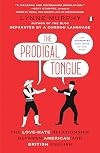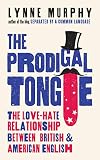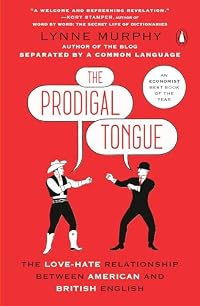
The Prodigal Tongue: The Love-Hate Relationship Between American and British English
by Lynne Murphy
On This Page
Description
"An American linguist teaching in England explores the sibling rivalry between British and American English. "If Shakespeare were alive today, he'd sound like an American." "English accents are the sexiest." "Americans have ruined the English language." "Technology means everyone will have to speak the same English." Such claims about the English language are often repeated but rarely examined. Professor Lynne Murphy is on the linguistic front line. In The Prodigal Tongue she explores the show more fiction and reality of the special relationship between British and American English. By examining the causes and symptoms of American Verbal Inferiority Complex and its flipside, British Verbal Superiority Complex, Murphy unravels the prejudices, stereotypes and insecurities that shape our attitudes to our own language. With great humo(u)r and new insights, Lynne Murphy looks at the social, political and linguistic forces that have driven American and British English in different directions: how Americans got from centre to center, why British accents are growing away from American ones, and what different things we mean when we say estate, frown, or middle class. Is anyone winning this war of the words? Will Yanks and Brits ever really understand each other?"-- show lessTags
Recommendations







Member Reviews
Linguists are a difficult lot. As a lifelong lover of English (especially written English) and a copy editor by calling and occasional profession, I'm always drawn to books about the English language, which means that I have to bear the insults that most linguists can't resist flinging toward copy editors, whom they seem to regard as the guardians of ignorance and prejudice against the way people naturally speak. In fact, editors work for employers and not for linguists, which means we're paid to put our clients in a good light by making their text clearer and more pleasing to the average reader. Unfortunately, this often includes adhering to conventions that have no basis in linguistic analysis -- as linguists will tell you at great show more length.
For whatever reason, however personable and kind the most prominent linguists may be in ordinary life, they also tend to be, well, abrasive. So you've got the pugnacity of John McWhorter, the rantish bullying of Geoffrey Pullum, and the cloying condescension of Kory Stamper, whose Twitter stream is hilarious but whose book is filled with infuriating I-bet-you-didn't-know-that asides. I'm glad to say that Lynne Murphy avoids all these flaws and has written a consistently entertaining, informative, and charming book that goes way beyond the usual list of obvious differences between North American and British English. As an American living in England with an English spouse, she's perfectly equipped not to analyze that divide from a linguistic standpoint, but from the point of view of one who continually encounters surprising differences in her daily life. So we get not just a dry list of equivalent words (the boot = the trunk, ho-hum) but some very intelligent discussions of when both cultures use the same word (such as "hot dog") to mean something very subtly different. (In America, a hot dog must include a frankfurter. In the UK, it's the roll that makes a hot dog, not the meat: it can be any kind of sausage.)
You get a discussion of the impact of lexicographers such as Samuel Johnson and Noah Webster. You get a startling sub-chapter about the completely opposed philosophies about how to teach English to college students. You get endlessly amusing stories about why British complaints about "Americanization" are ill-informed and otherwise all wet. And you get some very informed speculation about the future of the English language in the UK and around the world. Surprise: it's not likely to become "more American" after all!
All that's lacking in this book is an index of terms so that one can look up a particular phrase, whether American or British. It's a real shame, because in depth and number of examples, The Prodigal Tongue has my British/American Language Dictionary (1984) all beat. Highly, highly recommended to all lovers of English throughout the world, wherever they may read it. show less
For whatever reason, however personable and kind the most prominent linguists may be in ordinary life, they also tend to be, well, abrasive. So you've got the pugnacity of John McWhorter, the rantish bullying of Geoffrey Pullum, and the cloying condescension of Kory Stamper, whose Twitter stream is hilarious but whose book is filled with infuriating I-bet-you-didn't-know-that asides. I'm glad to say that Lynne Murphy avoids all these flaws and has written a consistently entertaining, informative, and charming book that goes way beyond the usual list of obvious differences between North American and British English. As an American living in England with an English spouse, she's perfectly equipped not to analyze that divide from a linguistic standpoint, but from the point of view of one who continually encounters surprising differences in her daily life. So we get not just a dry list of equivalent words (the boot = the trunk, ho-hum) but some very intelligent discussions of when both cultures use the same word (such as "hot dog") to mean something very subtly different. (In America, a hot dog must include a frankfurter. In the UK, it's the roll that makes a hot dog, not the meat: it can be any kind of sausage.)
You get a discussion of the impact of lexicographers such as Samuel Johnson and Noah Webster. You get a startling sub-chapter about the completely opposed philosophies about how to teach English to college students. You get endlessly amusing stories about why British complaints about "Americanization" are ill-informed and otherwise all wet. And you get some very informed speculation about the future of the English language in the UK and around the world. Surprise: it's not likely to become "more American" after all!
All that's lacking in this book is an index of terms so that one can look up a particular phrase, whether American or British. It's a real shame, because in depth and number of examples, The Prodigal Tongue has my British/American Language Dictionary (1984) all beat. Highly, highly recommended to all lovers of English throughout the world, wherever they may read it. show less
Informative without being stuffy and funny without being dismissive. I really loved Lynne Murphy's voice, it felt almost as if I was in a class with that one cool teacher. I was def surprised by the provenance of a lot of words, finding myself going "welp, that's wrong" and then remembering that I'm not a trained linguist, so maybe I don't know best pretty often. So I learned some new stuff, possibly including humility.
I must admit that I always want to spell "behavior" as "behaviour" and getting spell-checked is annoying af. I bet it's more annoying-er when it happens to British English speakers.
I must admit that I always want to spell "behavior" as "behaviour" and getting spell-checked is annoying af. I bet it's more annoying-er when it happens to British English speakers.
This goes beyond the vocabulary and spelling differences between British and American English that I was expecting. It includes slang, verb tenses, verb use with collective nouns, prototypes (such as our concepts of bacon and soup), and much more. Author Lynne Murphy cites history, politics, popular culture – the list goes on – in her explanation of how and why these differences have come about. She keeps the tone light and tosses in enough humor (or humour if you're British) to keep this from reading like a textbook. One note – I think the book version would be a better choice than the audiobook I listened to. The narrator did a good job but I found that some of the material, such as usage comparisons and spelling, was hard to show more grasp on the fly show less
(This is a British review of the British edition)
A lot of ink and paper has gone into books and articles about the differences between British and American English. A lot of hot air has gone into complaining, at least on this side of the Atlantic, about the corruption of the language of Shakespeare and Milton by the depraved. Almost invariably the result has been ill-informed and inaccurate.
Not before time comes a book that treats the subject seriously, by a writer who knows what she's talking about because she's an American professor of linguistics at a British university and furthermore has assimilated herself into British life by marrying a British man and raising a British daughter. For the last twelve years, as "Lynneguist (how show more lucky some people are whose names and occupations so readily make an apposite pun!), she's run the Separated by a Common Language blog, which isn't, she stresses, part of her day job but has provided much material for this book, along with meticulous research using the tools of the day job. The only conclusion can be that It's Never That Simple.
Those hated Americanisms, for example, turn out to have been in use in England long before Europeans arrived in America. Or they never came from America in the first place – 'train station', which gets so many British people very agitated, was in regular use in Hull when I lived there in the 1970s but I never heard it in America; my late mom-in-law, born in 1910, called it the 'depot' (pronounced DEEpo). Some words and pronunciations that appear American are still found in parts of England away from London and the south-east, because they were the standards before London fashion moved on. Can I get a coffee? As English as the fashionable coffee houses of the eighteenth century!
Is British English in danger of becoming homogenised by the insidious influence of American popular culture? Not at all, it would appear. British people, especially those most avid consumers of popular culture our teenagers (a very useful Americanism by the way), continue to be prolific at generating neologisms that baffle and delight American media, while we don't appear to absorb an American word simply to displace an exactly equivalent British word. The baby's pushchair isn't becoming a stroller any time soon. Where we do take on an American word we don't take on its precise American meaning, we take it to fill a hole, or some nuance of meaning. We've accepted 'cookie', for example, but not to apply to our own ginger nuts and chocolate digestives; thsoe are still biscuits. We took it on to cover the sort of soft baked good, almost a flat cake, that gets sold in a bag. What's shown at the Glasgow Film Theatre is still a film, but 'movies' are shown over the road at Cineworld.
Lynne's conclusion: British English is in rude health (it's particularly good at being rude, it seems) and the armchair critics should do their homework and stop being so smug. I heartily concur. show less
A lot of ink and paper has gone into books and articles about the differences between British and American English. A lot of hot air has gone into complaining, at least on this side of the Atlantic, about the corruption of the language of Shakespeare and Milton by the depraved. Almost invariably the result has been ill-informed and inaccurate.
Not before time comes a book that treats the subject seriously, by a writer who knows what she's talking about because she's an American professor of linguistics at a British university and furthermore has assimilated herself into British life by marrying a British man and raising a British daughter. For the last twelve years, as "Lynneguist (how show more lucky some people are whose names and occupations so readily make an apposite pun!), she's run the Separated by a Common Language blog, which isn't, she stresses, part of her day job but has provided much material for this book, along with meticulous research using the tools of the day job. The only conclusion can be that It's Never That Simple.
Those hated Americanisms, for example, turn out to have been in use in England long before Europeans arrived in America. Or they never came from America in the first place – 'train station', which gets so many British people very agitated, was in regular use in Hull when I lived there in the 1970s but I never heard it in America; my late mom-in-law, born in 1910, called it the 'depot' (pronounced DEEpo). Some words and pronunciations that appear American are still found in parts of England away from London and the south-east, because they were the standards before London fashion moved on. Can I get a coffee? As English as the fashionable coffee houses of the eighteenth century!
Is British English in danger of becoming homogenised by the insidious influence of American popular culture? Not at all, it would appear. British people, especially those most avid consumers of popular culture our teenagers (a very useful Americanism by the way), continue to be prolific at generating neologisms that baffle and delight American media, while we don't appear to absorb an American word simply to displace an exactly equivalent British word. The baby's pushchair isn't becoming a stroller any time soon. Where we do take on an American word we don't take on its precise American meaning, we take it to fill a hole, or some nuance of meaning. We've accepted 'cookie', for example, but not to apply to our own ginger nuts and chocolate digestives; thsoe are still biscuits. We took it on to cover the sort of soft baked good, almost a flat cake, that gets sold in a bag. What's shown at the Glasgow Film Theatre is still a film, but 'movies' are shown over the road at Cineworld.
Lynne's conclusion: British English is in rude health (it's particularly good at being rude, it seems) and the armchair critics should do their homework and stop being so smug. I heartily concur. show less
(This is a British review of the British edition)
A lot of ink and paper has gone into books and articles about the differences between British and American English. A lot of hot air has gone into complaining, at least on this side of the Atlantic, about the corruption of the language of Shakespeare and Milton by the depraved. Almost invariably the result has been ill-informed and inaccurate.
Not before time comes a book that treats the subject seriously, by a writer who knows what she's talking about because she's an American professor of linguistics at a British university and furthermore has assimilated herself into British life by marrying a British man and raising a British daughter. For the last twelve years, as "Lynneguist (how show more lucky some people are whose names and occupations so readily make an apposite pun!), she's run the Separated by a Common Language blog, which isn't, she stresses, part of her day job but has provided much material for this book, along with meticulous research using the tools of the day job. The only conclusion can be that It's Never That Simple.
Those hated Americanisms, for example, turn out to have been in use in England long before Europeans arrived in America. Or they never came from America in the first place – 'train station', which gets so many British people very agitated, was in regular use in Hull when I lived there in the 1970s but I never heard it in America; my late mom-in-law, born in 1910, called it the 'depot' (pronounced DEEpo). Some words and pronunciations that appear American are still found in parts of England away from London and the south-east, because they were the standards before London fashion moved on. Can I get a coffee? As English as the fashionable coffee houses of the eighteenth century!
Is British English in danger of becoming homogenised by the insidious influence of American popular culture? Not at all, it would appear. British people, especially those most avid consumers of popular culture our teenagers (a very useful Americanism by the way), continue to be prolific at generating neologisms that baffle and delight American media, while we don't appear to absorb an American word simply to displace an exactly equivalent British word. The baby's pushchair isn't becoming a stroller any time soon. Where we do take on an American word we don't take on its precise American meaning, we take it to fill a hole, or some nuance of meaning. We've accepted 'cookie', for example, but not to apply to our own ginger nuts and chocolate digestives; thsoe are still biscuits. We took it on to cover the sort of soft baked good, almost a flat cake, that gets sold in a bag. What's shown at the Glasgow Film Theatre is still a film, but 'movies' are shown over the road at Cineworld.
Lynne's conclusion: British English is in rude health (it's particularly good at being rude, it seems) and the armchair critics should do their homework and stop being so smug. I heartily concur. show less
A lot of ink and paper has gone into books and articles about the differences between British and American English. A lot of hot air has gone into complaining, at least on this side of the Atlantic, about the corruption of the language of Shakespeare and Milton by the depraved. Almost invariably the result has been ill-informed and inaccurate.
Not before time comes a book that treats the subject seriously, by a writer who knows what she's talking about because she's an American professor of linguistics at a British university and furthermore has assimilated herself into British life by marrying a British man and raising a British daughter. For the last twelve years, as "Lynneguist (how show more lucky some people are whose names and occupations so readily make an apposite pun!), she's run the Separated by a Common Language blog, which isn't, she stresses, part of her day job but has provided much material for this book, along with meticulous research using the tools of the day job. The only conclusion can be that It's Never That Simple.
Those hated Americanisms, for example, turn out to have been in use in England long before Europeans arrived in America. Or they never came from America in the first place – 'train station', which gets so many British people very agitated, was in regular use in Hull when I lived there in the 1970s but I never heard it in America; my late mom-in-law, born in 1910, called it the 'depot' (pronounced DEEpo). Some words and pronunciations that appear American are still found in parts of England away from London and the south-east, because they were the standards before London fashion moved on. Can I get a coffee? As English as the fashionable coffee houses of the eighteenth century!
Is British English in danger of becoming homogenised by the insidious influence of American popular culture? Not at all, it would appear. British people, especially those most avid consumers of popular culture our teenagers (a very useful Americanism by the way), continue to be prolific at generating neologisms that baffle and delight American media, while we don't appear to absorb an American word simply to displace an exactly equivalent British word. The baby's pushchair isn't becoming a stroller any time soon. Where we do take on an American word we don't take on its precise American meaning, we take it to fill a hole, or some nuance of meaning. We've accepted 'cookie', for example, but not to apply to our own ginger nuts and chocolate digestives; thsoe are still biscuits. We took it on to cover the sort of soft baked good, almost a flat cake, that gets sold in a bag. What's shown at the Glasgow Film Theatre is still a film, but 'movies' are shown over the road at Cineworld.
Lynne's conclusion: British English is in rude health (it's particularly good at being rude, it seems) and the armchair critics should do their homework and stop being so smug. I heartily concur. show less
This book is great fun, especially if you can compare notes with American and British friends. The author has a unique perspective as a linguist who is American by birth, educated in the U.S., and now lives in the U.K. with a British spouse. Of course she takes a diplomatic approach and never concedes that either American English or British English is "better than" or can "replace" the other. In fact she concludes by noting that climate change and politics rightly should be the focus of one's energies and outrage rather than how to spell "colo(u)r." Examples of accents and word usage are presented with great humor (humour?) throughout. Highly recommended.
i thoroughly enjoyed this book, underlined practically every page and will love to read it again at some point in the future. I learnt a lot about what brings American and British English together - and apart- and I learnt a lot of fallacies that exist concerning the language. It made me laugh a lot and it made me wonder! It is also written in a very nonchalant style, so even if you aren't a linguist, it will not feel like a dry read at all. It even comes with quizzes at the end!
Members
- Recently Added By
Lists

Top Five Books of 2019
387 works; 107 members

Books Read in 2023
5,547 works; 144 members
Author Information

4+ Works 352 Members
M. Lynne Murphy is Lecturer in Linguistics at the School of Cognitive and Computing Sciences, University of Sussex, with research interests in the structure of the mental lexicon, gradable adjective meaning, and psycho-social constraints on the semantic development of social group labels.
Awards and Honors
Distinctions
Common Knowledge
- Original publication date
- 2018
- People/Characters
- Benjamin Franklin; Simon Heffer; Samuel Johnson; Noah Webster
- Dedication
- For Arden,
who says tomato both ways - First words
- I
The Queen's English, Corrupted
Americans are ruining the English language. - Last words
- (Click to show. Warning: May contain spoilers.)It may be a small world, but English is a big language.
- Blurbers
- O'Conner, Patricia T.; Zimmer, Ben; McWhorter, John; Shriver, Lionel
Classifications
- Genres
- Nonfiction, General Nonfiction, History
- DDC/MDS
- 427.9 — Language English & Old English languages Historical and geographic variations, modern nongeographic variations of English Geographic variations
- LCC
- PE2808 .M87 — Language and Literature English language English Dialects. Provincialisms, etc.
- BISAC
Statistics
- Members
- 328
- Popularity
- 96,538
- Reviews
- 14
- Rating
- (4.05)
- Languages
- English
- Media
- Paper, Audiobook, Ebook
- ISBNs
- 9
- ASINs
- 4