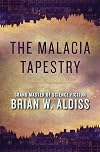
The Malacia Tapestry
by Brian W. Aldiss
On This Page
Description
In a grand medieval city where all change has been outlawed, a roguish young actor tempts fate and dinosaurs, all in the name of love By law, nothing can change in Malacia--a teeming, eternal city of dukes, players, wizards, merchants, beggars, ape-men, lizard-boys, and courtesans--but that is of no great consequence to Perian de Chirolo. An out-of-work actor and unabashed rogue, he is well satisfied with his lot as long as there's coin, eager young women to bed, and the occasional show more adventure. Perhaps it is this thrill-seeking spirit--or simply the lure of noble beauty--that makes Perian imprudently agree to take part in a mad inventor's illegal experiments, since such foolishness will never be tolerated in Malacia. But Perian's rash actions will only lead him on to further indiscretions, winning him first fame and then notoriety, causing him to be hunted, hounded, martyred, and trapped in a fight to the death with a razor-toothed Ancestral Beast on the outskirts of the city. And perhaps most frightening of all, Perian de Chirolo will find himself in love. Grand Master Brian W. Aldiss, one of science fiction's most able and ingenious creative artists, performs a truly astonishing feat of alternate-world building, immersing the reader in an unforgettable Medieval fantasy realm rich in color, incident, invention, and peril--and of course, giant lizards. Welcome to Malacia. show lessTags
Recommendations







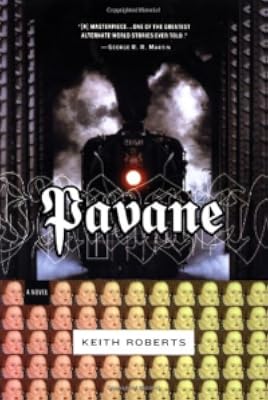
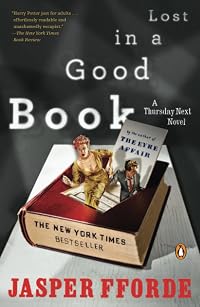
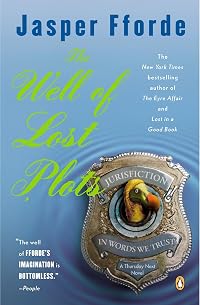


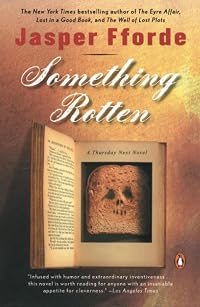












Member Recommendations
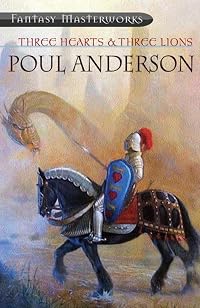
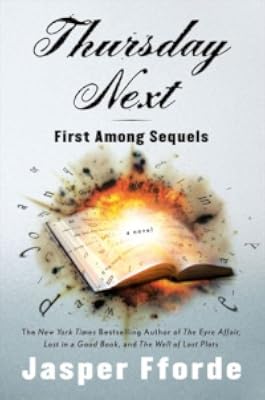
ed.pendragon Comparable works, where in one humanoid creatures inhabit another world and in the other reptilians inhabit the Adriatic coast.
Member Reviews
It's a long time since I read this and I found it a little hard to get into but it's a rather wonderful book and I suspect that further reading will reveal more. Set in an alternative reality in a City State based (I think) on Renaissance Venice, (and the etchings and paintings of Tiepolo), where mankind is co-exists with (and is descended from) ancestral beasts (dinosaurs) it tells of the romantic and political adventures of young Perian DeChirolo. However it's so much more than that, a tour de force of imagination, and with a great underlying theme of progress vs decay and how art plays out as a force for change. I won't leave it so long between re-readings in future.
One of the best sf novels I've ever read. It takes place in Malacia, a city that is an alternate 18th-century Italy where most inhabitants feel protected by their rulers' rejection of social and political change. The story follows Perian, a broke actor, as he cuts across all levels of society as part of a company that is presenting a play using a new process, mercurization, aka photography. This is sf's Candide and a neglected classic. If that isn't enough for you, there is also a dinosaur hunt.
Perian de Chirolo, a rogue actor in the eternally unchanging, decadent Renaissance-style city of Malacia, where a magical curse forbids change; Perian seeks status by wooing a rich merchant's daughter, but gets entangled in illegal experiments by a progressive inventor, forcing him to confront the city's stagnant system, his own shallow desires, and the blurring lines between his life, theatre, and reality, ultimately becoming a pawn in a larger struggle for change against the oppressive Supreme Council.
Baroque fiction from a science fiction master. My favourite from one of the most literate of the genre writers. The almost grandiloquent prose suits the story of the roguish Perian as he attempts to wend his way up the social ladder of Malacian Society. But it is the magical and timeless city of Malacia, so affectionately detailed and so wonderfully imagined, where Aldiss' writing shines. It is beautifully written.
The Malacia Tapestry can be read as social commentary, but it stands as minor masterpiece solely on the strength of the prose.
The Malacia Tapestry can be read as social commentary, but it stands as minor masterpiece solely on the strength of the prose.
This was a rather strange read. It's ostensibly a fantasy, but reads like a romance (one of those rare from-the-perspective-of-the-callow-youth romances, the pining swain all moody for his unobtainable woman). It happens to be set in an environment that we recognize as fantastic by its dissimilarity to actual places (a vaguely Venetian baroque setting, some unusual fauna, a race of winged-people, and an unusual interlude later on). But until about 2/3 of the way through, the fantastic elements are just window-dressing and the plot could With Great Ease be told as an episode of, say, Gossip Girl.
And I'd prefer if the plots of my fantasies had some aspect that necessitated their being a fantasy, otherwise it seems kind of pointless. Take show more Harry Potter, remove all the magic, just leave the bits about who he'll ask to the dance, etc., and it's not the same experience!
The writing is often beautiful, so a star for that, but I'm not sure I was able to appreciate what the writer was trying to accomplish here. Much was made (not in the way of plot, but as background) of the fact that in this fantasy world humans were descended from dinosaurs, essentially, who still exist and are plentiful, but this fact had no effect on anything. I'm puzzled.
(And eventual the book builds up to a stunningly unsurprising reveal which I can only imagine the author intended to be stunningly unsurprising, because it's that obvious.)
(Note: 5 stars = rare and amazing, 4 = quite good book, 3 = a decent read, 2 = disappointing, 1 = awful, just awful. There are a lot of 4s and 3s in the world!) show less
And I'd prefer if the plots of my fantasies had some aspect that necessitated their being a fantasy, otherwise it seems kind of pointless. Take show more Harry Potter, remove all the magic, just leave the bits about who he'll ask to the dance, etc., and it's not the same experience!
The writing is often beautiful, so a star for that, but I'm not sure I was able to appreciate what the writer was trying to accomplish here. Much was made (not in the way of plot, but as background) of the fact that in this fantasy world humans were descended from dinosaurs, essentially, who still exist and are plentiful, but this fact had no effect on anything. I'm puzzled.
(And eventual the book builds up to a stunningly unsurprising reveal which I can only imagine the author intended to be stunningly unsurprising, because it's that obvious.)
(Note: 5 stars = rare and amazing, 4 = quite good book, 3 = a decent read, 2 = disappointing, 1 = awful, just awful. There are a lot of 4s and 3s in the world!) show less
All the fine things others have said about this tale are true, and it makes excellent reading on several levels. But the true philosophical sting in the tail comes in the superficially light banter of the protagonists at the very end of the tale, which leave the thoughtful reader pondering time and timelessness.
Perhaps his finest novel. This picaresque is on of the finest fantasies I've read, even though Aldiss is better known for his SF.
Members
- Recently Added By
Lists

David Pringle's Modern Fantasy: The 100 Best Novels
100 works; 5 members
Author Information

572+ Works 27,539 Members
Brian W. Aldiss was born in Dereham, United Kingdom on August 18, 1925. In 1943, he joined the Royal Signals regiment, and saw action in Burma. After World War II, he worked as a bookseller at Oxford University. His first book, The Brightfount Diaries, was published in 1955. His first science fiction novel, Non-Stop (Starship in the United show more States), was published in 1958. He wrote more than 80 books including Hothouse, Greybeard, The Helliconia Trilogy, The Squire Quartet, Frankenstein Unbound, The Malacia Tapestry, Walcot, and Mortal Morning. His short story Super-Toys Last All Summer Long was the basis for the film A.I. Artificial Intelligence. He has received numerous awards for his work including two Hugo Awards, the Nebula Award, the John W. Campbell Memorial Award, and an OBE for services to literature. He was also an anthologist and an artist. He was the editor of 40 anthologies including Introducing SF, The Penguin Science Fiction Omnibus, Space Opera, Space Odysseys, Galactic Empires, Evil Earths, and Perilous Planets. He was an abstract artist and his first solo exhibition, The Other Hemisphere, was held in Oxford in August-September 2010. He died on August 19, 2017 at the age of 92. (Bowker Author Biography) show less
Some Editions
Awards and Honors
Notable Lists
Series
Belongs to Publisher Series
Common Knowledge
- Canonical title
- The Malacia Tapestry
- Original title
- The Malacia Tapestry
- Original publication date
- 1976
- Epigraph
- You sing of the old gods easily
In the days when you are young,
When love and trust seem not at odds;
But I know there are gods behind the gods,
Gods that are best unsung.
K. G. St Chentero
(XVI Mil.) - Dedication
- For Margaret
time under glass
dawn, and pollen clouds
crossing green ocean
you are my dream
green dream of existence
frail but enduring - First words
- Smoke was drifting through my high window, obscuring the light.
- Last words
- (Click to show. Warning: May contain spoilers.)I tucked my arm around her and fell asleep.
- Blurbers
- Korn, Eric; Bourke, Barbara; Quigly, Isabel
- Original language*
- Englisch
*Some information comes from Common Knowledge in other languages. Click "Edit" for more information.
Classifications
Statistics
- Members
- 595
- Popularity
- 49,522
- Reviews
- 10
- Rating
- (3.56)
- Languages
- 7 — Czech, English, German, Japanese, Polish, Portuguese, Spanish
- Media
- Paper, Audiobook, Ebook
- ISBNs
- 23
- ASINs
- 14