On This Page
Description
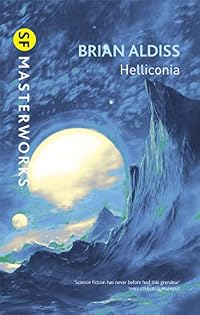
From a Science Fiction Grand Master: The sweeping epic of a planet veering from one extreme atmosphere to another—and the humans trying to survive on it.Helliconia Spring introduces us to a tumultuous world that follows an eccentric orbit around a double-star system—and the satellite from Earth secretly monitoring it. Hugo and Nebula Award–winning author Brian W. Aldiss then explores the social and religious divisions keeping the planet's population in conflict even as they're show more devastated by plague in Helliconia Summer, and concludes the trilogy with Helliconia Winter, which recounts both the threat of a looming, frigid age of decay and the hope of a new future.
The Helliconia Trilogy is both a riveting story and a thought-provoking examination of how our destinies are shaped by the environment around us. Aldiss's study of fields from astronomy to climatology to geobiology endow all three novels with rich details of the planet Helliconia.
This riveting, century-spanning saga is a timely exploration of what climate change can mean for our own planet. "Brian Aldiss's towering imagination places his Helliconia Trilogy far above standard science fiction" (Daily Mail).
. show less
Tags
Recommendations














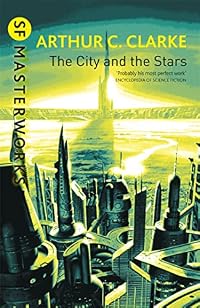
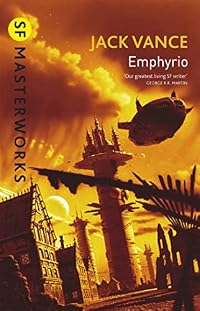

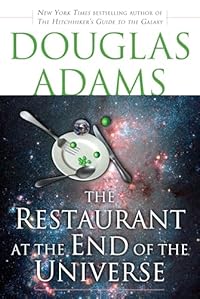
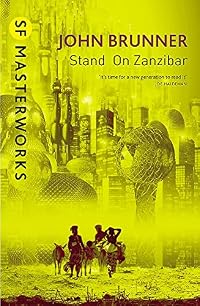


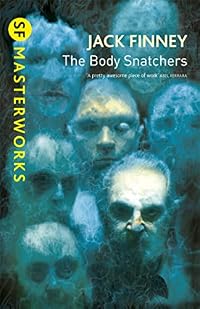

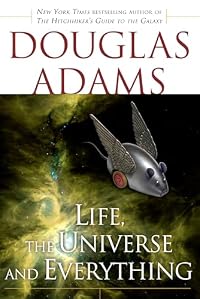
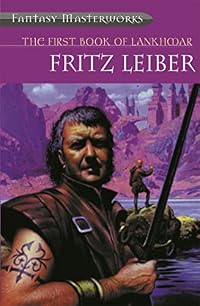


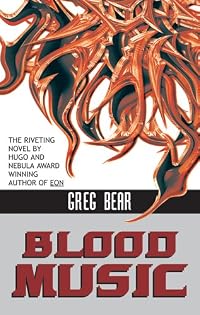
Member Recommendations
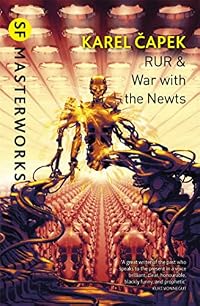
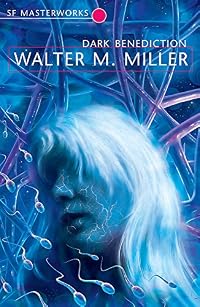
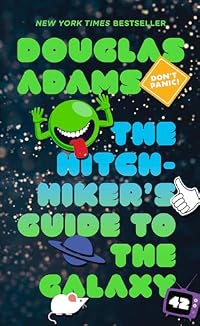
ed.pendragon Well thought-through planetary romance recreating an alien ecosystem.

ed.pendragon Comparable works, where in one humanoid creatures inhabit another world and in the other reptilian humans inhabit the Adriatic coast.
Member Reviews
An astonishing trilogy, best read, I suspect, in one big 1,000-plus paged lump as presented here. Helliconia is a formidable work. The timescale is vast, the themes are difficult, the human dramas, though full of intrigue and passion, battles and spectacle, are unashamedly literary in the demands placed on the reader. The trilogy, in fact, expects full intellectual and emotional engagement in order to fully appreciate the scale and complexity of Aldiss' achievement.
Helliconia is a planet with two suns and two years. The shorter years are over four hundred days long. The greater year takes milllenia. At one end of the great year the planet is shrouded in extreme cold, at the other in extreme heat. Civilisations rise and fall over the show more course of the year, only for the survivors to come forth again in the Spring and start all over again. Helliconia is an epic of climate change.
Vying for supremacy on the planet are two species, the phagor, who dominate in the cold time, and humans who dominate in the warmth. The two are profoundly hostile to each other, and yet fundamentally linked in the struggle to survive. Overhead is a research station from Earth, the Avernus, cataloguing and recording and transmitting its findings home.
Life persists, in abundant forms and varieties, though the processes are cruel and profligate with individuals, but the books chart the stories of individuals as they struggle with their strange world, trying to understand it or shape it or control it, often with plenty of cruelty of their own. Can the cycle be broken? Can memory and civilisation persist, and if so at what price?
The worlbuilding's the thing here. Designed, envisioned and delineated with great care and detail, Helliconia is alive on the page, but though marvelous and splendid and strange, it's more than a simple vehicle for escapist fantasy. It's a world in some ways even more circumscribed than our own, partly because of the strictures of the environment and partly because of humanity itself. It's a big, broad, shambling masterpiece. Every human is flawed, every venture doomed and the vast natural processes designed to preserve life are merciless and inscrutable, yet ultimately Aldiss unifies these elements into a vision of universal empathy in which intelligent life must adapt to to the natural vehicles that keep it alive. show less
Helliconia is a planet with two suns and two years. The shorter years are over four hundred days long. The greater year takes milllenia. At one end of the great year the planet is shrouded in extreme cold, at the other in extreme heat. Civilisations rise and fall over the show more course of the year, only for the survivors to come forth again in the Spring and start all over again. Helliconia is an epic of climate change.
Vying for supremacy on the planet are two species, the phagor, who dominate in the cold time, and humans who dominate in the warmth. The two are profoundly hostile to each other, and yet fundamentally linked in the struggle to survive. Overhead is a research station from Earth, the Avernus, cataloguing and recording and transmitting its findings home.
Life persists, in abundant forms and varieties, though the processes are cruel and profligate with individuals, but the books chart the stories of individuals as they struggle with their strange world, trying to understand it or shape it or control it, often with plenty of cruelty of their own. Can the cycle be broken? Can memory and civilisation persist, and if so at what price?
The worlbuilding's the thing here. Designed, envisioned and delineated with great care and detail, Helliconia is alive on the page, but though marvelous and splendid and strange, it's more than a simple vehicle for escapist fantasy. It's a world in some ways even more circumscribed than our own, partly because of the strictures of the environment and partly because of humanity itself. It's a big, broad, shambling masterpiece. Every human is flawed, every venture doomed and the vast natural processes designed to preserve life are merciless and inscrutable, yet ultimately Aldiss unifies these elements into a vision of universal empathy in which intelligent life must adapt to to the natural vehicles that keep it alive. show less
http://nwhyte.livejournal.com/2583651.html
Brian Aldiss is one of my favourite writers, and the Helliconia trilogy is one of his core works: three novels set centuries apart on Helliconia, a planet whose orbit brings it from freezing winter to hot summer over the centuries, and whose two major races (humans and horned furry Pharos) are under constant observation from Earth. Aldiss himself promoted it at the time as a major breakthrough, and I think it was - for him, as it was his first really long fiction, and for the genre, in that he caught the wave of Gaia-style ecology but managed to wear his (extensive) research pretty lightly while hanging interesting stories on the context.
Reading Helliconia Spring when it first came out in 1982, show more when I was 15, was tremendously exciting. I last reread it, along with the other two, on holiday in Croatia in 1996, I think. I'm glad to say that it pretty much stands the test of time. It is in two parts, the first being the short tale of Yuli, who escapes the (vividly drawn) theocratic underground city of Pannoval (I was sorry that we saw no more of it) to bring new expertise to the town which becomes known as Oldorando, and the second, many generations later, being the story of how the people of Oldorando adapt to the coming of Spring. We readers are told what is going on in terms of climate change, but the characters are in the situation of their world gradually (and sometimes suddenly) changing out of all recognition.
Helliconia Spring popped up on my reading list again thanks to having won the BSFA Award in 1983 (beating a pretty tough field: Little, Big, Nebula-winning No Enemy But Time, Philip K. Dick's The Divine Invasion and Gene Wolfe's The Sword of the Lictor; the Hugo that year went to Foundation's Edge). It also won the Campbell Memorial Award (again beating No Enemy But Time).
Helliconia Summer also still worked for me - the twist here is that the Earth observation satellite sends a volunteer from its crew to the surface of Helliconia, where he knows he will not survive long due to a lack of immunity from local diseases, but gets very much mixed up in a complex dynastic / political / gendered dispute among local rulers. Aldiss plays the theme of technologically advanced individual failing to impress a much more medieval civilisation very nicely. It didn't win any awards, the BSFA going that year to Tik-Tok.
On the other hand, Helliconia Winter didn't work for me anything like as well as the first two. I found the plot meandering, the gender politics pretty unpleasant, and the Earth observation sections taken in unwelcome and not very interesting directions. I may be in a minority; it also won the BSFA award, though I must say I have not heard of three of its four opponents - Free Live Free by Gene Wolfe, Kiteworld by Keith Roberts and The Warrior Who Carried Life, by Geoff Ryman, though of course I know other work by all three authors. The other BSFA nominee that year was The Anubis Gates, by Tim Powers, which I read and loved when it came out. The Hugo and Nebula that year both went to Startide Rising. None of the BSFA shortlist was on either the Hugo or Nebula ballots. show less
Brian Aldiss is one of my favourite writers, and the Helliconia trilogy is one of his core works: three novels set centuries apart on Helliconia, a planet whose orbit brings it from freezing winter to hot summer over the centuries, and whose two major races (humans and horned furry Pharos) are under constant observation from Earth. Aldiss himself promoted it at the time as a major breakthrough, and I think it was - for him, as it was his first really long fiction, and for the genre, in that he caught the wave of Gaia-style ecology but managed to wear his (extensive) research pretty lightly while hanging interesting stories on the context.
Reading Helliconia Spring when it first came out in 1982, show more when I was 15, was tremendously exciting. I last reread it, along with the other two, on holiday in Croatia in 1996, I think. I'm glad to say that it pretty much stands the test of time. It is in two parts, the first being the short tale of Yuli, who escapes the (vividly drawn) theocratic underground city of Pannoval (I was sorry that we saw no more of it) to bring new expertise to the town which becomes known as Oldorando, and the second, many generations later, being the story of how the people of Oldorando adapt to the coming of Spring. We readers are told what is going on in terms of climate change, but the characters are in the situation of their world gradually (and sometimes suddenly) changing out of all recognition.
Helliconia Spring popped up on my reading list again thanks to having won the BSFA Award in 1983 (beating a pretty tough field: Little, Big, Nebula-winning No Enemy But Time, Philip K. Dick's The Divine Invasion and Gene Wolfe's The Sword of the Lictor; the Hugo that year went to Foundation's Edge). It also won the Campbell Memorial Award (again beating No Enemy But Time).
Helliconia Summer also still worked for me - the twist here is that the Earth observation satellite sends a volunteer from its crew to the surface of Helliconia, where he knows he will not survive long due to a lack of immunity from local diseases, but gets very much mixed up in a complex dynastic / political / gendered dispute among local rulers. Aldiss plays the theme of technologically advanced individual failing to impress a much more medieval civilisation very nicely. It didn't win any awards, the BSFA going that year to Tik-Tok.
On the other hand, Helliconia Winter didn't work for me anything like as well as the first two. I found the plot meandering, the gender politics pretty unpleasant, and the Earth observation sections taken in unwelcome and not very interesting directions. I may be in a minority; it also won the BSFA award, though I must say I have not heard of three of its four opponents - Free Live Free by Gene Wolfe, Kiteworld by Keith Roberts and The Warrior Who Carried Life, by Geoff Ryman, though of course I know other work by all three authors. The other BSFA nominee that year was The Anubis Gates, by Tim Powers, which I read and loved when it came out. The Hugo and Nebula that year both went to Startide Rising. None of the BSFA shortlist was on either the Hugo or Nebula ballots. show less
Helliconia is long.
That was going to be the entirety of my review, but having read all the others from one to five stars, I feel that I should add something that has - unaccountably - been neglected by every single one: amongst the epic world building, the poignant pointed stories of human struggle, the parallel histories of three worlds rising, falling and sprawling together across the millennia, and the philosophical musings that improbably hold the whole thing together, Aldiss found the creative and narrative wherewithal to drop in a spaceship overrun by giant, carnivorous, genetically-modified, genitalia. For this alone, Helliconia is worth reading.
That was going to be the entirety of my review, but having read all the others from one to five stars, I feel that I should add something that has - unaccountably - been neglected by every single one: amongst the epic world building, the poignant pointed stories of human struggle, the parallel histories of three worlds rising, falling and sprawling together across the millennia, and the philosophical musings that improbably hold the whole thing together, Aldiss found the creative and narrative wherewithal to drop in a spaceship overrun by giant, carnivorous, genetically-modified, genitalia. For this alone, Helliconia is worth reading.
The Helliconian trilogy is a multi-layered composition, as long and as rich as The Lord of the Rings, as colourful as a medieval tapestry and as polemical as an eco-warrior's handbook. Aldiss is a prolific author in various genres, not just in science fiction; but SF at its best can itself include a great many genres, and this trilogy therefore has aspects of romance, epic, fantasy, prose poetry and science writing all flourishing in symbiosis with each other. And, like any great narrative, it is not only a great page-turner but has you caring about its characters.
Helliconia is a planet many light-years away being monitored by a manned observation station called the Avernus; perhaps significantly, the station is named after an Italian show more crater famed for its noxious fumes and reputed in classical times to be an entrance to the Ancient Roman Underworld, and Aldiss has borrowed the word for his own publishing imprint. Contrary to current non-interventionist ethics the Avernus can and does occasionally send down one of its inhabitants on a one-way trip to the surface of the planet; here the individual interacts briefly with the human Helliconians before succumbing to a breakdown in their own immune system. However, the Helliconian humans are largely unaware and unaffected by scientific considerations beyond their limited lives (rather like terrestrial humans in this regard), relying on religious beliefs and institutions to provide the philosophic and practical frameworks to their lives; the trilogy is in fact a thinly-veiled critique of institutionalised religions as well as superstition.
The frameworks are necessary to cope with the environments the Helliconians are part of, environments that bring changes in matters of climate, dominant species and fundamental human conditions. Aldiss explores ethical matters such as the misuse of political power, irrational beliefs, gender issues and the health of eco-systems abused by human rapaciousness, and all this can give pause for thought to those who are sensitive to such issues. But while this is a scientific romance we are also aware that within its narrative threads the trilogy holds up a mirror to our own experiences, cultures and passions: for me, for example, Spring, in two phases, is a story combining quest themes with re-births; Summer is a Shakespearian comedy with echoes of A Winter's Tale (though Aldiss claims re-reading A Midsummer Night's Dream was his preparation before writing the second novel); and Helliconia Winter has almost as broad a canvas as War and Peace.
Constantly punctuating the text are images of circularity (the Avernus, the Great Wheel of Kharnabhar, the glyph carved on the mysterious standing stones) and of the measurement of time (the hourly geyser of Oldorando, the timepiece of the Avernian traveller Billy Xiao Pin, Odim's beautiful clock), echoing the underlying cyclic nature of Aldiss' vast creation. Re-reading the three volumes a quarter of a century later I remain struck not only by the abiding and powerful images of weather and landscape but also by the captivating stories of the fragile and yet very human aliens of that world. It is a world I may yet re-visit in another quarter-century, or even sooner.
Helliconia is not an unqualified success, however. The broad-brush sweep of Earth's future in the third novel, for example, is a bit simplistic and preachy in its Lovelockian message and sits awkwardly as a counterpoint to the minutiae of individual Helliconian lives. In addition, the flashback device in the second novel and the rapid spring thaw combined with accelerating cultural innovations of the first novel either distort or telescope the chronology of the narratives. But these are minor flaws in the grand sheme of things, and Helliconia (the name of the planet, as well as appearing as Helicon in Asimov's Foundation series, may have been inspired by the fact that springs sacred to the Muses were located on Mount Helicon) remains one of those works one feels the better for having read. This one-volume edition, first published in 1996, includes introductions, appendices and a map by Margaret Aldiss. show less
Helliconia is a planet many light-years away being monitored by a manned observation station called the Avernus; perhaps significantly, the station is named after an Italian show more crater famed for its noxious fumes and reputed in classical times to be an entrance to the Ancient Roman Underworld, and Aldiss has borrowed the word for his own publishing imprint. Contrary to current non-interventionist ethics the Avernus can and does occasionally send down one of its inhabitants on a one-way trip to the surface of the planet; here the individual interacts briefly with the human Helliconians before succumbing to a breakdown in their own immune system. However, the Helliconian humans are largely unaware and unaffected by scientific considerations beyond their limited lives (rather like terrestrial humans in this regard), relying on religious beliefs and institutions to provide the philosophic and practical frameworks to their lives; the trilogy is in fact a thinly-veiled critique of institutionalised religions as well as superstition.
The frameworks are necessary to cope with the environments the Helliconians are part of, environments that bring changes in matters of climate, dominant species and fundamental human conditions. Aldiss explores ethical matters such as the misuse of political power, irrational beliefs, gender issues and the health of eco-systems abused by human rapaciousness, and all this can give pause for thought to those who are sensitive to such issues. But while this is a scientific romance we are also aware that within its narrative threads the trilogy holds up a mirror to our own experiences, cultures and passions: for me, for example, Spring, in two phases, is a story combining quest themes with re-births; Summer is a Shakespearian comedy with echoes of A Winter's Tale (though Aldiss claims re-reading A Midsummer Night's Dream was his preparation before writing the second novel); and Helliconia Winter has almost as broad a canvas as War and Peace.
Constantly punctuating the text are images of circularity (the Avernus, the Great Wheel of Kharnabhar, the glyph carved on the mysterious standing stones) and of the measurement of time (the hourly geyser of Oldorando, the timepiece of the Avernian traveller Billy Xiao Pin, Odim's beautiful clock), echoing the underlying cyclic nature of Aldiss' vast creation. Re-reading the three volumes a quarter of a century later I remain struck not only by the abiding and powerful images of weather and landscape but also by the captivating stories of the fragile and yet very human aliens of that world. It is a world I may yet re-visit in another quarter-century, or even sooner.
Helliconia is not an unqualified success, however. The broad-brush sweep of Earth's future in the third novel, for example, is a bit simplistic and preachy in its Lovelockian message and sits awkwardly as a counterpoint to the minutiae of individual Helliconian lives. In addition, the flashback device in the second novel and the rapid spring thaw combined with accelerating cultural innovations of the first novel either distort or telescope the chronology of the narratives. But these are minor flaws in the grand sheme of things, and Helliconia (the name of the planet, as well as appearing as Helicon in Asimov's Foundation series, may have been inspired by the fact that springs sacred to the Muses were located on Mount Helicon) remains one of those works one feels the better for having read. This one-volume edition, first published in 1996, includes introductions, appendices and a map by Margaret Aldiss. show less
I read this on-and-off for 5 years and only got 500 pages in. So I've decided to move it from "paused" to "unfinished" as I wont be coming back to it. There are some interesting ideas in the world building and I wanted to like it, but the characters just aren't very interesting and the plotting is glacially slow - maybe that's the point. I'm done.
Helliconia: Spring
Because approx 20-25 years ago I`ve read the hungarian translation of this book, which was literally unreadable, I was worried a bit when I started to read the original but after a few pages I`ve realized that it`s called one of the pinnacles of the SF literature for a reason. Great, detailed, original world, epic storyline, great characters.... genius! And now, let`s start the second volume.
:)
4.5 stars
Helliconia: Summer
I have to tell, I liked the second book of the trilogy a bit less than the previous one. The ‘summer ‘ story is basically a bit overwritten story of a medieval kingdom full with politics and intrigue. The only thing which elevates the book highly above the average is the description of this unique show more world in high details.
4/5
Helliconia: Winter
The third book of the trilogy (like the first one),is one of the pinnacles of the SF literature. The story about the world preparing for a long winter uniquely genius and entertaining. My only criticism (and it’s true to the whole trilogy) is about the storyline about the Earth and it’s satellite which adding nothing to the whole and the ‘Gaia’ mysticism getting stronger at the end of the third volume for me was simply irritating and damaged the quality of the trilogy.
4.5/5 show less
Because approx 20-25 years ago I`ve read the hungarian translation of this book, which was literally unreadable, I was worried a bit when I started to read the original but after a few pages I`ve realized that it`s called one of the pinnacles of the SF literature for a reason. Great, detailed, original world, epic storyline, great characters.... genius! And now, let`s start the second volume.
:)
4.5 stars
Helliconia: Summer
I have to tell, I liked the second book of the trilogy a bit less than the previous one. The ‘summer ‘ story is basically a bit overwritten story of a medieval kingdom full with politics and intrigue. The only thing which elevates the book highly above the average is the description of this unique show more world in high details.
4/5
Helliconia: Winter
The third book of the trilogy (like the first one),is one of the pinnacles of the SF literature. The story about the world preparing for a long winter uniquely genius and entertaining. My only criticism (and it’s true to the whole trilogy) is about the storyline about the Earth and it’s satellite which adding nothing to the whole and the ‘Gaia’ mysticism getting stronger at the end of the third volume for me was simply irritating and damaged the quality of the trilogy.
4.5/5 show less
Good and interesting read though I did find the antics on the orbital spaceship did start to get a little trippy.
Members
- Recently Added By
Lists

S.F. Masterworks (Complete)
229 works; 15 members

SF Masterworks
193 works; 8 members

Survey of Classic Science Fiction
171 works; 47 members
Talk Discussions
Past Discussions
Trilogy? Parasite/global weather changes cause humans to revert to caveman status every few 1000 yrs in Name that Book (December 2013)
Author Information

563+ Works 27,391 Members
Brian W. Aldiss was born in Dereham, United Kingdom on August 18, 1925. In 1943, he joined the Royal Signals regiment, and saw action in Burma. After World War II, he worked as a bookseller at Oxford University. His first book, The Brightfount Diaries, was published in 1955. His first science fiction novel, Non-Stop (Starship in the United show more States), was published in 1958. He wrote more than 80 books including Hothouse, Greybeard, The Helliconia Trilogy, The Squire Quartet, Frankenstein Unbound, The Malacia Tapestry, Walcot, and Mortal Morning. His short story Super-Toys Last All Summer Long was the basis for the film A.I. Artificial Intelligence. He has received numerous awards for his work including two Hugo Awards, the Nebula Award, the John W. Campbell Memorial Award, and an OBE for services to literature. He was also an anthologist and an artist. He was the editor of 40 anthologies including Introducing SF, The Penguin Science Fiction Omnibus, Space Opera, Space Odysseys, Galactic Empires, Evil Earths, and Perilous Planets. He was an abstract artist and his first solo exhibition, The Other Hemisphere, was held in Oxford in August-September 2010. He died on August 19, 2017 at the age of 92. (Bowker Author Biography) show less
Awards and Honors
Notable Lists
Series

Belongs to Publisher Series
SF Masterworks (New design)
Work Relationships
Contains
Common Knowledge
- Canonical title
- Helliconia
- Alternate titles
- The Helliconia Trilogy
- Original publication date
- 1996-07; 1982-85
- People/Characters*
- fagor; ansipitaali
*Some information comes from Common Knowledge in other languages. Click "Edit" for more information.
Classifications
Statistics
- Members
- 373
- Popularity
- 83,737
- Reviews
- 8
- Rating
- (3.44)
- Languages
- Dutch, English
- Media
- Paper, Ebook
- ISBNs
- 6
- ASINs
- 5