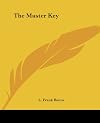
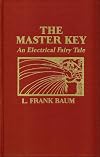
The Master Key
by L. Frank Baum
On This Page
Description
Though he is best remembered as the creator of The Wonderful Wizard of Oz and the subsequent series of Oz novels, L. Frank Baum's prolific imagination led him to pen many other tales, as well. The Master Key, which takes the form of a fairy tale or fable that happens to be set in the early twentieth century, follows teenage protagonist Rob Joslyn, an avid experimenter who accidentally summons a strange (but largely benign) demon while working with electricity.Tags
Recommendations










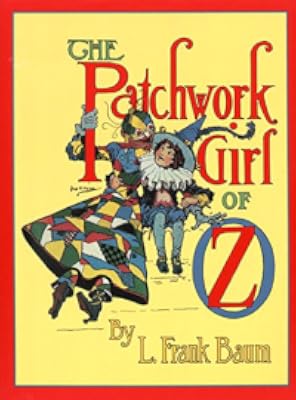
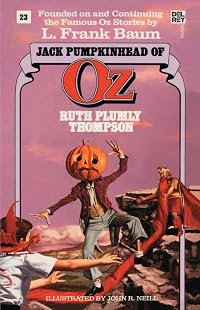


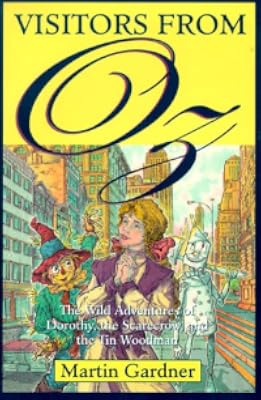
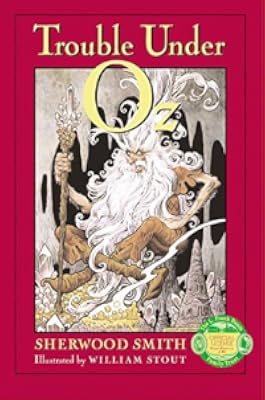



Member Recommendations

Member Reviews
A rather silly story - very much in fairy tale style (as he says in the subtitle). A boy accidentally summons the Demon (more Daemon) of Electricity, who gives him powerful gifts that are based on electricity...unsurprisingly, the boy goes wandering around (around the world), messes up frequently and comes very close to being killed several times, and stranded somewhere even more often. He's supposed to be showing his marvelous gifts to scientists in order to excite their curiosity and make them want to recreate the gadgets; somehow, every time he talks to someone who's actually interested in the gadgets rather than in what they can do or show, the person is evil and wants to steal the gifts. Every time. And one of the gifts would let show more him _see_ what their character was, and - every time - he checks only _after_ he's shown off his gifts. Three times at least. Sheesh. The boy is - well, a boy. Young teen at most, probably pre-teen, and as careless and unthinking as is normal for that age. The stories are mildly racist - he runs into serious problems with "savage natives" and "evil-faced" Arab warriors. On the other hand, it's definitely not "white men are good and heroic"; the time he comes closest to dying is because of a white man trying to steal his gadgets. He finally decides that the problem is that mankind as a whole are not yet ready for these gifts, and convinces the Demon to take them back and go away and wait until humans are ready to manage these things well. The conclusion isn't bad - it's better than either of the obvious options - but it's also a bit of a copout. Overall - eh. Not sorry I read it but I doubt I'll ever bother to reread. show less
The Master Key is an odd story-- some people claim that it's early science fiction, but it's not, really, it's exactly what the title might imply: fantasy with the trappings of science. It's about a boy named Rob who accidentally summons the Demon of Electricity, a genie who grants him three electrical devices a week for three weeks. These include a flying machine, a stun gun, food pills, a device that let's him see anything in the world at any time, and the Character Marker, a device that (quite impressively) reads the electrical fields of the body to see if a person is Good, Evil, Wise, Foolish, Kind, or Clever. Rob has a lot of zany adventures with these, of course, which range from fun (his foiling of coups in England and France) to show more tedious (his capture by the Turks) to fantastically racist (his encounter with a group of African cannibals). But the end of the book is deflating-- Baum's point was that humanity was not ready for the fantastic progress that the Demon brings, and Rob decides to return all the devices to the Demon. It's a good point... but not necessarily enjoyable reading. Rob becomes increasingly disillusioned with his devices as the story goes on, and so does the reader. But this perhaps makes it a piece of sf after all: in the venerable tradition of Frankenstein, it's a rumination on scientific progress and the costs and dangers it brings.
added December 2022:
Unlike all of Baum's other fantasies, this is not what Farah Mendelsohn would call a portal-quest fantasy, but an intrusion fantasy: the protagonist does not travel through a magical world, but instead, magic intrudes into our world. A boy named Rob accidentally assembles a complicated electrical circuit that strikes the "master key," summoning the Demon of Electricity, who grants him three electrical devices a week for three weeks, which he's supposed to use to reveal the powers of electricity to the world. One of them is a machine that uses electrical currents to let him fly, and so Rob makes a couple journeys around the Earth, and gets into various shenanigans and dangers.
As a result, it's Baum's only fantasy novel that actually does not link into the Oz expanded universe (though the Demon of Electricity here has some ideas in common with Electra, the maiden of electric light, in Tik-Tok of Oz). While reading all the other non-Oz Baum books aloud to my three-year-old, I've very carefully emphasized their links to Oz, which is usually easy to do if the countries in question appear on the International Wizard of Oz Club map of the Oz continent, or if the characters have appeared in the Oz books. But here there is actually no such link.
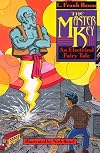
On top of this, one of the places Rob visits is an island of cannibals off the coast of Africa. My edition is a reillustrated Books of Wonder one from the 1990s, and thus not visually offensive (Nick Bruel draws the cannibals like comedy cavemen, and gives them fair skin), but still the text is unaltered.
So I decided to solve two problems at once: I changed the island into a magical one "near Regos and Coregos in the Nonestic Ocean" (causing my son to excitedly exclaim, "I know that place!"), and the islanders into magical creatures that eat humans.
Still, this is just a small incident of a couple chapters in a much longer book, and as we were nearing its end, my son asked when Rob was going to "visit a country near Oz," and seemed unsatisfied when I pointed out he already had. I don't think he found Rob's real-world adventures very compelling: foiling monarchist plots in republican France by giving secret information to the president just isn't the thing to spark the enthusiasm of a three-year-old boy in the year 2022.
Overall, in fact, it's a pretty downbeat book, and it has the purposeless that's common in many of Baum's early non-Oz fantasies, like Enchanted Island of Yew. Rob has no real reason to go adventuring, and most of his problems are self-inflicted; a multi-chapter incident where he ended up involved in a Turk/Tatar battle in the city of Yarkand (in western China) would not have happened if he hadn't made the mistake of falling asleep in the open and consequently getting robbed.* Also like Baum's early non-Oz fantasies (Enchanted Island again, and also King Rinkitink), it's much more violent than the Oz books, with clashing armies killing one another, and I found it unpleasant.
I once wrote and presented a paper on this book, and though it's interesting in many ways, I don't think it's anywhere near as strong as the Oz books, or even as most of Baum's other fantasies, and more of it went over the head of my son than in the other Oz/Baum books we've read recently. This had me dreading the fact that when our next Oz book still hadn't arrived by the time we finished it, that we would have to read two non-Oz books in a row, but more on that next time...
I did generally like Nick Bruel's illustrations; simple stuff, but generally effective. Clear, dark lines, and a good sense of design. He dramatizes some of the more exciting moments very well.
* I did think about changing the Turks into Mudgers, and then the Tatars into some other residents of Oz, but this seemed like it might make things a bit too complicated for me to keep track of on the fly, and as if it would raise more questions than I could answer. show less
added December 2022:
Unlike all of Baum's other fantasies, this is not what Farah Mendelsohn would call a portal-quest fantasy, but an intrusion fantasy: the protagonist does not travel through a magical world, but instead, magic intrudes into our world. A boy named Rob accidentally assembles a complicated electrical circuit that strikes the "master key," summoning the Demon of Electricity, who grants him three electrical devices a week for three weeks, which he's supposed to use to reveal the powers of electricity to the world. One of them is a machine that uses electrical currents to let him fly, and so Rob makes a couple journeys around the Earth, and gets into various shenanigans and dangers.
As a result, it's Baum's only fantasy novel that actually does not link into the Oz expanded universe (though the Demon of Electricity here has some ideas in common with Electra, the maiden of electric light, in Tik-Tok of Oz). While reading all the other non-Oz Baum books aloud to my three-year-old, I've very carefully emphasized their links to Oz, which is usually easy to do if the countries in question appear on the International Wizard of Oz Club map of the Oz continent, or if the characters have appeared in the Oz books. But here there is actually no such link.
On top of this, one of the places Rob visits is an island of cannibals off the coast of Africa. My edition is a reillustrated Books of Wonder one from the 1990s, and thus not visually offensive (Nick Bruel draws the cannibals like comedy cavemen, and gives them fair skin), but still the text is unaltered.
So I decided to solve two problems at once: I changed the island into a magical one "near Regos and Coregos in the Nonestic Ocean" (causing my son to excitedly exclaim, "I know that place!"), and the islanders into magical creatures that eat humans.
Still, this is just a small incident of a couple chapters in a much longer book, and as we were nearing its end, my son asked when Rob was going to "visit a country near Oz," and seemed unsatisfied when I pointed out he already had. I don't think he found Rob's real-world adventures very compelling: foiling monarchist plots in republican France by giving secret information to the president just isn't the thing to spark the enthusiasm of a three-year-old boy in the year 2022.
Overall, in fact, it's a pretty downbeat book, and it has the purposeless that's common in many of Baum's early non-Oz fantasies, like Enchanted Island of Yew. Rob has no real reason to go adventuring, and most of his problems are self-inflicted; a multi-chapter incident where he ended up involved in a Turk/Tatar battle in the city of Yarkand (in western China) would not have happened if he hadn't made the mistake of falling asleep in the open and consequently getting robbed.* Also like Baum's early non-Oz fantasies (Enchanted Island again, and also King Rinkitink), it's much more violent than the Oz books, with clashing armies killing one another, and I found it unpleasant.
I once wrote and presented a paper on this book, and though it's interesting in many ways, I don't think it's anywhere near as strong as the Oz books, or even as most of Baum's other fantasies, and more of it went over the head of my son than in the other Oz/Baum books we've read recently. This had me dreading the fact that when our next Oz book still hadn't arrived by the time we finished it, that we would have to read two non-Oz books in a row, but more on that next time...
I did generally like Nick Bruel's illustrations; simple stuff, but generally effective. Clear, dark lines, and a good sense of design. He dramatizes some of the more exciting moments very well.
* I did think about changing the Turks into Mudgers, and then the Tatars into some other residents of Oz, but this seemed like it might make things a bit too complicated for me to keep track of on the fly, and as if it would raise more questions than I could answer. show less
Ratings
Members
- Recently Added By
Lists

Children's Literature 1900 - 1950 in order
413 works; 8 members
Author Information

605+ Works 72,617 Members
Best known as the author of the Wizard of Oz series, Lyman Frank Baum was born on May 15, 1856, in New York. When Baum was a young man, his father, who had made a fortune in oil, gave him several theaters in New York and Pennsylvania to manage. Eventually, Baum had his first taste of success as a writer when he staged The Maid of Arran, a show more melodrama he had written and scored. Married in 1882 to Maud Gage, whose mother was an influential suffragette, the two had four sons. Baum often entertained his children with nursery rhymes and in 1897 published a compilation titled Mother Goose in Prose, which was illustrated by Maxfield Parrish. The project was followed by three other picture books of rhymes, illustrated by William Wallace Denslow. The success of the nursery rhymes persuaded Baum to craft a novel out of one of the stories, which he titled The Wonderful Wizard of Oz. Some critics have suggested that Baum modeled the character of the Wizard on himself. Other books for children followed the original Oz book, and Baum continued to produce the popular Oz books until his death in 1919. The series was so popular that after Baum's death and by special arrangement, Oz books continued to be written for the series by other authors. Glinda of Oz, the last Oz book that Baum wrote, was published in 1920. (Bowker Author Biography) show less
Some Editions
Work Relationships
Is contained in
Common Knowledge
- Canonical title
- The Master Key
- Original title
- The Master Key: An Electrical Fairy Tale, Founded Upon the Mysteries of Electricity and the Optimism of Its Devotees
- Original publication date
- 1901
- People/Characters
- Rob Joslyn; Daemon of Electricity; Edward VII, King of the United Kingdom; Émile Loubet; Prince Philippe, Duke of Orléans
Classifications
Statistics
- Members
- 136
- Popularity
- 240,561
- Reviews
- 2
- Rating
- (3.69)
- Languages
- English
- Media
- Paper, Ebook
- ISBNs
- 59
- ASINs
- 9