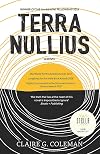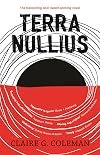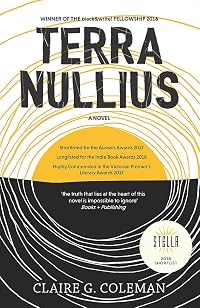
Terra Nullius
by Claire G. Coleman
On This Page
Description
NPR Best Books of 2018 "Coleman's timely debut is testimony to the power of an old story seen afresh through new eyes." —Adelaide Advertiser"In our politically tumultuous time, the novel's themes of racism, inherent humanity and freedom are particularly poignant." —Books + Publishing
The Natives of the Colony are restless. The Settlers are eager to have a nation of peace and to bring the savages into line. Families are torn apart. Reeducation is enforced. This rich land will provide for show more all.
This is not the Australia we know. This is not the Australia of the history books. Terra Nullius is something new, but all too familiar.
Shortlisted for the 2018 Stella Prize Indie Book Awards and Highly Commended for the Victorian Premiers Literary Awards, Terra Nullius is an incredible debut from a striking new Australian Aboriginal voice.
Jacky was running. There was no thought in his head, only an intense drive to run. There was no sense he was getting anywhere, no plan, no destination, no future. All he had was a sense of what was behind, what he was running from. Jacky was running.
Claire G. Coleman is a writer from Western Australia. She identifies with the South Coast Noongar people. Her family are associated with the area around Ravensthorpe and Hopetoun. Claire grew up in a Forestry's settlement in the middle of a tree plantation, where her dad worked, not far out of Perth. She wrote her black&write! fellowship- winning manuscript Terra Nullius while traveling around Australia in a caravan.
. show less
Tags
Recommendations












Member Recommendations

Member Reviews
As a work of speculative fiction inspired by the history of British colonisation of Australia and the history of enslavement of colonised people, this is an interesting read. As a thriller, it's even better. I'm not going to give too much away, but the opening makes the novel seem like historical fiction, with its references to Natives and Settlers, but as the story progresses it becomes clear that the setting is the future and history is repeating in a subtly different way.
The change in the narrative, once the truth is revealed, is a little clunky but it doesn't spoil what is a well-plotted, exciting thriller about survival and resistance. The current times being what they are, I couldn't help but think of recent instances of show more occupation and genocide.
I found the intertwining stories of rebel Native communities and abhorrent Settler communities compelling. Central to the tale is a character called Jacky who escapes the brutality of the Settler station where he works under slave conditions. He goes on the run to try to make his way home. Along the way he encounters two distinct groups of rebel Natives and is pursued by Settler Troopers sent out by a central government agency to capture him and prevent him from inspiring other Natives to follow his example. I was gripped by his journey through bush, outback, forest and desert.
The most hopeful character is a woman called Esperance, who is part of a large group of Natives trying to live freely away from Settler society. Through her storyline we learn the truth of the invasion and how it connects back to the history of colonisation and the subjugation of the Aboriginal people of Australia. show less
The change in the narrative, once the truth is revealed, is a little clunky but it doesn't spoil what is a well-plotted, exciting thriller about survival and resistance. The current times being what they are, I couldn't help but think of recent instances of show more occupation and genocide.
I found the intertwining stories of rebel Native communities and abhorrent Settler communities compelling. Central to the tale is a character called Jacky who escapes the brutality of the Settler station where he works under slave conditions. He goes on the run to try to make his way home. Along the way he encounters two distinct groups of rebel Natives and is pursued by Settler Troopers sent out by a central government agency to capture him and prevent him from inspiring other Natives to follow his example. I was gripped by his journey through bush, outback, forest and desert.
The most hopeful character is a woman called Esperance, who is part of a large group of Natives trying to live freely away from Settler society. Through her storyline we learn the truth of the invasion and how it connects back to the history of colonisation and the subjugation of the Aboriginal people of Australia. show less
I thought I knew what to expect, going in to Terra Nullius. I'd seen the book recommended on speculative sites, I'd read enough about it to know that its take on colonisation and extermination of indigineous people was almost but not quite based on the experience of Australia's indigenous communities following the British invasion in 1788. And yet, by a hundred pages in, I was starting to doubt what everyone and everything (including the book's own blurb) was telling me. Was I missing clues to a larger mystery? Were there adjectives that I was misreading or apparently historical references that I was misinterpreting? Where, to be blunt, was all the science fiction?
Of course, if you're paying attention, that's an intentional feature of show more Claire G. Coleman's brilliant debut novel, which offers a perspective on the invasion of Australia which is very much a speculative novel, and yet still inexctricably and uncomfortably intertwined with the real historical treatment of Aboriginal Australians over centuries of white rule. Coleman herself is Noongar, a community from the south coast of what is now Western Australia, and Terra Nullius is the product of a black&write! indigenous writers fellowship. Despite being a first novel, this is a book that's utterly confident both in its content and its narrative structure, and for very good reason.
Full Review at Nerds of a Feather show less
Of course, if you're paying attention, that's an intentional feature of show more Claire G. Coleman's brilliant debut novel, which offers a perspective on the invasion of Australia which is very much a speculative novel, and yet still inexctricably and uncomfortably intertwined with the real historical treatment of Aboriginal Australians over centuries of white rule. Coleman herself is Noongar, a community from the south coast of what is now Western Australia, and Terra Nullius is the product of a black&write! indigenous writers fellowship. Despite being a first novel, this is a book that's utterly confident both in its content and its narrative structure, and for very good reason.
Full Review at Nerds of a Feather show less
The extremely draggy, slow beginning made this one hard to immerse into. The concept is amazing, I feel, but clunky slow dialogue and dire repetition let a strong concept down. On the one hand I can see why this book is so necessary, especially in Australian literature, which is why it gets the rating it does, but on the other this was perilously close to a DNF the entire way through.
This is science fiction as it's supposed to be: a story that shows us with plenty of punch, who we are as humans, what we have done and what we might do again. It's a story that puts a fresh perspective on colonisation and as such should be read by pretty much everyone. I deeply appreciate the way it makes us feel what it really is like to be the Native, the one who is colonised by others - it is time, and long past time, for literature to be used for that end. I personally have so rarely come across it, especially in the context of Australia.
That's not to say there aren't faults to the novel - there are first-time author problems which I'm more than willing to forgive for the sake of what this novel is doing. The worst of these faults show more was the repeated tendency to belabour the comparison between the story and our true history - making direct comparisons in so many words. While the action was happening I was nodding in deep appreciation of how it all relates to our history, but then the author would go ahead and explain it, destroying all the subtlety and my participation in the story. Other things too could have done with a more thorough editing, but these things are in no way a reason to avoid this book: I highly, highly recommend it. show less
That's not to say there aren't faults to the novel - there are first-time author problems which I'm more than willing to forgive for the sake of what this novel is doing. The worst of these faults show more was the repeated tendency to belabour the comparison between the story and our true history - making direct comparisons in so many words. While the action was happening I was nodding in deep appreciation of how it all relates to our history, but then the author would go ahead and explain it, destroying all the subtlety and my participation in the story. Other things too could have done with a more thorough editing, but these things are in no way a reason to avoid this book: I highly, highly recommend it. show less
Set in occupied Australia, Terra Nullius tells three inter-weaved stories: the first is a residential school for Natives run by Settler Nuns headed by a fearsome Mother Superior, Sister Bagra. In this school, Native children have been forcibly taken from their families and are given a basic education so that they will graduate to domestic service for the Settlers.
The second story is the escape of Jacky from a similar place. Jacky is determined to find his birth family. He is told that they may be at the former town of Jerramungup, so proudly takes the name ‘Jacky Jerramungup’.
A third group of Natives live fearful lives in a series of squalid camps, always on the run and moving to a new location as the Settlers drive them into the show more desert. The only advantage of this is that the Settlers cannot live in the desert.
First-time novelist Claire Coleman, a West Australian Noongar, drops little hints that this is not the occupied Australia we know when the British Settlers occupied the land and treated the indigenous people with cruelty. About half-way through the book she reveals that these Settlers come from a space-faring Empire, and these Natives are black and white survivors of their arrival.
The Settlers are nicknamed Toads by the Natives, because they need moisture to survive. Because of the ever-present threat of Settler violence, the name ‘Toads’ is never used in their hearing.
The three main characters, Sister Bagra, Jacky and Esperance the de facto leader of the ever-moving camp are vividly drawn, as well as a big cast around them: Sergeant Rohan the indefatigable hunter of runaway Natives; Johnny Starr the outlaw Settler whose little gang gathers up Jacky Jerramungup on their way to an eventual show-down with Settler power, and Father Grark the reluctant Inspector sent to Sister Bagra’s mission.
I liked Terra Nullius very much. An atmosphere of dread induced both by the Settlers and the difficulty of surviving in the desert pervades the book. The West Australian settings are familiar but changed. The characters are never reduced to caricatures: most Settlers genuinely believe that the Natives were not human; the Native characters are clear individuals.
The pacing is well-handled. Towards the end, I couldn’t put the book down I was so afraid for Jacky and Esperance, and with reason!
It is a didactic novel. I suspect that Australians sceptical of Aboriginal claims will not be convinced by its premise, and may even be annoyed by its ideas. However it will appeal to people looking for reconciliation and deeper insights into our shared history, settler and native. show less
The second story is the escape of Jacky from a similar place. Jacky is determined to find his birth family. He is told that they may be at the former town of Jerramungup, so proudly takes the name ‘Jacky Jerramungup’.
A third group of Natives live fearful lives in a series of squalid camps, always on the run and moving to a new location as the Settlers drive them into the show more desert. The only advantage of this is that the Settlers cannot live in the desert.
First-time novelist Claire Coleman, a West Australian Noongar, drops little hints that this is not the occupied Australia we know when the British Settlers occupied the land and treated the indigenous people with cruelty. About half-way through the book she reveals that these Settlers come from a space-faring Empire, and these Natives are black and white survivors of their arrival.
The Settlers are nicknamed Toads by the Natives, because they need moisture to survive. Because of the ever-present threat of Settler violence, the name ‘Toads’ is never used in their hearing.
The three main characters, Sister Bagra, Jacky and Esperance the de facto leader of the ever-moving camp are vividly drawn, as well as a big cast around them: Sergeant Rohan the indefatigable hunter of runaway Natives; Johnny Starr the outlaw Settler whose little gang gathers up Jacky Jerramungup on their way to an eventual show-down with Settler power, and Father Grark the reluctant Inspector sent to Sister Bagra’s mission.
I liked Terra Nullius very much. An atmosphere of dread induced both by the Settlers and the difficulty of surviving in the desert pervades the book. The West Australian settings are familiar but changed. The characters are never reduced to caricatures: most Settlers genuinely believe that the Natives were not human; the Native characters are clear individuals.
The pacing is well-handled. Towards the end, I couldn’t put the book down I was so afraid for Jacky and Esperance, and with reason!
It is a didactic novel. I suspect that Australians sceptical of Aboriginal claims will not be convinced by its premise, and may even be annoyed by its ideas. However it will appeal to people looking for reconciliation and deeper insights into our shared history, settler and native. show less
I meet intermittently with a small group of women to discuss poetry. Together we constitute, for lack of a better term, a poetry book club. During a recent meet-up, I mentioned how frustrating I find it when poets compare women to birds. From my perspective (white Anglo-Canadian; degree in English Lit), this is a cliché device usually employed by male poets to patronize and coddle female characters-- to portray them as weak and fragile. But we were discussing a collection of poems by a Metis woman. I couldn’t understand why a radical young indigenous poet would frame women this way. Enter stage right: a moment of cross-cultural ignorance. Another group member-- an inquisitive, thoughtful women of colour who looks out for other show more marginalized women as a matter of course-- explained to me that those particular bird species have special significance to some indigenous groups on Turtle Island. My friend and fellow group member had done her homework; I was lazily relying on the homework I’d done for Intro to Women's Literature a decade and a half earlier.
I kept that learning experience top of mind while reading Claire G. Coleman's Terra Nullius. Coleman is, to quote her bio, "a writer from Western Australia who identifies with the South Coast Noongar people." Her novel is nothing if not a love letter to freedom, self-determination, and the rights of indigenous peoples. It is didactic, but justifiably so, given Australia's colonial history; and certain passages and scenes could be riveting if read aloud (invoking oral tradition?) in a junior high classroom by a teacher who cares about the work of reconciliation. But Terra Nullius is also beset by a peculiarly reticent omniscient narrator who keeps characters at arms length even while revealing their thoughts and feelings; unhelpful fictional epigraphs and epistolary fragments; and the author's frustrating decision to conceal the book's actual plot and setting until more than 100 pages in.
The plot of Terra Nullius follows several threads that are gradually woven together. The most compelling of these is Sister Bagra's reign of terror. She is Mother Superior at a residential school for humans ("natives"), where she contravenes her religious order by malnourishing her charges and training them for menial labour; they are slaves more than students. Sister Bagra is somewhat two-dimensional, even for a villain, and the origins of her bitterness and cruelty are never explored. But a good heel is a brilliant source of catharsis: easy to hate and rally against, especially when we recall that she is a fictional condensation of the religious authority figures who have abused, neglected, and killed indigenous children in colonial residential schools around the world.
To me, this is an important but imperfect novel-- but I am a settler trained in a literary tradition that is only beginning to consider the value of indigenous storytelling and ways of knowing. So don't take my word for it, please. show less
I kept that learning experience top of mind while reading Claire G. Coleman's Terra Nullius. Coleman is, to quote her bio, "a writer from Western Australia who identifies with the South Coast Noongar people." Her novel is nothing if not a love letter to freedom, self-determination, and the rights of indigenous peoples. It is didactic, but justifiably so, given Australia's colonial history; and certain passages and scenes could be riveting if read aloud (invoking oral tradition?) in a junior high classroom by a teacher who cares about the work of reconciliation. But Terra Nullius is also beset by a peculiarly reticent omniscient narrator who keeps characters at arms length even while revealing their thoughts and feelings; unhelpful fictional epigraphs and epistolary fragments; and the author's frustrating decision to conceal the book's actual plot and setting until more than 100 pages in.
The plot of Terra Nullius follows several threads that are gradually woven together. The most compelling of these is Sister Bagra's reign of terror. She is Mother Superior at a residential school for humans ("natives"), where she contravenes her religious order by malnourishing her charges and training them for menial labour; they are slaves more than students. Sister Bagra is somewhat two-dimensional, even for a villain, and the origins of her bitterness and cruelty are never explored. But a good heel is a brilliant source of catharsis: easy to hate and rally against, especially when we recall that she is a fictional condensation of the religious authority figures who have abused, neglected, and killed indigenous children in colonial residential schools around the world.
To me, this is an important but imperfect novel-- but I am a settler trained in a literary tradition that is only beginning to consider the value of indigenous storytelling and ways of knowing. So don't take my word for it, please. show less
 This review was written for LibraryThing Early Reviewers.
Terra Nullius by Claire G Coleman is a book I picked up because of the Australian Women Writers Challenge. A few people had reviewed it and, from how they were alluding to the spec fic element without giving it away made me intrigued. I downloaded the sample chapters off iBooks and, finding the writing to be very good ended up buying the whole book. Regular readers will know I don't like to give away spoilers willy-nilly but in this case, I find it necessary to properly be able to discuss the book (I was also frustrated by those allusive reviews). I will keep the actual spoilers under a spoiler shield, so if you don't want to read them, don't hover your mouse over them or highlight them.
The opening of this book was very well-written. show more There's a lot of set up of different characters and although the direction of the plot is not entirely clear from the beginning, I found it compelling reading. I also found myself spending the first 41% of the book trying to guess what the big reveal would be (the blurb and other reviews I'd read made it clear there was one). This was also especially well done since Coleman does not so much drop hints as studiously avoids anything explicit. I did pick up on one thing, but even then I wasn't entirely sure if it was relevant until I hit the actual reveal.
My issues with Terra Nullius arose once I actually got to the reveal and the book became more distinctly science fiction. Now for a spoilery discussion. Skip the next paragraph if you do not want to be spoiled.
My first issue, post-reveal, was the abrupt change in quality of the epigraphs. In this case, they were fictional quotes at the start of each chapter. Pre-reveal, they mostly just set the tone and highlighted the general horribleness of colonialism. After the reveal there were several which were more along the lines of "look at my clever comparison of the British with aliens, let me explain it in too much detail" which made me feel bashed over the head with obviousness. They were entirely unnecessary and would have been better replaced with something more subtle. Towards the end they settled down a bit, and there were some which explained the background of the aliens, which I found less blatantly obvious and more useful. I suspect that these are a product of insufficient science fictional research/reading (let's face it, this is not an original trope, only the intense Australian-ness of it brings something new to the table). Those quotes were definitely my biggest problem in terms of how the aliens were presented. Everything else more or less worked well, albeit there were a few (less annoying) infodumps in the main text as well.
If poorly written quotes were my only issue, I would have given this book an additional half-star rating. As it is, only the high quality of (most of) the prose pushes it up to four stars. The other issue I had was that I was expecting the plot to pick up after the reveal and gain a clearer direction. It did not. Individual characters had goals and/or motivations but these did not come together as one would expect from a genre book. My guess is that this was intentional, and I think I see what the author was trying to achieve, but I found it disappointing and insufficiently rewarding for pushing through to the end.
Ultimately, I don't think this book was aimed at science fiction readers. That said, other SF fans might be less annoyed than I was and enjoy it more. It certainly brings a lot of colonial context to the story, particularly from an indigenous perspective, and a strong Australian setting, which I enjoyed.
4 / 5 stars
You can read more reviews on my blog show less
The opening of this book was very well-written. show more There's a lot of set up of different characters and although the direction of the plot is not entirely clear from the beginning, I found it compelling reading. I also found myself spending the first 41% of the book trying to guess what the big reveal would be (the blurb and other reviews I'd read made it clear there was one). This was also especially well done since Coleman does not so much drop hints as studiously avoids anything explicit. I did pick up on one thing, but even then I wasn't entirely sure if it was relevant until I hit the actual reveal.
My issues with Terra Nullius arose once I actually got to the reveal and the book became more distinctly science fiction. Now for a spoilery discussion. Skip the next paragraph if you do not want to be spoiled.
If poorly written quotes were my only issue, I would have given this book an additional half-star rating. As it is, only the high quality of (most of) the prose pushes it up to four stars. The other issue I had was that I was expecting the plot to pick up after the reveal and gain a clearer direction. It did not. Individual characters had goals and/or motivations but these did not come together as one would expect from a genre book. My guess is that this was intentional, and I think I see what the author was trying to achieve, but I found it disappointing and insufficiently rewarding for pushing through to the end.
Ultimately, I don't think this book was aimed at science fiction readers. That said, other SF fans might be less annoyed than I was and enjoy it more. It certainly brings a lot of colonial context to the story, particularly from an indigenous perspective, and a strong Australian setting, which I enjoyed.
4 / 5 stars
You can read more reviews on my blog show less
Members
- Recently Added By
Lists

Favorite Science Fiction by Women Authors
737 works; 196 members

Native American / Indigenous Literature
172 works; 100 members

Diversity in Fantasy and Science Fiction
219 works; 33 members

Nonhuman Protagonists
235 works; 34 members

Books Set in Australia
41 works; 9 members
Recommended Speculative Fiction by Women and People of Color
298 works; 45 members

SFF Down Under
59 works; 3 members
Author Information

5+ Works 448 Members
Claire G. Coleman is an Australian writer (South Coast Noongar people). She grew up in a Forestry's settlement not far out of Perth. She writes fiction, essays and poetry while she travels around Australia in with a caravan. Her debut novel is entitled Terra Nullius, won the black&write! fellowship award and the Norma K Hemming Award 2018, in the show more long work category. (Bowker Author Biography) show less
Some Editions
Awards and Honors
Awards
Distinctions
Notable Lists
Common Knowledge
- Original publication date
- 2017
- Epigraph
- 'They were standing on the shore one day,
saw the white sails in the sun.
Wasn't long before they felt the sting,
white man, white law, white gun.'
-'SOLID ROCK', GOANNA - Dedication
- For Lily
Always - First words
- Jacky was running.
Classifications
Statistics
- Members
- 363
- Popularity
- 86,615
- Reviews
- 17
- Rating
- (3.50)
- Languages
- English
- Media
- Paper, Audiobook, Ebook
- ISBNs
- 10
- ASINs
- 4