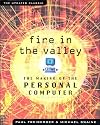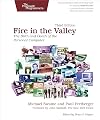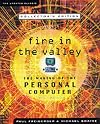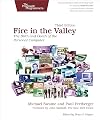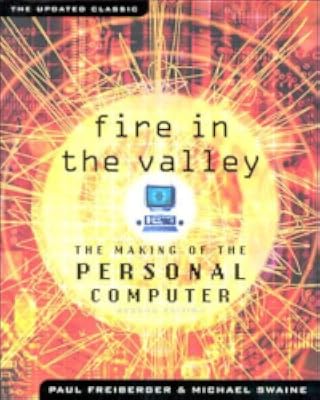
Fire in the Valley: The Making of The Personal Computer
by Paul Freiberger, Michael Swaine
On This Page
Description
In the 1970s, while their contemporaries were protesting the computer as a tool of dehumanization and oppression, a motley collection of college dropouts, hippies, and electronics fanatics were engaged in something much more subversive. Obsessed with the idea of getting computer power into their own hands, they launched from their garages a hobbyist movement that grew into an industry, and ultimately a social and technological revolution. What they did was invent the personal computer: not show more just a new device, but a watershed in the relationship between man and machine. This is their story. show lessTags
Recommendations


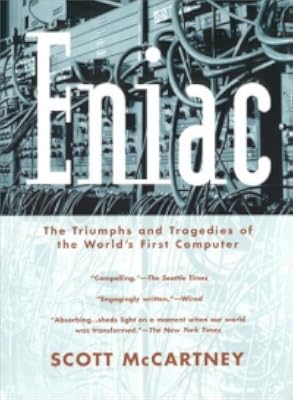
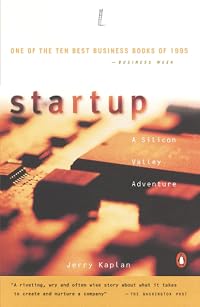

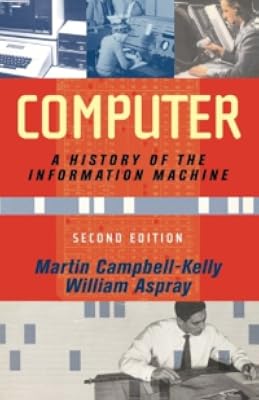

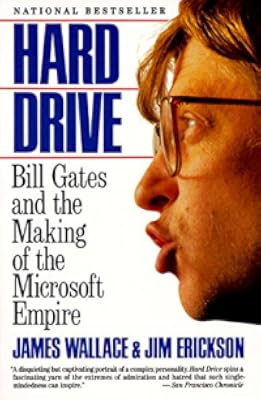
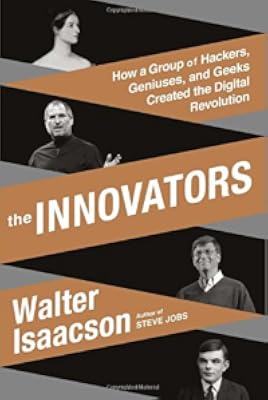

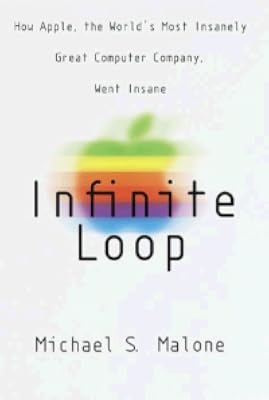

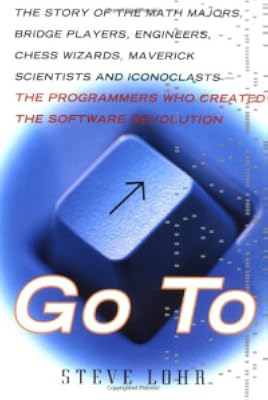
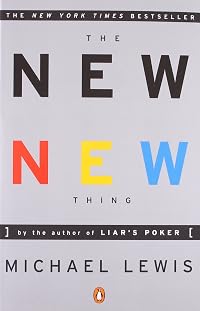
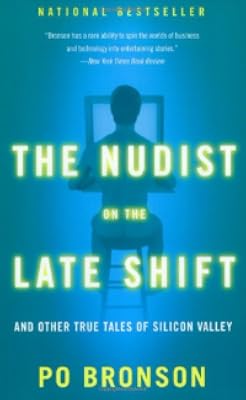
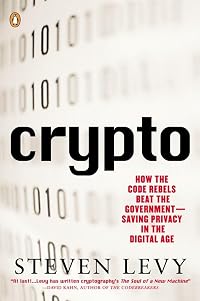
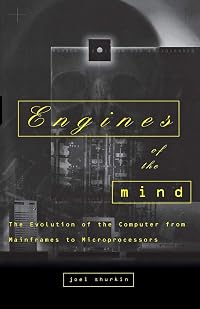



Member Recommendations

Member Reviews
Another pleasant reread of a personal computing history book I originally read in the 1980s.
The authors--both of whom edited computer publications as the stories developed--tell the story of the beginnings of the PC revolution from the perspective of Silicon Valley. Their version heavily overlaps Stephen Levy's Hackers, which was published a few months later, but it's a very different tale in style and substance.
For one thing, this is a less literary effort. It's also differently focused, as these guys care more about technical details than Levy does. And the largely west-coast perspective lets this book examine relationships in ways Hackers' structure didn't permit.
The book consists of many short sections, organized into eight thematic show more (and roughly chronological) chapters. While the sections are related, they're essentially independent. It's pretty common to find more than one version of a story/encounter within the book, often in widely separated places. This in no way harms the narrative; it's just a quirk of the book's organization.
Because the book's nearly three decades old, some of the context seems a little odd. In particular, a pervasive fear of IBM dates the book--not to say the fears weren't real, but we now know IBM had a significantly different impact than the PC industry expected. Similarly, there's essentially no recognition of the immense power Microsoft would come to yield in the industry, and (of course) no clue about Apple's long stagnation, and resurrection. And the Internet has no presence in this book whatever.
A very worthwhile effort. If you're interested in this era's history, you should read both this book and Levy's; their differences and their similarities are both instructive.
This review has also been published on a dabbler's journal. show less
The authors--both of whom edited computer publications as the stories developed--tell the story of the beginnings of the PC revolution from the perspective of Silicon Valley. Their version heavily overlaps Stephen Levy's Hackers, which was published a few months later, but it's a very different tale in style and substance.
For one thing, this is a less literary effort. It's also differently focused, as these guys care more about technical details than Levy does. And the largely west-coast perspective lets this book examine relationships in ways Hackers' structure didn't permit.
The book consists of many short sections, organized into eight thematic show more (and roughly chronological) chapters. While the sections are related, they're essentially independent. It's pretty common to find more than one version of a story/encounter within the book, often in widely separated places. This in no way harms the narrative; it's just a quirk of the book's organization.
Because the book's nearly three decades old, some of the context seems a little odd. In particular, a pervasive fear of IBM dates the book--not to say the fears weren't real, but we now know IBM had a significantly different impact than the PC industry expected. Similarly, there's essentially no recognition of the immense power Microsoft would come to yield in the industry, and (of course) no clue about Apple's long stagnation, and resurrection. And the Internet has no presence in this book whatever.
A very worthwhile effort. If you're interested in this era's history, you should read both this book and Levy's; their differences and their similarities are both instructive.
This review has also been published on a dabbler's journal. show less
This is one of the finest book written on the history of personal computers and computer revolution tracing back from 1960 to 1984. It traces it back to the hobbyist culture which shaped the industry. It talks about the attempts made my individuals who were interested in electronics, computers and who cared about this thing even before it was widely known to the general public. The history of machines and companies like IMSAI took me by surprise as even in the very early days, there was this company which was completely run by sales people and where technology had a backseat. But as challenges kept on, IMSAI faded because the technology was the ruler of this industry. It shows how the MITS ALTAIR computers helped spread the imagination show more of ownership of personal computers, but they were not perfect and had lot of short-comings in their engineering that led others catch on in the game. The story of young programmer bill gates is fascinating and it becomes more interesting towards as he works out his partnership with a big company like IBM. The story of Steve and Woz, and their differing personalities, styles makes an interesting read too. Steve seems to have had am ambition to build a great business and he pursued it like a religious leader would with his ideology, Woz on the other hand was an engineer, a fun loving type with no interest in business. I had an idea of Gary Kidall, who was the original author of DOS operating system and I thought that he lost out in the revolution, but this book corrected me as I learnt that Gary Kidall did make millions with his invention of DOS and enjoyed the lifestyle he wanted.
Here are some of the photos from this book which shows the various revolutions. I bet each of them have an Wikipedia entry that you can read further on. https://plus.google.com/photos/108858390822530038659/albums/5835555216193592433 show less
Here are some of the photos from this book which shows the various revolutions. I bet each of them have an Wikipedia entry that you can read further on. https://plus.google.com/photos/108858390822530038659/albums/5835555216193592433 show less
A fun book that covers the personal computer revolution from the mid 70's to the late 90's. Lots of great quotes and snippets from interviews plus several picture sections. The only weak part of the book is the very end where they attempt to draw conclusions about Internet issues and other things that are long since past history for us now.
The book significantly underestimates gaming's role in promoting the adoption of computing technologies. I'm to get more into this in depth with my video review.
Swaine, Michael (Author)
Ratings
Members
- Recently Added By
Author Information
7 Works 802 Members
5+ Works 489 Members
Common Knowledge
- Canonical title
- Fire in the Valley: The Making of The Personal Computer
- Original title
- Fire in the Valley: The Making of The Personal Computer
- Alternate titles
- Fire in the Valley: The Birth and Death of the Personal Computer
- Original publication date
- 1984
- People/Characters
- Bill Gates; Steve Jobs
- Related movies
- Pirates of Silicon Valley (1999 | IMDb)
Classifications
- Genres
- Technology, Nonfiction, General Nonfiction, History, Business
- DDC/MDS
- 338.47004160973 — Society, government, & culture Economics Production Secondary industries and services Services and specific products Computer Industry
- LCC
- QA76.5 .F697 — Science Mathematics Mathematics Instruments and machines Calculating machines Electronic computers. Computer science
- BISAC
Statistics
- Members
- 453
- Popularity
- 67,392
- Reviews
- 5
- Rating
- (4.03)
- Languages
- English, French, Italian
- Media
- Paper, Ebook
- ISBNs
- 11
- UPCs
- 2
- ASINs
- 3