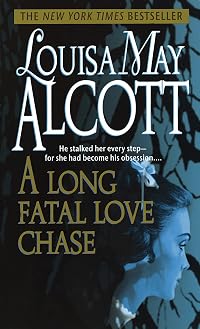
A Long Fatal Love Chase
by Louisa May Alcott
On This Page
Description
An Englishwoman falls for an older man who takes her to France where she discovers he is already married. When she leaves him, he pursues her and confines her to a lunatic asylum in Germany. But she will escape. The novel was written in 1866 and was rejected by the publisher as too sensational.Tags
Recommendations







Member Recommendations

JenniferRobb Both works deal with making a deal with the devil/selling your soul. Alcott's work has more romance than Benet's work.

by anonymous user
Member Reviews
If you're a fan of the sensation fiction of Wilkie Collins or Mary Elizabeth Braddon, you need to read Louisa May Alcott's contributions to the genre under the name A.M. Barnard. She writes the most wild stories, and I cannot decide if it is because she's an American writer and she can get away with more, or if this is just her style. That being said, this novel wasn't actually published during her lifetime, so it was still too shocking for an 19th century American readership.
"A Long Fatal Love Chase" was written 2 years before "Little Woman" was published. This novel is occupied with some of the same themes that make an appearance in her shorter sensation stories: primarily, the struggle of power between man and woman. I read another show more review that interpreted this story as a romance, and the chase as an erotic foreplay. I would strongly disagree. The chase in this book is not part of the romantic appeal, it is the desperate flight of a woman away from an evil man who she was romantically connected to. She remembers times she was happy and longs to go back to that innocence, but she chooses the difficult path and runs. He stalks her throughout the entire continent and her flight is for personal autonomy as much as it is for morality. He calls for her to submit to his will and then "he'll be her slave." I believe that Alcott is pointing out the utter stupidity of this patriarchal rhetoric.
Rosamond was an interesting heroine who climbs out windows, walks along roofs, and flees across the continent. She was very capable, and I loved the unlikely female friendships she develops along the way. Tempest is a typical sociopathic sensation villain and I hated him. Alcott connects him to the Mephistopheles from his first appearance, and that satanic imagery continues throughout the rest of the story to be contrasted with the pure priest character introduced in the second half of the book. This allegory seems to be the focus of the story more than capturing a type of "realism."
This book is quite the page-turner. It does get repetitive due to the structure of the book, but it is such a quick read and it kept me on the edge of my seat. The suspense never lets up once it gets going. Now I have to track down the rest of Alcott's sensation fiction because, although it has a lot of the sensation tropes, it still manages to feel like it's doing something different. show less
"A Long Fatal Love Chase" was written 2 years before "Little Woman" was published. This novel is occupied with some of the same themes that make an appearance in her shorter sensation stories: primarily, the struggle of power between man and woman. I read another show more review that interpreted this story as a romance, and the chase as an erotic foreplay. I would strongly disagree. The chase in this book is not part of the romantic appeal, it is the desperate flight of a woman away from an evil man who she was romantically connected to. She remembers times she was happy and longs to go back to that innocence, but she chooses the difficult path and runs. He stalks her throughout the entire continent and her flight is for personal autonomy as much as it is for morality. He calls for her to submit to his will and then "he'll be her slave." I believe that Alcott is pointing out the utter stupidity of this patriarchal rhetoric.
Rosamond was an interesting heroine who climbs out windows, walks along roofs, and flees across the continent. She was very capable, and I loved the unlikely female friendships she develops along the way. Tempest is a typical sociopathic sensation villain and I hated him. Alcott connects him to the Mephistopheles from his first appearance, and that satanic imagery continues throughout the rest of the story to be contrasted with the pure priest character introduced in the second half of the book. This allegory seems to be the focus of the story more than capturing a type of "realism."
This book is quite the page-turner. It does get repetitive due to the structure of the book, but it is such a quick read and it kept me on the edge of my seat. The suspense never lets up once it gets going. Now I have to track down the rest of Alcott's sensation fiction because, although it has a lot of the sensation tropes, it still manages to feel like it's doing something different. show less
Gather 'round, children, and hearken to my tale of a young girl who longs for adventure and love, gets what she wants, and ... immediately acts like a selfish little chit who didn't mean it, please!
Whatever, Rosaline. Your cautionary tale in sensationalist clothing (or is that the other way around?) did nothing at all for my moral health; I still lust after rogues, walk barefoot on precipices, and would gladly sell my soul for a year of freedom.
Whatever, Rosaline. Your cautionary tale in sensationalist clothing (or is that the other way around?) did nothing at all for my moral health; I still lust after rogues, walk barefoot on precipices, and would gladly sell my soul for a year of freedom.
I was apprehensive about this book even though I love Louisa May Alcott because the title and the reviews painted the book as a Harlequin romance-like book. But the writing was strong and complicated love-hate relationship between a stalker and the stalked woman was very well-done and just as relevant today. I was surprised that a woman who never married had such insight into unhealthy male/female relationships.
I also can see why it was not published when she wrote it. As I read it, I thought about Jo being admonished by Professor Bhaer to write more wholesome stories. But though I loved Little Women, this book was refreshing for its lack of the "preachiness" that gets tiresome in Alcott's more well-known books.
I also can see why it was not published when she wrote it. As I read it, I thought about Jo being admonished by Professor Bhaer to write more wholesome stories. But though I loved Little Women, this book was refreshing for its lack of the "preachiness" that gets tiresome in Alcott's more well-known books.
Rosamund - the young, beautiful, and strong-willed heroine - meets Philip Tempest; a handsome yet dubious man more than 15 years older than her. He leads her away from her monotonous life in England and they sail away together to Europe.
After a year of happiness Rosamund starts to realise that Philip isn't the man she thought he was. One thing leads to another and she leaves him without a word.
Although a bad man, Philip genuinely loves Rosamund. He and his spies track her down, lose her again, find and them lose her again, and so the love chase continues in this vein throughout the book.
Although I really liked this novel it didn't live up to my expectations after reading all the hype beforehand. I do agree, however, that it feels like show more it was written in 1995 rather than 1865. The prose, plotting, and themes feel modern, therefore it comes across like an historical novel.
I do admire Miss Alcott's talents as an author, as she proved her worth by writing in different genres.
Strange to think that there was a time when a book like this couldn't be published on account of it being "too sensational". I'm glad we live in a more open-minded time. show less
After a year of happiness Rosamund starts to realise that Philip isn't the man she thought he was. One thing leads to another and she leaves him without a word.
Although a bad man, Philip genuinely loves Rosamund. He and his spies track her down, lose her again, find and them lose her again, and so the love chase continues in this vein throughout the book.
Although I really liked this novel it didn't live up to my expectations after reading all the hype beforehand. I do agree, however, that it feels like show more it was written in 1995 rather than 1865. The prose, plotting, and themes feel modern, therefore it comes across like an historical novel.
I do admire Miss Alcott's talents as an author, as she proved her worth by writing in different genres.
Strange to think that there was a time when a book like this couldn't be published on account of it being "too sensational". I'm glad we live in a more open-minded time. show less
"I'd gladly sell my soul to Satan for a year of freedom," cries impetuous Rosamond Vivian to her callous grandfather. Then, one stormy night, a brooding stranger appears in her remote island home, ready to take Rosamond to her word. Spellbound by the mysterious Philip Tempest, Rosamond is seduced with promises of love and freedom, then spirited away on Tempest's sumptuous yacht. But she soon finds herself trapped in a web of intrigue, cruelty, and deceit. Desperate to escape, she flees to Italy, France, and Germany, from Parisian garret to mental asylum, from convent to chateau, as Tempest stalks every step of the fiery beauty who has become his obsession.
A story of dark love and passionate obsession that was considered "too show more sensational" to be published in the authors lifetime, A Long Fatal Love Chase was written for magazine serialization in 1866, two years before the publication of Little Women. Buried among Louisa May Alcott's papers for more than a century, its publication is a literary landmark—a novel that is bold, timeless, and mesmerizing." show less
A story of dark love and passionate obsession that was considered "too show more sensational" to be published in the authors lifetime, A Long Fatal Love Chase was written for magazine serialization in 1866, two years before the publication of Little Women. Buried among Louisa May Alcott's papers for more than a century, its publication is a literary landmark—a novel that is bold, timeless, and mesmerizing." show less
Rosamond is a young woman of seventeen who is tired of her isolated, safe life with her unsentimental grandfather. When one of her grandfather's cardplaying students, Philip Tempest, enters her life, she is captivated by his charm and good looks. Tempest is a personable and determined man with dark secrets in his past, and an unfortunate resemblance to Mephistopheles. When he wins Rosamond from her grandfather in a card game, he sweeps her off in his yacht and marries her. They have a year of happiness (for Rosamond loves him too) until events conspire to reveal a secret that would drive Rosamond from him forever.
Rosamond is an interesting heroine and her penchant for escaping out of windows reminds me of Marian from Collin's The Woman show more in White. Philip Tempest is very much like Marcus Vinicius of Sienkiewicz's Quo Vadis in his utterly relentless pursuit of the woman he loves, but unlike Vinicius Tempest never repents. Yet for all that I could not dislike him... is it terrible that I was rooting for him til the bitter end? The hints of mythology and literary villainy added great atmosphere to the story.
A Long Fatal Love Chase was considered too sensational to be published during Alcott's lifetime, even though she did go back and try to expunge the scandalous parts. I have to say I enjoyed it a great deal more than Little Women. Classic though it is, I never could get over the moralizing that seems to appear on every page of LW. A Long Fatal Love Chase was different. Though the plot was somewhat contrived, the characters were interesting and I really did want to find out how things would end. I should have just looked at the title for that... show less
Rosamond is an interesting heroine and her penchant for escaping out of windows reminds me of Marian from Collin's The Woman show more in White. Philip Tempest is very much like Marcus Vinicius of Sienkiewicz's Quo Vadis in his utterly relentless pursuit of the woman he loves, but unlike Vinicius Tempest never repents. Yet for all that I could not dislike him... is it terrible that I was rooting for him til the bitter end? The hints of mythology and literary villainy added great atmosphere to the story.
A Long Fatal Love Chase was considered too sensational to be published during Alcott's lifetime, even though she did go back and try to expunge the scandalous parts. I have to say I enjoyed it a great deal more than Little Women. Classic though it is, I never could get over the moralizing that seems to appear on every page of LW. A Long Fatal Love Chase was different. Though the plot was somewhat contrived, the characters were interesting and I really did want to find out how things would end. I should have just looked at the title for that... show less
Remember those "sensation" stories Jo March writes in Little Women? In chapter 27, "Literary Lessons," Jo decides to enter a competition in
"that class of light literature in which the passions have a holiday, and when the author's invention fails, a grand catastrophe clears the state of one-half the dramatis persona, leaving the other half to exult over their downfall....Her theatrical experience and miscellaneous reading were of service now, for they gave her some idea of dramatic effect, and supplied plot, language, and costumes. Her story was as full of desperation and despair as her limited acquaintance with those uncomfortable emotions enabled her to make it..."
Jo wins the competition (and $100), and keeps writing such thrillers to show more pay the family bills. In chapter 34, "A Friend," Jo continues:
"writing sensation stories - for in those dark days, even all-perfect America read rubbish....Like most young scribblers, she went abroad for her characters and scenery...as thrills could not be produced except by harrowing up the souls of the readers, history and romance, land and sea, science and art, police records and lunatic asylums, had to be ransacked for the purpose....she searched newspapers for accidents, incidents, and crimes; she excited the suspicions of public librarians by asking for works on poisons; she studied faces in the street, - and characters good, bad, and indifferent, all about her; she delved in the dust of ancient times, for facts or fictions so old that they were as good as new, and introduced herself to folly, sin, and misery, as well as her limited opportunities allowed."
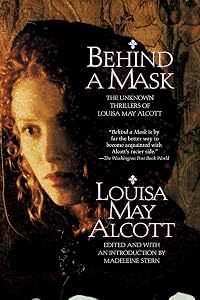
A Long Fatal Love Chase is the serialized "blood and thunder" story Jo March might have written. Even more interesting, though, is the story behind the story. After returning from a trip to Europe in 1866, where she served as a paid companion to an invalid, Louisa May Alcott sold her novella Behind the Mask (or, A Woman's Power) to editor James Elliott for the Boston weekly The Flag of Our Union for $75 in August. (It appeared in four installments in October and November of that year). Incorporating settings from her trip, in September, Alcott's journal indicates she "finished the long tale A Modern Mephistopheles. But Elliott would not have it, saying it was too long & too sensational! So I put it away & fell to work on other things."
After Alcott's death in 1888, the manuscript wound up in a Harvard library archive, where it was described as "A modern Mephistopheles, or The fatal love chase. ... A completely different novel from that published as A modern Mephistopheles in the No Name series, 1877. This novel apparently unpublished. ... NOTE: This item returned to family, 1991."
According to a September 1995 article in the Seattle Post-Intelligencer, Alcott's grandnephews put the manuscript on the market to raise money for the Louisa May Alcott Foundation, which operates Orchard House, the Alcott home in Concord, Masssachusetts, where she wrote Little Women. It languished unsold for a few years until a New Hampshire private school principal named Kent Bicknell purchased it (with the help of a financial backer) in 1994. He restored the much-revised text to the original (as submitted in 1866), and the profits from its subsequent publication were shared with Alcott's heirs, Orchard House, and Bicknell's school respectively.
Elliott had requested a novel of 24 chapters, with every other chapter ending with a bit of a cliffhanger, for serialization purposes. That is what Alcott has written here. The title and the cover blurb kind of give the plot away, but it's an easy and fun (and rather dark Gothic) read nonetheless.
© Amanda Pape - 2014
[This paperback was purchased at a Friends of the Library book sale and will likely remain in my personal collection.] show less
"that class of light literature in which the passions have a holiday, and when the author's invention fails, a grand catastrophe clears the state of one-half the dramatis persona, leaving the other half to exult over their downfall....Her theatrical experience and miscellaneous reading were of service now, for they gave her some idea of dramatic effect, and supplied plot, language, and costumes. Her story was as full of desperation and despair as her limited acquaintance with those uncomfortable emotions enabled her to make it..."
Jo wins the competition (and $100), and keeps writing such thrillers to show more pay the family bills. In chapter 34, "A Friend," Jo continues:
"writing sensation stories - for in those dark days, even all-perfect America read rubbish....Like most young scribblers, she went abroad for her characters and scenery...as thrills could not be produced except by harrowing up the souls of the readers, history and romance, land and sea, science and art, police records and lunatic asylums, had to be ransacked for the purpose....she searched newspapers for accidents, incidents, and crimes; she excited the suspicions of public librarians by asking for works on poisons; she studied faces in the street, - and characters good, bad, and indifferent, all about her; she delved in the dust of ancient times, for facts or fictions so old that they were as good as new, and introduced herself to folly, sin, and misery, as well as her limited opportunities allowed."
A Long Fatal Love Chase is the serialized "blood and thunder" story Jo March might have written. Even more interesting, though, is the story behind the story. After returning from a trip to Europe in 1866, where she served as a paid companion to an invalid, Louisa May Alcott sold her novella Behind the Mask (or, A Woman's Power) to editor James Elliott for the Boston weekly The Flag of Our Union for $75 in August. (It appeared in four installments in October and November of that year). Incorporating settings from her trip, in September, Alcott's journal indicates she "finished the long tale A Modern Mephistopheles. But Elliott would not have it, saying it was too long & too sensational! So I put it away & fell to work on other things."
After Alcott's death in 1888, the manuscript wound up in a Harvard library archive, where it was described as "A modern Mephistopheles, or The fatal love chase. ... A completely different novel from that published as A modern Mephistopheles in the No Name series, 1877. This novel apparently unpublished. ... NOTE: This item returned to family, 1991."
According to a September 1995 article in the Seattle Post-Intelligencer, Alcott's grandnephews put the manuscript on the market to raise money for the Louisa May Alcott Foundation, which operates Orchard House, the Alcott home in Concord, Masssachusetts, where she wrote Little Women. It languished unsold for a few years until a New Hampshire private school principal named Kent Bicknell purchased it (with the help of a financial backer) in 1994. He restored the much-revised text to the original (as submitted in 1866), and the profits from its subsequent publication were shared with Alcott's heirs, Orchard House, and Bicknell's school respectively.
Elliott had requested a novel of 24 chapters, with every other chapter ending with a bit of a cliffhanger, for serialization purposes. That is what Alcott has written here. The title and the cover blurb kind of give the plot away, but it's an easy and fun (and rather dark Gothic) read nonetheless.
© Amanda Pape - 2014
[This paperback was purchased at a Friends of the Library book sale and will likely remain in my personal collection.] show less
Members
- Recently Added By
Lists

Bibliography for How to be a Heroine
148 works; 12 members

KayStJ's to-read list
1,616 works; 11 members

Books Purchased July-December 2016
81 works; 1 member

Books Read in 2018
4,360 works; 110 members
Talk Discussions
Past Discussions
Found: Help me please- Name that Book in Name that Book (March 2023)
Author Information

475+ Works 109,584 Members
Louisa May Alcott was born in Germantown, Pennsylvania, in 1832. Two years later, she moved with her family to Boston and in 1840 to Concord, which was to remain her family home for the rest of her life. Her father, Bronson Alcott, was a transcendentalist and friend of Ralph Waldo Emerson and Henry David Thoreau. Alcott early realized that her show more father could not be counted on as sole support of his family, and so she sacrificed much of her own pleasure to earn money by sewing, teaching, and churning out potboilers. Her reputation was established with Hospital Sketches (1863), which was an account of her work as a volunteer nurse in Washington, D.C. Alcott's first works were written for children, including her best-known Little Women (1868--69) and Little Men: Life at Plumfield with Jo's Boys (1871). Moods (1864), a "passionate conflict," was written for adults. Alcott's writing eventually became the family's main source of income. Throughout her life, Alcott continued to produce highly popular and idealistic literature for children. An Old-Fashioned Girl (1870), Eight Cousins (1875), Rose in Bloom (1876), Under the Lilacs (1878), and Jack and Jill (1881) enjoyed wide popularity. At the same time, her adult fiction, such as the autobiographical novel Work: A Story of Experience (1873) and A Modern Mephistopheles (1877), a story based on the Faust legend, shows her deeper concern with such social issues as education, prison reform, and women's suffrage. She realistically depicts the problems of adolescents and working women, the difficulties of relationships between men and women, and the values of the single woman's life. (Bowker Author Biography) show less
Some Editions
Awards and Honors
Distinctions
Common Knowledge
- Canonical title
- A Long Fatal Love Chase
- Original title
- A Long Fatal Love Chase
- Alternate titles
- The Chase
- Original publication date
- 1995
- People/Characters
- Rosamond Vivian; Phillip Tempest; Marion Tempest; Mother Pujal; Baptiste; Dovenant (show all 25); Giuseppe; Ippolito Tempest "Lito"; Robert Willoughby; Dr. Montenari; Grammont; Adelaide Ristori; Grandfather Vivian; Father Ignatius; Bayard Conde (Father Ignatius); Vetrey (Chief of Police in Paris); Madame Montez (Baptiste); Mademoiselle Honorine; Dr. Gerard; Comte de Luneville; Natalie (Comte's daughter); Sister Agatha (Rosamond Vivian); Father Dominic; Mother Ursula; Madelaine Constant
- Important places
- Nice, Alpes-Maritimes, Provence-Alpes-Côte d'Azur, France; Paris, Île-de-France, France; Valros, Occitanie, France; Circe; Staffordshire, England, UK; London, England, UK (show all 8); Cologne, North Rhine-Westphalia, Germany; Wiesbaden, Hesse, Germany
- First words
- "I tell you I cannot bear it!"
- Last words
- (Click to show. Warning: May contain spoilers.)Like a fallen spirit shut out from eternal life, Tempest looked at him a moment, then, as the old fire blazed up within him for the last time, he drove a hidden dagger deep into his breast and, dropping on his knees, gathered the dead woman in his arms, saying with mingled love and defiance in his despairing voice, "Mine first--mine last--mine even in the grave!"
- Blurbers
- King, Stephen
- Original language
- English US
Classifications
Statistics
- Members
- 1,955
- Popularity
- 10,922
- Reviews
- 35
- Rating
- (3.49)
- Languages
- 7 — Dutch, English, Estonian, French, German, Italian, Portuguese
- Media
- Paper, Audiobook, Ebook
- ISBNs
- 30
- ASINs
- 11