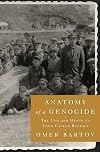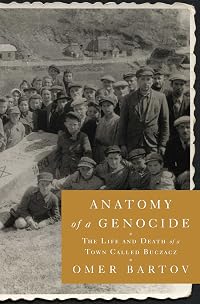
Anatomy of a Genocide: The Life and Death of a Town Called Buczacz
by Omer Bartov
On This Page
Description
"A fascinating and timely examination of how genocide can take root at the local level--turning neighbors, friends and even family members against one another--as seen through the little-known story of the Eastern European border town Buczacz during World War II"--Tags
Recommendations







Member Reviews
Anatomy of a Genocide: The Life and Death of a Town Called Buczacz by Omer Bartov tells of the violent history in a small Polish town during World War II, when people who lived side by side their whole lives turned on one another. Mr. Bartov is an Israeli scholars who went off to write a family history and stumbled onto something bigger.
This is the book I was waiting to read for a long time. I have had interest in World War II for many decades, I read numerous history books and works of fiction, all trying to explain human nature and the brutality which ensued, seemingly out of nowhere.
But we all know that it wasn’t out of nowhere.
And we all know that atrocities don’t just “happen”.
Mr. Bartov’s mother was raised in Buczacz show more (present day Ukraine), one day on offhand remark to her son raised his interest. Mr. Bartov started digging, trying to learn how his family lived and died.
Mr. Bartov failed to write a family history, but succeeded enormously in writing a fascinating and important book about the European mindset which caused the justification of genocide.
Buczacz lies in the middle of a politically charged region, due to its strategic importance. The town received its unfair attention from rival superpowers which put a microscope to the region and to the populace.
The violence against Jews did not start with the Third Reich, and sadly did not end with its demise. The district which had a population of Jews, Christians, Poles, and Ukrainians all living together relatively peacefully for centuries. Rivalries always exist where people are, Mr. Bartov analyzes those rivalries, especially those between the Poles and Ukrainian, which was made even more complicated when the Nazis invaded. The Soviets plan was to incorporate the region into the Soviet Union, something the Ukrainians embraced and the Poles rejected, the conflict which started before the First World War saw the population of the region reduced by one-third by the time 1945 came around.
So how did ordinary men and women turn on their neighbors during World War II?
As I mentioned, Anti-Semitism started much earlier, when Jews were lumped together with Russians, communists, and savage hordes. Portrayed as aliens which will not be assimilated into the society, Jews were looked upon as a subversive element. During the wars, this false rhetoric was manifested into mass murder. The Germans transformed the local Ukrainian militia into a district police force which committed dreaded atrocities at an “astonishing ease”. People killed those they personally knew, men, women, children, and friends.
This book of the mindset of mass murder and genocide is an important book which is well written and easy to read. Not only an important history book, but a cautionary tale as well.
For more reviews and bookish posts please visit: http://www.ManOfLaBook.com show less
This is the book I was waiting to read for a long time. I have had interest in World War II for many decades, I read numerous history books and works of fiction, all trying to explain human nature and the brutality which ensued, seemingly out of nowhere.
But we all know that it wasn’t out of nowhere.
And we all know that atrocities don’t just “happen”.
Mr. Bartov’s mother was raised in Buczacz show more (present day Ukraine), one day on offhand remark to her son raised his interest. Mr. Bartov started digging, trying to learn how his family lived and died.
Mr. Bartov failed to write a family history, but succeeded enormously in writing a fascinating and important book about the European mindset which caused the justification of genocide.
Buczacz lies in the middle of a politically charged region, due to its strategic importance. The town received its unfair attention from rival superpowers which put a microscope to the region and to the populace.
The violence against Jews did not start with the Third Reich, and sadly did not end with its demise. The district which had a population of Jews, Christians, Poles, and Ukrainians all living together relatively peacefully for centuries. Rivalries always exist where people are, Mr. Bartov analyzes those rivalries, especially those between the Poles and Ukrainian, which was made even more complicated when the Nazis invaded. The Soviets plan was to incorporate the region into the Soviet Union, something the Ukrainians embraced and the Poles rejected, the conflict which started before the First World War saw the population of the region reduced by one-third by the time 1945 came around.
So how did ordinary men and women turn on their neighbors during World War II?
As I mentioned, Anti-Semitism started much earlier, when Jews were lumped together with Russians, communists, and savage hordes. Portrayed as aliens which will not be assimilated into the society, Jews were looked upon as a subversive element. During the wars, this false rhetoric was manifested into mass murder. The Germans transformed the local Ukrainian militia into a district police force which committed dreaded atrocities at an “astonishing ease”. People killed those they personally knew, men, women, children, and friends.
This book of the mindset of mass murder and genocide is an important book which is well written and easy to read. Not only an important history book, but a cautionary tale as well.
For more reviews and bookish posts please visit: http://www.ManOfLaBook.com show less
Winner of the Yad Vashem International Book Book Prize for Holocaust Research
“A substantive contribution to the history of ethnic strife and extreme violence” (The Wall Street Journal) and a cautionary examination of how genocide can take root at the local level—turning neighbors, friends, and family against one another—as seen through the eastern European border town of Buczacz during World War II.
For more than four hundred years, the Eastern European border town of Buczacz—today part of Ukraine—was home to a highly diverse citizenry. It was here that Poles, Ukrainians, and Jews all lived side by side in relative harmony. Then came World War II, and three years later the entire Jewish population had been murdered by German show more and Ukrainian police, while Ukrainian nationalists eradicated Polish residents. In truth, though, this genocide didn’t happen so quickly.
In Anatomy of a Genocide, Omer Bartov explains that ethnic cleansing doesn’t occur as is so often portrayed in popular history, with the quick ascent of a vitriolic political leader and the unleashing of military might. It begins in seeming peace, slowly and often unnoticed, the culmination of pent-up slights and grudges and indignities. The perpetrators aren’t just sociopathic soldiers. They are neighbors and friends and family. They are also middle-aged men who come from elsewhere, often with their wives and children and parents, and settle into a life of bourgeois comfort peppered with bouts of mass murder.
For more than two decades Bartov, whose mother was raised in Buczacz, traveled extensively throughout the region, scouring archives and amassing thousands of documents rarely seen until now. He has also made use of hundreds of first-person testimonies by victims, perpetrators, collaborators, and rescuers. Anatomy of a Genocide profoundly changes our understanding of the social dynamics of mass killing and the nature of the Holocaust as a whole. Bartov’s book isn’t just an attempt to understand what happened in the past. It’s a warning of how it could happen again, in our own towns and cities—much more easily than we might think."
Mr. Bartov’s anatomy of genocidal destruction is a monument of a different sort. It is an act of filial piety recollecting the blood-soaked homeland of his parents; it is a substantive contribution to the history of ethnic strife and extreme violence; it is a harrowing reminder that brutality and intimacy can combine to destroy individual lives and reshape the destiny of a region and its peoples: history as recollection and as warning."
—Wall Street Journal
"Fascinating...This resonant and cautionary history demonstrates how the peace was incrementally disrupted, as rage accumulated and neighbors and friends felt pitted against one another."
— Los Angeles Times
"If you imagined there might be no more to learn, along comes this work of forensic, gripping, original, appalling brilliance."
— Philippe Sands, author of East West Street: On the Origins of "Genocide" and "Crimes Against Humanity"
"Combines a long historical perspective with an intimate reconstruction of who the perpetrators and victims of the Holocaust had been. A local history opening our understanding of the phenomenon at large. A brilliant book by a master historian."
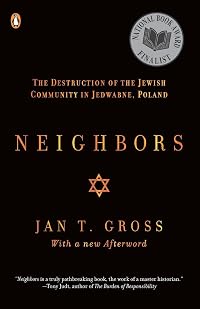
— Jan T. Gross, author of Neighbors: The Destruction of the Jewish Community in Jedwabne, Poland
"This is a gripping, challenging, and masterfully written book...Understanding the destruction of the Jews as part of genocidal perils that have not passed even today, the horrific case of Buczacz thus comes as a powerful warning against bigotry everywhere at any time."
— Tom Segev, author of The Seventh Mllion: The Israelis and the Holocaust and Simon Wiesenthal:The Life and Legends
"Omer Bartov's masterful study of Buczacz — marked by comprehensive scholarship and a compelling narrative — exemplifies the very best in current Holocaust history writing."
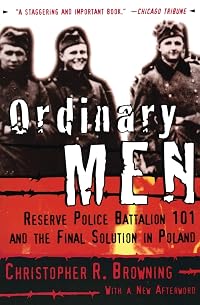
— Christopher R. Browning, author of Ordinary Men: Reserve Police Battalion 101 and the Final Solution in Poland
"A long-awaited and essential contribution to the history of the Holocaust. This thoroughly researched and beautifully written study of the deep roots and immediate circumstances of genocide in an East Galician multiethnic town...is an exemplary microhistory of the Holocaust, a model for future research."
— Saul Friedlander, author of Nazi Germany and the Jews
"The result is breathtaking, painful and astonishing…"
— The Spectator
"Bartov’s book is a significant contribution to the holocaust literature. However, the book’s contribution is even more significant in understanding the complexity of interethnic conflicts...Anatomy of a Genocide furnishes well-lit imagination, though shaded with sadness, beneficial for the communities trapped into mutual impairment in various parts of the world, including Chechnya, Palestine, Kashmir, Burundi, and Rwanda."
— New York Journal of Books
"Fascinating...This resonant and cautionary history demonstrates how the peace was incrementally disrupted, as rage accumulated and neighbors and friends felt pitted against one another."
—National Book Review
"At once a scholarly and a personal book."
—Jerusalem Post
"Remarkable."
—The New Yorker
Source: https://www.simonandschuster.com/books/Anatomy-of-a-Genocide/Omer-Bartov/9781451...
Listen also:
https://soundcloud.com/watsoninstitute/the-anatomy-of-a-genocide?fbclid=IwAR01N6... show less
“A substantive contribution to the history of ethnic strife and extreme violence” (The Wall Street Journal) and a cautionary examination of how genocide can take root at the local level—turning neighbors, friends, and family against one another—as seen through the eastern European border town of Buczacz during World War II.
For more than four hundred years, the Eastern European border town of Buczacz—today part of Ukraine—was home to a highly diverse citizenry. It was here that Poles, Ukrainians, and Jews all lived side by side in relative harmony. Then came World War II, and three years later the entire Jewish population had been murdered by German show more and Ukrainian police, while Ukrainian nationalists eradicated Polish residents. In truth, though, this genocide didn’t happen so quickly.
In Anatomy of a Genocide, Omer Bartov explains that ethnic cleansing doesn’t occur as is so often portrayed in popular history, with the quick ascent of a vitriolic political leader and the unleashing of military might. It begins in seeming peace, slowly and often unnoticed, the culmination of pent-up slights and grudges and indignities. The perpetrators aren’t just sociopathic soldiers. They are neighbors and friends and family. They are also middle-aged men who come from elsewhere, often with their wives and children and parents, and settle into a life of bourgeois comfort peppered with bouts of mass murder.
For more than two decades Bartov, whose mother was raised in Buczacz, traveled extensively throughout the region, scouring archives and amassing thousands of documents rarely seen until now. He has also made use of hundreds of first-person testimonies by victims, perpetrators, collaborators, and rescuers. Anatomy of a Genocide profoundly changes our understanding of the social dynamics of mass killing and the nature of the Holocaust as a whole. Bartov’s book isn’t just an attempt to understand what happened in the past. It’s a warning of how it could happen again, in our own towns and cities—much more easily than we might think."
Mr. Bartov’s anatomy of genocidal destruction is a monument of a different sort. It is an act of filial piety recollecting the blood-soaked homeland of his parents; it is a substantive contribution to the history of ethnic strife and extreme violence; it is a harrowing reminder that brutality and intimacy can combine to destroy individual lives and reshape the destiny of a region and its peoples: history as recollection and as warning."
—Wall Street Journal
"Fascinating...This resonant and cautionary history demonstrates how the peace was incrementally disrupted, as rage accumulated and neighbors and friends felt pitted against one another."
— Los Angeles Times
"If you imagined there might be no more to learn, along comes this work of forensic, gripping, original, appalling brilliance."
— Philippe Sands, author of East West Street: On the Origins of "Genocide" and "Crimes Against Humanity"
"Combines a long historical perspective with an intimate reconstruction of who the perpetrators and victims of the Holocaust had been. A local history opening our understanding of the phenomenon at large. A brilliant book by a master historian."
— Jan T. Gross, author of Neighbors: The Destruction of the Jewish Community in Jedwabne, Poland
"This is a gripping, challenging, and masterfully written book...Understanding the destruction of the Jews as part of genocidal perils that have not passed even today, the horrific case of Buczacz thus comes as a powerful warning against bigotry everywhere at any time."
— Tom Segev, author of The Seventh Mllion: The Israelis and the Holocaust and Simon Wiesenthal:The Life and Legends
"Omer Bartov's masterful study of Buczacz — marked by comprehensive scholarship and a compelling narrative — exemplifies the very best in current Holocaust history writing."
— Christopher R. Browning, author of Ordinary Men: Reserve Police Battalion 101 and the Final Solution in Poland
"A long-awaited and essential contribution to the history of the Holocaust. This thoroughly researched and beautifully written study of the deep roots and immediate circumstances of genocide in an East Galician multiethnic town...is an exemplary microhistory of the Holocaust, a model for future research."
— Saul Friedlander, author of Nazi Germany and the Jews
"The result is breathtaking, painful and astonishing…"
— The Spectator
"Bartov’s book is a significant contribution to the holocaust literature. However, the book’s contribution is even more significant in understanding the complexity of interethnic conflicts...Anatomy of a Genocide furnishes well-lit imagination, though shaded with sadness, beneficial for the communities trapped into mutual impairment in various parts of the world, including Chechnya, Palestine, Kashmir, Burundi, and Rwanda."
— New York Journal of Books
"Fascinating...This resonant and cautionary history demonstrates how the peace was incrementally disrupted, as rage accumulated and neighbors and friends felt pitted against one another."
—National Book Review
"At once a scholarly and a personal book."
—Jerusalem Post
"Remarkable."
—The New Yorker
Source: https://www.simonandschuster.com/books/Anatomy-of-a-Genocide/Omer-Bartov/9781451...
Listen also:
https://soundcloud.com/watsoninstitute/the-anatomy-of-a-genocide?fbclid=IwAR01N6... show less
Ratings
Members
- Recently Added By
Lists

History: Holocaust
106 works; 1 member
Author Information

30+ Works 1,073 Members
Omer Bartov is the John P. Birkelund Distinguished Professor of European History and Professor of History and German Studies at Brown University and has written on the Holocaust, Nazi Germany and modern genocide. His books include Erased: Vanishing Traces of Jewish Galicia in Present-Day Ukraine (2007), Germany's War and the Holocaust: Disputed show more Histories (2003) and Mirrors of Destruction: War, Genocide and Modern Identity (2000). show less
Some Editions
Awards and Honors
Awards
Common Knowledge
- Canonical title*
- Anatomie d'un génocide. Vie et mort dans une ville nommée Buczacz
- Original title
- Anatomy of a genocide. The life and death of a town called Buczacz
- Original publication date
- 2018-01-23 (1e édition originale américaine, Simon and Schuster, New York) (1e édition originale américaine, Simon and Schuster, New York); 2021-01-15 (1e traduction et édition française, Plein jour) (1e traduction et édition française, Plein jour)
- Important places
- Ukraine
- Important events
- Holocaust
- Epigraph*
- J’ai fermé les yeux pour ne pas voir mes frères, mes concitoyens, mourir ; une obsession que cette vision de ma ville et de ses morts, menés par leurs tortionnaires comme des brebis à l’abattoir, vers leur fin lamenta... (show all)ble et cruelle. Et j’ai fermé les yeux pour une autre raison. Car si je les ferme, je deviens alors le maître du monde et je ne vois que ce que je veux. Et c’est pourquoi j’ai fermé les yeux et appelé ma ville pour qu’elle se tienne devant moi, elle et tous ses habitants, elle et toutes ses synagogues pleines de leurs prières. Je me tenais devant chacun, à sa place, là où il avait l’habitude de s’asseoir, tout à son étude, et là où son fils et son beau-fils et ses petits-enfants avaient l’habitude de s’asseoir. Dans ma ville à moi, tous allaient à la prière*.
Samuel Joseph Agnon, La Ville tout entière - Dedication*
- À ma famille,
Wai-yee, Raz, Shira et Rom
Le rocher de mon existence et la fontaine de mon âme
Et en mémoire de
Yehudit (Szimer) Bartov, 1924-1998
Hanoch (Helfgott) Bartov, 1926-2016 - First words*
- Note sur la toponymie et les noms personnels
Cet ouvrage s’intéresse à une région qui a été habitée par plusieurs groupes ethniques et dirigée par différents régimes. [...]
Souvenirs d’enfance
« Parle-moi de ton enfance », ai-je dit.
Nous étions dans la cuisine de ma mère à Tel-Aviv. [...]
Chapitre 1
La tempête gronde
Buczacz apparaît pour la première fois dans les chroniques de la Pologne médiévale en 1260. [...] - Original language*
- Anglais (Etats-Unis) (Etats-Unis)
*Some information comes from Common Knowledge in other languages. Click "Edit" for more information.
Classifications
Statistics
- Members
- 136
- Popularity
- 241,034
- Reviews
- 2
- Rating
- (4.81)
- Languages
- English, French, German, Polish
- Media
- Paper, Ebook
- ISBNs
- 8
- ASINs
- 3