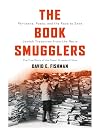
The Book Smugglers: Partisans, Poets, and the Race to Save Jewish Treasures from the Nazis
by David E. Fishman
On This Page
Description
The Book Smugglers is the nearly unbelievable story of ghetto residents who rescued thousands of rare books and manuscripts--first from the Nazis and then from the Soviets--by hiding them on their bodies, burying them in bunkers, and smuggling them across borders. It is a tale of heroism and resistance, of friendship and romance, and of unwavering devotion--including the readiness to risk one's life--to literature and art. And it is entirely true. Based on Jewish, German, and Soviet show more documents, including diaries, letters, memoirs, and the author's interviews with several of the story's participants, The Book Smugglers chronicles the daring activities of a group of poets turned partisans and scholars turned smugglers in Vilna, "The Jerusalem of Lithuania." The rescuers were pitted against Johannes Pohl, a Nazi "expert" on the Jews, who had been dispatched to Vilna by the Nazi looting agency, Einsatzstab Reichsleiter Rosenberg, to organize the seizure of the city's great collections of Jewish books. Pohl and his Einsatzstab staff planned to ship the most valuable materials to Germany and incinerate the rest. The Germans used forty ghetto inmates as slave-laborers to sort, select, pack, and transport the materials, either to Germany or to nearby paper mills. This group, nicknamed "the Paper Brigade," and informally led by poet Shmerke Kaczerginski, a garrulous, street-smart adventurer and master of deception, smuggled thousands of books and manuscripts past German guards. If caught, the men would have faced death by firing squad at Ponar, the mass-murder site outside of Vilna. To store the rescued manuscripts, poet Abraham Sutzkever helped build an underground book-bunker sixty feet beneath the Vilna ghetto. Kaczerginski smuggled weapons as well, using the group's worksite, the former building of the Yiddish Scientific Institute, to purchase arms for the ghetto's secret partisan organization. All the while, both men wrote poetry that was recited and sung by the fast-dwindling population of ghetto inhabitants. With the Soviet "liberation" of Vilna (now known as Vilnius), the Paper Brigade thought themselves and their precious cultural treasures saved--only to learn that their new masters were no more welcoming toward Jewish culture than the old, and the books must now be smuggled out of the USSR. Thoroughly researched by the foremost scholar of the Vilna Ghetto--a writer of exceptional daring, style, and reach--The Book Smugglers is an epic story of human heroism, a little-known tale from the blackest days of the war. show lessTags
Recommendations









Member Reviews
This is an interesting and moving book about a group of prisoners in Vilnius, Poland whose monumental efforts saved Jewish literature for future generations. This is a scholarly work that cannot be read quickly. There is too much to absorb. There is much written on these pages that I already am aware of, but there is also still so much recorded there that shocked me. I find that no matter how much I read on this subject, man’s inhumanity to man, man’s justification for it, and man’s implementation of the mass murder of millions of people still retains the power to horrify me. Yet on the flip side, there are these stories of courageous men and women that will live on in perpetuity and that continue to amaze me and challenge my own show more ideas of whether or not I, too, could have risen to the occasion as they did.
I had not known of the organization Hitler created to study Judaica, using the Jews’ own literature and religious books to justify their criminal status in order to legitimize Germany’s practice of rampant anti-Semitism and mass murder. The persecution of Jews, once begun, permeated German society in every country Germany invaded. Even, although difficult to believe, the church had members who were complicit in the brutality inflicted on those that Hitler deemed unfit. There was little opportunity for escape for the Jew who was caught in the web. Still, many unsung heroes risked life and limb to preserve their history and protect their written culture from literally being burned at the stake.
Books not deemed useful to the despicable effort of Hitler’s minions were burned in bonfires. Books deemed helpful in their effort to justify their heinous behavior were preserved. Jews were recruited and imprisoned for that particular intellectual pursuit. They were to decide which book lived and which book died. This book is the story of the salvation of the Jewish books that would eventually preserve Jewish history, heritage and culture, and defeat Hitler’s effort to destroy an entire people. The people featured in this book were their saviors. show less
I had not known of the organization Hitler created to study Judaica, using the Jews’ own literature and religious books to justify their criminal status in order to legitimize Germany’s practice of rampant anti-Semitism and mass murder. The persecution of Jews, once begun, permeated German society in every country Germany invaded. Even, although difficult to believe, the church had members who were complicit in the brutality inflicted on those that Hitler deemed unfit. There was little opportunity for escape for the Jew who was caught in the web. Still, many unsung heroes risked life and limb to preserve their history and protect their written culture from literally being burned at the stake.
Books not deemed useful to the despicable effort of Hitler’s minions were burned in bonfires. Books deemed helpful in their effort to justify their heinous behavior were preserved. Jews were recruited and imprisoned for that particular intellectual pursuit. They were to decide which book lived and which book died. This book is the story of the salvation of the Jewish books that would eventually preserve Jewish history, heritage and culture, and defeat Hitler’s effort to destroy an entire people. The people featured in this book were their saviors. show less
 This review was written for LibraryThing Early Reviewers.
Quite an incredible story about Vilna's "Paper Brigade," a group of committed men and women who saved books and manuscripts from destruction by the Nazis (and later by the Soviets). This is a fascinating tale, and Fishman's thorough research is very impressive. I wish, though, that the book had spent some more time with an editor: after the tenth time the author noted that Vilna was known as "the Jerusalem of Lithuania" before the thirtieth page, I was ready to fling the book across the room. I persevered, and am glad I did, but I admit that such stylistic infelicities did color my opinion of the volume.
This review was written for LibraryThing Early Reviewers.When reading books about historical events, I prefer narrative micro-history, in which the author takes a small slice of history and tells the story in depth and with a novelistic approach.
Who would ever dream that in a Jewish ghetto in Vilna, Lithuania, there would be a busy lending library run by people enslaved by the Nazis? That a group of men and women would risk torture and death to save books about Jewish culture and history? That those same books would need to be saved again from the Soviets? That the story would go on for decades? That’s the story in The Book Smugglers.
The Book Smugglers has everything I look for in a great book of history: top-notch writing and sourcing; a bibliography; voluminous notes; an index. As an show more added bonus, the author added a glossary of unfamiliar terms. AND, the book is a real page-turner.
Having read and enjoyed The Monuments Men, I had very high hopes for this book – and I was not disappointed in the least. As in that book, the characters who play prominent roles are amazing. But, while the Monuments Men worked under adverse conditions, the “book smugglers” worked against unbelievable odds that we can only imagine. The author does great honor to those heroes and ensures they will be remembered. show less
Who would ever dream that in a Jewish ghetto in Vilna, Lithuania, there would be a busy lending library run by people enslaved by the Nazis? That a group of men and women would risk torture and death to save books about Jewish culture and history? That those same books would need to be saved again from the Soviets? That the story would go on for decades? That’s the story in The Book Smugglers.
The Book Smugglers has everything I look for in a great book of history: top-notch writing and sourcing; a bibliography; voluminous notes; an index. As an show more added bonus, the author added a glossary of unfamiliar terms. AND, the book is a real page-turner.
Having read and enjoyed The Monuments Men, I had very high hopes for this book – and I was not disappointed in the least. As in that book, the characters who play prominent roles are amazing. But, while the Monuments Men worked under adverse conditions, the “book smugglers” worked against unbelievable odds that we can only imagine. The author does great honor to those heroes and ensures they will be remembered. show less
This review was written for LibraryThing Early Reviewers.This is the remarkable true story of ghetto residents who rescued thousands of rare books and manuscripts – first from the Nazis and then from the Soviets by hiding them on their bodies, burying them in bunkers, and smuggling them across borders. Fishman reminds us that the Holocaust was not just “the greatest genocide in history”. It was also “an act of cultural plunder and destruction” in which the “Nazis sought not only to murder the Jews but also to obliterate their culture”.
This is a fascinating look at the book brigade who, as best as they could salvaged Jewish books, papers, and other cultural items from the Nazis in Vilna, the "Jerusalem of Lithuania" during the war. This portion of the book makes for an incredible story of survival and daring.
The second half of the book, while interesting, was a bit of a letdown for me, as the book brigade survivors had to attempt, once again, to save the books, this time, from the Soviets. This portion of the book focused more on political and bureaucratic maneuverings and was not nearly as dramatic.
An excellent, well-researched book about a lesser-known chapter of the war and one I'd recommend to those who like to read nonfiction.
The second half of the book, while interesting, was a bit of a letdown for me, as the book brigade survivors had to attempt, once again, to save the books, this time, from the Soviets. This portion of the book focused more on political and bureaucratic maneuverings and was not nearly as dramatic.
An excellent, well-researched book about a lesser-known chapter of the war and one I'd recommend to those who like to read nonfiction.
This review was written for LibraryThing Early Reviewers.Libraries have always been among the first targets marked for destruction by an invading enemy. Throughout history unsung heroes have given their all to protect and save for prosperity the books in their care.
David Fleishman has given us a well-documented, fascinating book about the men and women who saved many of the most valuable Jewish and Yiddish books in Vilnius, Poland. They were called 'The Paper Brigade' and they managed to save Torahs, historical records, and art from Nazi, and later Soviet, destruction in WWII.
The Jewish community in Vilnius valued books. The Strasham Library was built next door to the synagogue and remained open seven days a week, including the Sabbath and holidays. The library was well known and people show more contributed valuable items from all over Poland, Europe and the world. Before the war the library held over 40,000 items.
The Paper Brigade eventually managed to save over 20,000 items, at the cost of several dedicated lives.
The book is well written, full of information and will leave you in awe of those who risked so much to keep the books from being stolen and/or destroyed. show less
David Fleishman has given us a well-documented, fascinating book about the men and women who saved many of the most valuable Jewish and Yiddish books in Vilnius, Poland. They were called 'The Paper Brigade' and they managed to save Torahs, historical records, and art from Nazi, and later Soviet, destruction in WWII.
The Jewish community in Vilnius valued books. The Strasham Library was built next door to the synagogue and remained open seven days a week, including the Sabbath and holidays. The library was well known and people show more contributed valuable items from all over Poland, Europe and the world. Before the war the library held over 40,000 items.
The Paper Brigade eventually managed to save over 20,000 items, at the cost of several dedicated lives.
The book is well written, full of information and will leave you in awe of those who risked so much to keep the books from being stolen and/or destroyed. show less
This review was written for LibraryThing Early Reviewers.The author should be commended for the detail in this book and the amount of research it must have taken to dig out all these facts. Art works weren't the only things looted during the Holocaust; libraries were also targets of Nazi theft. Jews risked their lives to save their treasures: books, letters, artifacts.
Although there were tons of names and organizations it was not difficult to read this book and I didn't feel that I was overwhelmed with information. I particularly liked the last chapters of the book which described what happened to the treasures and the people involved in the project following the war. This book is a keeper.
Although there were tons of names and organizations it was not difficult to read this book and I didn't feel that I was overwhelmed with information. I particularly liked the last chapters of the book which described what happened to the treasures and the people involved in the project following the war. This book is a keeper.
This review was written for LibraryThing Early Reviewers.Members
- Recently Added By
Author Information
11 Works 226 Members
David E. Fishman teaches history at the Jewish Theological Seminary in New York. His Scholarly interests focus on the Jews of Eastern Europe.
Awards and Honors
Awards
Common Knowledge
- Important places
- Vilna, Poland; Vilnius, Lithuania
- Important events
- Holocaust
- Original language
- English
Classifications
Statistics
- Members
- 148
- Popularity
- 222,532
- Reviews
- 12
- Rating
- (4.61)
- Languages
- English
- Media
- Paper, Audiobook, Ebook
- ISBNs
- 8
- ASINs
- 2