
David E. Fishman
Author of The Book Smugglers: Partisans, Poets, and the Race to Save Jewish Treasures from the Nazis
About the Author
David E. Fishman teaches history at the Jewish Theological Seminary in New York. His Scholarly interests focus on the Jews of Eastern Europe.
Works by David E. Fishman
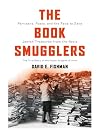
The Book Smugglers: Partisans, Poets, and the Race to Save Jewish Treasures from the Nazis (2017) 147 copies, 12 reviews
Embers Plucked from the Fire: The Rescue of Jewish Cultural Treasures in Vilna (1996) 16 copies, 2 reviews
Russia's First Modern Jews: The Jews of Shklov (Reappraisals in Jewish Social & Intellectual History) (1994) 13 copies, 1 review
Os Homens que Salvavam Livros. A Luta Para Proteger os Tesouros Judeus das Maos dos Nazistas (Em Portugues do Brasil) (2019) 13 copies
Tagged
Common Knowledge
- Canonical name
- Fishman, David E.
- Birthdate
- 1957
- Gender
- male
- Education
- Yeshiva University (BA)
Harvard University (MA/PhD) - Occupations
- author
professor - Nationality
- USA
- Birthplace
- New York, USA
- Places of residence
- New York, New York, USA
- Map Location
- USA
Members
Reviews
The Book Smugglers: Partisans, Poets, and the Race to Save Jewish Treasures from the Nazis by David E. Fishman
When reading books about historical events, I prefer narrative micro-history, in which the author takes a small slice of history and tells the story in depth and with a novelistic approach.
Who would ever dream that in a Jewish ghetto in Vilna, Lithuania, there would be a busy lending library run by people enslaved by the Nazis? That a group of men and women would risk torture and death to save books about Jewish culture and history? That those same books would need to be saved again from show more the Soviets? That the story would go on for decades? That’s the story in The Book Smugglers.
The Book Smugglers has everything I look for in a great book of history: top-notch writing and sourcing; a bibliography; voluminous notes; an index. As an added bonus, the author added a glossary of unfamiliar terms. AND, the book is a real page-turner.
Having read and enjoyed The Monuments Men, I had very high hopes for this book – and I was not disappointed in the least. As in that book, the characters who play prominent roles are amazing. But, while the Monuments Men worked under adverse conditions, the “book smugglers” worked against unbelievable odds that we can only imagine. The author does great honor to those heroes and ensures they will be remembered. show less
Who would ever dream that in a Jewish ghetto in Vilna, Lithuania, there would be a busy lending library run by people enslaved by the Nazis? That a group of men and women would risk torture and death to save books about Jewish culture and history? That those same books would need to be saved again from show more the Soviets? That the story would go on for decades? That’s the story in The Book Smugglers.
The Book Smugglers has everything I look for in a great book of history: top-notch writing and sourcing; a bibliography; voluminous notes; an index. As an added bonus, the author added a glossary of unfamiliar terms. AND, the book is a real page-turner.
Having read and enjoyed The Monuments Men, I had very high hopes for this book – and I was not disappointed in the least. As in that book, the characters who play prominent roles are amazing. But, while the Monuments Men worked under adverse conditions, the “book smugglers” worked against unbelievable odds that we can only imagine. The author does great honor to those heroes and ensures they will be remembered. show less
 This review was written for LibraryThing Early Reviewers.
The Book Smugglers: Partisans, Poets, and the Race to Save Jewish Treasures from the Nazis by David E. Fishman
This is a fascinating look at the book brigade who, as best as they could salvaged Jewish books, papers, and other cultural items from the Nazis in Vilna, the "Jerusalem of Lithuania" during the war. This portion of the book makes for an incredible story of survival and daring.
The second half of the book, while interesting, was a bit of a letdown for me, as the book brigade survivors had to attempt, once again, to save the books, this time, from the Soviets. This portion of the book focused show more more on political and bureaucratic maneuverings and was not nearly as dramatic.
An excellent, well-researched book about a lesser-known chapter of the war and one I'd recommend to those who like to read nonfiction. show less
The second half of the book, while interesting, was a bit of a letdown for me, as the book brigade survivors had to attempt, once again, to save the books, this time, from the Soviets. This portion of the book focused show more more on political and bureaucratic maneuverings and was not nearly as dramatic.
An excellent, well-researched book about a lesser-known chapter of the war and one I'd recommend to those who like to read nonfiction. show less
This review was written for LibraryThing Early Reviewers.The Book Smugglers: Partisans, Poets, and the Race to Save Jewish Treasures from the Nazis by David E. Fishman
This is an interesting and moving book about a group of prisoners in Vilnius, Poland whose monumental efforts saved Jewish literature for future generations. This is a scholarly work that cannot be read quickly. There is too much to absorb. There is much written on these pages that I already am aware of, but there is also still so much recorded there that shocked me. I find that no matter how much I read on this subject, man’s inhumanity to man, man’s justification for it, and man’s show more implementation of the mass murder of millions of people still retains the power to horrify me. Yet on the flip side, there are these stories of courageous men and women that will live on in perpetuity and that continue to amaze me and challenge my own ideas of whether or not I, too, could have risen to the occasion as they did.
I had not known of the organization Hitler created to study Judaica, using the Jews’ own literature and religious books to justify their criminal status in order to legitimize Germany’s practice of rampant anti-Semitism and mass murder. The persecution of Jews, once begun, permeated German society in every country Germany invaded. Even, although difficult to believe, the church had members who were complicit in the brutality inflicted on those that Hitler deemed unfit. There was little opportunity for escape for the Jew who was caught in the web. Still, many unsung heroes risked life and limb to preserve their history and protect their written culture from literally being burned at the stake.
Books not deemed useful to the despicable effort of Hitler’s minions were burned in bonfires. Books deemed helpful in their effort to justify their heinous behavior were preserved. Jews were recruited and imprisoned for that particular intellectual pursuit. They were to decide which book lived and which book died. This book is the story of the salvation of the Jewish books that would eventually preserve Jewish history, heritage and culture, and defeat Hitler’s effort to destroy an entire people. The people featured in this book were their saviors. show less
I had not known of the organization Hitler created to study Judaica, using the Jews’ own literature and religious books to justify their criminal status in order to legitimize Germany’s practice of rampant anti-Semitism and mass murder. The persecution of Jews, once begun, permeated German society in every country Germany invaded. Even, although difficult to believe, the church had members who were complicit in the brutality inflicted on those that Hitler deemed unfit. There was little opportunity for escape for the Jew who was caught in the web. Still, many unsung heroes risked life and limb to preserve their history and protect their written culture from literally being burned at the stake.
Books not deemed useful to the despicable effort of Hitler’s minions were burned in bonfires. Books deemed helpful in their effort to justify their heinous behavior were preserved. Jews were recruited and imprisoned for that particular intellectual pursuit. They were to decide which book lived and which book died. This book is the story of the salvation of the Jewish books that would eventually preserve Jewish history, heritage and culture, and defeat Hitler’s effort to destroy an entire people. The people featured in this book were their saviors. show less
This review was written for LibraryThing Early Reviewers.The Book Smugglers: Partisans, Poets, and the Race to Save Jewish Treasures from the Nazis by David E. Fishman
Quite an incredible story about Vilna's "Paper Brigade," a group of committed men and women who saved books and manuscripts from destruction by the Nazis (and later by the Soviets). This is a fascinating tale, and Fishman's thorough research is very impressive. I wish, though, that the book had spent some more time with an editor: after the tenth time the author noted that Vilna was known as "the Jerusalem of Lithuania" before the thirtieth page, I was ready to fling the book across the show more room. I persevered, and am glad I did, but I admit that such stylistic infelicities did color my opinion of the volume. show less
This review was written for LibraryThing Early Reviewers.Awards

You May Also Like


Statistics
- Works
- 11
- Members
- 225
- Popularity
- #99,814
- Rating
- 4.6
- Reviews
- 15
- ISBNs
- 22
- Languages
- 4
- Favorited
- 1
