Acadie
by Dave Hutchinson
On This Page
Description
The Colony left Earth to find their utopia--a home on a new planet where their leader could fully explore the colonists' genetic potential, unfettered by their homeworld's restrictions. They settled a new paradise, and have been evolving and adapting for centuries. Earth has other plans. The original humans have been tracking their descendants across the stars, bent on their annihilation. They won't stop until the new humans have been destroyed, their experimentation wiped out of the human show more gene pool. Can't anyone let go of a grudge anymore? show lessTags
Recommendations












Member Reviews
Dave Hutchinson is more widely known for his dystopian Fractured Europe series, whose first book I tried some time ago but did not finish: it was a good, interesting concept, that much I could see, but there was an underlying feeling of… sadness, for want of a better word, that ultimately drove me away from that story. My curiosity remains, however, and I don’t rule out the possibility of returning to the series at another time and maybe with a different frame of mind.
Meanwhile, I wanted to try something different from this author so that when I saw this novella mentioned I knew the different premise and genre might be what I needed, so I took the plunge: Acadie is a short but intriguing story that piqued my interest from page one show more to the – quite unexpected – end. The central character is Duke (or rather John Wayne Faraday, the nickname being one of the many tongue-in-cheek jokes scattered throughout the narrative), formerly a lawyer with the Bureau of Colonization that he left after a callous incident he publicly denounced. Adrift and without a job, Duke is contacted by an agent of the Colony, a remote conglomeration of artificial habitats created by Isobel Potter, a genetic scientist who fled Earth when her extreme experiments on human genome made her an outlaw. After 500 years away from the mother planet and the Bureau, Potter and her acolytes have created a society where extreme modifications are the norm and freedom of choice is the law: Duke has been elected President for the simple reason that he doesn’t want the job, and that’s where the real story starts, as a probe from Earth manages to slip through the Colony’s defense systems and threatens to expose the location of Potter and her people.
The overall tone of the story is light and humorous, mostly because of the apparent happy-go-lucky attitude of the Colony’s dwellers toward anything organized or even faintly smelling of imposed order: the rebels have created a society where the highly intelligent inhabitants can be anything they like, either in career choice or appearance – Duke’s meeting with a group of Tolkien enthusiasts modified to look like Hobbits, Elves and so on is indeed a case in point. Something changes, however, once the probe from Earth is discovered, not least because it was able to slip through the sophisticated net of countermeasures that were put in place: for this reason Duke is tasked with organizing the massive endeavor of picking up stakes and moving the Colony somewhere else, since their perfect hiding place has certainly been discovered.
Here is where a huge shift occurs: as the rest of the Colony moves away toward greener pastures, Duke and his team remain behind to insure no one will be aware of their whereabouts, and that’s when direct contact with the Earth probe’s AI changes everything, in a very unexpected, very dramatic way, taking away from the readers every single certainty they had gathered until that point. It’s been a long while since I was so stunned by a story and by the way the narrative managed to lull me into a false sense of security, only to open its trap under my feet at the very last moment.
Well done indeed…
Originally posted at SPACE and SORCERY BLOG show less
Meanwhile, I wanted to try something different from this author so that when I saw this novella mentioned I knew the different premise and genre might be what I needed, so I took the plunge: Acadie is a short but intriguing story that piqued my interest from page one show more to the – quite unexpected – end. The central character is Duke (or rather John Wayne Faraday, the nickname being one of the many tongue-in-cheek jokes scattered throughout the narrative), formerly a lawyer with the Bureau of Colonization that he left after a callous incident he publicly denounced. Adrift and without a job, Duke is contacted by an agent of the Colony, a remote conglomeration of artificial habitats created by Isobel Potter, a genetic scientist who fled Earth when her extreme experiments on human genome made her an outlaw. After 500 years away from the mother planet and the Bureau, Potter and her acolytes have created a society where extreme modifications are the norm and freedom of choice is the law: Duke has been elected President for the simple reason that he doesn’t want the job, and that’s where the real story starts, as a probe from Earth manages to slip through the Colony’s defense systems and threatens to expose the location of Potter and her people.
The overall tone of the story is light and humorous, mostly because of the apparent happy-go-lucky attitude of the Colony’s dwellers toward anything organized or even faintly smelling of imposed order: the rebels have created a society where the highly intelligent inhabitants can be anything they like, either in career choice or appearance – Duke’s meeting with a group of Tolkien enthusiasts modified to look like Hobbits, Elves and so on is indeed a case in point. Something changes, however, once the probe from Earth is discovered, not least because it was able to slip through the sophisticated net of countermeasures that were put in place: for this reason Duke is tasked with organizing the massive endeavor of picking up stakes and moving the Colony somewhere else, since their perfect hiding place has certainly been discovered.
Here is where a huge shift occurs: as the rest of the Colony moves away toward greener pastures, Duke and his team remain behind to insure no one will be aware of their whereabouts, and that’s when direct contact with the Earth probe’s AI changes everything, in a very unexpected, very dramatic way, taking away from the readers every single certainty they had gathered until that point. It’s been a long while since I was so stunned by a story and by the way the narrative managed to lull me into a false sense of security, only to open its trap under my feet at the very last moment.
Well done indeed…
Originally posted at SPACE and SORCERY BLOG show less
On a whim sponsored by a buddy read, I hopped on this novella by Hutchinson not knowing what to expect at all.
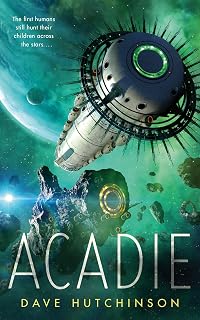
I mean, sure, the cover kinda tells me something, but other than something like a deep space opera or a generational ship and perhaps some AI action, I kinda cleansed my mind and let myself slide in.
And it was a gentle ride! Superbrights and an interesting colony and technological advancement and a really laid-back narrator. It was cool and light and pleasant...
Until the end. Or nearly so.
I LOVED the dark twist. :) No spoilers, but it's quite hardcore and tickled all my fancies. Hard SF shouldn't be afraid to go all dark. :) Fun twist, solid story.
I mean, sure, the cover kinda tells me something, but other than something like a deep space opera or a generational ship and perhaps some AI action, I kinda cleansed my mind and let myself slide in.
And it was a gentle ride! Superbrights and an interesting colony and technological advancement and a really laid-back narrator. It was cool and light and pleasant...
Until the end. Or nearly so.
I LOVED the dark twist. :) No spoilers, but it's quite hardcore and tickled all my fancies. Hard SF shouldn't be afraid to go all dark. :) Fun twist, solid story.
I’m not entirely convinced by tor.com’s line of novellas if only because they like to suggest they either saved the novella or created the current market for them. Small presses have been publishing novellas for decades. Which is not to say tor.com are doing a bad thing. I like novellas so I can’t fault tor.com’s mission. True, many of the novellas they’ve published have not been to my taste – and one or two have, I feel, been lauded far more than they deserve – but … one or two of them have been entirely to my taste. Like this one. Dave Hutchinson is a friend but I also think his soon-to-be-more-than-a-trilogy of Europe books is excellent. Acadie, however, is much closer to heartland sf. The narrator is the president of show more the Writers, a group outlawed because of their experimentation on the human genome. He was a famous whistleblower and was recruited by them. When the Writers learn their hideout may have been discovered, they kick into action a plan to abandon the star system and settle elsewhere. The narrator is one of several people left behind to oversee the withdrawal and ensure the Writers are not tracked to their new home. But what he learns calls into question everything he knows. Okay, so the big twist isn’t that hard to spot, and while I’m no fan of first-person narratives, it’s hard to see how this story would work in third-person. If I have one complaint, it’s the depictions of the Writers’ society are both a little extreme, which undermines the point they’re trying to make. But otherwise, this is good stuff. It may well make the BSFA Award shortlist. show less
One of those books with a giant plot twist at the end that makes you question absolutely everything, including whether you actually still like the book or not.
The beginning of the book is fun and kind of standard. Exceptional except really-not guy is recruited to join a secret colony project where clever and creative rogue-scientist types who have exploited genetic engineering to create super-intelligent people who think up solutions to all their problems and create a magical anarchy utopia in the sky.
Except, maybe it's all a horror-show? Maybe the narrator's entire existence was a made up back story to motivate his AI? BUT WAS IT? Signs say yes, but I have unanswered questions from the plot twist confrontation at the end.
I've had too show more many disappointing plot twist endings lately, so I'm pretty grumbly about this one. Hutchinson can write, and there are some cool ideas here, but I need a trial separation from the drastic plot-twist ending. We just need to see other people for a while. show less
The beginning of the book is fun and kind of standard. Exceptional except really-not guy is recruited to join a secret colony project where clever and creative rogue-scientist types who have exploited genetic engineering to create super-intelligent people who think up solutions to all their problems and create a magical anarchy utopia in the sky.
Except, maybe it's all a horror-show? Maybe the narrator's entire existence was a made up back story to motivate his AI? BUT WAS IT? Signs say yes, but I have unanswered questions from the plot twist confrontation at the end.
I've had too show more many disappointing plot twist endings lately, so I'm pretty grumbly about this one. Hutchinson can write, and there are some cool ideas here, but I need a trial separation from the drastic plot-twist ending. We just need to see other people for a while. show less
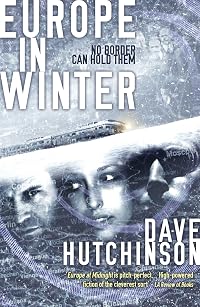
Dave Hutchinson is best know for his Fractured Europe series – an excellent, gritty near future mixture of spy, noir and even fantasy. So far, I’ve only read the first two books, both of which ended up in my favorite lists of what I read that year. I thought a break from that series before I tackle Europe In Winter might shed some more light on Hutchinson as an author. And while this 103-page novella is not as successful or original as both Europes I’ve read, it’s still a good, entertaining read.
For all the talk about Fractured Europe, Hutchinson’s short story collections seem to have been forgotten in the mists of time: he published 4 of those as David Hutchinson between 1978 and 1982. When he returned to fiction that was show more largely unacknowledged too. His 2001 full length debut The Villages only has 7 Goodreads ratings. The Push, a 2009 Hard SF novella, was only released in 350 copies. It took another 5 years before Europe At Autumn really got things going. Today Acadie is even published by powerhouse Tor, who seem to have picked up on Hutchinson’s critical acclaim.
Hutchinson’s narrative voice is again as confident as it is in Europe. (...)
Read the full review on Weighing A Pig... show less
For all the talk about Fractured Europe, Hutchinson’s short story collections seem to have been forgotten in the mists of time: he published 4 of those as David Hutchinson between 1978 and 1982. When he returned to fiction that was show more largely unacknowledged too. His 2001 full length debut The Villages only has 7 Goodreads ratings. The Push, a 2009 Hard SF novella, was only released in 350 copies. It took another 5 years before Europe At Autumn really got things going. Today Acadie is even published by powerhouse Tor, who seem to have picked up on Hutchinson’s critical acclaim.
Hutchinson’s narrative voice is again as confident as it is in Europe. (...)
Read the full review on Weighing A Pig... show less
Hutchinson, Dave. Acadie. St. Martins P, 2017.
Acadie is a far-future space opera novella with an unexpected twist at the end. It begins when Duke wakes up on the morning after his 150th birthday. There is a crisis on the utopian thinktank Colony of deep space habitats where he has been chosen president because nobody else wanted the job. He was abducted and offered the chance to join this Colony when he told off his bosses and quit his job with the ruling Bureau of the Settled Worlds. The genetic engineering genius who founded the Colony is on the run from the Settled Worlds, so the Colony has to move from one star system to another every time it is found by probes still searching for them after half a millennium. Now another Settled show more Worlds probe seems to have found them. Hutchinson, a British writer, has Duke speak a lively British slang. Even in the far future, Brits are likely to say “bollocks” when the occasion arises. show less
Acadie is a far-future space opera novella with an unexpected twist at the end. It begins when Duke wakes up on the morning after his 150th birthday. There is a crisis on the utopian thinktank Colony of deep space habitats where he has been chosen president because nobody else wanted the job. He was abducted and offered the chance to join this Colony when he told off his bosses and quit his job with the ruling Bureau of the Settled Worlds. The genetic engineering genius who founded the Colony is on the run from the Settled Worlds, so the Colony has to move from one star system to another every time it is found by probes still searching for them after half a millennium. Now another Settled show more Worlds probe seems to have found them. Hutchinson, a British writer, has Duke speak a lively British slang. Even in the far future, Brits are likely to say “bollocks” when the occasion arises. show less
Very short novel (less than 100 pages according to my ebook reader). It's an intriguing space opera about an "outlaw" community based on genetic manipulation that tries to avoid detection by the main human civilization. The readers are dropped right in and it takes a while before they understand what the setting is like and what the plot is about. The process is a bit too slow, perhaps, as it takes almost half the book. However, it's interesting enough, and in the second half the pace of the story quickens and it ends with a good twist. Recommended.
Members
- Recently Added By
Lists

2018 Hugo Eligible Novellas
33 works; 9 members
Author Information
46+ Works 1,540 Members
Dave Hutchinson was born in Sheffield in 1960. After reading American Studies at the University of Nottingham, he became a journalist. He's the author of five collections of short stories and one novel, and his novella "The Push" was shortlisted for the 2010 BSFA award for short fiction. He has also edited two anthologies and co-edited a third. show more His short story 'The Incredible Exploding Man' was featured in the first 'Solaris Rising' anthology, and appeared in the 29th Year's Best Science Fiction collection. In 2015 his title Europe in Autumn made the shortlist for the Arthur C Clarke Award for science-fiction. (Bowker Author Biography) show less
Some Editions
Awards and Honors
Series
Belongs to Publisher Series
Une heure-lumière (20)
Common Knowledge
- Canonical title*
- Acadie
- Original title
- Acadie
- Original publication date
- 2017-09-05
- People/Characters*
- John Wayne "Duke" Faraday; Cunjugación "Connie" Lang; Ernestine "Ernie" Bury; Isabel Potter; Karl Ross
- First words
- It was the morning after the morning after my hundred and fiftieth birthday, and a terrible noise was trying to wake me up.
- Last words
- (Click to show. Warning: May contain spoilers.)It was the morning after the morning after my hundred and fiftieth birthday, and a terrible noise was trying to wake me up.
- Original language*
- Anglais (Royaume-Uni) (Royaume-Uni)
*Some information comes from Common Knowledge in other languages. Click "Edit" for more information.
Classifications
Statistics
- Members
- 130
- Popularity
- 251,187
- Reviews
- 11
- Rating
- (3.67)
- Languages
- English, French
- Media
- Paper, Ebook
- ISBNs
- 3
- ASINs
- 2