On This Page
Description
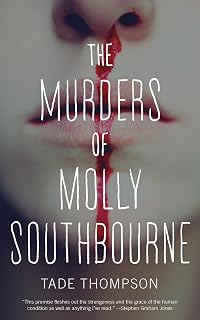
The rule is simple: don't bleed. For as long as Molly Southbourne can remember, she's been watching herself die. Whenever she bleeds, another molly is born, identical to her in every way and intent on her destruction. Molly knows every way to kill herself, but she also knows that as long as she survives she'll be hunted. No matter how well she follows the rules, eventually the mollys will find her. Can Molly find a way to stop the tide of blood, or will she meet her end at the hand of a girl show more who looks just like her? show lessTags
Recommendations
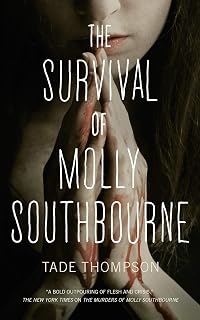






Member Recommendations
Member Reviews
This is very good body horror, about a young woman whose blood generates versions of herself that inevitably become violent, attack her, and must be killed. Reading this story literally raises many questions, but I don't think it's meant to be read literally, given the ambiguity about when and where this is taking place. Metaphorically, this is a horrifying rendition of a reality many of us endure or have endured: the unceasing and often violent murders of aspects of ourselves, both good and bad, so that we can continue to exist. No wonder Molly was exhausted at the end. No wonder we all feel so exhausted.
A bold novella that, despite its splatter-punk attire and childhood narrative, is neither a horror story nor a coming of age story, but a ruthlessly wrought thought-experiment, soaked in blood.
This was a beautifully written and deeply strange novella. It started in bloody chaos that challenged me to live with not understanding what was going on, to let the strangeness and blood gush over me as I sifted it for meaning.
Before I could make sense of the situation, I was dropped into a retrospective narrative of childhood. This should have been more familiar territory but it was not. It was a childhood bounded by simple but inscrutable rules and filled with violent death and unacknowledged secrets. Of course, in some ways, all childhoods show more are bounded by the inscrutable and filled with unacknowledged secrets held both the adults and the child. Part of the power of this strange story is how close it is to normality.
The journey to unlocking the rules and secrets of Molly Southbourne's childhood and their consequences led me back to the start, a place I now understood, and then offered one final surprise.
It was a stimulating journey of the kind that classic Science Fiction short stories are made of: relentlessly pursuing the consequences of an original idea. Despite its splatter-punk attire and childhood narrative, this was neither a horror story nor a rites of passage, coming of age story of the kind that builds empathy for the young person coming to adulthood. Rather it was a ruthlessly wrought thought-experiment, soaked in blood.
I realise now that Tade Thompson had signposted his intent with the 'Epigraph', a quote from an eighteenth-century psychologist that I should have paid more attention to. It reads:
One of the big debates in psychology is the nature of the self, sometimes seen as reflexive self-defence mechanism conjured by need and sometimes as the heart of cognisance.
'The Murders of Molly Southbourne' takes a look at the concept of self in a very dramatic, very physical way. I think Tade Thompson uses it as an experiment to answer the question 'What if, every time we bled, we were confronted with a new self that wanted to replace us?'
He looks at how we would react to the new selves, at how we would survive at how the new selves would change us and whether the struggle to sustain the self that is constantly challenged and constantly changing, is worth it.
I think it's a sign of his skill that I was so wrapped up the story while reading it, that I only understood that it was a thought experiment when the experiment was over and the results were in.
I think that's because Tade Thompson loves playing with words as much as he loves playing with ideas. He virtually declares as much when he attributes this passion to the deadly, isolated, constantly under threat Molly:
I enjoyed the story for its boldness and its matter-of-fact approach to survival through violence. Molly's parents were a great invention. They create everything Molly is an yet have almost nothing in common with her and almost no understanding of who she is. Tade Thompson takes this common situation and uses it to amplify the strangeness in his story.
I think the ending is one that will either be loved or hated. I liked it. It seemed to me to be a result of the experiment that was credible even though it was unexpected. It also seemed a brave way for a writer to end a story. Of course, being a writer, Tade Thompson also managed to make the ending a great opening to a new story. Some may see that as a cliff-hanger ending. I think we plunged madly over the edge of the cliff and are now surveying the wreckage and looking for survivors.
Tade Thompson has written a second novella, 'The Survival Of Molly Southbourne', which starts where 'The Murders Of Molly Southbourne' ends. I'll be reading it soon. I'm hoping to find that, unlike the 'Murderbot' novellas which felt like a novel served in slices, the next novella will conduct a new experiment. I'm intrigued to know what that will be. show less
This was a beautifully written and deeply strange novella. It started in bloody chaos that challenged me to live with not understanding what was going on, to let the strangeness and blood gush over me as I sifted it for meaning.
Before I could make sense of the situation, I was dropped into a retrospective narrative of childhood. This should have been more familiar territory but it was not. It was a childhood bounded by simple but inscrutable rules and filled with violent death and unacknowledged secrets. Of course, in some ways, all childhoods show more are bounded by the inscrutable and filled with unacknowledged secrets held both the adults and the child. Part of the power of this strange story is how close it is to normality.
The journey to unlocking the rules and secrets of Molly Southbourne's childhood and their consequences led me back to the start, a place I now understood, and then offered one final surprise.
It was a stimulating journey of the kind that classic Science Fiction short stories are made of: relentlessly pursuing the consequences of an original idea. Despite its splatter-punk attire and childhood narrative, this was neither a horror story nor a rites of passage, coming of age story of the kind that builds empathy for the young person coming to adulthood. Rather it was a ruthlessly wrought thought-experiment, soaked in blood.
I realise now that Tade Thompson had signposted his intent with the 'Epigraph', a quote from an eighteenth-century psychologist that I should have paid more attention to. It reads:
'With each failure, each insult, each wound to the psyche, we are created anew. This new self is who we must battle each day or face extinction of the spirit. Writings on the Natural History of the Mind
Theophilus Roshodan, 1789
One of the big debates in psychology is the nature of the self, sometimes seen as reflexive self-defence mechanism conjured by need and sometimes as the heart of cognisance.
'The Murders of Molly Southbourne' takes a look at the concept of self in a very dramatic, very physical way. I think Tade Thompson uses it as an experiment to answer the question 'What if, every time we bled, we were confronted with a new self that wanted to replace us?'
He looks at how we would react to the new selves, at how we would survive at how the new selves would change us and whether the struggle to sustain the self that is constantly challenged and constantly changing, is worth it.
I think it's a sign of his skill that I was so wrapped up the story while reading it, that I only understood that it was a thought experiment when the experiment was over and the results were in.
I think that's because Tade Thompson loves playing with words as much as he loves playing with ideas. He virtually declares as much when he attributes this passion to the deadly, isolated, constantly under threat Molly:
Molly loves reading. Words used to be homework, a chore, but books make words do magic tricks. She loves that writers make words their servants and bend them to their will.
I enjoyed the story for its boldness and its matter-of-fact approach to survival through violence. Molly's parents were a great invention. They create everything Molly is an yet have almost nothing in common with her and almost no understanding of who she is. Tade Thompson takes this common situation and uses it to amplify the strangeness in his story.
I think the ending is one that will either be loved or hated. I liked it. It seemed to me to be a result of the experiment that was credible even though it was unexpected. It also seemed a brave way for a writer to end a story. Of course, being a writer, Tade Thompson also managed to make the ending a great opening to a new story. Some may see that as a cliff-hanger ending. I think we plunged madly over the edge of the cliff and are now surveying the wreckage and looking for survivors.
Tade Thompson has written a second novella, 'The Survival Of Molly Southbourne', which starts where 'The Murders Of Molly Southbourne' ends. I'll be reading it soon. I'm hoping to find that, unlike the 'Murderbot' novellas which felt like a novel served in slices, the next novella will conduct a new experiment. I'm intrigued to know what that will be. show less
A near-enough future novella that blends the horror inherent in a mutating, collapsing Earth and the human response to it with the species-level will to live no matter what.
I was utterly sucked into the narrative early on:
I'm not going to tell you what mollys are because this is a very difficult concept to get across. I want the whole reading experience to be as full and rich for you as it was for me. And I want to encourage you to spend $3.99 on a novella of surpassing strangeness, violence, and transcendent oddness.
What isn't odd, though sometimes is transcendent, is Author Tade's writing. He show more finds angles and corners where others don't look, or if they look don't see.
With the exception of one, and only one, hideous and disfiguring instance of the w-bomb, the text is chillingly, even eerily, smooth and flawless. It resembles in its affect the narrative monologues of Rod Serling. You know the point is there, you can see it rising like the number Pi is said to do over all knowledge, glimpses above foggy lowlands of text, but it shifts and your gaze has to slip away from it as you negotiate the steps of the ziggurat.
Climb, I urge you; the view is fine and the journey's toll is just the beginning of a quest. show less
I was utterly sucked into the narrative early on:
An example has aspects of a thing, but is that the thing itself? The mollys have aspects of Molly, but that doesn't make them Molly, does it?
I'm not going to tell you what mollys are because this is a very difficult concept to get across. I want the whole reading experience to be as full and rich for you as it was for me. And I want to encourage you to spend $3.99 on a novella of surpassing strangeness, violence, and transcendent oddness.
What isn't odd, though sometimes is transcendent, is Author Tade's writing. He show more finds angles and corners where others don't look, or if they look don't see.
Her shoes wait in formation for her feet to quicken them.
***
Alarms are going off like the mating calls of robotic insects.
***
As she cuts the cadavers on the slabs, she realizes there is no sense to be made out of life.
With the exception of one, and only one, hideous and disfiguring instance of the w-bomb, the text is chillingly, even eerily, smooth and flawless. It resembles in its affect the narrative monologues of Rod Serling. You know the point is there, you can see it rising like the number Pi is said to do over all knowledge, glimpses above foggy lowlands of text, but it shifts and your gaze has to slip away from it as you negotiate the steps of the ziggurat.
Climb, I urge you; the view is fine and the journey's toll is just the beginning of a quest. show less
To be fair to Thompson, I had no idea what I was getting myself into with this book. I bought it because I love the Rosewater books, and other people have been saying good things about it.
The opening chapter of this book makes no sense on first read. However, near to the end of the book something became horribly clear, and I had to go back and reread that chapter. Given that it is the framing narrative of the whole story, it shouldn't have worked. And yet. I recommend people read the book before reading any reviews.
Although novella/novelette length, this is a lush and convoluted story with so much detailed world-building and characterisation leaked to the reader a droplet at a time. As a horror story, it works on multiple fascinating show more levels. The surface level body horror is flagged in the blurb on the back of the book. Some of that can be quite visceral.
But in the background is a barely recognised societal and environmental collapse happening. The little bits of that the creep in are sadly entirely credible as the way that life is going. show less
The opening chapter of this book makes no sense on first read. However, near to the end of the book something became horribly clear, and I had to go back and reread that chapter. Given that it is the framing narrative of the whole story, it shouldn't have worked. And yet. I recommend people read the book before reading any reviews.
Although novella/novelette length, this is a lush and convoluted story with so much detailed world-building and characterisation leaked to the reader a droplet at a time. As a horror story, it works on multiple fascinating show more levels. The surface level body horror is flagged in the blurb on the back of the book. Some of that can be quite visceral.
But in the background is a barely recognised societal and environmental collapse happening. The little bits of that the creep in are sadly entirely credible as the way that life is going. show less
This is a twisted little nugget of a book. I don’t think I’ve ever read anything else like it. Based on the blurb, one would expect to read a suspense novel or a thriller, but it really wasn’t either. Molly Southbourne faces nearly impossible circumstances, because her blood can spontaneously reproduce into murderous replicas of herself. I say murderous, but they don’t set their sights on any old target, just on Molly herself. Despite this, Molly chooses to leave behind the insular life she has lived on her parents’ farm and attend university. In the end, The Murders of Molly Southbourne is a story about a girl facing factors outside her control and still trying to find a way to live life on her own terms.
I would recommend show more this book to more mature readers who don’t mind delving into the gray areas of morality. There is extensive bloodshed, but it is acknowledged in a very clinical manner, so it doesn’t come across as being gory. show less
I would recommend show more this book to more mature readers who don’t mind delving into the gray areas of morality. There is extensive bloodshed, but it is acknowledged in a very clinical manner, so it doesn’t come across as being gory. show less
Can't think of anything I've ever read quite like this! An unusual twist on the coming-of-age novella that reads quickly, but is a complete and satisfying story in its own right.
Molly lives a lonely childhood on a farm, homeschooled by her parents. Her parents give her a shortlist of rules that become normal to her: avoid bleeding at all cost, any blood (a nosebleed, a scraped knee, a dog bite, a paper cut) is to be burned and bleached. If attacked, she is to fight back and if she comes across a pit, she is to call her parents immediately.
Turns out, that any amount of Molly's blood that isn't obliterated quickly will result in the 'seeding' of at least one doppelganger. These pod mollies are murderous and the OG Molly must kill them or show more be killed.
Of course, her condition presents an interesting challenge as she ages, goes through a rebellious period with her parents, and eventually has boyfriends or sexual relationships. The book covers her 'education' about her afflection and how she learns to live with it from childhood through early adulthood.
Horror and a high body count, but less of the grisly sort, more of the unsettling kind. Appropriate for high schoolers on the more mature side--has a couple of fairly graphic sexual scenes and depictions of violence.
Recommended - I came across a reco for it, had never heard of it, likely wouldn't have found on my own, but glad I did! It has that under-the-radar gem kind of feel to it. show less
Molly lives a lonely childhood on a farm, homeschooled by her parents. Her parents give her a shortlist of rules that become normal to her: avoid bleeding at all cost, any blood (a nosebleed, a scraped knee, a dog bite, a paper cut) is to be burned and bleached. If attacked, she is to fight back and if she comes across a pit, she is to call her parents immediately.
Turns out, that any amount of Molly's blood that isn't obliterated quickly will result in the 'seeding' of at least one doppelganger. These pod mollies are murderous and the OG Molly must kill them or show more be killed.
Of course, her condition presents an interesting challenge as she ages, goes through a rebellious period with her parents, and eventually has boyfriends or sexual relationships. The book covers her 'education' about her afflection and how she learns to live with it from childhood through early adulthood.
Horror and a high body count, but less of the grisly sort, more of the unsettling kind. Appropriate for high schoolers on the more mature side--has a couple of fairly graphic sexual scenes and depictions of violence.
Recommended - I came across a reco for it, had never heard of it, likely wouldn't have found on my own, but glad I did! It has that under-the-radar gem kind of feel to it. show less
The Murders of Molly Southbourne is a story about enduring trauma and the fear that comes with mental illness (as this story acts as a parable for mental illness). Thompson asks: what happens when someone who looks exactly like you, comes from within you, seeking to destroy your relationships and to kill you. This is what suffering from undiagnosed mental illness in extreme cases feels like.
The Murders of Molly Southbourne is a body horror/psychological thriller about a woman named Molly whose blood makes murderous doppelgängers when it is shed outside her body. She and her parents call them mollies. The reason that Molly’s blood has this effect is opaque to Molly, though as the story begins in Molly’s early childhood, it’s show more clear that this peculiar blood-borne disease is normal to Molly, even though she may be the only one in the world to suffer from it (although a letter from her mother reveals that Molly's disease was potentially somehow was passed on to her) Molly is trained from a young age to kill the mollies: to bleach and burn any of her blood that falls.
So when she goes to college, she finds that her disease makes everything harder. She finds out that her relations with men ultimately result in their deaths. Her parents are killed (also by mollies, ones that were trapped in Molly’s childhood and overlooked),and in the conclusion, we learn that Molly is trying to find a lucid non-murderous mollie to replace her, because she’s tired of living.
Talk about bleak. But Thompson has crafted a tale of life, death, love, and suffering and heartbreak that is so disturbing you can't look away. It's visceral, it's chilling, it's sad. AND there is truth to it.
Molly is fighting herself and she destroys everything she is connected to. When mental illness goes untreated this is what it feels like.
This is a powerful work of fiction. show less
The Murders of Molly Southbourne is a body horror/psychological thriller about a woman named Molly whose blood makes murderous doppelgängers when it is shed outside her body. She and her parents call them mollies. The reason that Molly’s blood has this effect is opaque to Molly, though as the story begins in Molly’s early childhood, it’s show more clear that this peculiar blood-borne disease is normal to Molly, even though she may be the only one in the world to suffer from it (although a letter from her mother reveals that Molly's disease was potentially somehow was passed on to her) Molly is trained from a young age to kill the mollies: to bleach and burn any of her blood that falls.
So when she goes to college, she finds that her disease makes everything harder. She finds out that her relations with men ultimately result in their deaths. Her parents are killed (also by mollies, ones that were trapped in Molly’s childhood and overlooked),and in the conclusion, we learn that Molly is trying to find a lucid non-murderous mollie to replace her, because she’s tired of living.
Talk about bleak. But Thompson has crafted a tale of life, death, love, and suffering and heartbreak that is so disturbing you can't look away. It's visceral, it's chilling, it's sad. AND there is truth to it.
Molly is fighting herself and she destroys everything she is connected to. When mental illness goes untreated this is what it feels like.
This is a powerful work of fiction. show less
Members
- Recently Added By
Lists

Scary Stories for the Season
160 works; 94 members

Diverse Horror
262 works; 6 members

2018 Hugo Eligible Novellas
33 works; 9 members

Books Read in 2018
4,360 works; 110 members

Books About Murder
313 works; 7 members

Books Read in 2019
4,052 works; 110 members

Books Tagged Doppelganger
15 works; 1 member

Books Read in 2020
4,379 works; 124 members

Black Authors
386 works; 32 members

Female Protagonist
1,056 works; 57 members

Reading Glasses Podcast
410 works; 3 members
Author Information

28+ Works 3,348 Members
Awards and Honors
Awards
Series

Belongs to Publisher Series
Une heure-lumière (18)
Work Relationships
Is abridged in
Common Knowledge
- Canonical title
- The Murders of Molly Southbourne
- Original title
- The Murders of Molly Southbourne
- Original publication date
- 2017
- People/Characters
- Molly Southbourne; Mykhaila Southbourne; Connor Southbourne; James Down
- Epigraph
- With each failure, each insult, each wound to the psyche, we are created anew. This new self is who we must battle each day or face extinction of the spirit.
WRITINGS ON THE NATURAL HISTORY OF THE MIND
THEOPHILUS ROSHOD... (show all)AN, 1789 - Dedication
- For Hunter,
Pectus est quod disertos facit. - First words
- I wake into a universe defined by pain.
- Last words
- (Click to show. Warning: May contain spoilers.)“Name?” says a voice.
“Molly Southbourne,” I say. - Blurbers
- Bear, Elizabeth; Khaw, Cassandra; Saulter, Stephanie; Bestwick, Simon; Grimwood, Jon Courtenay; Jones, Stephen Graham
- Original language
- English
- Canonical DDC/MDS
- 823.92
- Canonical LCC
- PR6120.H6653
Classifications
Statistics
- Members
- 437
- Popularity
- 70,636
- Reviews
- 32
- Rating
- (3.93)
- Languages
- Catalan, English, French, Hungarian
- Media
- Paper, Ebook
- ISBNs
- 7
- ASINs
- 1