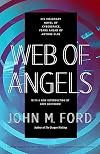
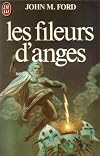
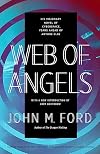
Web of Angels
by John M. Ford
On This Page
Description
"The Web links the many worlds of humanity. Most people can only use it to communicate. Some can retrieve and store data, as well as use simple precoded programs. Only a privileged few are able to create their own software, within proscribed limits. And then there are the Webspinners. Grailer is Fourth Literate, able to manipulate the Web at will-and use it for purposes unintended and impossible for anyone but the most talented Webspinner. Obviously, he cannot be allowed to live. Condemned show more to death at the age of nine, Grailer must go underground, hiding his skills, testing his powers--until he is ready to do battle with the Web itself. With a new introduction from Cory Doctorow, written especially for this edition"-- show lessTags
Recommendations



















Member Reviews
(Original Review, 1993)
"Web of Angels" by John M. Ford is an interesting new book, sort of a mixture of Samuel Delany's style and the subject of "Shockwave Rider". A future galactic civilization has FTL ships, anti-gravity, life-prolonging treatments etc., but the greatest of their tools is the Web, a universal communication and processing system that can reach any part of the Galaxy instantaneously. As a result, people are graded by their ability to use the system: First Literacy is the ability to understand symbols, i.e., to use the Web as a communications device only, Second Literacy to run programs, i.e., the ability to retrieve and store data in open Web storage, to use existing precoded programs in normal access patterns, and show more Third to write code, i.e., the ability to change the structure of existing Web. People without First Literacy are not allowed to leave their planet. The book's protagonist has Fourth Literacy: the power to make unauthorized use of the system resources in spite of safeguards. He calls it Webspinning. The Bell Stellar Communications Corporation terminates spinners with extreme prejudice. The black-clad agents of CIRCE are constantly hunting for them. Far worse, though, are the Geisthounds, semi-intelligent programs that roam the Web in search of tampering. While the hero is teaching his lover to become a spinner she is murdered by them. All of this is mixed in with legends, the Tarot, and old folksongs. The way he scatters these tidbits around shows either amazing erudition or, if they are all invented, equally amazing imagination. His view of computers is perhaps too romantic, but the glitter of the rest of the story more than makes up for it.
I went off and thought for awhile, and then decided to ask what other books have been written which were a) based on computer technology; b) not outrageously incorrect; and c) based mainly on HUMAN characters, not cardboard cut-outs. The only three books or novellas I can think of that satisfy all of these criteria are "The Shockwave Rider", by John Brunner, "Fireship", by Joan D. Vinge, and now, "Web of Angels", by John M. Ford. The last is not up to the first two but is certainly a VERY impressive first showing.
Note that "When Harlie Was One" is not included since by my lights it violates both (b) and (c). "The Moon is a Harsh Mistress" violates (b), somewhat. show less
"Web of Angels" by John M. Ford is an interesting new book, sort of a mixture of Samuel Delany's style and the subject of "Shockwave Rider". A future galactic civilization has FTL ships, anti-gravity, life-prolonging treatments etc., but the greatest of their tools is the Web, a universal communication and processing system that can reach any part of the Galaxy instantaneously. As a result, people are graded by their ability to use the system: First Literacy is the ability to understand symbols, i.e., to use the Web as a communications device only, Second Literacy to run programs, i.e., the ability to retrieve and store data in open Web storage, to use existing precoded programs in normal access patterns, and show more Third to write code, i.e., the ability to change the structure of existing Web. People without First Literacy are not allowed to leave their planet. The book's protagonist has Fourth Literacy: the power to make unauthorized use of the system resources in spite of safeguards. He calls it Webspinning. The Bell Stellar Communications Corporation terminates spinners with extreme prejudice. The black-clad agents of CIRCE are constantly hunting for them. Far worse, though, are the Geisthounds, semi-intelligent programs that roam the Web in search of tampering. While the hero is teaching his lover to become a spinner she is murdered by them. All of this is mixed in with legends, the Tarot, and old folksongs. The way he scatters these tidbits around shows either amazing erudition or, if they are all invented, equally amazing imagination. His view of computers is perhaps too romantic, but the glitter of the rest of the story more than makes up for it.
I went off and thought for awhile, and then decided to ask what other books have been written which were a) based on computer technology; b) not outrageously incorrect; and c) based mainly on HUMAN characters, not cardboard cut-outs. The only three books or novellas I can think of that satisfy all of these criteria are "The Shockwave Rider", by John Brunner, "Fireship", by Joan D. Vinge, and now, "Web of Angels", by John M. Ford. The last is not up to the first two but is certainly a VERY impressive first showing.
Note that "When Harlie Was One" is not included since by my lights it violates both (b) and (c). "The Moon is a Harsh Mistress" violates (b), somewhat. show less
This story is one of the precursors of all the current Internet/Hacker genres. A young boy is born with the innate ability to 'Spin' the Web...except of course, Webspinning is illegal.
What's amazing of this story is the detailed depth of Ford's Universe-- an interstellar nation filled with corporations and shadowy government powerful near-immortals and an artful use of folklore and mythology to give the reader a glimpse of a society the recognizable came from Earth...just a long long time ago. In the end, the story is about the Power to Effect Change, and the responsibility that comes with it. The imagined technology is timeless, and as exciting a read today as it was way back in 1980.
What's amazing of this story is the detailed depth of Ford's Universe-- an interstellar nation filled with corporations and shadowy government powerful near-immortals and an artful use of folklore and mythology to give the reader a glimpse of a society the recognizable came from Earth...just a long long time ago. In the end, the story is about the Power to Effect Change, and the responsibility that comes with it. The imagined technology is timeless, and as exciting a read today as it was way back in 1980.
his first novel, actually the first true cyberpunk novel, published in 1980, and amazingly predictive about the shape of the WWW that was still to emerge. it's kind of a difficult novel to read in places, as Ford never stops to expand on anything: though it comes in at 311 pp, a normal length at the time, it really needs about 700 pp (more normal for a major sf work now) to fill out the world, characters, and timeline; i always wonder whether it was massively cut to fit, or whether his editor needed to tell him to 'unpack everything'. cause an expanded mss might have resulted in perfection. this is his first novel, but his later books do consistently come in at about that size, though not necessarily at that weight. but anyway don't be show more dismayed, just keep reading: most everything has a resolution, the shadowy characters are ethically complex, the background world easy to extrapolate from the hints at hand, and Ford's interesting brain just keeps on making new and creative connections between things as his various stories eventually come together. Ford is a brilliant thinker, and writer, and this is still an important book for more than historical reasons. show less
A far future cyberpunk novel, showing Ford's promise as a writer.
Ratings
Members
- Recently Added By
Author Information

70+ Works 5,999 Members
John M. Ford is the author of eight novels and dozens of short stories. He lives in Minneapolis, Minnesota
Some Editions
Common Knowledge
- Canonical title
- Web of Angels
- Original publication date
- 1980
- Epigraph
- Still to be haunted, still to be pursued,
Still to be frighted with false apparitions
Of pageant majesty and new-coined greatness. . . .
—from Perkin Warbeck - First words
- The boy ran for his life, across the City Juvenal on the planet called Brass.
- Last words
- (Click to show. Warning: May contain spoilers.)For to the question the black knight had asked, he did not know if he would ever find another reply.
"Well, they're saved from the blessings of civilization."
—from Stagecoach - Blurbers
- Jordan, Robert
Classifications
Statistics
- Members
- 225
- Popularity
- 144,293
- Reviews
- 4
- Rating
- (3.97)
- Languages
- English, French
- Media
- Paper, Ebook
- ISBNs
- 5
- ASINs
- 2