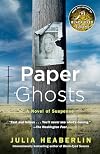
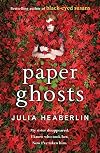
Paper Ghosts
by Julia Heaberlin
On This Page
Description
A Texas map marked with three red dots like drops of blood. A serial killer who claims to have dementia. A mysterious young woman who wants answers. What could go wrong?FINALIST FOR THE ITW THRILLER AWARD • “Fast and furious . . . You’ll never see what’s coming.”—The Washington Post
Years ago, her sister Rachel vanished. Now she is almost certain the man who took Rachel sits in the passenger seat beside her. He claims to have dementia and no memory of murdering girls across show more Texas in a string of places where he shot eerie pictures. To find the truth, she proposes a dangerous idea: a ten-day road trip with a possible serial killer to examine cold cases linked to his haunting photographs. Is he a liar or a broken old man? Is he a pathological con artist—or is she? You won’t see the final, terrifying twist spinning your way until the very last mile.
Praise for Paper Ghosts
“Paper Ghosts is a riveting summer read that shows Texas in a powerfully intimate light.” —The Austin Chronicle
“[An] artful and elegiac psychological thriller . . . riveting.”—Publishers Weekly (starred review)
“[Paper Ghosts] elevates the often tawdry genre of the serial killer novel to a work of art.”—Sunday Express (UK)
“Texas has yet again bred a major American noir writer.”—D Magazine
“[Heaberlin has] developed a distinctive literary voice, one that is on full display in Paper Ghosts.”—Houston Chronicle
“Entertainingly unnerving.”—The Dallas Morning News
“Strong characterisation, haunting images, a wonderful sense of place, and some dark comedy make this travelogue-cum-psychological thriller well worth the read.”—The Guardian. show less
Tags
Recommendations



















Member Reviews
MYSTERY/SUSPENSE
Julia Heaberlin
Paper Ghosts: A Novel of Suspense
Ballantine Books
Hardcover, 978-0-8041-7802-0 (also available as an e-book, an audio book, and on Audible), 368 pgs., $26.00
May 15, 2018
Nineteen-year-old Rachel disappeared on a sunny summer morning while riding her bicycle to a babysitting job. Twelve years later Rachel’s sister believes, after “dozens of interviews…hundreds of suspects…thousands of documents…reading, stalking, stealing,” she’s found the man who killed Rachel. Carl Louis Feldman, an internationally famous, award-winning documentary and fine-art photographer, is an elderly man, who may have dementia, living in a halfway house in Fort Worth after being acquitted of the murder of a Waco woman.
Our show more narrator, name unknown until the penultimate chapter, tells the proprietor of the halfway house that Carl is her long-lost father so she can take him on a ten-day road trip across Texas, “from the gray beaches of Galveston to the existential desert town of Marfa and then back across the state to disappear into the Pine Curtain,” visiting gruesome landmarks where women disappeared or were killed, women our narrator suspects are Carl’s victims. She hopes to jar his faulty memory into revealing the location of Rachel’s body, so she can be properly laid to rest.
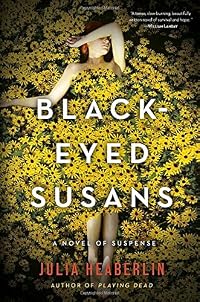
Paper Ghosts: A Novel of Suspense is the fourth psychological thriller from award-winning Texas journalist Julia Heaberlin. Her last novel, Black-Eyed Susans (Ballantine Books, 2015), has been optioned for film by Rod Lurie and Voltage Pictures. Accessorized with haunting black-and-white photographs, Paper Ghosts is top-notch suspense, a dangerous game of hide-and-go-seek, masterfully crafted.
Heaberlin conjures a foreboding atmosphere of exquisite tension. Paper Ghosts is an evenly paced, intricately plotted original conception, with plenty of twists to keep us guessing. “I know what I’m worried about,” the narrator thinks. “I know the laws I’ve broken, the snakes I’ve poked. But who does Carl think is following us?” Clues are dark, thin threads in a tangled bird’s nest; this is a mystery requiring your attention.
Paper Ghosts moves between the present and our narrator’s anxiety-ridden childhood and her obsessive search. She’s literally trained with a shadowy character she discovered on the Dark Web to overcome her many fears, both real and imagined. She would make a great recurring character or the star of a series, like Taylor Stevens’s Vanessa Michael Munroe, with whom she has much in common. Given the limitations of first-person point of view, we readers know only what the narrator knows, but we don’t know if she’s reliable.
Heaberlin has written a literary thriller in which evocative imagery and precise details provide texture. As a thunderstorm builds, “[t]he air is churning, half-hot, half-cool, cream being poured into hot coffee.” “Perspiration sticks like apple juice” behind the narrator’s knees during an afternoon thick with humidity. An old Victorian home, long shuttered, is “velvet with darkness and dust.”
Macabre humor is startling, but it feels good to relieve the tension. Wily Carl has a list of conditions to be met if he’s to agree to this road trip with a stranger he knows isn’t his daughter, including a camera, a Whataburger, a can of WD-40 (?), a copy of Lonesome Dove, and a shovel (!). Following a near miss with a speeding car while crossing a street, Carl tells our narrator, “I’m taking you back to Fort Worth. You’re a goddamn ticking bomb. I was looking for a pleasant little road trip and a lot of Whataburgers.”
Ultimately the narrator finds herself in league with Carl, which she resists, the relationship reminding me weirdly of Paper Moon (Paramount Pictures, 1973). Paper Ghosts is emotional pinball, and Heaberlin is the wizard.
Originally published in Lone Star Literary Life. show less
Julia Heaberlin
Paper Ghosts: A Novel of Suspense
Ballantine Books
Hardcover, 978-0-8041-7802-0 (also available as an e-book, an audio book, and on Audible), 368 pgs., $26.00
May 15, 2018
Nineteen-year-old Rachel disappeared on a sunny summer morning while riding her bicycle to a babysitting job. Twelve years later Rachel’s sister believes, after “dozens of interviews…hundreds of suspects…thousands of documents…reading, stalking, stealing,” she’s found the man who killed Rachel. Carl Louis Feldman, an internationally famous, award-winning documentary and fine-art photographer, is an elderly man, who may have dementia, living in a halfway house in Fort Worth after being acquitted of the murder of a Waco woman.
Our show more narrator, name unknown until the penultimate chapter, tells the proprietor of the halfway house that Carl is her long-lost father so she can take him on a ten-day road trip across Texas, “from the gray beaches of Galveston to the existential desert town of Marfa and then back across the state to disappear into the Pine Curtain,” visiting gruesome landmarks where women disappeared or were killed, women our narrator suspects are Carl’s victims. She hopes to jar his faulty memory into revealing the location of Rachel’s body, so she can be properly laid to rest.
Paper Ghosts: A Novel of Suspense is the fourth psychological thriller from award-winning Texas journalist Julia Heaberlin. Her last novel, Black-Eyed Susans (Ballantine Books, 2015), has been optioned for film by Rod Lurie and Voltage Pictures. Accessorized with haunting black-and-white photographs, Paper Ghosts is top-notch suspense, a dangerous game of hide-and-go-seek, masterfully crafted.
Heaberlin conjures a foreboding atmosphere of exquisite tension. Paper Ghosts is an evenly paced, intricately plotted original conception, with plenty of twists to keep us guessing. “I know what I’m worried about,” the narrator thinks. “I know the laws I’ve broken, the snakes I’ve poked. But who does Carl think is following us?” Clues are dark, thin threads in a tangled bird’s nest; this is a mystery requiring your attention.
Paper Ghosts moves between the present and our narrator’s anxiety-ridden childhood and her obsessive search. She’s literally trained with a shadowy character she discovered on the Dark Web to overcome her many fears, both real and imagined. She would make a great recurring character or the star of a series, like Taylor Stevens’s Vanessa Michael Munroe, with whom she has much in common. Given the limitations of first-person point of view, we readers know only what the narrator knows, but we don’t know if she’s reliable.
Heaberlin has written a literary thriller in which evocative imagery and precise details provide texture. As a thunderstorm builds, “[t]he air is churning, half-hot, half-cool, cream being poured into hot coffee.” “Perspiration sticks like apple juice” behind the narrator’s knees during an afternoon thick with humidity. An old Victorian home, long shuttered, is “velvet with darkness and dust.”
Macabre humor is startling, but it feels good to relieve the tension. Wily Carl has a list of conditions to be met if he’s to agree to this road trip with a stranger he knows isn’t his daughter, including a camera, a Whataburger, a can of WD-40 (?), a copy of Lonesome Dove, and a shovel (!). Following a near miss with a speeding car while crossing a street, Carl tells our narrator, “I’m taking you back to Fort Worth. You’re a goddamn ticking bomb. I was looking for a pleasant little road trip and a lot of Whataburgers.”
Ultimately the narrator finds herself in league with Carl, which she resists, the relationship reminding me weirdly of Paper Moon (Paramount Pictures, 1973). Paper Ghosts is emotional pinball, and Heaberlin is the wizard.
Originally published in Lone Star Literary Life. show less
I just spent a week in Texas, including a family reunion in Waco, where Heaberlin’s book begins, and am happy to report that trip was nothing like this story, a battle of wits between a woman and a really creepy protagonist.
Grace is twenty-four and obsessed with finding out what happened to her only sister Rachel, who disappeared when Grace was twelve. What ignited her search was finding a photograph of two ethereal girls taped to the bottom of their home’s attic stairs. The photographer, Carl Feldman, was later tried and acquitted in another local woman’s disappearance, although suspicions about him never went away. Heaberlin masterfully weaves this backstory through the narrative— enlightening, coloring, providing show more motivation.
Diagnosed with dementia, the elderly Carl now lives in a halfway house run by Mrs. T. Grace poses as Carl’s daughter to persuade Mrs. T to let her take him on a “vacation.” In reality, she plans to revisit places where three young women disappeared, hoping to break through the tattered veil of confusion that Carl pulls over himself. He’s just lucid and insightful enough to know what Grace is up to, to go along with the deception, and to toy with her mercilessly.
Grace’s personal safety trainer has readied her to handle the tricks Carl might try. Most important, she’s worked on conquering fear. You see pages from her childhood “survival notebook,” which contained her strategies for conquering various fears, like spiders or ghosts. Charming, but more important, these entries show an organized determination that foreshadows the adult Grace will become.
Mrs. T gives her ten days, at which time she absolutely must return Carl to the halfway house. Ten days in a car with a possible serial killer, in motel rooms at night, in situations where he may say who knows what? Carl is infinitely unpredictable. And sneaky.
Around day four or five, you may wonder whether Heaberlin’s inventiveness will run out, whether the diaristic recitation of their doings will wear thin. It never does. Her writing style is rich with metaphors tied to Carl’s strong identity as a photographer. In his photos, his paper ghosts, much is revealed, and much is hidden.
This risky roadtrip through a nightmare Texas doesn’t deflect Grace from the fundamental question, what happened to Rachel? And does Carl even know? And if he doesn’t, or if he’s overtaken by dementia, will she ever find out? You keep turning pages to find out. show less
Grace is twenty-four and obsessed with finding out what happened to her only sister Rachel, who disappeared when Grace was twelve. What ignited her search was finding a photograph of two ethereal girls taped to the bottom of their home’s attic stairs. The photographer, Carl Feldman, was later tried and acquitted in another local woman’s disappearance, although suspicions about him never went away. Heaberlin masterfully weaves this backstory through the narrative— enlightening, coloring, providing show more motivation.
Diagnosed with dementia, the elderly Carl now lives in a halfway house run by Mrs. T. Grace poses as Carl’s daughter to persuade Mrs. T to let her take him on a “vacation.” In reality, she plans to revisit places where three young women disappeared, hoping to break through the tattered veil of confusion that Carl pulls over himself. He’s just lucid and insightful enough to know what Grace is up to, to go along with the deception, and to toy with her mercilessly.
Grace’s personal safety trainer has readied her to handle the tricks Carl might try. Most important, she’s worked on conquering fear. You see pages from her childhood “survival notebook,” which contained her strategies for conquering various fears, like spiders or ghosts. Charming, but more important, these entries show an organized determination that foreshadows the adult Grace will become.
Mrs. T gives her ten days, at which time she absolutely must return Carl to the halfway house. Ten days in a car with a possible serial killer, in motel rooms at night, in situations where he may say who knows what? Carl is infinitely unpredictable. And sneaky.
Around day four or five, you may wonder whether Heaberlin’s inventiveness will run out, whether the diaristic recitation of their doings will wear thin. It never does. Her writing style is rich with metaphors tied to Carl’s strong identity as a photographer. In his photos, his paper ghosts, much is revealed, and much is hidden.
This risky roadtrip through a nightmare Texas doesn’t deflect Grace from the fundamental question, what happened to Rachel? And does Carl even know? And if he doesn’t, or if he’s overtaken by dementia, will she ever find out? You keep turning pages to find out. show less
By all accounts, Paper Ghosts should be a good novel. With its cat-and-mouse tale between potential serial killer and potential victim/victim’s sister, you would think this would be a novel that gets your heart pounding and your pulse racing. This should be a book you read in one sitting. And yet, it is anything but that.
Instead, it is a novel that is so introspective that it is boring. It is a novel you question why you are reading it because nothing happens for the first half of the book. You spend so much time in the narrator’s head, and she spends most of the time rehashing the steps she took to prepare her for this journey, that you wonder whether there is any point to the story. You question where the suspense is and show more contemplate quitting the story multiple times.
It mildly improves once you reach the halfway point, and if you make it that far you continue only because you want closure. Yet the closure you receive is inadequate, open-ended and leaving room for a potential sequel you have no interest in reading. It leaves you disappointed that there is not more there to capture your interest and to create tension. You regret the decision to keep reading it because the fizzle at the end is not what you hoped would happen.
Having not read Ms. Heaberlin’s first novel but having read many a gushing review of it, I had high hopes about Paper Ghosts. Perhaps that is the issue, but I suspect not. The story is not set up to be a psychological thriller given the interplay between the two characters, yet that is exactly what Ms. Heaberlin ended up writing. We are in the narrator’s head too much, which cancels out the little action that occurs and creates an unending series of disappointments as the story never takes off the way it should. I do plan to go back and read that first novel of hers one day, if only to compare the two novels. However, Paper Ghosts left such a poor impression that I am unfortunately hesitant to read anything else she might write in the future. show less
Instead, it is a novel that is so introspective that it is boring. It is a novel you question why you are reading it because nothing happens for the first half of the book. You spend so much time in the narrator’s head, and she spends most of the time rehashing the steps she took to prepare her for this journey, that you wonder whether there is any point to the story. You question where the suspense is and show more contemplate quitting the story multiple times.
It mildly improves once you reach the halfway point, and if you make it that far you continue only because you want closure. Yet the closure you receive is inadequate, open-ended and leaving room for a potential sequel you have no interest in reading. It leaves you disappointed that there is not more there to capture your interest and to create tension. You regret the decision to keep reading it because the fizzle at the end is not what you hoped would happen.
Having not read Ms. Heaberlin’s first novel but having read many a gushing review of it, I had high hopes about Paper Ghosts. Perhaps that is the issue, but I suspect not. The story is not set up to be a psychological thriller given the interplay between the two characters, yet that is exactly what Ms. Heaberlin ended up writing. We are in the narrator’s head too much, which cancels out the little action that occurs and creates an unending series of disappointments as the story never takes off the way it should. I do plan to go back and read that first novel of hers one day, if only to compare the two novels. However, Paper Ghosts left such a poor impression that I am unfortunately hesitant to read anything else she might write in the future. show less
Original and clever. In the twelve years since her sister disappeared, she has been obsessed with finding her body and what happened to her. She has now targeted on a 61 year old, photographer, Carl, a man who took pictures of women she is certain have been his victims. Aquited of the murder of one of the women ,Carl now has dementia and is living in a halfway house. Pretending she is his daughter she decides to take him on a journey to different sites in his photograph, hoping this will spark something in his memory.
Neither of our lead characters are reliable narrators since one has to question if they are always sane. Traveling the state of Texas, many times I wondered if Carl really had dementia, at times he seemed extremely lucid. show more There is plenty of suspense, had no idea if Carl was guilty or not, though the evidence seemed to suggest his guilt. There was also humor, with the situation itself, with the demands Carl makes, and the ghosts that seem to accompany him. We are even taken to the site of the Davidisns and the markings of the dead. Such a unique albeit strange setup, and one that I thought well done.
I liked this authors previous book, but actually think I liked this one even better. It is hard with so many thrillers and suspense novels being written, to come up with a unique plot as well as unique characters. Haberlin managed to do just that.
ARC from Netgalley. show less
Neither of our lead characters are reliable narrators since one has to question if they are always sane. Traveling the state of Texas, many times I wondered if Carl really had dementia, at times he seemed extremely lucid. show more There is plenty of suspense, had no idea if Carl was guilty or not, though the evidence seemed to suggest his guilt. There was also humor, with the situation itself, with the demands Carl makes, and the ghosts that seem to accompany him. We are even taken to the site of the Davidisns and the markings of the dead. Such a unique albeit strange setup, and one that I thought well done.
I liked this authors previous book, but actually think I liked this one even better. It is hard with so many thrillers and suspense novels being written, to come up with a unique plot as well as unique characters. Haberlin managed to do just that.
ARC from Netgalley. show less
Carl Feldman was a famous photographer whose photos were well-known and whose books sold around the country. Then, he was tried--and acquitted--for the murder of a young mother. Now he lives in a home for wayward folks and criminals with dementia. Supposedly his mind is going, and there's much he doesn't remember about his past. There are tremors in his arm and gaps in his past. But each week a young woman visits, claiming to be his daughter. Eventually, she shows up to take Carl on a trip. But this isn't a father/daughter bonding ritual. She's convinced Carl knows what happened to her sister, Rachel, who disappeared when she was twelve and Rachel nineteen. She's spent years accumulating clues and evidence that point squarely to Carl's show more guilt--including his own photographs. How much does Carl really remember about those years? And how much is she at risk driving into Texas with a potential killer?
This was really different and odd book--not necessarily in a bad way, but it takes some getting used to and it's hard to explain, especially without spoiling anything. Our characters are few, with a focus on our female protagonist (who isn't named until the end of the book, so I won't name her here) and Carl. Both come alive through Heaberlin's well-written words, but neither are easy to like at times. Our main character is on a quest--one she's been on from the moment Rachel disappeared: to figure out what happened to her beloved sister. Her drive and desperation seep through the pages, and she's a fascinating and dynamic character, if not always a sympathetic or reliable one.
Yet she's completely lovable next to Carl, a potential serial killer who could be whispering to ghosts or plotting to kill her--it's so hard for us to know. What's so intriguing about this book is the bond to the two form as they drive across Texas, whose landscape becomes almost a third character in the novel. While at times I felt the plot dip and drag a bit, wondering where things were going, other times I was struck by the amazing dynamic Heaberlin created between the two. So much of the book is just Carl and our main character, alone in a vehicle in Texas, and it's very interesting, honestly, how she kept that interesting!
The book is creepy and tense at times, with Carl's behavior coming across as spooky and a layer of distrust covering the whole book. Who can we trust or believe? How much does Carl really remember? What is our main character really trying to achieve with this journey with Carl; is she telling us everything? I was left jumping and mistrustful, always wondering what would happen next.
The mixed media aspect of the book helps too, with not only commentary from our main character, but also excerpts from her childhood journal, pictures of Carl's, and snippets from one of his photography books. As such, things unfold slowly and ominously, overlaying the tense atmosphere of the novel. A lot happens and it can get a little perplexing at times, but it's also intriguing and compelling. A few twists and turns made me go "whoa." There's even a few moments between Carl and his "daughter" that are humorous. By the end, you're a little dazed and worn out, and the ending seems shocking. It definitely wasn't what I was expecting, that's for sure. The whole book felt the way, even though I enjoyed it.
Overall, this is slow-burning thriller that takes some time to warm to, but once you get into the rhythm, is interesting and compelling. The main characters are well-faceted, different, and unreliable. It's a creepy and tense read. 3.5 stars.
I received a copy of this novel from the publisher and Netgalley in return for an unbiased review (thank you!).
You can read my review of Heaberlin's novel BLACK-EYED SUSANS here.
Blog ~ Twitter ~ Facebook ~ Google ~ Instagram show less
This was really different and odd book--not necessarily in a bad way, but it takes some getting used to and it's hard to explain, especially without spoiling anything. Our characters are few, with a focus on our female protagonist (who isn't named until the end of the book, so I won't name her here) and Carl. Both come alive through Heaberlin's well-written words, but neither are easy to like at times. Our main character is on a quest--one she's been on from the moment Rachel disappeared: to figure out what happened to her beloved sister. Her drive and desperation seep through the pages, and she's a fascinating and dynamic character, if not always a sympathetic or reliable one.
Yet she's completely lovable next to Carl, a potential serial killer who could be whispering to ghosts or plotting to kill her--it's so hard for us to know. What's so intriguing about this book is the bond to the two form as they drive across Texas, whose landscape becomes almost a third character in the novel. While at times I felt the plot dip and drag a bit, wondering where things were going, other times I was struck by the amazing dynamic Heaberlin created between the two. So much of the book is just Carl and our main character, alone in a vehicle in Texas, and it's very interesting, honestly, how she kept that interesting!
The book is creepy and tense at times, with Carl's behavior coming across as spooky and a layer of distrust covering the whole book. Who can we trust or believe? How much does Carl really remember? What is our main character really trying to achieve with this journey with Carl; is she telling us everything? I was left jumping and mistrustful, always wondering what would happen next.
The mixed media aspect of the book helps too, with not only commentary from our main character, but also excerpts from her childhood journal, pictures of Carl's, and snippets from one of his photography books. As such, things unfold slowly and ominously, overlaying the tense atmosphere of the novel. A lot happens and it can get a little perplexing at times, but it's also intriguing and compelling. A few twists and turns made me go "whoa." There's even a few moments between Carl and his "daughter" that are humorous. By the end, you're a little dazed and worn out, and the ending seems shocking. It definitely wasn't what I was expecting, that's for sure. The whole book felt the way, even though I enjoyed it.
Overall, this is slow-burning thriller that takes some time to warm to, but once you get into the rhythm, is interesting and compelling. The main characters are well-faceted, different, and unreliable. It's a creepy and tense read. 3.5 stars.
I received a copy of this novel from the publisher and Netgalley in return for an unbiased review (thank you!).
You can read my review of Heaberlin's novel BLACK-EYED SUSANS here.
Blog ~ Twitter ~ Facebook ~ Google ~ Instagram show less
Carl Louis Feldman is an elderly man suffering from dementia and a life resigned to a halfway house. He used to be a widely regarded photographer until he was tried for murder. Carl was accused of taking the life of a young woman and evidence, while miniscule, linked him to the death. The jury didn’t believe there was a strong enough connection and he was eventually acquitted. Over the years there were other cases that had strange links to Carl, but he was never convicted of being a killer. That hasn’t stopped the woman who is now showing up at the halfway house claiming to be Carl’s daughter from wanting Carl to pay for his sins.
The young woman posing as Carl’s offspring is actually the sister of a missing girl. Her sister, show more Rachel, left home one day and never came back. She’s convinced that Carl must have killed her sister because one of his photographs was found in their childhood house. After years of pouring over Carl’s life and his actions, she has a plan to find out the truth about not only what happened to Rachel, but also the other women tied to Carl. The two embark on a road trip straight down memory lane with various stops planned out to test Carl’s suspicious dementia claims. Will Carl tell her the truth? Did he kill her sister?
PAPER GHOSTS is a work of crime fiction and suspense that takes the reader along on the road trip with Carl and his fake daughter. There are moments of true suspense and Carl gives the reader and this young woman a glimpse into what he’s capable of doing. He might look frail and appear that he can’t remember his past, but Carl harbors a secret strength both mentally and physically. As each day passes in the road trip the lines between Carl as a criminal and Carl as an elderly man with severe mental impairment blur together and make it hard to distinguish who the real Carl is. Are the ghosts in the back seat as real as the ghosts of his past? The constant battle of wanting to trust Carl or see the good in Carl is always there up until the very last page.
While Carl is the center of the story, the mystery woman who is posing as his daughter is just as important. She shows the raw emotions a person is left to deal with after losing a loved one, the passion and determination in wanting to know the truth, and the unyielding desire to stop at nothing and sacrifice everything in the name of justice. I think one of my favorite moments was when her name was finally revealed. It was almost as if all of the things that had weighed on her over the years and truly owned her as a person were stripped back and she could finally be herself. Heaberlin has written a compelling piece of literature in PAPER GHOSTS that left me at the edge of seat, flying through the pages, and thinking about how many more minutes were left until I could pick the book back up.
A special thank you to Goodreads and Ballantine Books for hosting a giveaway of which I was a winner of a free copy of PAPER GHOSTS. This in no way influences my review. show less
The young woman posing as Carl’s offspring is actually the sister of a missing girl. Her sister, show more Rachel, left home one day and never came back. She’s convinced that Carl must have killed her sister because one of his photographs was found in their childhood house. After years of pouring over Carl’s life and his actions, she has a plan to find out the truth about not only what happened to Rachel, but also the other women tied to Carl. The two embark on a road trip straight down memory lane with various stops planned out to test Carl’s suspicious dementia claims. Will Carl tell her the truth? Did he kill her sister?
PAPER GHOSTS is a work of crime fiction and suspense that takes the reader along on the road trip with Carl and his fake daughter. There are moments of true suspense and Carl gives the reader and this young woman a glimpse into what he’s capable of doing. He might look frail and appear that he can’t remember his past, but Carl harbors a secret strength both mentally and physically. As each day passes in the road trip the lines between Carl as a criminal and Carl as an elderly man with severe mental impairment blur together and make it hard to distinguish who the real Carl is. Are the ghosts in the back seat as real as the ghosts of his past? The constant battle of wanting to trust Carl or see the good in Carl is always there up until the very last page.
While Carl is the center of the story, the mystery woman who is posing as his daughter is just as important. She shows the raw emotions a person is left to deal with after losing a loved one, the passion and determination in wanting to know the truth, and the unyielding desire to stop at nothing and sacrifice everything in the name of justice. I think one of my favorite moments was when her name was finally revealed. It was almost as if all of the things that had weighed on her over the years and truly owned her as a person were stripped back and she could finally be herself. Heaberlin has written a compelling piece of literature in PAPER GHOSTS that left me at the edge of seat, flying through the pages, and thinking about how many more minutes were left until I could pick the book back up.
A special thank you to Goodreads and Ballantine Books for hosting a giveaway of which I was a winner of a free copy of PAPER GHOSTS. This in no way influences my review. show less
Lost in Texas
Heaberlin’s Paper Ghosts (which admittedly is a terrifically intriguing title) is part murder mystery and part travelogue, with your creepiest old uncle riding shotgun. Unfortunately, for some, this novel will require a bit more belief suspension than usual and for others the journey will just be too tedious. Maybe if the trip had been a hundred pages shorter, then at least you wouldn’t be tempted to nap, you know, like an old creepy uncle, from time to time.
Carl Feldman was a documentary photographer who may or may not have been a serial killer who roamed Texas murdering young girls, then documenting their deaths in his photography. He also may or may not be suffering from dementia in a halfway home, where he claims to show more have no knowledge of killing anybody. Grace doesn’t buy it. She suspects he murdered her older sister, Rachel, when she was seventeen and Grace was eight. Not only does she suspect him, she obsesses on the idea to the point of undergoing training against the day she finally comes up again Feldman.
That day arrives, when she executes her plan. She finagles him out of his halfway home by pretending to be his daughter, there to learn more about him, to see if she possesses any of his traits. Her plan calls for them to visit ten murder sites throughout Texas, her hope being any of these, but especially that of her sister, will issue an admission from him. What happens is that the whole affair devolves into a drive around, with Grace constantly expressing how afraid of him she is, of him being a sort of know-it-all creepy uncle, and of the pair being chased by mysterious bad dudes, all ushered along by some pretty dull writing.
It’s never a good sign when you resist the idea of giving up several times and when you fight off sleep while debating if you’re going to give up. There are better of this genre out there. show less
Heaberlin’s Paper Ghosts (which admittedly is a terrifically intriguing title) is part murder mystery and part travelogue, with your creepiest old uncle riding shotgun. Unfortunately, for some, this novel will require a bit more belief suspension than usual and for others the journey will just be too tedious. Maybe if the trip had been a hundred pages shorter, then at least you wouldn’t be tempted to nap, you know, like an old creepy uncle, from time to time.
Carl Feldman was a documentary photographer who may or may not have been a serial killer who roamed Texas murdering young girls, then documenting their deaths in his photography. He also may or may not be suffering from dementia in a halfway home, where he claims to show more have no knowledge of killing anybody. Grace doesn’t buy it. She suspects he murdered her older sister, Rachel, when she was seventeen and Grace was eight. Not only does she suspect him, she obsesses on the idea to the point of undergoing training against the day she finally comes up again Feldman.
That day arrives, when she executes her plan. She finagles him out of his halfway home by pretending to be his daughter, there to learn more about him, to see if she possesses any of his traits. Her plan calls for them to visit ten murder sites throughout Texas, her hope being any of these, but especially that of her sister, will issue an admission from him. What happens is that the whole affair devolves into a drive around, with Grace constantly expressing how afraid of him she is, of him being a sort of know-it-all creepy uncle, and of the pair being chased by mysterious bad dudes, all ushered along by some pretty dull writing.
It’s never a good sign when you resist the idea of giving up several times and when you fight off sleep while debating if you’re going to give up. There are better of this genre out there. show less
Members
- Recently Added By
Lists

Publishers Weekly Best Books of the Week / Starred Reviews 2018
78 works; 2 members

To Read
617 works; 7 members

Books Read in 2021
5,361 works; 113 members
Author Information

6 Works 2,820 Members
Some Editions
Awards and Honors
Common Knowledge
- Canonical title
- Paper Ghosts
- Original title
- Paper Ghosts
- Original publication date
- 2018
- Important places
- Marfa, Texas, USA; Galveston, Texas, USA; Austin, Texas, USA; Houston, Texas, USA; Bryan, Texas, USA; Calvert, Texas, USA (show all 8); Fort Worth, Texas, USA; Waco, Texas, USA
- Epigraph
- A picture is a secret about a secret. The more it tells you the less you know. -Diane Arbus
- Dedication
- For Steve who never gave up on me or the Cubs
- First words
- When she was twelve, my sister fell into a grave.
- Last words
- (Click to show. Warning: May contain spoilers.)Are you ready to train?
- Original language
- English
Classifications
Statistics
- Members
- 329
- Popularity
- 96,239
- Reviews
- 22
- Rating
- (3.34)
- Languages
- English, German, Italian
- Media
- Paper, Audiobook, Ebook
- ISBNs
- 21
- ASINs
- 5