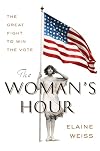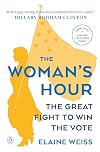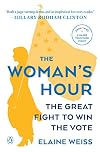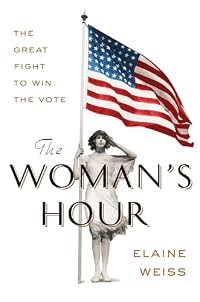
The Woman's Hour: The Great Fight to Win the Vote
by Elaine F. Weiss
On This Page
Description
"Both a page-turning drama and an inspiration for every reader"—Hillary Rodham ClintonSoon to Be a Major Television Event
The nail-biting climax of one of the greatest political battles in American history: the ratification of the constitutional amendment that granted women the right to vote.
"With a skill reminiscent of Robert Caro, [Weiss] turns the potentially dry stuff of legislative give-and-take into a drama of courage and cowardice."—The Wall Street Journal
"Weiss is a clear show more and genial guide with an ear for telling language ... She also shows a superb sense of detail, and it's the deliciousness of her details that suggests certain individuals warrant entire novels of their own... Weiss's thoroughness is one of the book's great strengths. So vividly had she depicted events that by the climactic vote (spoiler alert: The amendment was ratified!), I got goose bumps."—Curtis Sittenfeld, The New York Times Book Review
Nashville, August 1920. Thirty-five states have ratified the Nineteenth Amendment, twelve have rejected or refused to vote, and one last state is needed. It all comes down to Tennessee, the moment of truth for the suffragists, after a seven-decade crusade. The opposing forces include politicians with careers at stake, liquor companies, railroad magnates, and a lot of racists who don't want black women voting. And then there are the "Antis"—women who oppose their own enfranchisement, fearing suffrage will bring about the moral collapse of the nation. They all converge in a boiling hot summer for a vicious face-off replete with dirty tricks, betrayals and bribes, bigotry, Jack Daniel's, and the Bible.
Following a handful of remarkable women who led their respective forces into battle, along with appearances by Woodrow Wilson, Warren Harding, Frederick Douglass, and Eleanor Roosevelt, The Woman's Hour is an inspiring story of activists winning their own freedom in one of the last campaigns forged in the shadow of the Civil War, and the beginning of the great twentieth-century battles for civil rights. show less
Tags
Recommendations




Member Reviews
"Even if we win we who have been here will never remember it with anything but a shudder." While I imagine the leading suffragist Catherine Catt did not really feel that way after the battle to ratify women's suffrage in Tennessee was over, this book provided an informative and exciting corrective to my naive assumption that once President Wilson came out for women's suffrage the Nineteenth Amendment was enacted with ease. The book takes a very interesting look at how progress really came about: following other states' unexpected rejections, Tennessee became the critical thirty-sixth state required to amend the Constitution, and the struggle over the votes of her legislators ran the gamut from the highest idealism to (on the Anti side show more mainly) the lowest dregs of bribery, blackmail, intoxication, racism and cowardice. It was particularly interesting to learn about the prominent Southern anti-suffragist women activists and their ideological commitments: to them, politics was a dirty, shady business that well-bred women ought not to leave their domestic duties to get involved in; at the same time, and not entirely compatibly, their menfolk were their honoured preservers to whom they looked to uphold the Southern way of life. The reader will be surprised and moved by what turned the last single vote in the end. Lastly, the penultimate chapter notes interesting consequences and developments, particularly around the evolution of women's right-wing movements, such as the 'Women's Red Scare': I would not be surprised to hear if this were to be the topic of the author's next book. show less
This book says it is about the last few days of the fight for the 19th Amendment, as the force for and against suffrage gathered in Tennessee to either win or prevent the 36th state - the last needed for ratification. In reality, it is much broader than that, sweeping through the history of the Suffrage fight from the antebellum days to the final countdown, as players jockeyed for position and played politics in manners both dirty and clean. It was interesting to discover the dirty tricks played by the Antis, and the questionable legality of many of their maneuvers (as well as outright bribery, which is not of questionable legality but is illegal). Passions flared on both sides, perhaps made warmer by the fact that this was happening in show more the dog days of summer, as the nation headed toward the 1920 presidential election. The author presents each side much as the women (and some men) who were on that side experienced it, though her sympathies are plainly with the "Suffs". The wishy-washy attitudes of many of the men, and the downright hostility toward women voting, comes through loud and clear in the author's highly lucid and readable prose. It loses a half star for the sheer number of sentence fragments that can become distracting during the reading. Otherwise, a fine work that should be on the reading list of anyone who thinks that rights just sort of happen. show less
A captivatingly readable narrative of the final weeks of a decade long fight to bring universal suffrage to the US through the ratification of the 19th amendment. Eye opening for the depth of the political shenanigans and blatant racism this exceptionally well researched book has a relevance today.
“Carrie Catt was dismayed, but not deeply shocked, to find that, once again the freedom of American women might fall victim to the egos and ambitions of powerful men.”
Thoughts
Whilst Weiss provides a useful precis of the suffragist movement in the US from Seneca Falls onwards the focus of her attention here is the push to get the 19th Amendment ratified by a final 36th state. Tennessee was that state and as such much of the action show more plays out in Nashville although there are also some scenes in Washington and Ohio as she explores the backdrop of the upcoming Presidential election and the impact it had.
Weiss covers a huge amount of ground and provides great pen portrait of all the major players. And there are many players introduced. Both Carrie Catt’s National American Woman Suffrage Association (the more traditional political movement) and Alice Paul’s Congressional Union for Woman Suffrage and the National Woman's Party (the more radical group) were on the ground in Nashville as well as any number of female and male “Anti’s”. At first I found it a little challenging to keep up with all of the names and details but am glad I stuck with it as by the end these extra insights into the players was crucial in both understanding what happened and highlighting the final, painful dash to the finishing line. The details provided about many of the members of the Tennessee legislature were also helpful in understanding the double dealing and side changing that occurred as the voting got underway.
However whilst a fantastic read and insight into both the broader movements and the minutia of what it took for American women to gain the vote I am mostly left with some strong lessons from history:
1) The confidence both sides of the debate had with embracing racism to achieve their aims. Many of the white suffragettes were more than willing to ignore their African-American counterparts if it got the job done, going so far as to advise black suffragist groups and campaigners to stay away. On the Anti side, the claims were even more overtly racist calling on the still painful memories of the Civil War and the rise of the KKK to campaign against anything that ‘risked’ an increase in African American voting rights.
2) The number of women in the Anti parties. Their reasons did not resonate with me but provide a useful insight into todays conservatives who vociferously support legislation that blocks and limits women’s rights.
3) The influence of the media and special interests – in this case the railroads and liquor industries (no mean feat in an allegedly dry state like Tennessee). Money, power and influence of these groups spilled across events with legislators changing sides throughout debates as pressure was applied.
I think there is more to get form this one and imagine I will re-read again at some point in the future. show less
“Carrie Catt was dismayed, but not deeply shocked, to find that, once again the freedom of American women might fall victim to the egos and ambitions of powerful men.”
Thoughts
Whilst Weiss provides a useful precis of the suffragist movement in the US from Seneca Falls onwards the focus of her attention here is the push to get the 19th Amendment ratified by a final 36th state. Tennessee was that state and as such much of the action show more plays out in Nashville although there are also some scenes in Washington and Ohio as she explores the backdrop of the upcoming Presidential election and the impact it had.
Weiss covers a huge amount of ground and provides great pen portrait of all the major players. And there are many players introduced. Both Carrie Catt’s National American Woman Suffrage Association (the more traditional political movement) and Alice Paul’s Congressional Union for Woman Suffrage and the National Woman's Party (the more radical group) were on the ground in Nashville as well as any number of female and male “Anti’s”. At first I found it a little challenging to keep up with all of the names and details but am glad I stuck with it as by the end these extra insights into the players was crucial in both understanding what happened and highlighting the final, painful dash to the finishing line. The details provided about many of the members of the Tennessee legislature were also helpful in understanding the double dealing and side changing that occurred as the voting got underway.
However whilst a fantastic read and insight into both the broader movements and the minutia of what it took for American women to gain the vote I am mostly left with some strong lessons from history:
1) The confidence both sides of the debate had with embracing racism to achieve their aims. Many of the white suffragettes were more than willing to ignore their African-American counterparts if it got the job done, going so far as to advise black suffragist groups and campaigners to stay away. On the Anti side, the claims were even more overtly racist calling on the still painful memories of the Civil War and the rise of the KKK to campaign against anything that ‘risked’ an increase in African American voting rights.
2) The number of women in the Anti parties. Their reasons did not resonate with me but provide a useful insight into todays conservatives who vociferously support legislation that blocks and limits women’s rights.
3) The influence of the media and special interests – in this case the railroads and liquor industries (no mean feat in an allegedly dry state like Tennessee). Money, power and influence of these groups spilled across events with legislators changing sides throughout debates as pressure was applied.
I think there is more to get form this one and imagine I will re-read again at some point in the future. show less
"Even if we win we who have been here will never remember it with anything but a shudder." While I imagine the leading suffragist Catherine Catt did not really feel that way after the battle to ratify women's suffrage in Tennessee was over, this book provided an informative and exciting corrective to my naive assumption that once President Wilson came out for women's suffrage the Nineteenth Amendment was enacted with ease. The book takes a very interesting look at how progress really came about: following other states' unexpected rejections, Tennessee became the critical thirty-sixth state required to amend the Constitution, and the struggle over the votes of her legislators ran the gamut from the highest idealism to (on the Anti side show more mainly) the lowest dregs of bribery, blackmail, intoxication, racism and cowardice. It was particularly interesting to learn about the prominent Southern anti-suffragist women activists and their ideological commitments: to them, politics was a dirty, shady business that well-bred women ought not to leave their domestic duties to get involved in; at the same time, and not entirely compatibly, their menfolk were their honoured preservers to whom they looked to uphold the Southern way of life. The reader will be surprised and moved by what turned the last single vote in the end. Lastly, the penultimate chapter notes interesting consequences and developments, particularly around the evolution of women's right-wing movements, such as the 'Women's Red Scare': I would not be surprised to hear if this were to be the topic of the author's next book. show less
Tedious and numbingly detailed description of the fight to have the 19th Amendment ratified in Tennessee, making it part of the U.S. Constitution.
It's also, ultimately, a downer because there's an awful lot of déjà vu all over again here. Split from within by opposing factions, tangled in the question of civil rights for African-Americans, struggling under the long shadow of the Civil War, and hysterically opposed by many women, the battle for equal rights, equal citizenship, and self-determination is a familiar one yet today.
It also proves the truth of a remark attributed to Otto von Bismarck: “If you like laws and sausages, you should never watch either one being made.”
It's also, ultimately, a downer because there's an awful lot of déjà vu all over again here. Split from within by opposing factions, tangled in the question of civil rights for African-Americans, struggling under the long shadow of the Civil War, and hysterically opposed by many women, the battle for equal rights, equal citizenship, and self-determination is a familiar one yet today.
It also proves the truth of a remark attributed to Otto von Bismarck: “If you like laws and sausages, you should never watch either one being made.”
A blow-by-blow description of the fight to make Tennessee the 36th state to ratify the 19th Amendment and earn women the right to vote, Weiss's book is well-researched, moving and makes the personalities and events of that last great battle come alive. She doesn't shirk from showing the role race played in the suffrage movement and she places today's events in the context of the history of the fight for suffrage. This book had a big impact on me.
I would not have read this book were it not for one of the Goodreads book clubs in which I participate discussing it; I followed their discussion and decided that even though I knew a lot of the suffrage movement history and the contextual history in which the 19th Amendment was finally ratified, I knew relatively little about the political context in which Tennessee ultimately became the 36th state to do so. I loved this book! It was beautifully narrated by Tavia Gilbert and her interview with Elaine Weiss, a bonus on the audio edition, was quite interesting. I particularly appreciated being reminded of the striking parallels with our current political environment in the United States. I was aware of similarities from my own reading of show more history but the effectiveness and clarity of Elaine Weiss’s writing highlighted them for me. We women owe the women of the suffrage movement a great debt; they deserve our gratitude and our respect. The finest tribute we can give them is to cast an educated and informed vote in every election. show less
Members
- Recently Added By
Lists

Top Five Books of 2019
387 works; 111 members

Feminism
167 works; 4 members
Author Information

Some Editions
Awards and Honors
Awards
Distinctions
Notable Lists
Common Knowledge
- Canonical title
- The Woman's Hour: The Great Fight to Win the Vote
- Original publication date
- 2018-03-06
- People/Characters
- Carrie Chapman Catt; Sue Shelton White; Alice Paul; Josephine Pearson; Warren G. Harding; Susan B. Anthony (show all 15); Elizabeth Cady Stanton; Lucy Stone; Frederick Douglass; Albert Houston Roberts; Harry T. Burn; Seth Walker; Woodrow Wilson; Luke Lea; Ida B. Wells-Barnett
- Important places
- Nashville, Tennessee, USA
- Important events
- Women's Suffrage; Ratification of 19th Amendment to U.S. Constitution; American Civil War
- Epigraph
- The time has come to shout aloud in every city, village and hamlet, and in tones so clear and jubilant that they will reverberate from every mountain peak and echo from shore to shore: "The Woman's Hour has struck."
The right of citizens of the United States to vote shall not be denied or abridged by the United States or by any State on account of sex.
--Nineteenth Amendment of the U.S. Constitution - Dedication
- In memory of my parents, who took their little girl into the voting booth, let her pull the magic curtain, and taught me to treasure my right to vote
and my dear friend Natalie Moore Babbitt, who taught me how to be... (show all) a writer - First words
- On a Saturday evening in mid-July 1920, three women raced toward Nashville's Union Station on steam-powered trains.
- Quotations
- Winning the vote required seventy-two years of ceaseless agitation by three generations of dedicated, fearless suffragists, who sought to overturn centuries of law and millennia of tradition concerning gender roles. The women... (show all) who launched the movement were dead by the time it was completed; the women who secured its final success weren't born when it began.
- Blurbers
- Clinton, Hillary Rodham; Sittenfeld, Curtis; Bordewich, Fergus M.; Shetterly, Margot Lee; Cheney, Lynne; Cook, Blanche Wiesen
- Original language
- English
Classifications
- Genres
- History, Nonfiction, General Nonfiction, Sexuality and Gender Studies
- DDC/MDS
- 324.6 — Society, Government, and Culture Political science Politics & Elections Suffrage, Voting Rights, Voting and Electoral Systems
- LCC
- JK1911 .T2 .W45 — Political Science Political institutions and public administration (United States) Political institutions and public administration United States Political rights. Practical politics Suffrage
- BISAC
Statistics
- Members
- 528
- Popularity
- 56,146
- Reviews
- 21
- Rating
- (3.99)
- Languages
- English
- Media
- Paper, Audiobook, Ebook
- ISBNs
- 14
- ASINs
- 2