On This Page
Description
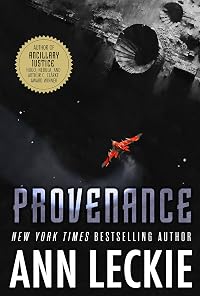
An ambitious young woman has just one chance to secure her future and reclaim her family's priceless lost artifacts in this stand-alone novel set in the world of the award-winning, New York Times bestselling Imperial Radch trilogy. Though she knows her brother holds her mother's favor, Ingrid is determined to at least be considered as heir to the family name. She hatches an audacious plan -- free a thief from a prison planet from which no one has ever returned, and use them to help steal show more back a priceless artifact. But Ingray and her charge return to her home to find their planet in political turmoil, at the heart of an escalating interstellar conflict. Together, they must make a new plan to salvage Ingray's future and her world, before they are lost to her for good. show lessTags
Recommendations


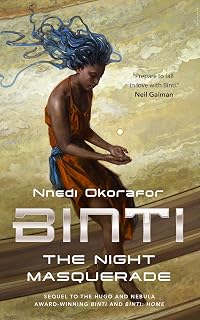
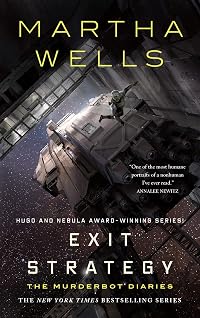

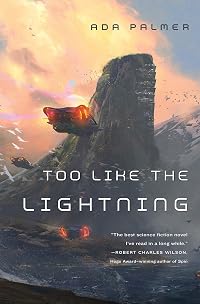

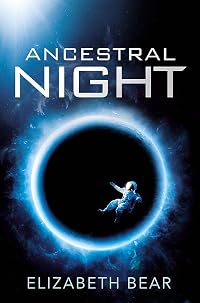


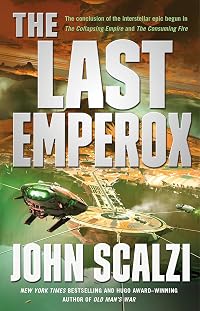
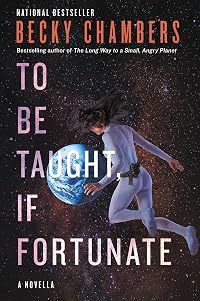
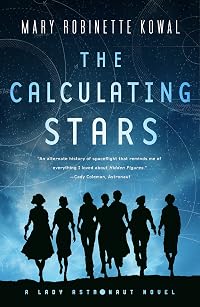
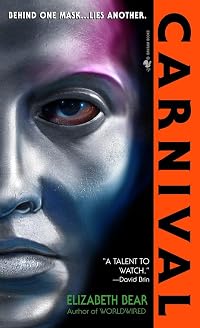



Member Recommendations
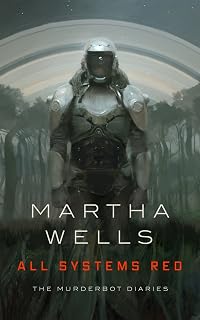
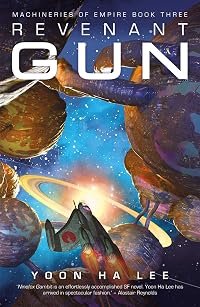
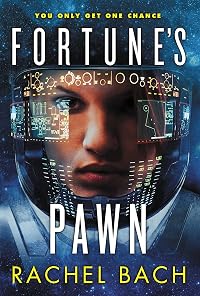
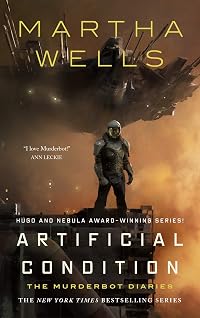
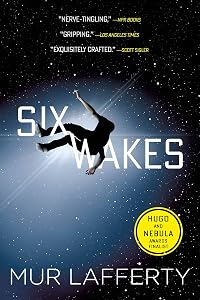
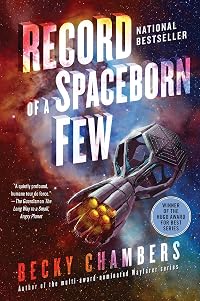
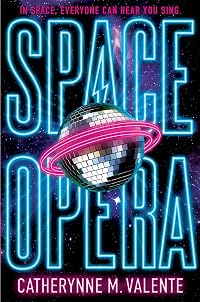
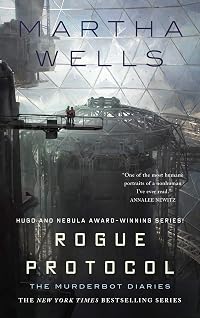
Arifel For young protagonists with big, largely self-imposed parental obligations, trying to operate on a much larger political scale than they are really ready for.
30
g33kgrrl The Goblin Emperor is fantasy not sci-fi, but it's amazing and similar in some interesting ways and it's one of the best books around.
20
Member Reviews
I love the incredible complexity of the cultures Leckie builds — no "one alien species, one culture" but fully realized worlds with subcultures and histories. I especially admire how she manages to touch on them just briefly, so they add flavor to the universe, without being several chapter long sidebars that distract from the main plot.
Every character in this book was a complete delight, and the plot was thoroughly engaging. And all the queerness made my queer little heart sing with joy. A really, really enjoyable, fantastic read.
Every character in this book was a complete delight, and the plot was thoroughly engaging. And all the queerness made my queer little heart sing with joy. A really, really enjoyable, fantastic read.
"Provenance" is a delightfully deft piece of genre-twisting science fiction that pivots around the idea that our identity is the product of the story that we tell ourselves about who we are and where came from. It examines how the things that give that story a provenance, a history of ownership, become as important to us as the identity itself.
"Provenance" is a stand-alone novel, set in the same universe as the "Imperial Radch" triology, but focusing on humans living outside the Radch. The main character is a young woman, who has been adopted from a public creche by a noble family and given the opportunity to compete with her adopted brother to become the heir to the family name.
The story unfolds in an unhurried way, allowing time for show more building worlds and revealing characters. The actions starts off as a sort of heist/forgery idea, then morphs into a murder investigation and morphs again into a military thriller. The tone throughout is civilized, introspective and self-deprecating. If Jane Austen has written science fiction, this is the kind of humane comedy of manners she might have produced.
What I enjoyed most was that the main character kept making choices that, while fair, honourable and even quietly courageous, were unexpected in the circumstances she found herself in. The choices she makes create a chain of provenance that slowly shapes her definition of who she is and who she wants to become.
Ann Leckie has a gift for world building and for making us look with a fresh eye at things we might think we already understand. She creates aliens who really are alien to our way of thinking and our way of living but with whom we can be empathetic and from whom we can learn more about ourselves. It turns out that she also has a talent for humour that the Imperial Radch trilogy gave her almost no opportunity to demonstrate.
I listened to the audiobook version which is delivered flawlessly by the talented Adjoa Andoh, who also narrated the Imperial Radch trilogy. show less
"Provenance" is a stand-alone novel, set in the same universe as the "Imperial Radch" triology, but focusing on humans living outside the Radch. The main character is a young woman, who has been adopted from a public creche by a noble family and given the opportunity to compete with her adopted brother to become the heir to the family name.
The story unfolds in an unhurried way, allowing time for show more building worlds and revealing characters. The actions starts off as a sort of heist/forgery idea, then morphs into a murder investigation and morphs again into a military thriller. The tone throughout is civilized, introspective and self-deprecating. If Jane Austen has written science fiction, this is the kind of humane comedy of manners she might have produced.
What I enjoyed most was that the main character kept making choices that, while fair, honourable and even quietly courageous, were unexpected in the circumstances she found herself in. The choices she makes create a chain of provenance that slowly shapes her definition of who she is and who she wants to become.
Ann Leckie has a gift for world building and for making us look with a fresh eye at things we might think we already understand. She creates aliens who really are alien to our way of thinking and our way of living but with whom we can be empathetic and from whom we can learn more about ourselves. It turns out that she also has a talent for humour that the Imperial Radch trilogy gave her almost no opportunity to demonstrate.
I listened to the audiobook version which is delivered flawlessly by the talented Adjoa Andoh, who also narrated the Imperial Radch trilogy. show less
This stand-alone novel is set in the same universe as Leckie's 'Imperial Radch' novels, but has very little congruency with those books; at one point, someone comments on the political moves to give AIs full civil rights, and there's a Radchaai ambassador, but that's about all. But the world-building is just as inventive, and the society as interestingly different as Radchaai space. Political power here is achieved through inheritance, but there's a lot of strings attached to that; and the society of the planet Hwae is heavily invested in "vestiges" (taking the place of the tea services in Leckie's earlier novels), artefacts somewhere between souvenirs and an autograph collection. The provenance of these vestiges is important, and show more indeed plot developments in this novel hinge on just how solid those provenances are.
Other world-building hints at all sorts of puzzles; what is "ruin glass", and why does it seem to exist in almost geological quantities? And why does Hwae have such a restricted diet of noodles and nutrient blocks?
The plot concerns Ingray, adopted daughter of a powerful politician, but the way things are looking, not one who stands to inherit prestige and advantage. She devises a plot to make her brother - who is more likely to succeed - look bad; but her plot unravels in various ways. Meanwhile, other unravellings are taking place around her.
Some critics have said that Ingray (whose name I kept reading as though it were pig Latin) seems a whiny and flimsy protagonist. She is certainly an insecure character at the start of the novel, and it is partly her inexperience and lack of worldly wisdom that gets her into problems. I rather suspect that to have been Leckie's point; just as Breq in the earlier novels has to negotiate their way round what seems to them a strange and puzzling society, so Ingray has to do the same as part of the process of growing up, and growing into a complex and high-profile role.
On the dustjacket of my copy, Elizabeth Bear declares Leckie to be an heir to Iain M. Banks. Well, Leckie may lack Banks' political sensibilities that informed his idea of The Culture, and I certainly don't think that Radchaai space is necessarily well-developed enough for anyone to imagine that they might like to actually live there; but on the strength of this novel, she is well along the road to having created an intriguing and rich universe to set her stories in. show less
Other world-building hints at all sorts of puzzles; what is "ruin glass", and why does it seem to exist in almost geological quantities? And why does Hwae have such a restricted diet of noodles and nutrient blocks?
The plot concerns Ingray, adopted daughter of a powerful politician, but the way things are looking, not one who stands to inherit prestige and advantage. She devises a plot to make her brother - who is more likely to succeed - look bad; but her plot unravels in various ways. Meanwhile, other unravellings are taking place around her.
Some critics have said that Ingray (whose name I kept reading as though it were pig Latin) seems a whiny and flimsy protagonist. She is certainly an insecure character at the start of the novel, and it is partly her inexperience and lack of worldly wisdom that gets her into problems. I rather suspect that to have been Leckie's point; just as Breq in the earlier novels has to negotiate their way round what seems to them a strange and puzzling society, so Ingray has to do the same as part of the process of growing up, and growing into a complex and high-profile role.
On the dustjacket of my copy, Elizabeth Bear declares Leckie to be an heir to Iain M. Banks. Well, Leckie may lack Banks' political sensibilities that informed his idea of The Culture, and I certainly don't think that Radchaai space is necessarily well-developed enough for anyone to imagine that they might like to actually live there; but on the strength of this novel, she is well along the road to having created an intriguing and rich universe to set her stories in. show less
Torn between 4 and 5 stars---5 for the setting, 4 for the plot.
Sam asked me to describe this, and I said something like "casually queer/trans coming of age murder mystery political intrigue comedy of errors with dysfunctional family dynamics, Really Alien Human Cultures, and Really Alien Aliens."
Normally in political intrigue stories (or even stuff like the Vorkosigan books) I enjoy reading about but can't relate at all to people who Really Grok Political Strategy and are always thinking twelve steps ahead and always have an ulterior motive. (I'd say that's a fair description of Breq and many other characters from [book:Ancillary Justice|17333324], except that Breq thinks she's more of a ruthless logical fiend than she actually is.) show more Ingray... oh god, do I ever relate to Ingray. (discussion of general thrust of the plot)She tries so hard to be calculating and political, and she's not bad at it because she's had extensive training, but she's never comfortable and sometimes she does things because she cares/sympathizes for people, which she then feels guilty for! Much of the coming-of-age is Ingray discovering that not everyone is as calculating as she was raised and that she doesn't have to live that way either.
Leckie is a genius at worldbuilding, especially coming up with incredibly alien human cultures of the far future, and then showing us that the people inside them are still very relatable human beings. This is my absolute favorite thing in science fiction, and Provenance is a perfect serving. At first I was missing the comfortable familiarity of Radchaai culture (!), but by the end I was feeling comfortably familiar with Hwaeans too. there is a character who is genderqueer even in relation to her own culture that doesn't have a cis male/cis female sex/gender binary!!!!! This is something I have wanted to see since literally forever.
If that wasn't enough, everyone is queer! EVERYONE. IS. QUEER. A bunch of main characters are nemen (Hwaean adult gender along with men and women), and it's like, not a thing at all. Much is left to the imagination about Hwaean family structure, but biological parents aren't an important part of it, and I'm not sure we ever see exactly two people collaborating to raise a child? Lots of parents who are mentioned singly, and one mention of biological parents in the plural.
Just read this fucking book, y'all.
***
On reread, the plot stuff annoyed me more, though I think I was able to puzzle out more of the implications that Leckie doesn't quite put into text. The feeling of struggling to grasp all the possibilities and the politics does make it feel genuine that this is not Ingray's greatest strength or passion, unlike (say) Miles Vorkosigan. show less
Sam asked me to describe this, and I said something like "casually queer/trans coming of age murder mystery political intrigue comedy of errors with dysfunctional family dynamics, Really Alien Human Cultures, and Really Alien Aliens."
Normally in political intrigue stories (or even stuff like the Vorkosigan books) I enjoy reading about but can't relate at all to people who Really Grok Political Strategy and are always thinking twelve steps ahead and always have an ulterior motive. (I'd say that's a fair description of Breq and many other characters from [book:Ancillary Justice|17333324], except that Breq thinks she's more of a ruthless logical fiend than she actually is.) show more Ingray... oh god, do I ever relate to Ingray. (discussion of general thrust of the plot)
Leckie is a genius at worldbuilding, especially coming up with incredibly alien human cultures of the far future, and then showing us that the people inside them are still very relatable human beings. This is my absolute favorite thing in science fiction, and Provenance is a perfect serving. At first I was missing the comfortable familiarity of Radchaai culture (!), but by the end I was feeling comfortably familiar with Hwaeans too. there is a character who is genderqueer even in relation to her own culture that doesn't have a cis male/cis female sex/gender binary!!!!! This is something I have wanted to see since literally forever.
If that wasn't enough, everyone is queer! EVERYONE. IS. QUEER. A bunch of main characters are nemen (Hwaean adult gender along with men and women), and it's like, not a thing at all. Much is left to the imagination about Hwaean family structure, but biological parents aren't an important part of it, and I'm not sure we ever see exactly two people collaborating to raise a child? Lots of parents who are mentioned singly, and one mention of biological parents in the plural.
Just read this fucking book, y'all.
***
On reread, the plot stuff annoyed me more, though I think I was able to puzzle out more of the implications that Leckie doesn't quite put into text. The feeling of struggling to grasp all the possibilities and the politics does make it feel genuine that this is not Ingray's greatest strength or passion, unlike (say) Miles Vorkosigan. show less
I appear to like Provenance a lot more than most readers, and it's mostly in the tension between Ingray's self-conception and how others see her. Ingray is a potential heir to political power, in vicious competition for her mother's favor back home over her brother. Her ambition has brought her to the station of Tyr, where anything is for sale, to bargain everything she owns on the exiled and imprisoned child of her mother's main political rival, who she believes knows a dark secret that could give her family immense political ambition.
Ingray sees herself as dancing along the edge of chaos, a social and emotional wreck desperately improvising to keep from falling into the abyss. The book spends a lot of time in her head, so glimpses of show more the outer Ingray, a possessed young woman who is scarily good at spotting weakness and jumping at it, is a delight.
The plot has a lot of moving pieces, which ultimately come to a kind of sleight of hand trick, but in a series that tends slow-to-glacial, alien ambassadors, murder mysteries, surprising romances, and a hostage situation on a space station as prelude to invasion, all offer a lot of interesting bits to chew on as the sociological design of Ingray's Hwae culture, focused on veneration of artifacts linked to famous events and people, unfolds. show less
Ingray sees herself as dancing along the edge of chaos, a social and emotional wreck desperately improvising to keep from falling into the abyss. The book spends a lot of time in her head, so glimpses of show more the outer Ingray, a possessed young woman who is scarily good at spotting weakness and jumping at it, is a delight.
The plot has a lot of moving pieces, which ultimately come to a kind of sleight of hand trick, but in a series that tends slow-to-glacial, alien ambassadors, murder mysteries, surprising romances, and a hostage situation on a space station as prelude to invasion, all offer a lot of interesting bits to chew on as the sociological design of Ingray's Hwae culture, focused on veneration of artifacts linked to famous events and people, unfolds. show less
Anne Leckie returns to the universe of her Imperial Radch trilogy with Provenance, a standalone novel set outside the Radch Empire.
Ingray Aughskold has put everything she owns into a desperate gambit to out-maneuver her brother Danach and finally raise herself high enough in her mother’s esteem that she might be named her successor. Her plan to free a prisoner who can lead her to priceless missing artifacts, or vestiges, on her homeworld of Hwae begins to fall apart when the person she frees turns out not to be who she thought they were. Quickly following is an odd encounter with the ambassador from the alien Geck, who is obsessed with the captain of the ship upon which she has booked passage home. She returns home to find more show more aliens at her mother’s house back on Hwae who are seeking political help for their own aims. Ingray finds herself at the center of events that threaten her own planet, nearby systems and more than one alien race. Ingray must rely on both new and old friends, but primarily draw on her own resourcefulness and courage she didn’t know she had if disaster is to be averted.
Leckie has once again demonstrated incomparable world-building, filled with complicated plots and politics. Provenance is more character driven than the Radch trilogy, but is still layered with intriguing ideas and concepts. The interesting and thought-provoking use of gendered pronouns is present here, but not to the same degree as her earlier books. Ingray is on a journey of discovery, both of who she is and what she wants her life to be. Likewise, Leckie explores how societies forge an identity based on the things they choose to hold sacred, even if those choices appear incomprehensible to outsiders. Ingray’s life has been a battle with her brother to shine in her mother Netano’s eyes. She questions if she has any place in the family if she fails to do so. How much is she willing to risk to succeed?
Fans of Leckie’s earlier work will certainly enjoy Provenance. For those who have not read her previously, Provenance is an excellent jumping off point before diving into the Radch trilogy. It can be read either before or independent of that series.
All Ann Leckie does is write great books. Do yourself a favor and pick up Provenance. Highly recommended.
I was fortunate to receive an advance copy of the book from the publisher. show less
Ingray Aughskold has put everything she owns into a desperate gambit to out-maneuver her brother Danach and finally raise herself high enough in her mother’s esteem that she might be named her successor. Her plan to free a prisoner who can lead her to priceless missing artifacts, or vestiges, on her homeworld of Hwae begins to fall apart when the person she frees turns out not to be who she thought they were. Quickly following is an odd encounter with the ambassador from the alien Geck, who is obsessed with the captain of the ship upon which she has booked passage home. She returns home to find more show more aliens at her mother’s house back on Hwae who are seeking political help for their own aims. Ingray finds herself at the center of events that threaten her own planet, nearby systems and more than one alien race. Ingray must rely on both new and old friends, but primarily draw on her own resourcefulness and courage she didn’t know she had if disaster is to be averted.
Leckie has once again demonstrated incomparable world-building, filled with complicated plots and politics. Provenance is more character driven than the Radch trilogy, but is still layered with intriguing ideas and concepts. The interesting and thought-provoking use of gendered pronouns is present here, but not to the same degree as her earlier books. Ingray is on a journey of discovery, both of who she is and what she wants her life to be. Likewise, Leckie explores how societies forge an identity based on the things they choose to hold sacred, even if those choices appear incomprehensible to outsiders. Ingray’s life has been a battle with her brother to shine in her mother Netano’s eyes. She questions if she has any place in the family if she fails to do so. How much is she willing to risk to succeed?
Fans of Leckie’s earlier work will certainly enjoy Provenance. For those who have not read her previously, Provenance is an excellent jumping off point before diving into the Radch trilogy. It can be read either before or independent of that series.
All Ann Leckie does is write great books. Do yourself a favor and pick up Provenance. Highly recommended.
I was fortunate to receive an advance copy of the book from the publisher. show less
Ingray has a brilliant plan, kind of, to secure her mother's favor, for which she and her brother Danach have been competing since childhood. If she can break Pahlad Budrakim out of Compassionate Removal (a.k.a. prison) and bring him back to her home planet Hwae, he can tell her where he hid the missing historical items that he was sent away for stealing, and she can present those to her mother. Of course, things don't go as planned -- especially when a murder is committed shortly after their return to Hwae, and Pahlad is one of the primary suspects...
This story is set in the same world as Leckie's other Imperial Radch books, but with completely different characters, in a different locale. It felt almost young adult to me, as Ingray show more undergoes a coming-of-age journey and makes a lot of the impetuous decisions one might expect from a YA heroine. Still, I enjoyed it quite a bit. I have been listening to the audiobooks, which is nice because the narrator solves the problem of how to pronounce some of the trickier names! show less
This story is set in the same world as Leckie's other Imperial Radch books, but with completely different characters, in a different locale. It felt almost young adult to me, as Ingray show more undergoes a coming-of-age journey and makes a lot of the impetuous decisions one might expect from a YA heroine. Still, I enjoyed it quite a bit. I have been listening to the audiobooks, which is nice because the narrator solves the problem of how to pronounce some of the trickier names! show less
Members
- Recently Added By
Lists

Best Science Fiction Novels
816 works; 426 members

Favorite Science Fiction by Women Authors
737 works; 202 members

2018 Hugo Eligible Novels
170 works; 16 members

2017 Locus recommended reading list SciFi
28 works; 2 members

Best 21st Century Books (So Far)
670 works; 86 members
Recommended Speculative Fiction by Women and People of Color
298 works; 45 members

Female Author
1,235 works; 67 members
LGBTQ+ Speculative Fiction
820 works; 51 members

Speculative Fiction to Read
706 works; 32 members

Books Read in 2017
4,249 works; 129 members

Books Read in 2025
4,091 works; 97 members

Reading Glasses Podcast
410 works; 3 members

Literature About Women and Girls
394 works; 39 members

Books Read in 2023
5,547 works; 145 members

Books Read in 2020
4,379 works; 124 members
Books Read in 2018
4,360 works; 110 members

Books Read in 2026
1,910 works; 66 members
Author Information

29+ Works 19,765 Members
Ann Leckie was born in Toledo, Ohio on March 2, 1966. She attended Clarion West Writers Workshop and studied under Octavia Butler. Her debut novel Ancillary Justice won several awards, 2014 Hugo Award for Best Novel, Nebula Award, the Arthur C. Clarke Award, and the 2013 BSFA Award. Her next book was Ancillary Sword. It won the 2014 BSFA Award for show more Best Novel and the 2015 Locus Award for Best Science Fiction Novel. Ancillary Mercy is the third book the Imperial Radch trilogy. Her short stories include Hesperia and Glory, Marsh Gods, The God of Au, The Endangered Camp, The Unknown God, Beloved of the Sun, and Maiden, Mother, Crone. (Bowker Author Biography) show less

Ann Leckie is a LibraryThing Author, an author who lists their personal library on LibraryThing.
Some Editions
Awards and Honors
Awards
Series

Common Knowledge
- Original publication date
- 2017-09-26
- People/Characters
- Ingray Aughskold; Tic Uisine (Captain); Netano Aughskold; Danach Aughskold; Pahlad Budrakim/Garal Ket; Taucris Ithesta (show all 15); Zat; Hevom; Deputy Chief Cheban Veret; Lak Aughskold; Tibanvori Nevol (Ambassador); the Geck Ambassador; Ethiat Budakrim; Char Nakal; Nuncle Lak
- Important places
- Hwae; Tyr Siilas
- First words
- "There were unexpected difficulties," said the dark gray blur.
- Last words
- (Click to show. Warning: May contain spoilers.)She took Taucris's hand and they walked together away from the noise and crowd of the station, toward the shuttle bound for the elevator, and home.
- Publisher's editor
- Hinton, Will; Hill, Jenni
- Original language
- English
Classifications
Statistics
- Members
- 1,862
- Popularity
- 11,570
- Reviews
- 112
- Rating
- (3.79)
- Languages
- English, French
- Media
- Paper, Audiobook, Ebook
- ISBNs
- 16
- ASINs
- 8