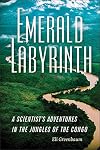
Emerald Labyrinth: A Scientist's Adventures in the Jungles of the Congo
by Eli Greenbaum
On This Page
Description
Emerald Labyrinth is a scientist and adventurer's chronicle of years exploring the rainforests of sub-Saharan Africa. The richly varied habitats of the Democratic Republic of the Congo offer a wealth of animal, plant, chemical, and medical discoveries. But the country also has a deeply troubled colonial past and a complicated political present. Author Eli Greenbaum is a leading expert in sub-Saharan herpetology--snakes, lizards, and frogs--who brings a sense of wonder to the question of how show more science works in the twenty-first century. Along the way he comes face to face with spitting cobras, silverback mountain gorillas, wild elephants, and the teenaged armies of AK-47-toting fighters engaged in the continent's longest-running war. As a bellwether of the climate and biodiversity crises now facing the planet, the Congo holds the key to our planet's future. Writing in the tradition of books like The Lost City of Z, Greenbaum seeks out the creatures struggling to survive in a war-torn, environmentally threatened country. Emerald Labyrinth is an extraordinary book about the enormous challenges and hard-won satisfactions of doing science in one of the least known, least hospitable places on earth. show lessTags
Recommendations




















Member Reviews
In 7th grade in the early ‘60s we studied South America—rivers, geography, countries, etc. In the 8th grade we were scheduled to do the same thing for Africa—but the teacher threw up her hands and said “it’s changing too much right now”. So while some of the things discussed here resonate, many do not. The best thing about this book is the endless enthusiasm the author conveys—for Congo, for frogs and snakes and birds, for discovering and cataloging the vast number of species that exist now, and for preservation of all of this. It can be read on two levels—as a survey or as an exhaustive look at the politics, environment, people and animals of a land many Americans know little about. The author obviously deeply cares show more about his subjects, and blends the details into the story, sometimes entertaining, sometimes profoundly worrisome, of his research and study trips. I particularly like his belief that the results of research supported by public funds should be passed along to the public, not just in scholarly journals (although he does that as well.) This book will inform you not only about Congo and Africa, but about the particular time we inhabit, where so much can still be done to preserve the Emerald Labyrinths everywhere. show less
 This review was written for LibraryThing Early Reviewers.
Greenbaum travels through the Congo in search of new & under-documented amphibians & reptiles attempting to catalogue the diversity before species are forced to extinction by human practices. A couple of his tangents caused my to-read list to expand, but this was more of a repetitive travel log than a distilled account of the difficulties of conducting field research in a third-world country and the necessity of continuing to try.
This review was written for LibraryThing Early Reviewers.Eli Greenbaum is an associate professor of evolutionary genetics at the University of Texas, El Paso, which seems to mean that he is a herpetologist who studies reptiles and amphibians. He seems to have chosen to concentrate on the reptiles and amphibians of the Congo. And he seeks with his book, Emerald Labyrinth: A Scientist's Adventures in the Jungles of the Congo, to communicate his work to the general public, to share his passion.
And passion is certainly what he would need to go on a scientific expedition to the Congo. Hot and humid jungles, poor infrastructure, tropical diseases, and limited or outright unsafe food are likely enough to dissuade most people following in his footsteps. Add corrupt government officials, potentially show more violent poachers, bandits, and communities where the locals believe whites are vampires who should be done away with, and anyone else considering going would probably change their mind. Add the fact that the region is crawling with the troops of various tribal warlords, a number of whom are known for committing atrocities against civilians, and I think virtually anyone would decline to go. But not Professor Greenbaum. His scientific curiosity seems to be stronger than his sense of self-preservation.
It likely helps that Professor Greenbaum seems to have a genuine affinity for the region and its people. What I particularly liked about his book is that, in addition to generally describing his trips, he gives a good summary of the region’s history, from the time of its discovery by Europeans until the present. Sadly, that history has mostly been a bloody one. First the Belgians ravaged the region and its people for profit. Independence did not improve things. The infrastructure introduced by the Belgians has been allowed to erode, and the general mayhem engaged in under Belgian rule has been carried on by a succession of tribal warlords who have added ethnic cleansing and organized rape to the mix. Nevertheless, I found myself wondering how Professor Greenbaum managed to survive his visits to write his book. He seems to have suffered from the physical strain of hiking through jungles and over mountains, injuring himself in various falls. He contracted various serious tropical diseases. And he came into all-too-frequent contact with highly-armed and very paranoid militia groups. The fact that Professor Greenbaum not only survived, but seems to have achieved his scientific goals, is frankly astonishing.
While his book is both entertaining and educational, I wish it had been a bit more educational. While his book includes both maps and photos, they aren’t sufficient to convey a good sense of where he was or what he found. His book also doesn’t delve into much detail about the day-to-day operations of such a scientific expedition. There are references to capturing various animals, to photographing them, and now and then to the need to prepare them before they degrade, but no real details are given. For example, did he and his team release most of the animals they found after photographing them? Did they kill and preserve them for further study? If the latter, did they have to march through the jungles of the Congo carrying gallons of formaldehyde, collection jars, and other equipment? Did they periodically ship their collections off, or did they drag them all along with them until the end of the expedition? While such details might have bored a herpetologist, the book was plainly written for lay-readers who would likely have better understood the expeditions if such details had been provided.
It would also have been helpful to have been told more about why Professor Greenbaum believes it’s more beneficial than detrimental to capture, kill, and preserve even the rarest species for further study, rather than allowing them to live on and, presumably, give birth to more of their kind. Professor Greenbaum does spend a few pages on this topic, but his musings aren’t convincing, especially as he voices his opposition to the killing of rhinos or elephants that are subject to conservation orders, while apparently not holding that same belief as to any reptiles or amphibians that he might stumble across, even if they’ve long been thought to be extinct or haven’t been seen in many decades. It’s especially confusing given that he at one point notes that it’s not enough to capture and kill just one example of a rare reptile or amphibian, science demanding the capture and killing of multiple examples for further study, a single animal being pretty much useless to science. Professor Greenbaum’s collection efforts detracted from his overall warnings about the harm humans are causing to various species, especially rare ones, and left a distinct distaste in my mouth.
I also found myself disconcerted by the racism in Professor Greenbaum’s book. Not racism by Professor Greenbaum per se, but generally. He seems by virtue of being white to have been given preferential treatment by many of the local people, preferential treatment that he usually did not turn down. It would have made me uncomfortable, and it would have been interesting to read what Professor Greenbaum thought of that dynamic, especially as he was in the minority in the Congo, sometimes surrounded by people who had never heard of a white man outside myth.
I was similarly discomfited by the fact that there seemed to be a strict hierarchy on the team. Professor Greenbaum was very obviously in charge. And everyone else, even local herpetologists whom he now and then referred to as his “colleagues,” seemed very much to have had a subservient role. This is likely just the way such expeditions work: the professor who obtained the funding is the leader and everyone else is a subordinate. I suspect it would have been the same had everyone been white and from the United States. But, given that the expedition took place in the Congo, involving a region and a people who are almost poster-children for the excesses of racist European imperialism, it struck a bad chord.
This impression wasn’t helped by the lack of any information as to what it was all for. There wasn’t really any discussion of what scientific discoveries the expedition made, how the sacrifice of all those animals resulted in anything useful (other than learning more about the, now-dead, animals), or even what papers (other than papers identifying a new species) resulted. Did the expedition lead to more funding for the protection of the animals and their habitats? Was anything learned that will help us preserve both? What role did the local herpetologists have in the subsequent research and publications? Do the local people now better understand the importance of what they have? Those questions, and others, are never answered.
All in all, Professor Greenbaum’s book was entertaining as well as educational. And he does a good job adding further warnings to those of the many other scientists decrying our many adverse impacts on the natural world. He also gave me a better insight into life in the Congo, and to what it is like visiting. His book is well worth reading. I just found myself wishing for more. show less
And passion is certainly what he would need to go on a scientific expedition to the Congo. Hot and humid jungles, poor infrastructure, tropical diseases, and limited or outright unsafe food are likely enough to dissuade most people following in his footsteps. Add corrupt government officials, potentially show more violent poachers, bandits, and communities where the locals believe whites are vampires who should be done away with, and anyone else considering going would probably change their mind. Add the fact that the region is crawling with the troops of various tribal warlords, a number of whom are known for committing atrocities against civilians, and I think virtually anyone would decline to go. But not Professor Greenbaum. His scientific curiosity seems to be stronger than his sense of self-preservation.
It likely helps that Professor Greenbaum seems to have a genuine affinity for the region and its people. What I particularly liked about his book is that, in addition to generally describing his trips, he gives a good summary of the region’s history, from the time of its discovery by Europeans until the present. Sadly, that history has mostly been a bloody one. First the Belgians ravaged the region and its people for profit. Independence did not improve things. The infrastructure introduced by the Belgians has been allowed to erode, and the general mayhem engaged in under Belgian rule has been carried on by a succession of tribal warlords who have added ethnic cleansing and organized rape to the mix. Nevertheless, I found myself wondering how Professor Greenbaum managed to survive his visits to write his book. He seems to have suffered from the physical strain of hiking through jungles and over mountains, injuring himself in various falls. He contracted various serious tropical diseases. And he came into all-too-frequent contact with highly-armed and very paranoid militia groups. The fact that Professor Greenbaum not only survived, but seems to have achieved his scientific goals, is frankly astonishing.
While his book is both entertaining and educational, I wish it had been a bit more educational. While his book includes both maps and photos, they aren’t sufficient to convey a good sense of where he was or what he found. His book also doesn’t delve into much detail about the day-to-day operations of such a scientific expedition. There are references to capturing various animals, to photographing them, and now and then to the need to prepare them before they degrade, but no real details are given. For example, did he and his team release most of the animals they found after photographing them? Did they kill and preserve them for further study? If the latter, did they have to march through the jungles of the Congo carrying gallons of formaldehyde, collection jars, and other equipment? Did they periodically ship their collections off, or did they drag them all along with them until the end of the expedition? While such details might have bored a herpetologist, the book was plainly written for lay-readers who would likely have better understood the expeditions if such details had been provided.
It would also have been helpful to have been told more about why Professor Greenbaum believes it’s more beneficial than detrimental to capture, kill, and preserve even the rarest species for further study, rather than allowing them to live on and, presumably, give birth to more of their kind. Professor Greenbaum does spend a few pages on this topic, but his musings aren’t convincing, especially as he voices his opposition to the killing of rhinos or elephants that are subject to conservation orders, while apparently not holding that same belief as to any reptiles or amphibians that he might stumble across, even if they’ve long been thought to be extinct or haven’t been seen in many decades. It’s especially confusing given that he at one point notes that it’s not enough to capture and kill just one example of a rare reptile or amphibian, science demanding the capture and killing of multiple examples for further study, a single animal being pretty much useless to science. Professor Greenbaum’s collection efforts detracted from his overall warnings about the harm humans are causing to various species, especially rare ones, and left a distinct distaste in my mouth.
I also found myself disconcerted by the racism in Professor Greenbaum’s book. Not racism by Professor Greenbaum per se, but generally. He seems by virtue of being white to have been given preferential treatment by many of the local people, preferential treatment that he usually did not turn down. It would have made me uncomfortable, and it would have been interesting to read what Professor Greenbaum thought of that dynamic, especially as he was in the minority in the Congo, sometimes surrounded by people who had never heard of a white man outside myth.
I was similarly discomfited by the fact that there seemed to be a strict hierarchy on the team. Professor Greenbaum was very obviously in charge. And everyone else, even local herpetologists whom he now and then referred to as his “colleagues,” seemed very much to have had a subservient role. This is likely just the way such expeditions work: the professor who obtained the funding is the leader and everyone else is a subordinate. I suspect it would have been the same had everyone been white and from the United States. But, given that the expedition took place in the Congo, involving a region and a people who are almost poster-children for the excesses of racist European imperialism, it struck a bad chord.
This impression wasn’t helped by the lack of any information as to what it was all for. There wasn’t really any discussion of what scientific discoveries the expedition made, how the sacrifice of all those animals resulted in anything useful (other than learning more about the, now-dead, animals), or even what papers (other than papers identifying a new species) resulted. Did the expedition lead to more funding for the protection of the animals and their habitats? Was anything learned that will help us preserve both? What role did the local herpetologists have in the subsequent research and publications? Do the local people now better understand the importance of what they have? Those questions, and others, are never answered.
All in all, Professor Greenbaum’s book was entertaining as well as educational. And he does a good job adding further warnings to those of the many other scientists decrying our many adverse impacts on the natural world. He also gave me a better insight into life in the Congo, and to what it is like visiting. His book is well worth reading. I just found myself wishing for more. show less
This review was written for LibraryThing Early Reviewers.In 'Emerald Labyrinth' Eli Greenbaum takes the reader through his early experience doing field research in the Congo. Greenbaum thoughtfully discusses why taxonomy is important, the ins and outs of conducting taxonomy research in areas that are remote enough to retain their biodiversity, how diminishing biodiversity is impacting climate change, and how the sociopolitical history of the Congo is uniquely tied to the loss of the native flora and fauna. Greenbaum is a compelling author who provides useful insight into the science, history and current cultural context, and the impact on climate change, however the transitions between these intertwined topics don't always make for a coherent narrative. Despite that, Emerald Labyrinth is a show more fascinating and informative book. show less
This review was written for LibraryThing Early Reviewers.The Democratic Republic of Congo is a deeply troubled place. But also a place with a huge biodiversity, and it's disappearing. Eli Greenbaum studies reptiles and amphibians across the Congo, trying to save as much as possible as humans encroach on more and more of the rain forest. Emerald Labyrinth is the story of his travels across the Congo looking for new species and trying to understand how the world is changing.
And his story is an interesting one. It's not an easy trip, but he gets into some truly wild places and finds some interesting animals. And he tells us quite a lot about the history of the region and how it's affected the environment. Unfortunately, Greenbaum is a scientist, not a teller of great stories, so the writing is show more choppy and full of little distractions that take away from his important message. show less
And his story is an interesting one. It's not an easy trip, but he gets into some truly wild places and finds some interesting animals. And he tells us quite a lot about the history of the region and how it's affected the environment. Unfortunately, Greenbaum is a scientist, not a teller of great stories, so the writing is show more choppy and full of little distractions that take away from his important message. show less
This review was written for LibraryThing Early Reviewers.I enjoyed Eli Greenbaum's book. It was interesting without having to be over-the-top exciting. He seems like a genuinely nice guy that has respect for the cultures he's working with. It was good to get more insight into the Congo, any information that helps to better-educate the public about the loss of nature is valuable and Greenbaum does an admirable job.
That said, I thought the last section of the book taking a deeper dive into climate change and the threats it produces was out of place. His information was good, but it didn't go into great depth. Maybe some will learn a little extra from it, but I thought it could have and should have ended with his specific focus on the Congo and his work there. As another reviewer noted, this is show more a little light on the science. It makes it more accessible to the common reader, but might not offer much to people with a better grounding in the sciences. show less
That said, I thought the last section of the book taking a deeper dive into climate change and the threats it produces was out of place. His information was good, but it didn't go into great depth. Maybe some will learn a little extra from it, but I thought it could have and should have ended with his specific focus on the Congo and his work there. As another reviewer noted, this is show more a little light on the science. It makes it more accessible to the common reader, but might not offer much to people with a better grounding in the sciences. show less
This review was written for LibraryThing Early Reviewers.Author Eli Greenbaum is a herpetologist and evolutionary biologist. He's also a modern adventurer.
He's been to the People's Republic of the Congo several times in his quests to document new or rare species of amphibians (and the occasional snake). There is real urgency for this work, as with each acre of jungle that disappears, undiscovered species may disappear forever.
This is also a modern day travel adventure account as central Africa, with its continuing wars and unrest, along with its remote, difficult to access locations, has been overlooked and little understood by the West for many years.
Each chapter begins with a bit about the area he will be traveling in – history, such the colonial ambitions of Belgium's King Leopold II and show more more current events including wars, uprisings and civil wars including the Hutu/Tsutsi conflict and genocide. We're also introduced to some of the geology of the area that formed the Great Rift; and of course, the endangered gorillas and elephants of the area.
The chapter then continues with the story of his expedition , including the obstacles to travel due to terrain, illnesses such as malaria, and hostile inhabitants. And of course, he describes the creatures that he found, and how they are is important to his research and to understanding our changing planet as a whole.
I enjoyed the sheer adventure of this book, the scientific work and also learning about the Congo. I came away from it with an increased knowledge and appreciation of central Africa. If you're an armchair scientist or an armchair adventurer, I think you'll find this book of interest.
I received this book through the LibraryThing Early Reviewers program in exchange for an honest review. show less
He's been to the People's Republic of the Congo several times in his quests to document new or rare species of amphibians (and the occasional snake). There is real urgency for this work, as with each acre of jungle that disappears, undiscovered species may disappear forever.
This is also a modern day travel adventure account as central Africa, with its continuing wars and unrest, along with its remote, difficult to access locations, has been overlooked and little understood by the West for many years.
Each chapter begins with a bit about the area he will be traveling in – history, such the colonial ambitions of Belgium's King Leopold II and show more more current events including wars, uprisings and civil wars including the Hutu/Tsutsi conflict and genocide. We're also introduced to some of the geology of the area that formed the Great Rift; and of course, the endangered gorillas and elephants of the area.
The chapter then continues with the story of his expedition , including the obstacles to travel due to terrain, illnesses such as malaria, and hostile inhabitants. And of course, he describes the creatures that he found, and how they are is important to his research and to understanding our changing planet as a whole.
I enjoyed the sheer adventure of this book, the scientific work and also learning about the Congo. I came away from it with an increased knowledge and appreciation of central Africa. If you're an armchair scientist or an armchair adventurer, I think you'll find this book of interest.
I received this book through the LibraryThing Early Reviewers program in exchange for an honest review. show less
This review was written for LibraryThing Early Reviewers.Members
- Recently Added By
Author Information
3 Works 53 Members
Classifications
Statistics
- Members
- 36
- Popularity
- 795,207
- Reviews
- 12
- Rating
- (3.50)
- Languages
- English
- Media
- Paper, Ebook
- ISBNs
- 2
- ASINs
- 1