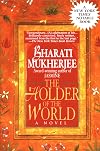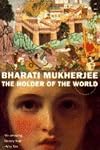
The Holder of the World
by Bharati Mukherjee
On This Page
Description
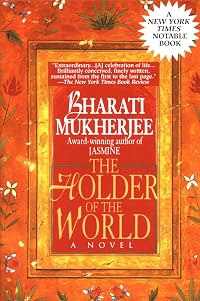
“An amazing literary feat and a masterpiece of storytelling. Once again, Bharati Mukherjee prove she is one of our foremost writers, with the literary muscles to weave both the future and the past into a tale that is singularly intelligent and provocative.”—Amy TanThis is the remarkable story of Hannah Easton, a unique woman born in the American colonies in 1670, “a person undreamed of in Puritan society.” Inquisitive, vital and awake to her own possibilities, Hannah travels to show more Mughal, India, with her husband, and English trader. There, she sets her own course, “translating" herself into the Salem Bibi, the white lover of a Hindu raja.
It is also the story of Beigh Masters, born in New England in the mid-twentieth century, an “asset hunter” who stumbles on the scattered record of her distant relative's life while tracking a legendary diamond. As Beigh pieces together details of Hannah's journeys, she finds herself drawn into the most intimate and spellbinding fabric of that remote life, confirming her belief that with “sufficient passion and intelligence, we can decontrsuct the barriers of time and geography....”. show less
Tags
Recommendations













Member Reviews
Had I not been held captive in a stifling, airless bedroom of a beach bungalow in Zanzibar by the worst sunburn I’ve ever had in my life AND a foot aching from sea urchin spines, I doubt I would have had the wherewithal to make it through this. As it was: “Thanks, Ms Mukherjee. You only added to my misery.”
Trying to do too much in a short novel is the fate of any writer who really lacks the ability to write well. If you can write prose like Alessandro Barrico, Virginia Woolf or Colm Toibin, you can easily achieve mastery of your literary mission in under 200 pages. If you’re Mukherjee, you cannot. In fact, she should not.
Having said that, I wouldn’t have wanted her to have to pull another 200 pages of printer paper off the show more shelf to make this one work. Her writing jumps around all over the place, can’t make up its mind if it is history of sci-fi or romance or whatever.
Having completed it, I was somewhat surprised to find that it’s supposed to be a retelling of Hawthorne’s Scarlet Letter. Quite why a novelist with the output of Hawthorne needs to be retold, I have no idea. I also had no idea while reading Holder that Mukherjee was retelling that particular narrative such was the success of the attempt. Simply having your protagonist name her daughter Pearl is insufficient.
The prose is turgid, completely opaque at points and completely banal at others. Here’s an example of the opaque:
Before this longing, she had conceived of emptiness as absence, detectable only by the circumference within which it was contained. Now the void became a pleasure-filled pain subsuming all the old salient virtues such as duty and compassion
I’ve re-read that enough times to know that I can’t wring any more meaning than none from it. Horrendous.
And here’s an example of the banal:
Hannah shrieked, even though she didn’t know she had until she heard the shriek herself.
There are two things wrong with this. Firstly, sound travels at 343 metres per second and let’s say she has a fairly large head to give her the benefit of the doubt. That means it that the period of ignorance Mukherjee is referring to last less than half a thousandth of a second. Hardly worth referring to.
Secondly, and worse still, the subordinating conjunction “even though” implies that the shrieking happened despite her not hearing it which is meaningless at best. Whether or not you hear yourself shriek does not in any way determine whether you shriek or not.
Sadly, what Mukherjee lacks in her ability to write she also lacks in her ability to construct a coherent novel. Every single reference to a modern-day researcher of artifacts (who exactly has that job description?) and her live-in lover who is attempting a time-travel experiment could be excised from the book and it would actually improve it. It has zero relevance.
Other characters such as Hannah’s husband Gabriel or Higginbotham drift in and out of the reader’s semi-consciousness and seem to contribute little or nothing to the point of anything.
I’ve just now realised that I’m in serious danger of praising the novel by assuming there was a point to it so I’d better stop. show less
Trying to do too much in a short novel is the fate of any writer who really lacks the ability to write well. If you can write prose like Alessandro Barrico, Virginia Woolf or Colm Toibin, you can easily achieve mastery of your literary mission in under 200 pages. If you’re Mukherjee, you cannot. In fact, she should not.
Having said that, I wouldn’t have wanted her to have to pull another 200 pages of printer paper off the show more shelf to make this one work. Her writing jumps around all over the place, can’t make up its mind if it is history of sci-fi or romance or whatever.
Having completed it, I was somewhat surprised to find that it’s supposed to be a retelling of Hawthorne’s Scarlet Letter. Quite why a novelist with the output of Hawthorne needs to be retold, I have no idea. I also had no idea while reading Holder that Mukherjee was retelling that particular narrative such was the success of the attempt. Simply having your protagonist name her daughter Pearl is insufficient.
The prose is turgid, completely opaque at points and completely banal at others. Here’s an example of the opaque:
Before this longing, she had conceived of emptiness as absence, detectable only by the circumference within which it was contained. Now the void became a pleasure-filled pain subsuming all the old salient virtues such as duty and compassion
I’ve re-read that enough times to know that I can’t wring any more meaning than none from it. Horrendous.
And here’s an example of the banal:
Hannah shrieked, even though she didn’t know she had until she heard the shriek herself.
There are two things wrong with this. Firstly, sound travels at 343 metres per second and let’s say she has a fairly large head to give her the benefit of the doubt. That means it that the period of ignorance Mukherjee is referring to last less than half a thousandth of a second. Hardly worth referring to.
Secondly, and worse still, the subordinating conjunction “even though” implies that the shrieking happened despite her not hearing it which is meaningless at best. Whether or not you hear yourself shriek does not in any way determine whether you shriek or not.
Sadly, what Mukherjee lacks in her ability to write she also lacks in her ability to construct a coherent novel. Every single reference to a modern-day researcher of artifacts (who exactly has that job description?) and her live-in lover who is attempting a time-travel experiment could be excised from the book and it would actually improve it. It has zero relevance.
Other characters such as Hannah’s husband Gabriel or Higginbotham drift in and out of the reader’s semi-consciousness and seem to contribute little or nothing to the point of anything.
I’ve just now realised that I’m in serious danger of praising the novel by assuming there was a point to it so I’d better stop. show less
Mukherjee's novel is a fantastic journey not through history, per se, but about the aspects of the personal that inform history and its varied tellings. Many of the reviews I've read of The Holder of the World that were negative seemed to be expecting a historical fiction; this is far from Mukherjee's intention here. Indeed, she is questioning the very notion of history itself in how the narrator constructs the past of her seventeenth-century ancestor, Hannah, whose very name is palindrome, implying that she can be read in the same way from any vantage point. But this is not what the narrator discovers: Mukherjee's text is a collage of other texts from the narrator's trips to archival sources to journal entries (some from texts that show more actually exist, some from texts that do not exist at all), from intertextual allusions to Hawthorne and Rowlandson to a juxtaposition of different ways to retrieve and assess different kinds of information and build histories from them—e.g. the narrator's archival quest versus her partner's computerized experiments in mapping memory and time.
As a novel about history, this is wonderfully written, engaging, and compelling; the fractured and fragmented narrative—which sometimes jumps back and forth in time rapidly and lacks an overall cohesiveness—can be dizzying at first, but this is part of its structural integrity. The project of building one's history is never linear, and Mukherjee's project in bringing colonial America into dialogue with colonial England—and placing Hannah in the direct center of the Native Americans and native Indians as she journeys throughout her life—is a sophisticated attempt to discuss how power and narrative can be subverted. Not only are the stereotypical traits assigned to race and mapped on to gender at play here, with Hannah navigating her way through them, but these "negative" attributes are actually sources of freedom, movement, and liberation, both for this seventeenth-century woman and for the narrator who is intent on constructing this woman's history.
The source material is varied and rich; the historical settings are always visceral and enhanced by archival material—whether real or not, as Mukherjee seems to want to get the reader involved in questioning whether all truths are necessary in constructing a history or histories. I really enjoyed the book, and would highly recommend it to those interested in the problematical task of writing and constructing personal and cultural histories, and how the same problems at work in these attempts to reach back through time are also at play in the time period in questioning, allowing for a concurrent analysis of power, class, race, gender, and imperialism to take place while still conducting a very personal project close to one's heart. show less
As a novel about history, this is wonderfully written, engaging, and compelling; the fractured and fragmented narrative—which sometimes jumps back and forth in time rapidly and lacks an overall cohesiveness—can be dizzying at first, but this is part of its structural integrity. The project of building one's history is never linear, and Mukherjee's project in bringing colonial America into dialogue with colonial England—and placing Hannah in the direct center of the Native Americans and native Indians as she journeys throughout her life—is a sophisticated attempt to discuss how power and narrative can be subverted. Not only are the stereotypical traits assigned to race and mapped on to gender at play here, with Hannah navigating her way through them, but these "negative" attributes are actually sources of freedom, movement, and liberation, both for this seventeenth-century woman and for the narrator who is intent on constructing this woman's history.
The source material is varied and rich; the historical settings are always visceral and enhanced by archival material—whether real or not, as Mukherjee seems to want to get the reader involved in questioning whether all truths are necessary in constructing a history or histories. I really enjoyed the book, and would highly recommend it to those interested in the problematical task of writing and constructing personal and cultural histories, and how the same problems at work in these attempts to reach back through time are also at play in the time period in questioning, allowing for a concurrent analysis of power, class, race, gender, and imperialism to take place while still conducting a very personal project close to one's heart. show less
I'm not sure what I think of it. I feel a little disappointed. I liked the idea of the story, but it felt more like an academic book on English life in India in the 1700's. I wish there were more story to it. I also thought that the story would be more about Hannah's life as the Salem Bibi, but that was short and only near the end of the book. I thought it was interesting how the author tied in The Scarlet Letter by Hawthorne at the end.
I read this book a long time ago, and just came across it again as I was entering it into my LT catalogue. I loved this book, it was absolutely fascinating and thought-provoking: the story of a 17th century New England woman who settles in Mughal India, told through the researches of a descendant 300 years later. In fact I have another copy of it somewhere in the house (though I may have loaned it to someone, since it was an extra one). Anyway, I'm adding this to my list of books to re-read.
An interesting book with some historical details the author made come to life. It keep my interest until the end because I wanted to know how Hannah became the Salem Bibi. However by the time I got to the end, I didn't really feel strongly about the main character one way or another, I just wanted the story to wrap up the details. The end was disappointing, rather a dull narrative.
I don't know why I read this book. It started out okay, set in 1670 Massachusetts, but grew confusing once the time frame jumped to the present and we're introduced to the narrator/asset hunter who is on the trail of a huge diamond and the Salem bibi, Hannah Easton. Her journey from Puritan New England to colonial India and into the arms of a Hindu King is told through historical clues and some weird "time-travel." I kept thinking I'd find something here to engage me, but I never did and now I'm sorry I wasted my time. The story is not badly written, it's just not compelling enough; I can't recommend it.
Have started, but did not get far.
Since this book is a BC-book AND a 1001-library book, I'll pass it on now to the next reader.
Since this book is a BC-book AND a 1001-library book, I'll pass it on now to the next reader.
Members
- Recently Added By
Lists

Parallel Novels
37 works; 6 members
Author Information

18+ Works 3,169 Members
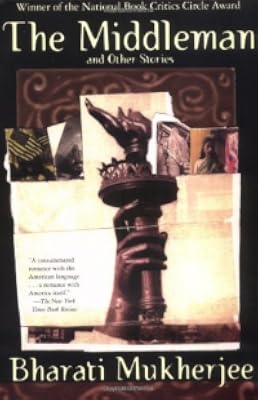
Bharati Mukherjee was born in Calcutta, India on July 27, 1940. She received a bachelor's degree in English from the University of Calcutta in 1959 and a master's degree from the University of Baroda in 1961. After sending six stories to the University of Iowa, she was accepted into the Iowa Writers' Workshop. She received an M.F.A. in 1963 and a show more doctorate in comparative literature in 1969 from the University of Iowa. She married fellow student Clark Blaise, a Canadian author, in 1963. They moved to Montreal in 1966, where she taught English at McGill University. They moved back to the United States in 1980. After teaching creative writing at Columbia University, New York University, and Queens College, she taught postcolonial and world literature at the University of California, Berkeley. She wrote numerous books during her lifetime including The Tiger's Daughter, Wife, Darkness, Jasmine, The Holder of the World, Desirable Daughters, The Tree Bride, and Miss New India. In 1988, The Middleman and Other Stories won the National Book Critics Circle Award for fiction. She died from complications of rheumatoid arthritis and takotsubo cardiomyopathy, a stress-induced heart condition, on January 28, 2017 at the age of 76. (Bowker Author Biography) show less
Some Editions
Awards and Honors
Common Knowledge
- Canonical title
- The Holder of the World
- Original title
- The Holder of the World
- Original publication date
- 1993
- Important places
- India
Classifications
- Genres
- General Fiction, Fiction and Literature, Historical Fiction
- DDC/MDS
- 813.54 — Literature & rhetoric American literature in English American fiction in English 1900-1999 1945-1999
- LCC
- PR9499.3 .M77 .H65 — Language and Literature English English Literature English literature: Provincial, local, etc.
- BISAC
Statistics
- Members
- 464
- Popularity
- 65,699
- Reviews
- 8
- Rating
- (3.27)
- Languages
- 5 — Danish, Dutch, English, French, German
- Media
- Paper, Ebook
- ISBNs
- 15
- ASINs
- 3