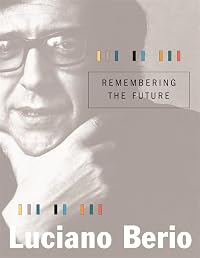
Remembering the Future
by Luciano Berio
24 Members (3.50)
On This Page
Description
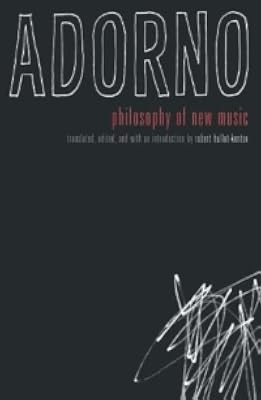
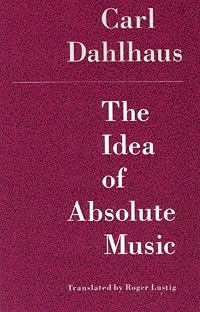
In Remembering the Future Luciano Berio shares with us some musical experiences that "invite us to revise or suspend our relation with the past and to rediscover it as part of a future trajectory." His scintillating meditation on music and the ways of experiencing it reflects the composer's profound understanding of the history and contemporary practice of his art. There is much in this short book that provides insight on Berio's own compositions. Indeed, he comments that writing it "led me show more to formulate thoughts that might otherwise have remained concealed in the folds of my work." He explores themes such as transcription and translation, poetics and analysis, "open work," and music theater. The reader will also find here numerous insights on the work of other composers, past and present, and much more. A figure of formidable intellect, Berio ranges easily among topics such as Schenkerian analysis, the criticism of Carl Dahlhaus and Theodor Adorno, the works of his friends and sometime collaborators Italo Calvino and Umberto Eco. But Berio carries his learning lightly--his tone is conversational, often playful, punctuated by arresting aphorisms: "The best possible commentary on a symphony is another symphony." show lessTags
Recommendations
















Member Reviews
Members
- Recently Added By
Author Information

115+ Works 217 Members
A musician and composer, Luciano Berio was born in Oneglia, near Genoa, Italy. Music was an intrinsic part of his childhood. His father was his first teacher, instructing him on the organ and piano. At the age of 15, Berio went to the Milan Conservatory, where he studied composition and conducting. After graduation, he worked for a short period as show more a voice coach and conductor in several Italian opera houses and composed several pieces, including Due Pezzi, for violin and piano (1951); Variazioni, for piano (1952); and Chamber Music, for voice, clarinet, cello, and harp, based on poems by James Joyce. While at the Berkshire Music Center at the Tanglewood Music Center in Lenox, Massachusetts, Berio studied composition with Luigi Dallapiccola. Dallapiccola introduced Berio to the artistic potentials of 12-tone music and serialism. Variations for Chamber Orchestra (1953); Nones, for orchestra (1954); and Allelujah 1, for orchestra (1956) are characterized as controlled serialism. In 1954 Berio returned to Milan, where he founded the Studio di Fonologia Musicale in order to experiment with electronic music. He incorporated electronic sounds into such compositions as Mutazioni (1955); Omaggio a Joyce (1958), based on Chapter 11 of Joyce's Ulysses; and Momento (1958). Berio no longer confined music to pitched sound; he embraced the world of sound and experimented with and used sounds of all kinds in his compositions. Visage (1960) was the last piece of music that Berio wrote during this period of experimentation with electronics at his Milan studio. In 1960 Berio returned to the United States. He taught music at Mills College at Oakland, California, and Harvard University before settling at the Julliard School of Music in New York. (Bowker Author Biography) show less
Series
Belongs to Publisher Series
Charles Eliot Norton Lectures (1993-1994)
Common Knowledge
- Canonical title
- Remembering the Future
Classifications
Statistics
- Members
- 24
- Popularity
- 1,112,514
- Rating
- (3.50)
- Languages
- English, Italian
- Media
- Paper, Ebook
- ISBNs
- 3