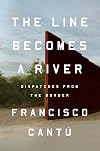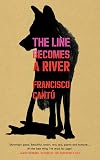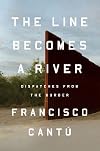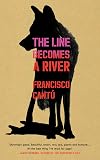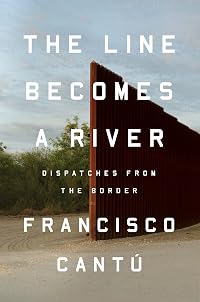
The Line Becomes a River: Dispatches from the Border
by Francisco Cantú
On This Page
Description
NAMED A TOP 10 BOOK OF 2018 BY NPR and THE WASHINGTON POSTSHORTLISTED FOR THE ANDREW CARNEGIE MEDAL OF EXCELLENCE
FINALIST FOR THE NATIONAL BOOK CRITIC CIRCLE'S JOHN LEONARD PRIZE
The instant New York Times bestseller, "A must-read for anyone who thinks 'build a wall' is the answer to anything." —Esquire
For Francisco Cantú, the border is in the blood: his mother, a park ranger and daughter of a Mexican immigrant, raised him in the scrublands of the Southwest. Driven to understand the show more hard realities of the landscape he loves, Cantú joins the Border Patrol. He and his partners learn to track other humans under blistering sun and through frigid nights. They haul in the dead and deliver to detention those they find alive. Plagued by a growing awareness of his complicity in a dehumanizing enterprise, he abandons the Patrol for civilian life. But when an immigrant friend travels to Mexico to visit his dying mother and does not return, Cantú discovers that the border has migrated with him, and now he must know the full extent of the violence it wreaks, on both sides of the line. show less
Tags
Recommendations




Member Reviews
MEMOIR/IMMIGRATION
Francisco Cantú
The Line Becomes a River: Dispatches from the Border
Riverhead Books
Hardcover, 978-0-7352-1771-3, (also available as an e-book, an audio book, and on Audible), 256 pgs., $26.00
February 6, 2018
They come from Michoacán and Guadalajara, from Oaxaca and El Salvador. Men, women, children, entire families. Some are heroin mules, “coyotes,” and cartel scouts; some are pregnant women, children escaping gangs, and fathers who want to feed their kids. One man offers to clean up around the station while he waits for the bus that will return him to Mexico. Sometimes the migrants’ backpacks are dumped on the desert floor, the water drained, the clothes and food burned. Other times, the migrants’ blistered show more feet are washed and bandaged. There are abandoned drug loads and abandoned people, extraordinary cruelty and ordinary kindness, paranoia and compromising situations, kidney failure and the comatose and the dead. The Southwestern desert is a vast graveyard. A Texas sheriff notes, “For every one we find, we’re probably missing five.”
The Line Becomes a River: Dispatches from the Border is the first book from Francisco Cantú, a former U.S. Border Patrol agent. His writing has appeared in Harper’s and Guernica, among other publications, and Cantú won a Pushcart Prize and the 2017 Whiting Award. The Line Becomes a River is a profoundly disturbing memoir of Cantú’s years in the Border Patrol during years of breathtaking violence, when Felipe Calderón was president of Mexico and challenged the cartels.
Cantú, whose family came from Mexico, spent time growing up in West Texas, his mother a park ranger. He left the desert for Washington, D.C., and earned a degree in international relations, studying the southern border. Seeking to add practical experience to his academic studies, Cantú entered the Border Patrol academy. “The government took my passion and bent it to its own purpose,” his mother warns him. “Stepping into a system doesn’t mean that the system becomes you,” he parries.
Divided into three parts, The Line Becomes a River is composed of a series of vignettes, sometimes approximating stream-of-consciousness. Cantú is conflicted and dreams of wolves and disintegrating teeth; Jungian psychology provides context. He alternates between the anecdotal and the empirical, fitting human faces to the facts and figures—all those numbers—and providing a history of the line—all those broken treaties. Cantú has read his Charles Bowden and Molly Molloy and Sara Uribe.
After Cantú left the agency to attend graduate school, he learns that a friend with whom he shared breakfast almost every morning, José, has been arrested re-entering the country after visiting his dying mother. It’s the first time Cantú visits anyone in detention, attends the court hearings, witnesses the slow-motion ripping apart of a family. The last part of The Line Becomes a River is related in José’s voice, a very effective technique, visceral and instructive: “The U.S. is making criminals out of those who could become its very best citizens.”
The Line Becomes a River seems an honest examination of conscious, a reckoning on Cantú’s part. Though he occasionally strays into melodrama, I admire Cantú’s writing and was moved by the stories he relates. Still, The Line Becomes a River leaves me unsettled, troubled by something I can’t quite put my finger on. Cantú wonders whether his shame can be redeemed, spiritual sickness healed. I wonder at the costs to human beings of what sometimes seems a personal experiment on the part of Cantú.
Originally published in Lone Star Literary Life. show less
Francisco Cantú
The Line Becomes a River: Dispatches from the Border
Riverhead Books
Hardcover, 978-0-7352-1771-3, (also available as an e-book, an audio book, and on Audible), 256 pgs., $26.00
February 6, 2018
They come from Michoacán and Guadalajara, from Oaxaca and El Salvador. Men, women, children, entire families. Some are heroin mules, “coyotes,” and cartel scouts; some are pregnant women, children escaping gangs, and fathers who want to feed their kids. One man offers to clean up around the station while he waits for the bus that will return him to Mexico. Sometimes the migrants’ backpacks are dumped on the desert floor, the water drained, the clothes and food burned. Other times, the migrants’ blistered show more feet are washed and bandaged. There are abandoned drug loads and abandoned people, extraordinary cruelty and ordinary kindness, paranoia and compromising situations, kidney failure and the comatose and the dead. The Southwestern desert is a vast graveyard. A Texas sheriff notes, “For every one we find, we’re probably missing five.”
The Line Becomes a River: Dispatches from the Border is the first book from Francisco Cantú, a former U.S. Border Patrol agent. His writing has appeared in Harper’s and Guernica, among other publications, and Cantú won a Pushcart Prize and the 2017 Whiting Award. The Line Becomes a River is a profoundly disturbing memoir of Cantú’s years in the Border Patrol during years of breathtaking violence, when Felipe Calderón was president of Mexico and challenged the cartels.
Cantú, whose family came from Mexico, spent time growing up in West Texas, his mother a park ranger. He left the desert for Washington, D.C., and earned a degree in international relations, studying the southern border. Seeking to add practical experience to his academic studies, Cantú entered the Border Patrol academy. “The government took my passion and bent it to its own purpose,” his mother warns him. “Stepping into a system doesn’t mean that the system becomes you,” he parries.
Divided into three parts, The Line Becomes a River is composed of a series of vignettes, sometimes approximating stream-of-consciousness. Cantú is conflicted and dreams of wolves and disintegrating teeth; Jungian psychology provides context. He alternates between the anecdotal and the empirical, fitting human faces to the facts and figures—all those numbers—and providing a history of the line—all those broken treaties. Cantú has read his Charles Bowden and Molly Molloy and Sara Uribe.
After Cantú left the agency to attend graduate school, he learns that a friend with whom he shared breakfast almost every morning, José, has been arrested re-entering the country after visiting his dying mother. It’s the first time Cantú visits anyone in detention, attends the court hearings, witnesses the slow-motion ripping apart of a family. The last part of The Line Becomes a River is related in José’s voice, a very effective technique, visceral and instructive: “The U.S. is making criminals out of those who could become its very best citizens.”
The Line Becomes a River seems an honest examination of conscious, a reckoning on Cantú’s part. Though he occasionally strays into melodrama, I admire Cantú’s writing and was moved by the stories he relates. Still, The Line Becomes a River leaves me unsettled, troubled by something I can’t quite put my finger on. Cantú wonders whether his shame can be redeemed, spiritual sickness healed. I wonder at the costs to human beings of what sometimes seems a personal experiment on the part of Cantú.
Originally published in Lone Star Literary Life. show less
This is not a view of the persons trying to enter the USA from Mexico as it sees the cynicism and inherent capitalism that affects non-rich human lives. This is a first-person depiction of the war which rages from the USA against Mexicans, the group of nationality which is most abused in everyday northern America, and is being "thwarted" from entering the USA.
Cantú worked as a US border patrol agent between 2008 and 2012. As such, and seemingly being an open-minded humanitarian, he's seen a lot of shit happen. Everything from finding half-dead persons dying from thirst while trying to (illegally) entering the USA, to seeing border politics basically going from there not being a border, to capitalism of the 1980s entering the picture, show more to how Bush/Obama/Trump want it all to be, caused a state where US border patrol is made up of persons who want to protect their country with pride, while behaving like human beings towards those trying to get into the US.
Still, as such, violence and callous behaviour is often normalised, as is violence towards border patrol staff.
Cantú is a born writer. His level-headed style of description, rhythm, and laying out facts is both seldom seen and deeply valuable. I'm left with a sense of enrichment from having read this book, even though I have read a bunch of others that have been about trafficking around different parts of the globe; his human views and views on humans provide the reader with ample info.
The slightly bad side with this book is that the facts pile up almost like a kind of fact-after-fact recount, which novice writers can be prone to delve into. Still, considering how this is the author's first book, it is a veritable tour-de-force which should receive more press than it has.
Examples of the short and packed sentences:
The writing that's not entirely about patrolling is also good:
I liked this bit, which probably best of all paragraphs in the book shows the weariness and paranoia that follows any line of work where one's colleagues and the work is congealed and one doesn't separate easily from that mess:
In summary: an easy read that may reveal more to life than you know where desperation meets bureaucracy in the most insane ways. show less
Cantú worked as a US border patrol agent between 2008 and 2012. As such, and seemingly being an open-minded humanitarian, he's seen a lot of shit happen. Everything from finding half-dead persons dying from thirst while trying to (illegally) entering the USA, to seeing border politics basically going from there not being a border, to capitalism of the 1980s entering the picture, show more to how Bush/Obama/Trump want it all to be, caused a state where US border patrol is made up of persons who want to protect their country with pride, while behaving like human beings towards those trying to get into the US.
Still, as such, violence and callous behaviour is often normalised, as is violence towards border patrol staff.
Cantú is a born writer. His level-headed style of description, rhythm, and laying out facts is both seldom seen and deeply valuable. I'm left with a sense of enrichment from having read this book, even though I have read a bunch of others that have been about trafficking around different parts of the globe; his human views and views on humans provide the reader with ample info.
The slightly bad side with this book is that the facts pile up almost like a kind of fact-after-fact recount, which novice writers can be prone to delve into. Still, considering how this is the author's first book, it is a veritable tour-de-force which should receive more press than it has.
Examples of the short and packed sentences:
Robles’s eyes seemed to detach from his surroundings, as if his gaze had turned inward. A year after that, he continued, I chased another man to the banks of the Colorado River. He ran out into the water and was swept away by the current like it was nothing. And I’ll tell you what I did. I swam into the river and I battled to keep him afloat even as I inhaled mouthfuls of water, even though I can’t remember ever having been more tired. I saved that man’s life, and still, there’s not a single day I don’t think about the one I took before it.
The writing that's not entirely about patrolling is also good:
After completing the course of fire, I shot at a smaller target with my own .22 caliber pistol. As I paused to reload, a yellow bird landed atop the target stand. I waited for it to fly off, but the bird continued hopping across the top. I started to walk downrange to scare it off, and then I stopped. I looked around. The range was empty. It occurred to me then that perhaps I should shoot the bird, that I should prove to myself that I could take a life, even one this small. I dropped the little bird with one shot. I walked over and picked up its body and in my hands the dead animal seemed weightless. I rubbed its yellow feathers with my fingertip. I began to feel sick and I wondered, for one brief moment, if I was going insane. At the edge of the firing range I dug a small hole beneath a creosote bush and buried the bird there, covering the fresh dirt with a small pile of stones.
I liked this bit, which probably best of all paragraphs in the book shows the weariness and paranoia that follows any line of work where one's colleagues and the work is congealed and one doesn't separate easily from that mess:
The dentist silently jotted his notes in my file. So why’d you leave the field? he asked. Won’t you be bored? I began to feel annoyed with his questions, concerned that I was somehow telegraphing cowardice or insecurity. It’s kind of a promotion, I said, it’s a chance to learn something new. Another side of the job, you know? The dentist looked at me and shrugged his shoulders. I used to have an office job, he told me, there’s only so much you can learn at a computer screen. I rolled my eyes and shook my head. Look, I finally said, I don’t know what else to tell you. I thought it would be nice to have a break from the field, to live in the city for a while. All right, all right, he said, holding up his hands. I feel you. I’m just trying to make sure you don’t grind your teeth out.
In summary: an easy read that may reveal more to life than you know where desperation meets bureaucracy in the most insane ways. show less
The Line Becomes a River is at times a well-written, even lyrical, memoir about the author's experiences as a member of the U.S. Border Patrol. Although Francisco Cantú is of Mexican descent, he chose to join this controversial—to put it mildly—institution in order to "better understand" the U.S.-Mexico border.
After an intriguing start, I thought this book faltered badly. It read like an uneasy mix of Cantú wanting to tacitly admit that his mother was right (she counselled him repeatedly against joining the Border Patrol) and wanting to hold everything terrible he was complicit in at arm's length. To me, it was telling that at one point Cantú repeats discredited, sensationalist takes on behavioural genetics. This kind of show more reductive evo-psych nonsense tends to get trotted out any time people want to avoid indictments of systemic injustice. (Women just be like that, right! etc.)
My suspicion is that in joining the Border Patrol, in trying to "better understand" the border question, Cantú was really seeking to avoid the uncomfortable truths he was told by his mother and by his college professors (he repeatedly mentions a feeling that what he studied as an International Relations major in college wasn't grounded in reality). Throughout the book, Cantú tells us that he wants to understand things more deeply, but doesn't really do the work to show that. An unsettling read, on a number of levels. show less
After an intriguing start, I thought this book faltered badly. It read like an uneasy mix of Cantú wanting to tacitly admit that his mother was right (she counselled him repeatedly against joining the Border Patrol) and wanting to hold everything terrible he was complicit in at arm's length. To me, it was telling that at one point Cantú repeats discredited, sensationalist takes on behavioural genetics. This kind of show more reductive evo-psych nonsense tends to get trotted out any time people want to avoid indictments of systemic injustice. (Women just be like that, right! etc.)
My suspicion is that in joining the Border Patrol, in trying to "better understand" the border question, Cantú was really seeking to avoid the uncomfortable truths he was told by his mother and by his college professors (he repeatedly mentions a feeling that what he studied as an International Relations major in college wasn't grounded in reality). Throughout the book, Cantú tells us that he wants to understand things more deeply, but doesn't really do the work to show that. An unsettling read, on a number of levels. show less
Eloquent, Emotional and Disturbing Look at the Dark Underbelly of US Immigration Policy.
Through simple, concise and beautifully crafted language, this book does more to explain the complexities involved in immigration policy than any thing else I’ve read.
The author, a former border patrol officer himself, weaves together a rich and provocative collection of his own experiences and impressions from the job, anecdotes, and profoundly human immigrant stories into a novel that, quite honestly, is very difficult to read.
• There are callous border officers relentlessly seeking out and arresting illegals.
• There are impoverished and desperate immigrants (including women and children) who are routinely abused, cheated, left abandoned, show more and even murdered by “guides” hired to sneak them across the border.
• There are massive drug trafficking operations, where torture and murder are commonplace.
• And there are way too many migrants who disappear in the desert –sometimes simply because of insufficient water or excessive heat.
And, at the center of it all, a legal system that comes off as harsh, random and insensitive in the ways it attempts to dispense “justice.”
Throughout the book, author Francisco Cantu (who is part Mexican) appears to be trying to make sense of all the conflicts and complexities inherent in U.S. immigration policy enforcement. And the ways in which his work permanently changes him.
He also follows, in detail, one representative but deeply sad story of Jose, a hardworking but illegal family man, who has lived in the US for 30 years, but makes the mistake of returning to Mexico to attend his mother’s deathbed.
By the end of this narrative, it is painfully clear that all of us too often are distracted by cerebral policy discussions and meaningless statistics, forgetting that each number represents a single individual’s own deeply human desire and commitment to living a better life. show less
Through simple, concise and beautifully crafted language, this book does more to explain the complexities involved in immigration policy than any thing else I’ve read.
The author, a former border patrol officer himself, weaves together a rich and provocative collection of his own experiences and impressions from the job, anecdotes, and profoundly human immigrant stories into a novel that, quite honestly, is very difficult to read.
• There are callous border officers relentlessly seeking out and arresting illegals.
• There are impoverished and desperate immigrants (including women and children) who are routinely abused, cheated, left abandoned, show more and even murdered by “guides” hired to sneak them across the border.
• There are massive drug trafficking operations, where torture and murder are commonplace.
• And there are way too many migrants who disappear in the desert –sometimes simply because of insufficient water or excessive heat.
And, at the center of it all, a legal system that comes off as harsh, random and insensitive in the ways it attempts to dispense “justice.”
Throughout the book, author Francisco Cantu (who is part Mexican) appears to be trying to make sense of all the conflicts and complexities inherent in U.S. immigration policy enforcement. And the ways in which his work permanently changes him.
He also follows, in detail, one representative but deeply sad story of Jose, a hardworking but illegal family man, who has lived in the US for 30 years, but makes the mistake of returning to Mexico to attend his mother’s deathbed.
By the end of this narrative, it is painfully clear that all of us too often are distracted by cerebral policy discussions and meaningless statistics, forgetting that each number represents a single individual’s own deeply human desire and commitment to living a better life. show less
Eloquent, Emotional and Disturbing Look at the Dark Underbelly of US Immigration Policy.
Through simple, concise and beautifully crafted language, this book does more to explain the complexities involved in immigration policy than any thing else I’ve read.
The author, a former border patrol officer himself, weaves together a rich and provocative collection of his own experiences and impressions from the job, anecdotes, and profoundly human immigrant stories into a novel that, quite honestly, is very difficult to read.
• There are callous border officers relentlessly seeking out and arresting illegals.
• There are impoverished and desperate immigrants (including women and children) who are routinely abused, cheated, left abandoned, show more and even murdered by “guides” hired to sneak them across the border.
• There are massive drug trafficking operations, where torture and murder are commonplace.
• And there are way too many migrants who disappear in the desert –sometimes simply because of insufficient water or excessive heat.
And, at the center of it all, a legal system that comes off as harsh, random and insensitive in the ways it attempts to dispense “justice.”
Throughout the book, author Francisco Cantu (who is part Mexican) appears to be trying to make sense of all the conflicts and complexities inherent in U.S. immigration policy enforcement. And the ways in which his work permanently changes him.
He also follows, in detail, one representative but deeply sad story of Jose, a hardworking but illegal family man, who has lived in the US for 30 years, but makes the mistake of returning to Mexico to attend his mother’s deathbed.
By the end of this narrative, it is painfully clear that all of us too often are distracted by cerebral policy discussions and meaningless statistics, forgetting that each number represents a single individual’s own deeply human desire and commitment to living a better life. show less
Through simple, concise and beautifully crafted language, this book does more to explain the complexities involved in immigration policy than any thing else I’ve read.
The author, a former border patrol officer himself, weaves together a rich and provocative collection of his own experiences and impressions from the job, anecdotes, and profoundly human immigrant stories into a novel that, quite honestly, is very difficult to read.
• There are callous border officers relentlessly seeking out and arresting illegals.
• There are impoverished and desperate immigrants (including women and children) who are routinely abused, cheated, left abandoned, show more and even murdered by “guides” hired to sneak them across the border.
• There are massive drug trafficking operations, where torture and murder are commonplace.
• And there are way too many migrants who disappear in the desert –sometimes simply because of insufficient water or excessive heat.
And, at the center of it all, a legal system that comes off as harsh, random and insensitive in the ways it attempts to dispense “justice.”
Throughout the book, author Francisco Cantu (who is part Mexican) appears to be trying to make sense of all the conflicts and complexities inherent in U.S. immigration policy enforcement. And the ways in which his work permanently changes him.
He also follows, in detail, one representative but deeply sad story of Jose, a hardworking but illegal family man, who has lived in the US for 30 years, but makes the mistake of returning to Mexico to attend his mother’s deathbed.
By the end of this narrative, it is painfully clear that all of us too often are distracted by cerebral policy discussions and meaningless statistics, forgetting that each number represents a single individual’s own deeply human desire and commitment to living a better life. show less
Slim and beautifully written, The Line Becomes a River is a powerful, deeply humane piece of nonfiction about the lives of Border Patrol agents and desperate migrants on the frontier between the U.S. and Mexico. This is a hybrid work: part memoir, part meditation, part expository piece. Richly allusive, it refers to the works of many writers on immigration, history, politics, and psychology. Aspects of Mexico’s geography—its flora and fauna, its culture and history, its wars of independence and revolution, as well as its ongoing catastrophic drug wars—in which thousands of innocents have been murdered and innumerable crimes against humanity have been committed—are all touched upon. Other topics are addressed, including the show more cartels (whose stranglehold on human smuggling only grew as the U.S. government cracked down on the border and hardened the policy related to it), mass graves (well over a hundred throughout Mexico, a number of them along the border), and femicide. No, this is not cheerful stuff.
The first half of the book focuses on Cantú‘s 2008-2012 training, field, and intelligence work for the U.S. Border Patrol—mostly in Arizona. His decision to join this agency greatly concerns his mother, the granddaughter of a Mexican immigrant, a former National Park ranger, someone who proclaims herself to be “not an enforcement-minded person.” As she sees it, the Border Patrol is “a paramilitary police force.” “You must understand,” she tells her son, “you are stepping into a system, an institution with little regard for people.” However, Cantú has determined that he will gain real-world experience with the border he’s spent the last few years studying in his international relations program in Washington, D.C.. A number of the men he meets during his training grew up on the border, are bilingual, and have even attended college; they’ve joined because the agency represents an opportunity for service, stability, and financial security.
The lessons, the rules, come swift and hard. “Your body is a tool,” says a trainer; batons, tasers, and guns mean nothing compared to the body, and a person must not give in when it tires. You must learn to read the dirt: when you “cut the sign”—i.e., follow a migrant trail—you must keep the sun in front of you, never at your back, so that the sign catches the light. Don’t track drug smugglers: you’re only asking for “a hell of a lot of paperwork” and a double shift to write it all up. When you discover “lay-up spots”—where rations and water are stashed—piss on, crush, or burn the stuff to encourage migrants to quit and return. Be sure to carry Vicks VapoRub; you’ll need it when you come upon the dead bodies.
It isn’t long before Cantú feels the effects of his work. “I have nightmares, visions of them [migrants] staggering through the desert . . . men lost and wandering without food or water, dying slowly as they look for some road, some village, some way out.” The nightmares intensify: a wolf is a recurrent character, and sometimes Cantú’s teeth break in these dreams. A dentist he visits during this period supplies the reason: Cantú is wearing down his tooth enamel with nighttime grinding. When his uncle asks about his job, Cantú wants to tell the older man that he can hardly sleep: his mind is “so filled with violence” that he can no longer perceive the beauty of a landscape he was once so sensitive to. There is a term for what has happened to him: moral injury—“a more subtle wound [than PTSD], characterized not by flashbacks or a startle complex, but by ‘sorrow, remorse, grief, shame, bitterness, and moral confusion.’” It is learned behaviour: “learning to accept things you know are wrong.” Cantú tells his supervisor, Hayward—who greatly values him, that he needs to leave. What he cannot tell Hayward is that “it’s not the work for me.”
The second part of The Line Becomes a River concerns itself with Cantu’s life after the Border Patrol, when he is working as a barista and becomes friends with Jose Martinez, a hardworking undocumented Mexican employed as the mercado’s custodian. Every morning at 10 am, Jose sits down to share a burrito with Cantu, who prepares him coffee with vanilla in return. A father of three sons, all born in America (one mentally disabled; one slightly lame after being hit by a car), Jose has a wife who is is also an illegal. When the dedicated Jose doesn’t show up for work one morning, Diane—the owner of the mercado—informs Cantú that her best worker has returned to Mexico to see his dying mother. Two weeks later, in late 2015, he is caught trying to illegally cross back into the U.S. (where he has lived for 30 years, since the age of 11) and is scheduled for deportation. Cantú attempts to aid the Martinez family as a sort of interpreter and shepherd through a justice system that he himself knows little about. Because Lupe Martinez is also illegal, it is Cantu who accompanies the Martinez sons to the prison facility where their father is being held. Through these experiences, the author sees what happens to illegals on the other side of arrests of the kind he carried out as a Border Patrol agent.
I have watched my fair share of TV news stories on the plight of Mexican and Central American migrants, and I have read some children’s literature that portrays their experience. However, it is Cantú’s understated book that has brought the issues home for me. The Line Becomes a River is a powerful, exceptional work about an ongoing tragedy. I hope we will be hearing more from Cantú. show less
The first half of the book focuses on Cantú‘s 2008-2012 training, field, and intelligence work for the U.S. Border Patrol—mostly in Arizona. His decision to join this agency greatly concerns his mother, the granddaughter of a Mexican immigrant, a former National Park ranger, someone who proclaims herself to be “not an enforcement-minded person.” As she sees it, the Border Patrol is “a paramilitary police force.” “You must understand,” she tells her son, “you are stepping into a system, an institution with little regard for people.” However, Cantú has determined that he will gain real-world experience with the border he’s spent the last few years studying in his international relations program in Washington, D.C.. A number of the men he meets during his training grew up on the border, are bilingual, and have even attended college; they’ve joined because the agency represents an opportunity for service, stability, and financial security.
The lessons, the rules, come swift and hard. “Your body is a tool,” says a trainer; batons, tasers, and guns mean nothing compared to the body, and a person must not give in when it tires. You must learn to read the dirt: when you “cut the sign”—i.e., follow a migrant trail—you must keep the sun in front of you, never at your back, so that the sign catches the light. Don’t track drug smugglers: you’re only asking for “a hell of a lot of paperwork” and a double shift to write it all up. When you discover “lay-up spots”—where rations and water are stashed—piss on, crush, or burn the stuff to encourage migrants to quit and return. Be sure to carry Vicks VapoRub; you’ll need it when you come upon the dead bodies.
It isn’t long before Cantú feels the effects of his work. “I have nightmares, visions of them [migrants] staggering through the desert . . . men lost and wandering without food or water, dying slowly as they look for some road, some village, some way out.” The nightmares intensify: a wolf is a recurrent character, and sometimes Cantú’s teeth break in these dreams. A dentist he visits during this period supplies the reason: Cantú is wearing down his tooth enamel with nighttime grinding. When his uncle asks about his job, Cantú wants to tell the older man that he can hardly sleep: his mind is “so filled with violence” that he can no longer perceive the beauty of a landscape he was once so sensitive to. There is a term for what has happened to him: moral injury—“a more subtle wound [than PTSD], characterized not by flashbacks or a startle complex, but by ‘sorrow, remorse, grief, shame, bitterness, and moral confusion.’” It is learned behaviour: “learning to accept things you know are wrong.” Cantú tells his supervisor, Hayward—who greatly values him, that he needs to leave. What he cannot tell Hayward is that “it’s not the work for me.”
The second part of The Line Becomes a River concerns itself with Cantu’s life after the Border Patrol, when he is working as a barista and becomes friends with Jose Martinez, a hardworking undocumented Mexican employed as the mercado’s custodian. Every morning at 10 am, Jose sits down to share a burrito with Cantu, who prepares him coffee with vanilla in return. A father of three sons, all born in America (one mentally disabled; one slightly lame after being hit by a car), Jose has a wife who is is also an illegal. When the dedicated Jose doesn’t show up for work one morning, Diane—the owner of the mercado—informs Cantú that her best worker has returned to Mexico to see his dying mother. Two weeks later, in late 2015, he is caught trying to illegally cross back into the U.S. (where he has lived for 30 years, since the age of 11) and is scheduled for deportation. Cantú attempts to aid the Martinez family as a sort of interpreter and shepherd through a justice system that he himself knows little about. Because Lupe Martinez is also illegal, it is Cantu who accompanies the Martinez sons to the prison facility where their father is being held. Through these experiences, the author sees what happens to illegals on the other side of arrests of the kind he carried out as a Border Patrol agent.
I have watched my fair share of TV news stories on the plight of Mexican and Central American migrants, and I have read some children’s literature that portrays their experience. However, it is Cantú’s understated book that has brought the issues home for me. The Line Becomes a River is a powerful, exceptional work about an ongoing tragedy. I hope we will be hearing more from Cantú. show less
Have you ever wondered what it would be like to be one of the agents who patrols our southern border? Cantú paints a bleak picture of his four years near Tucson, AZ, and El Paso, TX. He grew up in West Texas and got a college degree in international relations, specializing in the relationship between the U.S. and Mexico. With his Mexican heritage and fluency in Spanish, he thought he could make a real difference in the lives of people he intercepted at the border. There are some tender scenes mixed in with the too common discouraging events involving drug smuggling and human trafficking. He couldn't bend the rules and allow illegal migrants to stay in the U.S., but he could treat them with compassion. After four years, though, the show more upsetting dreams came more frequently and he decided he needed to take a break from the high-stress job and go back to school to further his writing career.
After almost 2/3 of the book spent in relating the experiences of a Border Agent, the book changed directions and the author became friends with an illegal alien who had been in the states for almost 30 years raising a family and being a good "citizen". When he was called back to Mexico to attend to his dying mother, the book turned from a documentary into a compelling personal story about trying to reunite with his family and coming up against the system over and over. The author tried to help his friend and the family but there was little he could do. The heartrending story of a man who just wanted to live with and support his wife and children personalized the dilemma of what is going on at our southern border and made me better understand the complicated nature of our current laws and wish that cases could be considered in a more individual and compassionate way. show less
After almost 2/3 of the book spent in relating the experiences of a Border Agent, the book changed directions and the author became friends with an illegal alien who had been in the states for almost 30 years raising a family and being a good "citizen". When he was called back to Mexico to attend to his dying mother, the book turned from a documentary into a compelling personal story about trying to reunite with his family and coming up against the system over and over. The author tried to help his friend and the family but there was little he could do. The heartrending story of a man who just wanted to live with and support his wife and children personalized the dilemma of what is going on at our southern border and made me better understand the complicated nature of our current laws and wish that cases could be considered in a more individual and compassionate way. show less
Members
- Recently Added By
Lists

TLS 6009
39 works; 1 member

Books Read in 2018
4,360 works; 110 members

Indie Next Picks
196 works; 4 members

Books Read in 2019
4,052 works; 110 members

Book Club Suggestions for 2020
27 works; 2 members

Books With Water Words in the Title
186 works; 12 members
Author Information

2+ Works 758 Members
Some Editions
Awards and Honors
Awards
Distinctions
Common Knowledge
- Canonical title*
- Solo un fiume a separarci. Dispacci dalla frontiera
- Original title
- The Line Becomes a River: Dispatches from the Border
- Original publication date
- 2018
- Important places
- Mexico; Mexican-U.S. border
- Dedication
- To my mother and grandfather, for giving me life and a name; and to all those who risk their souls to traverse or patrol an unnatural divide.
- First words
- My mother and I drove east across the flatlands, along the vast floor of an ancient sea.
- Last words
- (Click to show. Warning: May contain spoilers.)All around me the landscape trembled and breathed as one.
- Blurbers
- Sandra Cisneros; Phil Klay; Alfredo Corchado; Barry Lopez; Luis Alberto Urrea
- Original language
- English
*Some information comes from Common Knowledge in other languages. Click "Edit" for more information.
Classifications
- Genres
- General Nonfiction, Biography & Memoir, Nonfiction, History
- DDC/MDS
- 363.28 — Society, government, & culture Social problems and social services Public Safety - Police, Crime Investigation Police services Services of special kinds of security and law enforcement agencies
- LCC
- JV6565 .C37 — Political Science Colonies and colonization. Emigration and immigration. International migration Colonies and colonization. Emigration and Emigration and immigration. International United States
- BISAC
Statistics
- Members
- 757
- Popularity
- 37,101
- Reviews
- 31
- Rating
- (3.94)
- Languages
- 6 — Chinese, Dutch, English, German, Italian, Spanish
- Media
- Paper, Audiobook, Ebook
- ISBNs
- 24
- ASINs
- 4