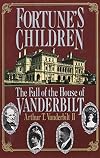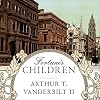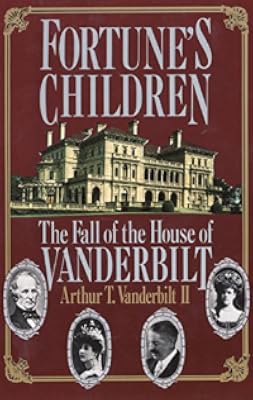
Fortune's Children: The Fall of the House of Vanderbilt
by II Arthur T. Vanderbilt
On This Page
Description
Vanderbilt: The very name is synonymous with the Gilded Age. The family patriarch, 'the Commodore,' built a fortune that made him the world's richest man by 1877. Yet, less than fifty years after his death, no Vanderbilt was counted among the world's richest people. Written by descendant Arthur T. Vanderbilt II, he traces the dramatic and amazingly colorful history, from the rise of industrialist and philanthropist Cornelius Vanderbilt to the fall of his progeny.Tags
Recommendations
















Member Reviews
Could Not Hold My Interest.
As someone who likes to read about the lives of the rich and famous, I expected this book to be fascinating. NOT! While there were some parts of interest, it felt like most of the book was a narrative about money -- how much was spent on this, how much it cost to built that, what mansion contents were sold to whom for how much. I actually found myself skipping long paragraphs full of figures. (I suppose you have to give the author lots of credit for thorough research.)
There was an additional confusing element to the story of four generations of Vanderbilts -- the fact that they kept using the same names in each generation. So, the reader has to try to figure out which Cornelius Vanderbilt was being discussed show more or which William or Alva, etc. The author did not do a very good job of helping with this.
On the plus side, I liked the story of the rivalry between Mrs. Vanderbilt and Mrs. Astor, the efforts to marry Consuelo Vanderbilt to the Duke of Marlborough, and the custody battle over little Gloria Vanderbilt (she who makes the jeans and is mother to Anderson Cooper). And you do get a reasonable tale of how the enormous fortune of the Commodore was squandered by subsequent generations -- through lavish entertaining, ostentatious building, and extravagant spending. show less
As someone who likes to read about the lives of the rich and famous, I expected this book to be fascinating. NOT! While there were some parts of interest, it felt like most of the book was a narrative about money -- how much was spent on this, how much it cost to built that, what mansion contents were sold to whom for how much. I actually found myself skipping long paragraphs full of figures. (I suppose you have to give the author lots of credit for thorough research.)
There was an additional confusing element to the story of four generations of Vanderbilts -- the fact that they kept using the same names in each generation. So, the reader has to try to figure out which Cornelius Vanderbilt was being discussed show more or which William or Alva, etc. The author did not do a very good job of helping with this.
On the plus side, I liked the story of the rivalry between Mrs. Vanderbilt and Mrs. Astor, the efforts to marry Consuelo Vanderbilt to the Duke of Marlborough, and the custody battle over little Gloria Vanderbilt (she who makes the jeans and is mother to Anderson Cooper). And you do get a reasonable tale of how the enormous fortune of the Commodore was squandered by subsequent generations -- through lavish entertaining, ostentatious building, and extravagant spending. show less
By fair means and foul, Cornelius "Commodore" Vanderbilt built a fortune of $105 million in the mid-nineteenth century. One hundred years later, most of that fortune was gone.
In Fortune's Children, Arthur T. Vanderbilt II paints a vivid portrait of his ancestors. The Commodore is one of the most important capitalists this country has ever produced, and with the marriage of his great-granddaughter to the Duke of Marlborough, this book will make excellent reading for any fan of Downton Abbey.
The author states that the fortune dissipated quickly because the Commodore was the first and only Vanderbilt who was obsessed with making money. The Vanderbilt men who followed were obsessed with keeping it. You need both to maintain those bank show more balances. Some-- like Alva Belmont Vanderbilt-- were obsessed with spending it to ram their way into New York's high society. Alva built some of the largest and most ostentatious homes ever to grace these shores, and the houses' interiors were even more lavish than their exteriors. Each of the author's ancestors is portrayed with wit and sorrow, which can often happen with the "advantage" of hindsight.
This is an absorbing tale of greed, snobbery, and profligacy that kept me fascinated from first page to last. If this is your cup of tea, I urge you to pour yourself some. show less
In Fortune's Children, Arthur T. Vanderbilt II paints a vivid portrait of his ancestors. The Commodore is one of the most important capitalists this country has ever produced, and with the marriage of his great-granddaughter to the Duke of Marlborough, this book will make excellent reading for any fan of Downton Abbey.
The author states that the fortune dissipated quickly because the Commodore was the first and only Vanderbilt who was obsessed with making money. The Vanderbilt men who followed were obsessed with keeping it. You need both to maintain those bank show more balances. Some-- like Alva Belmont Vanderbilt-- were obsessed with spending it to ram their way into New York's high society. Alva built some of the largest and most ostentatious homes ever to grace these shores, and the houses' interiors were even more lavish than their exteriors. Each of the author's ancestors is portrayed with wit and sorrow, which can often happen with the "advantage" of hindsight.
This is an absorbing tale of greed, snobbery, and profligacy that kept me fascinated from first page to last. If this is your cup of tea, I urge you to pour yourself some. show less
Could Not Hold My Interest.
As someone who likes to read about the lives of the rich and famous, I expected this book to be fascinating. NOT! While there were some parts of interest, it felt like most of the book was a narrative about money -- how much was spent on this, how much it cost to built that, what mansion contents were sold to whom for how much. I actually found myself skipping long paragraphs full of figures. (I suppose you have to give the author lots of credit for thorough research.)
There was an additional confusing element to the story of four generations of Vanderbilts -- the fact that they kept using the same names in each generation. So, the reader has to try to figure out which Cornelius Vanderbilt was being discussed show more or which William or Alva, etc. The author did not do a very good job of helping with this.
On the plus side, I liked the story of the rivalry between Mrs. Vanderbilt and Mrs. Astor, the efforts to marry Consuelo Vanderbilt to the Duke of Marlborough, and the custody battle over little Gloria Vanderbilt (she who makes the jeans and is mother to Anderson Cooper). And you do get a reasonable tale of how the enormous fortune of the Commodore was squandered by subsequent generations -- through lavish entertaining, ostentatious building, and extravagant spending. show less
As someone who likes to read about the lives of the rich and famous, I expected this book to be fascinating. NOT! While there were some parts of interest, it felt like most of the book was a narrative about money -- how much was spent on this, how much it cost to built that, what mansion contents were sold to whom for how much. I actually found myself skipping long paragraphs full of figures. (I suppose you have to give the author lots of credit for thorough research.)
There was an additional confusing element to the story of four generations of Vanderbilts -- the fact that they kept using the same names in each generation. So, the reader has to try to figure out which Cornelius Vanderbilt was being discussed show more or which William or Alva, etc. The author did not do a very good job of helping with this.
On the plus side, I liked the story of the rivalry between Mrs. Vanderbilt and Mrs. Astor, the efforts to marry Consuelo Vanderbilt to the Duke of Marlborough, and the custody battle over little Gloria Vanderbilt (she who makes the jeans and is mother to Anderson Cooper). And you do get a reasonable tale of how the enormous fortune of the Commodore was squandered by subsequent generations -- through lavish entertaining, ostentatious building, and extravagant spending. show less
3.5 Stars
Money has never made man happy, nor will it, there is nothing in its nature to produce happiness. The more of it one has the more one wants.( Benjamin Franklin)
The very name Vanderbilt is synonymous with the Gilded Age. The family patriarch, "the Commodore,” built a fortune that made him the world's richest man by 1877. Yet, less than fifty years after his death, no Vanderbilt was counted among the world's richest people.
I love books on the gilded age and was delighted to get my hands on a copy of this one as it is a very detailed account of the fall of the House of Vanderbilt. I had visited Newport some years ago and did a tour of some of the Mansions and the Marble House and the Breakers were among them which were built show more by the Vanderbilt family.
I really enjoyed the read and first third of the book deals with " The commodore" and how he managed to build his fortune and the remainder of the book focus on the his decedents and how they managed to squander millions.
The book is very well researched and written wih a numerous photographs, notes, bibliography and Index.
I loved reading about The Commodore (Cornelius Vanderbilt) and how he built up his fortune to make him the world's richest man by 1877. The book is very detailed and we are introduced to several key members of the Vanderbilt family and learn about their marriages how they squandered the fortune that Commodore built up.
By the end of the book I was exhausted reading about the opulence and the dreadful waste and greed of this family. The book does become quite repetitive and I think it could have been slimmed way down by at least 100 pages and it would have had much more an impact on me.
Having said that I did enjoy the read and although it was a bit of slog it is certainly interesting and satisfied my curiosity about the Vanderbilt family. show less
Money has never made man happy, nor will it, there is nothing in its nature to produce happiness. The more of it one has the more one wants.( Benjamin Franklin)
The very name Vanderbilt is synonymous with the Gilded Age. The family patriarch, "the Commodore,” built a fortune that made him the world's richest man by 1877. Yet, less than fifty years after his death, no Vanderbilt was counted among the world's richest people.
I love books on the gilded age and was delighted to get my hands on a copy of this one as it is a very detailed account of the fall of the House of Vanderbilt. I had visited Newport some years ago and did a tour of some of the Mansions and the Marble House and the Breakers were among them which were built show more by the Vanderbilt family.
I really enjoyed the read and first third of the book deals with " The commodore" and how he managed to build his fortune and the remainder of the book focus on the his decedents and how they managed to squander millions.
The book is very well researched and written wih a numerous photographs, notes, bibliography and Index.
I loved reading about The Commodore (Cornelius Vanderbilt) and how he built up his fortune to make him the world's richest man by 1877. The book is very detailed and we are introduced to several key members of the Vanderbilt family and learn about their marriages how they squandered the fortune that Commodore built up.
By the end of the book I was exhausted reading about the opulence and the dreadful waste and greed of this family. The book does become quite repetitive and I think it could have been slimmed way down by at least 100 pages and it would have had much more an impact on me.
Having said that I did enjoy the read and although it was a bit of slog it is certainly interesting and satisfied my curiosity about the Vanderbilt family. show less
This was a very informative book and it was an enjoyable read as well. I do love history and the Vanderbilt family history is fascinating. I know that I am supposed to loathe and deplore these people for being wealthy one percenters......but I can't. People are just people and I tend to judge them by their actions rather than their economic class. I felt sympathy for some of them, especially Consuelo and Neil, the son of Cornelius and Grace Vanderbilt.
As a house geek, this book was very satisfying. I really liked reading about the construction and furnishing of the Vanderbilt homes. I think George Vanderbilt was the coolest of all; turning his back on New York society and building his little duchy in North Carolina and living the life show more of a gentleman farmer. (Just what I would do if a big powerball win were to roll my way)
It also just kills me that I do not have a time machine and can't go back to the times when all various Vanderbilt descendants were auctioning off all their possessions. Amazing stuff, going for pennies on the dollar and my poor self yet unborn and unable to bid. Maybe someday there will be a repeat of this with other wealthy families, but I have seen pics of Donald Trump's homes......and quite honestly, I'm not spending good money on tacky crap regardless of how much it originally cost.
So read this book and live vicariously through the Vanderbilt family for a while.....it's fun! show less
As a house geek, this book was very satisfying. I really liked reading about the construction and furnishing of the Vanderbilt homes. I think George Vanderbilt was the coolest of all; turning his back on New York society and building his little duchy in North Carolina and living the life show more of a gentleman farmer. (Just what I would do if a big powerball win were to roll my way)
It also just kills me that I do not have a time machine and can't go back to the times when all various Vanderbilt descendants were auctioning off all their possessions. Amazing stuff, going for pennies on the dollar and my poor self yet unborn and unable to bid. Maybe someday there will be a repeat of this with other wealthy families, but I have seen pics of Donald Trump's homes......and quite honestly, I'm not spending good money on tacky crap regardless of how much it originally cost.
So read this book and live vicariously through the Vanderbilt family for a while.....it's fun! show less
Cornelius Vanderbilt was an unpleasant young man, who grew to become an exceedingly unpleasant old man. At 16, he borrowed $100 from his mother and bought a ferryboat that he operated on New York Bay. He worked hard, and in his first year of business made $1,000 at 18 cents a trip. It was a year later, during the War of 1812 that the British blockade of New York Harbor gave him an opportunity to rapidly increase his fortune. He won a contract with the military to carry provisions to military garrisons; he even brought food down the Hudson River and sold it to the starving people of the city. With his profits, he bought two more boats. With this beginning, the Commodore, as he was nicknamed, had amassed a fortune of $40 million by 1862, show more the year before he acquired his first railroad. At his death his estimated worth was $100 million.
The author, a descendant of the Commodore, opens all the closet doors and rattles all the skeletons, in this true tale of how four generations of Vanderbilts first built, then consumed the massive Vanderbilt fortune. Famed fashion designer Gloria Vanderbilt and her half sister inherited equal shares of a $5-million trust when their father, a self-confessed ne’re-do-well, died. Though Vanderbilt’s narrative treats this as the last of the Commodore’s wealth, it’s worth noting that Gloria Vanderbilt, now 88 years old, has grown her $2.5 inheritance to a respectable $200 million.
Fortune’s Children reads like a beautifully crafted novel, perfectly paced and filled with fascinating characters. Arthur Vanderbilt II is an accomplished writer, and his family memoir is a monumental accomplishment. show less
The author, a descendant of the Commodore, opens all the closet doors and rattles all the skeletons, in this true tale of how four generations of Vanderbilts first built, then consumed the massive Vanderbilt fortune. Famed fashion designer Gloria Vanderbilt and her half sister inherited equal shares of a $5-million trust when their father, a self-confessed ne’re-do-well, died. Though Vanderbilt’s narrative treats this as the last of the Commodore’s wealth, it’s worth noting that Gloria Vanderbilt, now 88 years old, has grown her $2.5 inheritance to a respectable $200 million.
Fortune’s Children reads like a beautifully crafted novel, perfectly paced and filled with fascinating characters. Arthur Vanderbilt II is an accomplished writer, and his family memoir is a monumental accomplishment. show less
This was a first rate biography of one of the wealthiest American families, the Vanderbilts. Written by a member of the family, this book in no way shows any bias towards them. It presents the details of the accumulation of their wealth and the subsequent spending of it in a factual and extremely interesting way. The family is full of real characters and this book showcases each in an entirely readable way. A good book for those interested in the Gilded Age.
Members
- Recently Added By
Author Information

16+ Works 674 Members
Some Editions
Work Relationships
Common Knowledge
- Original title
- Fortune's Children: The Fall of the House of Vanderbilt
- People/Characters
- Cornelius Vanderbilt; Alva Vanderbilt Belmont; Consuelo Vanderbilt; Gloria Morgan Vanderbilt; Gertrude Vanderbilt Whitney; Gladys Vanderbilt Széchenyi (show all 14); George Washington Vanderbilt; Alice Gwynne Vanderbilt; Reginald Claypoole Vanderbilt; Gloria Vanderbilt; Florence Vanderbilt; William Kissam Vanderbilt; Grace Wilson Vanderbilt; Alfred Gwynne Vanderbilt
- Important places
- Newport, Rhode Island, USA; Asheville, North Carolina, USA; New York, New York, USA
- Important events
- Gilded Age
- Original language
- English
Classifications
Statistics
- Members
- 510
- Popularity
- 58,418
- Reviews
- 14
- Rating
- (3.86)
- Languages
- English, Spanish
- Media
- Paper, Audiobook, Ebook
- ISBNs
- 10
- ASINs
- 5