On This Page
Description
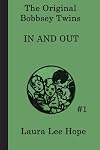
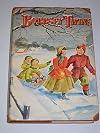
The Bobbsey Twins series set the mark for juvenile fiction in the early twentieth century, and was almost single-handedly responsible for the genre's skyrocketing popularity during that era. This early entrant in the series introduces the eternally chipper Bobbsey family and their two sets of fraternal twins. Younger readers will be charmed by these tales of simple childhood pleasures..
Tags
Recommendations


















Member Recommendations
Member Reviews
This book is probably of interest only to collectors of vintage series books and people interested in books for children from the turn of the century. I first read it when I was eleven years old, and though I enjoyed it then, I was already discovering an interest in popular fiction from the past, and The Bobbsey Twins definitely is that.
I don't feel that it's a particularly well written book, and in my most recent reading, I had to push through to the end. There is no real overarching plot, rather it's a series of vignettes of the daily life of the Bobbsey children during the winter. The first takes place sometime in November, shortly before the first snowfall of the year, while the last is in February or early March.
The vignettes show more often have very little to do with one another, and they would make for perfectly lovely bedtime stories for children, except that rather than being split into chapters by scene, the splits tend to occur during the middle of the vignette in order to force a cliffhanger.
There are two things that tie the vignettes together. The first is Danny Rugg, a boy from school who bullies Bert terribly. He is probably the primary recurring character outside of the household. The second is a 'ghost' who appears at night to Bert early in the book, then shows up again towards the end to Nan, but other than the chapters expressly concerned with the ghost, no mention is made of it.
What made the Bobbsey Twins worth reading through for me is its record of life in 1903. Though it is fiction and cannot be completely trusted to share popular opinion of the upper middle class, there is still value in the way this book was read by children from that period and so must be at least somewhat representative, if rather utopian.
Two scenes especially stand out as "quaint" to me. The first is chapter two, "Jumping Rope, and What Happened Next," where Nan's friend Grace is skipping rope with the other girls. Her mother warns her to not do it too much or she'll be sick, but Grace decides that doesn't mean she ought to stop, so she dares the other girls that she can jump to 100. Unfortunately, she overexerts herself and faints dead away while in the 70s and the other girls fear they've killed her by turning the ropes and allowing her to continue jumping. This seemed awfully odd to me when I first read it, considering the modern opinions on jump rope, then I recalled that girls of this class and time would have been wearing constricting garments to make too much of certain kinds of exercise unwise (plus, girls simply weren't supposed to exert themselves too much).
The other scene is a short bit later in the book that describes Nan's dolls. She has five which are described from the most beautiful and important to her to the least, which is Jujube - a "colored" boy doll that was a gift from Sam and Dinah. It's really rather appalling to read the condescending description of the thing, which does all it can to say "look how good Nan is for not rejecting the gift, but also keeping it quite separate from the others, letting it know it is unwelcome." It's an example of the racism that is prevalent in the book, distilled to only three or four paragraphs, and never mentioned again.
So, I can't say that this is a particularly good book, or one that I would go out and recommend children read - even when I was eleven and naïve I recognized the condescending racism - but it is an interesting book, perhaps with some sociological or historical value to it. show less
I don't feel that it's a particularly well written book, and in my most recent reading, I had to push through to the end. There is no real overarching plot, rather it's a series of vignettes of the daily life of the Bobbsey children during the winter. The first takes place sometime in November, shortly before the first snowfall of the year, while the last is in February or early March.
The vignettes show more often have very little to do with one another, and they would make for perfectly lovely bedtime stories for children, except that rather than being split into chapters by scene, the splits tend to occur during the middle of the vignette in order to force a cliffhanger.
There are two things that tie the vignettes together. The first is Danny Rugg, a boy from school who bullies Bert terribly. He is probably the primary recurring character outside of the household. The second is a 'ghost' who appears at night to Bert early in the book, then shows up again towards the end to Nan, but other than the chapters expressly concerned with the ghost, no mention is made of it.
What made the Bobbsey Twins worth reading through for me is its record of life in 1903. Though it is fiction and cannot be completely trusted to share popular opinion of the upper middle class, there is still value in the way this book was read by children from that period and so must be at least somewhat representative, if rather utopian.
Two scenes especially stand out as "quaint" to me. The first is chapter two, "Jumping Rope, and What Happened Next," where Nan's friend Grace is skipping rope with the other girls. Her mother warns her to not do it too much or she'll be sick, but Grace decides that doesn't mean she ought to stop, so she dares the other girls that she can jump to 100. Unfortunately, she overexerts herself and faints dead away while in the 70s and the other girls fear they've killed her by turning the ropes and allowing her to continue jumping. This seemed awfully odd to me when I first read it, considering the modern opinions on jump rope, then I recalled that girls of this class and time would have been wearing constricting garments to make too much of certain kinds of exercise unwise (plus, girls simply weren't supposed to exert themselves too much).
The other scene is a short bit later in the book that describes Nan's dolls. She has five which are described from the most beautiful and important to her to the least, which is Jujube - a "colored" boy doll that was a gift from Sam and Dinah. It's really rather appalling to read the condescending description of the thing, which does all it can to say "look how good Nan is for not rejecting the gift, but also keeping it quite separate from the others, letting it know it is unwelcome." It's an example of the racism that is prevalent in the book, distilled to only three or four paragraphs, and never mentioned again.
So, I can't say that this is a particularly good book, or one that I would go out and recommend children read - even when I was eleven and naïve I recognized the condescending racism - but it is an interesting book, perhaps with some sociological or historical value to it. show less
This edition contains the original 1904 text by Edward Stratemeyer himself. It's a book that does not stand the test of time, from the toddling prose all the way to the unselfconscious racism and misogyny. It's still readable as a primary sourse and historical curiosity, and in that context it's amusing and still entertaining in parts and gives a vivid picture of the limited worldview of a well-off Victorian child in the American Midwest. But I would not put it in the hands of a child without making sure they had all of that context available to them.
This book was a childhood favorite of my mom who enjoyed it back in the 1920s and 1930s. The story details the adventures and misadventures of the Bobbsey Twins -- Bert and Nan (8 years old) and Freddie and Flossie (4 years old). It harkens back to a much simpler time. Children's literature has progressed a great deal since this book was published, but I found myself enjoying it. There are certain words used (such as "queer") that have entirely different connotations for today's readers. There are times when children are left unsupervised to play outside which would never happen in today's books. It's a dated, but still enjoyable book.
This was such a cute book. Glad that I picked it back up and read it. This sweet little book was just what I needed to lift my spirits & make me smile! I kept having to remember when this book was written when some parts about race came up. There was a part that spoke of one of their "servants" was to stay up all night looking for a "ghost" and the mother said something to the effect of Sam being so black that the ghost wouldn't see him. My eyes got wide and my first thought was What!! then, right after that, I had to remind myself this was written in the early 1900's (I think I got that right) . Other than that, there wasn't too much of an issue.
I wouldn't say this is a favorite and I'm not sure I will go on to any of the other books show more in this series but I'm glad I was able to read it because it did cheer me up quite a bit. :-) show less
I wouldn't say this is a favorite and I'm not sure I will go on to any of the other books show more in this series but I'm glad I was able to read it because it did cheer me up quite a bit. :-) show less
19. The Bobbsey Twins by Laura Lee Hope (read in 1939) This is the first Bobbsey twin book. Those books were mostly read by girls but I read two of them--this one and The Bobbsey Twins in the Country. I must have been desperate for something to read.
Two sets of twins spend their winter trying to solve the mystery of a ghost.
The very first book that I was given in this series - it was a Christmas present and the first book of my own. I loved Nan, Bert, Freddie and Flossie.
Members
- Recently Added By
Lists

Favorite Childhood Books
1,646 works; 518 members
1001 Children's Books You Must Read Before You Grow Up
774 works; 101 members

Books with Twins
175 works; 12 members

The Stratemeyer Syndicate
605 works; 1 member

Book Titles Mentioned In Newberry Medal And Honor Books
884 works; 3 members

Recommended Reading List
219 works; 1 member

EGBERTINA'S List of childhood books worthy of merit or unspeakable delight
155 works; 6 members
Author Information

352 Works 20,857 Members
Laura Lee Hope is the pseudonym for Stratemeyer Syndicate ghost writers who happened to be assigned to write the Bobbsey Twins series at any given time. In 1904, Edward Stratemeyer wrote the first installment in the Bobbsey Twin series: The Bobbsey Twins, or Merry Days Indoor and Out. Mershon published it in 1904. A debate rages as to the show more authorship of books 2 and 3. They are traditionally attributed to Edward Stratemeyer, but other Bobbsey experts assert that Lilian C. Garis, wife of Stratemeyer writer, Howard R. Garis, wrote them. Lilian's husband, Howard R. Garis, wrote the Bobbsey Twins series from 1913 to 1935. He is responsible for books 4-28 and book 41. The series was completed by Harriet S. Adams (books 36-40, 42-48), Andrew E. Svenson (books 49-52), June M. Dunn (books 53-59), Grace Grote (books 60-67) and Nancy S. Axelrad (books 68-72). (Bowker Author Biography) show less
Awards and Honors
Series

Work Relationships
Common Knowledge
- Canonical title
- The Bobbsey Twins; or, Merry Days Indoors and Out
- Original publication date
- 1904
- People/Characters
- Bert Bobbsey; Nan Bobbsey; Flossie Bobbsey; Freddie Bobbsey; Mary Bobbsey (Mamma); Richard Bobbsey (Papa) (show all 9); Dinah; Sam; Danny Rugg
- Important places
- Lakeport
- First words
- The Bobbsey twins were very busy that morning.
- Last words
- (Click to show. Warning: May contain spoilers.)And here let us say good-night, too, for my little story has reached its end.
- Original language
- English
- Disambiguation notice
- The Bobbsey Twins, or Merry Days Indoors and Out is the original version of this book from 1904. The Bobbsey Twins of Lakeport is a complete rewrite of the book dating to 1961. Source: ... (show all)m.com/~drmike99/BobbRevis.html" rel="nofollow" target="_new">http://home.netcom.com/~drmike99/Bobb...
Classifications
Statistics
- Members
- 930
- Popularity
- 28,669
- Reviews
- 9
- Rating
- (3.41)
- Languages
- English
- Media
- Paper, Ebook
- ISBNs
- 48
- ASINs
- 64