
Annie Barrows
Author of The Guernsey Literary and Potato Peel Pie Society
About the Author
Award winning author Annie Barrows was born in San Diego, California. She graduated from UC Berkeley. After graduation Annie became an editor editing books on a wide-range of topics. After she had edited a couple hundred books, she decided that that she could probably write one herself so she went show more to writing school. After writing several books for adults she decided she'd like to write for children. Annie is the author of the Ivy and Bean Series which have won numerous awards including: 2007 ALA Notable Children's Book, Booklist, Editor's Choice, Best Books of 2007 Kirkus Reviews, The Best Children's Book of 2006, Best Early Chapter Books, Book Links, Best New Books for the Classroom, 2006, New York Public Library's 100 Titles for Reading and Sharing 2006. she is also the co-author of the New York Times bestselling novel, The Guernsey Literary and Potato Peel Pie Society. Her title The Truth According to Us, also made The New York Times Best Seller List. (Bowker Author Biography) show less
Image credit: Photo by Brook McCormick
Series
Works by Annie Barrows
The Guernsey Literary and Potato Peel Pie Society {abridged audiobook} (2008) 124 copies, 25 reviews
Ivy + Bean and the Secret Hideaway 4 copies
The House on First Street 1 copy
Associated Works
The Art of Ramona Quimby: Sixty-Five Years of Illustrations from Beverly Cleary’s Beloved Books (2020) — Contributor — 33 copies, 4 reviews
Tagged
Common Knowledge
- Birthdate
- 1962
- Gender
- female
- Education
- University of California, Berkeley (medieval history)
Mills College - Occupations
- book editor
- Organizations
- Chronicle Books
- Relationships
- Shaffer, Mary Ann (aunt)
- Short biography
- Annie Barrows grew up in San Anselmo, in Northern California. She is married and has two daughters.
- Nationality
- USA
- Birthplace
- San Diego, California, USA
- Places of residence
- California, USA
- Associated Place (for map)
- California, USA
Members
Discussions
The Book Thief and The Guernsey Litereary & Potato Peel Pie Society in Books Compared (October 2013)
Reviews

Determined to get their hands on some lowfat Belldeloon cheese in a special just-for-you serving size - not because they like the cheese itself, but because the red wax in which it is packaged makes for excellent play material - second-graders and best friends Ivy and Bean set out to earn the money necessary. At the suggestion of Bean's father, the two girls decide to sell subscriptions to a local newspaper that they will (they claim) be producing, with all the news from their street, show more Pancake Court. When they discover that they actually have to produce the paper, they are somewhat dismayed, until they discover how much fun it is to snoop around, and peer in their neighbors' windows. But will the first edition of The Flip(p)ing Pancake, with its sensational stories about the neighbors, bring them fame and fortune, or universal opprobrium...?
I can't say that this eighth and thus-far final installment of Annie Barrows and Sophie Blackall's series of chapter-books chronicling the adventures of second-grade best friends Ivy and Bean - there is a ninth due out, later this year, provisionally entitled Ivy + Bean Make the Rules - is one of my favorites. In fact, it probably ties with Ivy + Bean Take Care of the Babysitter as my least favorite of the collection - and for the same reasons. There is a fine line between transgressive humor and outright nastiness, and while I am far from arguing that that line is in the same place for every reader, this story crossed it, as far as I am concerned. Kids can sometimes be whiny and entitled, as Bean and Ivy are, when trying to convince their parents to buy them the cheese, and they can also be heedless. But when these two sell subscriptions, deliberately intending never to produce the product they're selling, I have a hard time believing that they aren't perfectly aware that they're being dishonest. I certainly would have been well aware of that, at their age! Likewise, I don't buy that it would not have occurred to them that printing nasty things about their neighbors in a newspaper might be questionable - especially when those nasty things are rather... unsubstantiated.
Kids aren't angels, and I'm all for stories that acknowledge that fact - especially stories that upend the old "sugar and spice" nonsense, about little girls - but I couldn't really see the humor here. Not good. Not good at all. I hope the next one improves... show less
I can't say that this eighth and thus-far final installment of Annie Barrows and Sophie Blackall's series of chapter-books chronicling the adventures of second-grade best friends Ivy and Bean - there is a ninth due out, later this year, provisionally entitled Ivy + Bean Make the Rules - is one of my favorites. In fact, it probably ties with Ivy + Bean Take Care of the Babysitter as my least favorite of the collection - and for the same reasons. There is a fine line between transgressive humor and outright nastiness, and while I am far from arguing that that line is in the same place for every reader, this story crossed it, as far as I am concerned. Kids can sometimes be whiny and entitled, as Bean and Ivy are, when trying to convince their parents to buy them the cheese, and they can also be heedless. But when these two sell subscriptions, deliberately intending never to produce the product they're selling, I have a hard time believing that they aren't perfectly aware that they're being dishonest. I certainly would have been well aware of that, at their age! Likewise, I don't buy that it would not have occurred to them that printing nasty things about their neighbors in a newspaper might be questionable - especially when those nasty things are rather... unsubstantiated.
Kids aren't angels, and I'm all for stories that acknowledge that fact - especially stories that upend the old "sugar and spice" nonsense, about little girls - but I couldn't really see the humor here. Not good. Not good at all. I hope the next one improves... show less
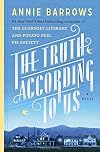
Barrows was one of the co-writers of Guernsey Literary & Potato Peel Society, an absolutely charming book that reached worldwide acclaim. That's an awfully high bar to set with a debut. Her solo debut, The Truth According to Us is strong and charming in its own way, though not the equal of the first book. Again--I sympathize, because the standard is so high.
The new book is set in West Virginia during the Great Depression and follows numerous characters: 11-year-old Willa Romeyn, whose show more intelligence and curiosity are bound to get her in trouble; her aunt Jottie, who has raised her rakish brother's two children and largely shut herself off from the outside world after a tragedy almost two decades before; and Layla, a newcomer to town, a disowned socialite and now an employee of the WPA with an assignment to write the small town's history.
I found the first few chapters confusing because of the shifting perspectives and sheer number of Romeyns, but soon enough the book gripped me. It's not an action-filled book, but all the same, there is a lot of tension between the characters and the sense that things will soon explode like a powder keg. The city itself is a fantastic character, as its highfalutin residents want the history white-washed. Layla grew on me greatly as she shed the last vestments of her former high lifestyle and became determined to tell the true history, Indian massacres, sordid preachers and all. I loved Willa. She has that southern strength like Scout in To Kill a Mockingbird and by the end I really wanted to give her a hug. Her father... well. Barrows is an excellent character writer. She manages to make even the most selfish people into sympathetic villains... even if I still want to slap them.
This is a strong book, and I can definitely see it as a hit of the summer and a book club favorite. show less
The new book is set in West Virginia during the Great Depression and follows numerous characters: 11-year-old Willa Romeyn, whose show more intelligence and curiosity are bound to get her in trouble; her aunt Jottie, who has raised her rakish brother's two children and largely shut herself off from the outside world after a tragedy almost two decades before; and Layla, a newcomer to town, a disowned socialite and now an employee of the WPA with an assignment to write the small town's history.
I found the first few chapters confusing because of the shifting perspectives and sheer number of Romeyns, but soon enough the book gripped me. It's not an action-filled book, but all the same, there is a lot of tension between the characters and the sense that things will soon explode like a powder keg. The city itself is a fantastic character, as its highfalutin residents want the history white-washed. Layla grew on me greatly as she shed the last vestments of her former high lifestyle and became determined to tell the true history, Indian massacres, sordid preachers and all. I loved Willa. She has that southern strength like Scout in To Kill a Mockingbird and by the end I really wanted to give her a hug. Her father... well. Barrows is an excellent character writer. She manages to make even the most selfish people into sympathetic villains... even if I still want to slap them.
This is a strong book, and I can definitely see it as a hit of the summer and a book club favorite. show less
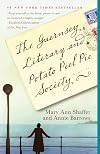
In the aftermath of WWII, a writer in London named Juliet receives a letter from a stranger living on the island of Guernsey in the English Channel. This begins a correspondence that expands to other members of the islander's literary society, as Juliet wants to hear more about their society. The Guernsey Literary and Potato Peel Pie Society was formed during the German occupation of the island, and became so much more.
The book started out a little slow, but when it took off, it really took show more off. It's written entirely in epistolary style, with letters and telegrams between various characters telling the story. The characters are endearing, and as the trials they went through during the war are revealed, the lasting effects are shown alongside them. The emotions are real, and I found myself swept up in them.
Early in the book, I was mostly annoyed with Juliet and her tendency to complain. It was establishing her background and life, I know, but maybe specifically because of the book's format, since we saw everything directly from her perspective, she just seemed whiny. Around the time she got the first letter from Dawsey on the island, her character deepened enough that I didn't dislike her so much. And then her sincere interest in the literary society and what the people on the island went through endeared her to me a lot more.
The format of the book is done well--each letter has a header stating who it was written to and from, so before you even start reading the letter, you are fully aware of that. It helps a lot, as eventually there are quite a few characters to keep straight. Some become more familiar, and others fall away, but overall, I only had a little struggle sorting through them.
Unsurprisingly, the characters are what make this book so great. I loved the way that the heart of the literary society was never even physically present in the book, once characters came together in the physical space, yet she was still a big part of the story. On the other hand, Juliet has this suitor that is pretty terrible. I don't get why she doesn't see how incredibly misogynistic he is, even in that somewhat different time.
This book is split into 2 parts, and by the time I got to part 2, I was completely hooked. It's a fairly short book, and I think the epistolary format makes it particularly easy to read, because there's not a lot of description. I read the bulk of it in a day. This is one book I am definitely going to re-read in the future. I recommend it for all fans of historical fiction, but even others, especially those who like character-driven stories. show less
The book started out a little slow, but when it took off, it really took show more off. It's written entirely in epistolary style, with letters and telegrams between various characters telling the story. The characters are endearing, and as the trials they went through during the war are revealed, the lasting effects are shown alongside them. The emotions are real, and I found myself swept up in them.
Early in the book, I was mostly annoyed with Juliet and her tendency to complain. It was establishing her background and life, I know, but maybe specifically because of the book's format, since we saw everything directly from her perspective, she just seemed whiny. Around the time she got the first letter from Dawsey on the island, her character deepened enough that I didn't dislike her so much. And then her sincere interest in the literary society and what the people on the island went through endeared her to me a lot more.
The format of the book is done well--each letter has a header stating who it was written to and from, so before you even start reading the letter, you are fully aware of that. It helps a lot, as eventually there are quite a few characters to keep straight. Some become more familiar, and others fall away, but overall, I only had a little struggle sorting through them.
Unsurprisingly, the characters are what make this book so great. I loved the way that the heart of the literary society was never even physically present in the book, once characters came together in the physical space, yet she was still a big part of the story. On the other hand, Juliet has this suitor that is pretty terrible. I don't get why she doesn't see how incredibly misogynistic he is, even in that somewhat different time.
This book is split into 2 parts, and by the time I got to part 2, I was completely hooked. It's a fairly short book, and I think the epistolary format makes it particularly easy to read, because there's not a lot of description. I read the bulk of it in a day. This is one book I am definitely going to re-read in the future. I recommend it for all fans of historical fiction, but even others, especially those who like character-driven stories. show less
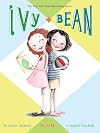
Bean is a creative and adventurous girl, reminiscent a bit to Ramona, but more aggressive and unrepentant. Her heart is in the right place, but her curiosity, inexperience, and annoying older pre-teen sister, often lead her into sticky situations. When she learns that a girl around her age is moving into her neighborhood, she's excited at the prospect of making a new friend. However, when Bean meets Ivy her hopes are dashed. Ivy seems to be the polar opposite of Bean in terms of personality: show more she is reserved, soft-spoken, and polite. She seems completely obedient to the adults around them. Bean decides to not pursue a friendship. She changes her mind, however, after Ivy comes to Bean's rescue when Bean's sister, Nancy, is out for revenge. From that point on, Bean realizes that Ivy isn't everything Bean had assumed she was. Ivy is just as willing to enjoy some pranking as Bean is, and while she appears to follow her parents' every rule she has her own way of getting out of things. She is even practicing to become a witch. Slowly, a close and formidable friendship is formed.
My girls and I enjoyed this story about a friendship between opposites, and learning to not rely on first impressions or initial appearances. The writing is engaging and funny, and the characters are relatable girls that brim with energy and imagination. The hijinks that result from their friendship are entertaining. My kids could certainly relate to a lot of the details in this story. I've noticed quite a divide in the reviews of this book online. Some people enjoy or love the story, but others are furious at the good reviews that led them to accidentally read this book. I get that some parents are worried about Bean as a role model; she does fight with her older sister, and call people names sometimes, and generally is a bit of a troublemaker. A lot of the things that I remember laughing about or bring intrigued by when I was reading books as a child, honestly. When I read this story to my girls, I made sure to take breaks and talk with them a couple of times about the need for compassion and considering other people's feelings. And I also was okay giggling along with them, too, at the instances of juvenile humor. For me, a story is a great place for kids to see real childish behavior reflected back to them, both the good and the bad. When necessary, we stop to talk if we read about kids doing stuff that would not be acceptable in our family, but I'm fine with them being exposed (and I'm only talking about topics that are appropriate to a child's world, here) to things through the safe medium of books. Also, while Bean sometimes makes bad choices, I read her as good kid at heart. However, for adults who don't want to expose their kids to characters that can sometimes be mean or disobedient, then this is not the book for their family. While I can understand the reservations some people have about the book, for my family, this was a fun start to a series that we will continue reading. show less
My girls and I enjoyed this story about a friendship between opposites, and learning to not rely on first impressions or initial appearances. The writing is engaging and funny, and the characters are relatable girls that brim with energy and imagination. The hijinks that result from their friendship are entertaining. My kids could certainly relate to a lot of the details in this story. I've noticed quite a divide in the reviews of this book online. Some people enjoy or love the story, but others are furious at the good reviews that led them to accidentally read this book. I get that some parents are worried about Bean as a role model; she does fight with her older sister, and call people names sometimes, and generally is a bit of a troublemaker. A lot of the things that I remember laughing about or bring intrigued by when I was reading books as a child, honestly. When I read this story to my girls, I made sure to take breaks and talk with them a couple of times about the need for compassion and considering other people's feelings. And I also was okay giggling along with them, too, at the instances of juvenile humor. For me, a story is a great place for kids to see real childish behavior reflected back to them, both the good and the bad. When necessary, we stop to talk if we read about kids doing stuff that would not be acceptable in our family, but I'm fine with them being exposed (and I'm only talking about topics that are appropriate to a child's world, here) to things through the safe medium of books. Also, while Bean sometimes makes bad choices, I read her as good kid at heart. However, for adults who don't want to expose their kids to characters that can sometimes be mean or disobedient, then this is not the book for their family. While I can understand the reservations some people have about the book, for my family, this was a fun start to a series that we will continue reading. show less
Lists
Women's Stories (1)
Women Writers (1)
Indie Next Picks (1)
To Read (1)
Female Author (1)
Best Audiobooks (1)
Five star books (1)
2000s decade (1)
Women in War (1)
Epistolary Books (2)
READ in 2023 (1)
Great Audiobooks (1)
War Literature (1)
Favourite Books (1)
Awards


You May Also Like


Associated Authors
Statistics
- Works
- 49
- Also by
- 3
- Members
- 41,443
- Popularity
- #421
- Rating
- 4.1
- Reviews
- 1,704
- ISBNs
- 562
- Languages
- 24
- Favorited
- 3
