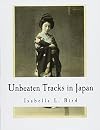
Unbeaten Tracks in Japan
by Isabella L. Bird
On This Page
Description
Nineteenth-century English traveler, writer, and natural historian Isabella Bird contributes this stunning narrative to the genre of early travelogues about Japan. The volume Unbeaten Tracks in Japan includes a series of essays recounting Bird's months-long sojourn in the Far East. Already a treat for fans of 19th century travel literature, the book is rendered all the more unique by virtue of Bird's perspective as a Western female traveling alone in Japan..
Tags
Recommendations












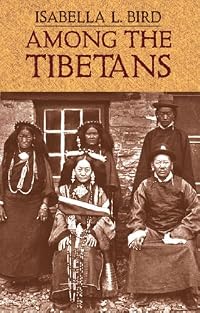










Member Reviews
Isabella Bird was born in England in 1831. She was unwell most of her life so her doctor essentially gave her a prescription to travel. Travel she did, becoming the first woman to be elected a fellow of the Royal Geographic Society.
In 1878, she visited Japan. She hired a young Japanese man, Ito, to interpret for her and assist with arrangements. The pair set out for the interior of the country, which hadn’t been explored very well by Europeans at that point. After completing that part of her journey, she visited the indigenous Aino (now, Ainu) people of Japan.
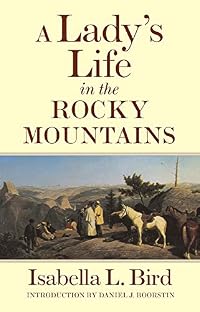
I read one of Ms. Bird’s earlier books, Adventures in the Rocky Mountains, during my blogging break and quite enjoyed it. I could only admire a woman who, in Victorian times, show more not only traveled alone, but managed to summit Longs Peak in a dress. When I needed a travel book as part of the 20201 Nonfiction Challenge, Ms. Bird came to mind and this was the book that was available at my library.
What I forgot in my admiration for Ms. Bird’s accomplishments as a woman is her matter-of-fact racism. This is so disturbing! She’s a product of her time but it’s so jarring to read today! Her attitude does improve as she travels more extensively throughout Japan and grows accustomed to the culture. She really doesn’t like Japanese people at all at first. As she travels and learns the culture, she appreciates their unquestioning kindness toward guests. After a week or two of traveling, she even mentions that a young Japanese lady is the most beautiful woman she’s ever seen, bar none! But this tends to be the exception more than the rule. The interior of Japan was apparently very poor at this point in history and she continually complains about how filthy everything is, including her rooms, the adults, and especially the children.
When she visits the Ainu people, she really likes them and struggles to work out her feelings in her letters. Her father was a clergyman so she’s coming from a very conservative Christian background. I did finally take some notes in this section.
Surely these simple savages are children, as children to be judged; may we not hope as children to be saved through Him who came not to judge the world, but to save the world ?
She’s still degrading them but if she’s worried about their souls, at least she sees them as humans who have souls and feelings. Then she has a longer theosophical argument with herself.
The glamour which at first disguises the inherent barrenness of savage life has had time to pass away, and I see it in all its nakedness as a life not much raised above the necessities of animal existence, timid, monotonous, barren of good, dark, dull, without hope, and without God in the world; though at its lowest and worst considerably higher and better than that of many other aboriginal races, and– must I say it?–considerably higher and better than that of thousands of the lapsed masses of our own great cities who are baptized into Christ’s name, and are laid at last in holy ground, inasmuch as the Ainos are truthful, and, on the whole, chaste, hospitable, honest, reverent, and kind to the aged.
She’s still calling them savages but she’s finally admitting that they’re more moral than a lot of Christians. I don’t think we can call her “woke” by modern standards, but for the time, she’s practically a paragon of acceptance, I guess.
That aside, the bulk of the book is monotonous. I don’t know if she visited in an exceptionally rainy summer or if the interior is a temperate rainforest, but most of the book can be summed up with, “It rained; I slept in a disgusting hovel; I rode an obstreperous, ill-treated horse; it rained even more; I crossed a flooded river; I slept in a disgusting hovel; repeat.”
There were a few notable exceptions to the monotony and I wish Ms. Bird had written more consistently like this. The Shrine of Nikko (I think we call it the Toshugo Shrine now) astounds her and she describes it extensively. She writes beautifully about seeing a young bride preparing for her wedding. The rest is rain and mud until she visits the Aino, where her writing really shines. It doesn’t rain as much while she’s visiting them, so she thoroughly describes their appearance (in unconsciously derogatory terms), their religion, their customs, some of their mythology, and their culture, all of which is fascinating.
I preferred Adventures in the Rocky Mountains overall (although I do remember now that Ms. Bird always refers to Native Americans as savages too), because there’s more going on than just rain and mud. I’d recommend that book over this one but if you’re looking for more of this author’s works, certainly give Unbeaten Tracks in Japan a try. show less
In 1878, she visited Japan. She hired a young Japanese man, Ito, to interpret for her and assist with arrangements. The pair set out for the interior of the country, which hadn’t been explored very well by Europeans at that point. After completing that part of her journey, she visited the indigenous Aino (now, Ainu) people of Japan.
I read one of Ms. Bird’s earlier books, Adventures in the Rocky Mountains, during my blogging break and quite enjoyed it. I could only admire a woman who, in Victorian times, show more not only traveled alone, but managed to summit Longs Peak in a dress. When I needed a travel book as part of the 20201 Nonfiction Challenge, Ms. Bird came to mind and this was the book that was available at my library.
What I forgot in my admiration for Ms. Bird’s accomplishments as a woman is her matter-of-fact racism. This is so disturbing! She’s a product of her time but it’s so jarring to read today! Her attitude does improve as she travels more extensively throughout Japan and grows accustomed to the culture. She really doesn’t like Japanese people at all at first. As she travels and learns the culture, she appreciates their unquestioning kindness toward guests. After a week or two of traveling, she even mentions that a young Japanese lady is the most beautiful woman she’s ever seen, bar none! But this tends to be the exception more than the rule. The interior of Japan was apparently very poor at this point in history and she continually complains about how filthy everything is, including her rooms, the adults, and especially the children.
When she visits the Ainu people, she really likes them and struggles to work out her feelings in her letters. Her father was a clergyman so she’s coming from a very conservative Christian background. I did finally take some notes in this section.
Surely these simple savages are children, as children to be judged; may we not hope as children to be saved through Him who came not to judge the world, but to save the world ?
She’s still degrading them but if she’s worried about their souls, at least she sees them as humans who have souls and feelings. Then she has a longer theosophical argument with herself.
The glamour which at first disguises the inherent barrenness of savage life has had time to pass away, and I see it in all its nakedness as a life not much raised above the necessities of animal existence, timid, monotonous, barren of good, dark, dull, without hope, and without God in the world; though at its lowest and worst considerably higher and better than that of many other aboriginal races, and– must I say it?–considerably higher and better than that of thousands of the lapsed masses of our own great cities who are baptized into Christ’s name, and are laid at last in holy ground, inasmuch as the Ainos are truthful, and, on the whole, chaste, hospitable, honest, reverent, and kind to the aged.
She’s still calling them savages but she’s finally admitting that they’re more moral than a lot of Christians. I don’t think we can call her “woke” by modern standards, but for the time, she’s practically a paragon of acceptance, I guess.
That aside, the bulk of the book is monotonous. I don’t know if she visited in an exceptionally rainy summer or if the interior is a temperate rainforest, but most of the book can be summed up with, “It rained; I slept in a disgusting hovel; I rode an obstreperous, ill-treated horse; it rained even more; I crossed a flooded river; I slept in a disgusting hovel; repeat.”
There were a few notable exceptions to the monotony and I wish Ms. Bird had written more consistently like this. The Shrine of Nikko (I think we call it the Toshugo Shrine now) astounds her and she describes it extensively. She writes beautifully about seeing a young bride preparing for her wedding. The rest is rain and mud until she visits the Aino, where her writing really shines. It doesn’t rain as much while she’s visiting them, so she thoroughly describes their appearance (in unconsciously derogatory terms), their religion, their customs, some of their mythology, and their culture, all of which is fascinating.
I preferred Adventures in the Rocky Mountains overall (although I do remember now that Ms. Bird always refers to Native Americans as savages too), because there’s more going on than just rain and mud. I’d recommend that book over this one but if you’re looking for more of this author’s works, certainly give Unbeaten Tracks in Japan a try. show less
09 Sep 2010 - from Paola on LibraryThing Virago Group
I was excited to ask for this spare copy and receive it, as I loved Bird's book about travelling in the US South-West and hoped for more of the same. I got to p. 100. The descriptions were interesting, but I was beaten down by the unyielding patronising and colonialist descriptions of the Japanese people. Basically, they are all yellow, ugly "mannikins" who are out to cheat her, or living in disgusting poverty from which they refuse to raise themselves... and she just seems to find them loathsome. And this spoils the book for me (especially as I was working for a lovely, highly competent and well organised Japanese client for Libro at the time of reading - that made me feel very show more uncomfortable!). So I gave up after p. 100 and will be sending it off to another LibraryThinger (I have warned them all!) show less
I was excited to ask for this spare copy and receive it, as I loved Bird's book about travelling in the US South-West and hoped for more of the same. I got to p. 100. The descriptions were interesting, but I was beaten down by the unyielding patronising and colonialist descriptions of the Japanese people. Basically, they are all yellow, ugly "mannikins" who are out to cheat her, or living in disgusting poverty from which they refuse to raise themselves... and she just seems to find them loathsome. And this spoils the book for me (especially as I was working for a lovely, highly competent and well organised Japanese client for Libro at the time of reading - that made me feel very show more uncomfortable!). So I gave up after p. 100 and will be sending it off to another LibraryThinger (I have warned them all!) show less
Unbeaten Tracks in Japan is composed of a series of letters that Isabella Bird wrote home to her sister and friends during the summer of 1878. She set out from Tokyo, eager to explore the “unbeaten tracks” of the northern part of Honshu (the largest island of Japan) and Hokkaido. The letters are a combination of travelogue, anthropological study, and cultural study. I was especially eager to grab this book off my TBR shelf after what’s recently happened in Japan, and I enjoyed reading about Isabella Bird’s adventures there 130 years ago—a very different experience from when my family lived in Tokyo in the 1980s and ‘90s!
Isabella Bird inserts very little of her own thoughts and feelings into the narrative of her letters, but show more at times her very subtle sense of humor comes through, especially with regards to her interpreter, Ito, towards whom she has a kind of maternal disapproval at times. Bird was the first Western woman to travel in some of the remoter parts of Japan; in fact, she was the first Western person to travel in those areas, period, so caused quite a stir there when she arrived! Through her letters, Bird comes across as a very courageous woman, despite the fact that she suffered from back pain during her travels.
Some of the details she recounts are a bit boring (she even lists temperatures at certain points), but her views on the natives of Japan are fascinating, albeit from a modern prospective sometimes a bit disturbing. But I think Bird went to Japan with preconceived ideas of the Japanese. It’s interesting, therefore, to see how her opinions changed and improved over the course of her journey. Bird’s writing style itself is almost poetic at times, especially when she’s describing the scenery she passes through. I loved, for example her description of Mount Fuji when first arriving! show less
Isabella Bird inserts very little of her own thoughts and feelings into the narrative of her letters, but show more at times her very subtle sense of humor comes through, especially with regards to her interpreter, Ito, towards whom she has a kind of maternal disapproval at times. Bird was the first Western woman to travel in some of the remoter parts of Japan; in fact, she was the first Western person to travel in those areas, period, so caused quite a stir there when she arrived! Through her letters, Bird comes across as a very courageous woman, despite the fact that she suffered from back pain during her travels.
Some of the details she recounts are a bit boring (she even lists temperatures at certain points), but her views on the natives of Japan are fascinating, albeit from a modern prospective sometimes a bit disturbing. But I think Bird went to Japan with preconceived ideas of the Japanese. It’s interesting, therefore, to see how her opinions changed and improved over the course of her journey. Bird’s writing style itself is almost poetic at times, especially when she’s describing the scenery she passes through. I loved, for example her description of Mount Fuji when first arriving! show less
I enjoyed reading the letters Isabella Bird wrote to her sister during her travels in Japan in the second half of the nineteenth century. They were illuminating about Japan, of course, but also a little about Britain in those days.
Isabella Bird was the first Western white woman to visit the more remote regions of Japan. She did so - as usual, in her travels - with merely a local guide and appropriate travel/camping gear. Her writings offer a fascinating glimpse into local life in Japan in the mid-late 1800s. She was an intrepid traveler, an astute observer of the human and the cultural, and very much a woman of her era - although open-minded for her times, many of her cultural assumptions and societal standards come through between the lines. But it is an altogether delightful read. This and her other books are compilations of letters she wrote home to her sister, who was also her very good friend: reading this, you can "be there" with her on her travels, just as show more she must have intended her sister to be. Highly recommended for anyone interested in a close look at a foreign culture, in Japan, and/or in great travel writing. show less
I love this book. It is very interesting to see through the eyes of someone who was so new to the country. It is also interesting to see the common prejudices and viewpoints that were held at that time.
Isabella Bird is an amazing character, a very intrepid lady.
I was inspired to read this after seeing an exhibition of modern photographs of many of the places she visited and the geography she covered is awe -inspiring, especially as she was a lady of a certain age suffering from back problems.
My copy of the book is to be posted off to my Mum to read next.
I was inspired to read this after seeing an exhibition of modern photographs of many of the places she visited and the geography she covered is awe -inspiring, especially as she was a lady of a certain age suffering from back problems.
My copy of the book is to be posted off to my Mum to read next.
Members
- Recently Added By
Lists

Japanese travel literature
11 works; 3 members

Travelogues in Japan
22 works; 3 members

Geography and Travel from The Book-Lover
291 works; 1 member

el
1,139 works; 1 member
Author Information

42+ Works 2,372 Members
Series
Belongs to Publisher Series
Common Knowledge
- Canonical title
- Unbeaten Tracks in Japan
- Original publication date
- 1880
- People/Characters
- Isabella Bird Bishop
- Important places
- Japan
- First words
- Eighteen days of unintermitted rolling over "desolate rainy seas" brought the "City of Tokio" early yesterday morning to Cape King, and by noon we were steaming up the Gulf of Yedo, quite near the shore.
- Last words
- (Click to show. Warning: May contain spoilers.)The snowy dome of Fujisan reddening in the sunrise rose above the violet woodands of Mississippi Bay as we steamed out of Yokohama Harbour on the 19th, and three days later I saw the last of Japan--a rugged coast, lashed by a wintery sea.
Classifications
Statistics
- Members
- 319
- Popularity
- 99,419
- Reviews
- 8
- Rating
- (3.67)
- Languages
- English, German, Japanese, Spanish
- Media
- Paper, Ebook
- ISBNs
- 51
- UPCs
- 1
- ASINs
- 16