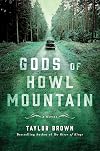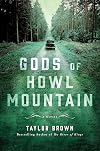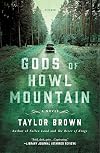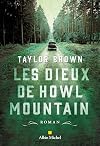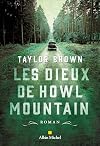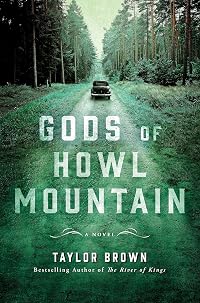
Gods of Howl Mountain: A Novel
by Taylor Brown
On This Page
Description
Bootlegger Rory Docherty has returned home to the fabled mountain of his childhood - a misty wilderness that holds its secrets close and keeps the outside world at gunpoint. Slowed by a wooden leg and haunted by memories of the Korean War, Rory runs bootleg whiskey for a powerful mountain clan in a retro-fitted '40 Ford coupe. Between deliveries to roadhouses, brothels, and private clients, he lives with his formidable grandmother, evades federal agents, and stokes the wrath of a rival runner.Tags
Recommendations


Member Reviews
Historical fiction and mystery about bootlegging in the backwoods of North Carolina in the 1950’s. Rory Docherty, a Korean war veteran, has returned home emotionally and physically damaged. With limited employment options due to his prosthetic leg, he runs moonshine for the kingpin of the mountain where he grew up. His mother has been confined to a mental hospital since he was a child, and he lives with his grandmother, Granny May. This book is filled with vivid scenes such as the early days of stock car racing, evading the revenuers, attending religious events where participants are stirred to a fever-pitched frenzy (including rattlesnakes), feuding families, and seeking revenge against wrongs of the past and present. Power, greed, show more and vengeance are prominent themes.
The author’s writing is evocative, and I found it particularly effective in describing the natural environment. The author is adept at character development. Granny May is a particularly memorable character. She is an herbalist, skilled in finding roots, leaves, herbs, and plants for making tinctures and other homeopathic remedies. She is not shy in expressing her opinions. The other characters are multi-faceted enough to carry the story. Not my typical reading experience, and not a cheery book, it has a raw feel to it. Contains profanity, sex, violence, and harm to animals. Recommended to those interested in “slice of life” stories with a strong sense of time and place or dark mysteries with interconnected threads.
I received this book in a Goodreads giveaway, with a request for a candid review. show less
The author’s writing is evocative, and I found it particularly effective in describing the natural environment. The author is adept at character development. Granny May is a particularly memorable character. She is an herbalist, skilled in finding roots, leaves, herbs, and plants for making tinctures and other homeopathic remedies. She is not shy in expressing her opinions. The other characters are multi-faceted enough to carry the story. Not my typical reading experience, and not a cheery book, it has a raw feel to it. Contains profanity, sex, violence, and harm to animals. Recommended to those interested in “slice of life” stories with a strong sense of time and place or dark mysteries with interconnected threads.
I received this book in a Goodreads giveaway, with a request for a candid review. show less
Rory comes home from Korea to the mountains of North Carolina missing half of a leg, which means he's not going to find work in the textile mills or in the logging camps. But making a living outside of what is legal is a family tradition and connections get him a job running bootleg moonshine to the red light district of the nearest town. It's a job that requires driving skill and the willingness to take risky chances and Rory is doing fine with his job. His grandmother, who raised him, is involved with the boss of the moonshiners and his best friend runs a small garage and keeps Rory's car fast and powerful. But the local sheriff is under pressure to make arrests when the FBI sends a new agent in. And Rory sees a young woman attending show more the Pentecostal church that occupies an old gas station building on the edge of the red light district and can't get her out of his mind.
Set in the 1950s, this novel is full of atmosphere and excitement. The author has an eye for detail and a love for the history and geography of the South and it shows. The plot is predictable, as are the characters (the wise mountain woman, the evil sheriff, etc...) but Brown is enjoying the story so much it would be rude to not just go with it and do the same. show less
Set in the 1950s, this novel is full of atmosphere and excitement. The author has an eye for detail and a love for the history and geography of the South and it shows. The plot is predictable, as are the characters (the wise mountain woman, the evil sheriff, etc...) but Brown is enjoying the story so much it would be rude to not just go with it and do the same. show less
I received an advance reader's copy of Gods of Howl Mountain through NetGalley. Set in the 1950s in North Carolina's Appalachian Mountains, the novel focuses on Granny May and her grandson Rory as they struggle to come to terms with a traumatic past that has left Rory's mother and her daughter locked up in an insane asylum.
The opening scenes of the novel offer a view of what might seem a stereotypical mountain grandmother, rocking and smoking on the porch of her cabin. But while she does seem to be everyone's granny, offering mountain remedies for ailments and tending to her grandson and his friend, she also wields a shotgun with ease and has her own past to contend with. Plus, she isn't above a bit of malicious fun when it comes to show more those who judge her.
Rory, her grandson, home from the Korean War minus a leg, works in the moonshine trade, dodging the revenuers and locals in his big Ford. He is a somewhat reluctant participant but it is the work available to him. One night, he stumbles upon a group of frenzied Pentecostals worshipping in an old garage, speaking in tongues and handling snakes. The scenes of the church have a surreal quality as we move into the crowd with Rory, mesmerized by the chanting and dancing.
The novel itself seems to pulse with the life of the mountains and Taylor Brown uses rich prose to describe people and places. It threatens every so often to spill over into excess but Brown manages to keep control, much like his main characters controls the big Ford. His world is one of raw life: violence, sex, love, grief all rolled into complex characters. show less
The opening scenes of the novel offer a view of what might seem a stereotypical mountain grandmother, rocking and smoking on the porch of her cabin. But while she does seem to be everyone's granny, offering mountain remedies for ailments and tending to her grandson and his friend, she also wields a shotgun with ease and has her own past to contend with. Plus, she isn't above a bit of malicious fun when it comes to show more those who judge her.
Rory, her grandson, home from the Korean War minus a leg, works in the moonshine trade, dodging the revenuers and locals in his big Ford. He is a somewhat reluctant participant but it is the work available to him. One night, he stumbles upon a group of frenzied Pentecostals worshipping in an old garage, speaking in tongues and handling snakes. The scenes of the church have a surreal quality as we move into the crowd with Rory, mesmerized by the chanting and dancing.
The novel itself seems to pulse with the life of the mountains and Taylor Brown uses rich prose to describe people and places. It threatens every so often to spill over into excess but Brown manages to keep control, much like his main characters controls the big Ford. His world is one of raw life: violence, sex, love, grief all rolled into complex characters. show less
Note: This book is scheduled to be released in March, 2018. I am very grateful to the author, St. Martin's Press, and Netgalley for making advanced copies available to members of Goodreads’ On the Southern Literary Trail book group.
The upcoming release of Taylor Brown’s third novel justifies the old adage that the third time is the charm. While Fallen Land is a stark road-trip through the post-apocalyptic landscape of the American South during the Civil War and The River of Kings is an unabashed love letter to Georgia’s Altamaha River, his newest book takes readers on a visit to the mountains of North Carolina, to a world that is slowly being dragged, kicking and screaming, into the twentieth century. The year is 1952 and talk is show more that Gen. Dwight Eisenhower will be elected president but that will change little in North Carolina except maybe the color of the hats ladies will be wearing (Mamie loves pink). Prohibition may have ended but the government’s tax men are still waging a vicious war with the moonshiners whose souped-up roadsters are starting to migrate from the backroads to the racetracks. While many have been forced from their lands by government reclamation projects, others cling tenaciously to the mountains that their ancestors tamed centuries before, and to the old ways that are slowly being forgotten.
It is an homage to the Scots Irish settlers who came seeking America’s egalitarian dream, but found themselves ostracized, forced hammer out a life on the inhospitable frontiers. They are represented beautifully by Granny May Docherty, whose “blood had been in these mountains a long time, two centuries nearly. Her people had cut timber with axes and crosscuts saws, building cabins no bigger than bear dens. They had raised hogs, which they turned loose to fatten on the fallen nuts of the forest, and they had grown “whiskey trees”— corn—stirring giant copper pots of mash with handmade paddles. They had fought in every war of a young nation, siding with the union when the state seceded, and they had hunted roots and beasts of every stripe, lining the mountainsides with the iron jaws of traps. They had done whatever they could to keep alive, the same as she had done, and they had died and died and died. They died in the grip of influenza or the hemorrhages of childbirth. They were crushed beneath widowmaker limbs or kicked by mules or burned in stilling accidents. Some walked off into the forest and never came back. Few died of old age.”
Life is hard for the mountain people and few escape without scars. Granny May’s grandson Rory has returned from bitter fighting in Korea minus a leg and with no job prospects aside from driving for Eustace Uptree, the Great War machine-gunner who killed hundreds and returned home and disappeared into the mountains to create a thriving whiskey business. There is also the aptly named snake-handling preacher Asa Adderholt is missing an eye, possibly due to an accident while working as a logger, and Rory’s mother, who fought off a vicious attack years before but was left so traumatized that she lost the power of speech.
Bottom line: I absolutely loved this book. It takes historical events and weaves them into the lives of well-crafted characters so skillfully that the reader is left with the satisfaction that one experiences when the last piece of a puzzle slips into place. In addition, it is chockful of Appalachian folklore and folk medicine, subjects that I find fascinating. I have read every novel that Taylor Brown has read and this one is by far his best. I highly recommend it.
*Quotations are cited from an advanced reading copy and may not be the same as appears in the final published edition. The review was based on an advanced reading copy obtained at no cost from the publisher in exchange for an unbiased review. While this does take any ‘not worth what I paid for it’ statements out of my review, it otherwise has no impact on the content of my review.
FYI: On a 5-point scale I assign stars based on my assessment of what the book needs in the way of improvements:
*5 Stars – Nothing at all. If it ain’t broke, don’t fix it.
*4 Stars – It could stand for a few tweaks here and there but it’s pretty good as it is.
*3 Stars – A solid C grade. Some serious rewriting would be needed in order for this book to be considered great or memorable.
*2 Stars – This book needs a lot of work. A good start would be to change the plot, the character development, the writing style and the ending.
*1 Star – The only thing that would improve this book is a good bonfire. show less
The upcoming release of Taylor Brown’s third novel justifies the old adage that the third time is the charm. While Fallen Land is a stark road-trip through the post-apocalyptic landscape of the American South during the Civil War and The River of Kings is an unabashed love letter to Georgia’s Altamaha River, his newest book takes readers on a visit to the mountains of North Carolina, to a world that is slowly being dragged, kicking and screaming, into the twentieth century. The year is 1952 and talk is show more that Gen. Dwight Eisenhower will be elected president but that will change little in North Carolina except maybe the color of the hats ladies will be wearing (Mamie loves pink). Prohibition may have ended but the government’s tax men are still waging a vicious war with the moonshiners whose souped-up roadsters are starting to migrate from the backroads to the racetracks. While many have been forced from their lands by government reclamation projects, others cling tenaciously to the mountains that their ancestors tamed centuries before, and to the old ways that are slowly being forgotten.
It is an homage to the Scots Irish settlers who came seeking America’s egalitarian dream, but found themselves ostracized, forced hammer out a life on the inhospitable frontiers. They are represented beautifully by Granny May Docherty, whose “blood had been in these mountains a long time, two centuries nearly. Her people had cut timber with axes and crosscuts saws, building cabins no bigger than bear dens. They had raised hogs, which they turned loose to fatten on the fallen nuts of the forest, and they had grown “whiskey trees”— corn—stirring giant copper pots of mash with handmade paddles. They had fought in every war of a young nation, siding with the union when the state seceded, and they had hunted roots and beasts of every stripe, lining the mountainsides with the iron jaws of traps. They had done whatever they could to keep alive, the same as she had done, and they had died and died and died. They died in the grip of influenza or the hemorrhages of childbirth. They were crushed beneath widowmaker limbs or kicked by mules or burned in stilling accidents. Some walked off into the forest and never came back. Few died of old age.”
Life is hard for the mountain people and few escape without scars. Granny May’s grandson Rory has returned from bitter fighting in Korea minus a leg and with no job prospects aside from driving for Eustace Uptree, the Great War machine-gunner who killed hundreds and returned home and disappeared into the mountains to create a thriving whiskey business. There is also the aptly named snake-handling preacher Asa Adderholt is missing an eye, possibly due to an accident while working as a logger, and Rory’s mother, who fought off a vicious attack years before but was left so traumatized that she lost the power of speech.
Bottom line: I absolutely loved this book. It takes historical events and weaves them into the lives of well-crafted characters so skillfully that the reader is left with the satisfaction that one experiences when the last piece of a puzzle slips into place. In addition, it is chockful of Appalachian folklore and folk medicine, subjects that I find fascinating. I have read every novel that Taylor Brown has read and this one is by far his best. I highly recommend it.
*Quotations are cited from an advanced reading copy and may not be the same as appears in the final published edition. The review was based on an advanced reading copy obtained at no cost from the publisher in exchange for an unbiased review. While this does take any ‘not worth what I paid for it’ statements out of my review, it otherwise has no impact on the content of my review.
FYI: On a 5-point scale I assign stars based on my assessment of what the book needs in the way of improvements:
*5 Stars – Nothing at all. If it ain’t broke, don’t fix it.
*4 Stars – It could stand for a few tweaks here and there but it’s pretty good as it is.
*3 Stars – A solid C grade. Some serious rewriting would be needed in order for this book to be considered great or memorable.
*2 Stars – This book needs a lot of work. A good start would be to change the plot, the character development, the writing style and the ending.
*1 Star – The only thing that would improve this book is a good bonfire. show less
The story is set in the 1950s, when hill communities like this one in North Carolina lived in self-enclosed, tight spaces filled with local history and culture. Howl Mountain is all about bootleg whiskey, guns, dark woods, small time power struggles, long-held grudges, and grim outlooks.
Rory Docherty is the central character in the story. Rory has come home from the Korean War to a broken life — a missing leg, a long-ago murdered father he never knew, a mother in a mental hospital, and a grandmother holding things together in her own ways.
Rory is consumed by what he doesn’t know about his father’s death and what caused his mother’s emotional breakdown. He knows his father was something of an odd character for Howl Mountain, and show more that he was murdered when he was found with Rory’s mother in a cabin they had transformed into a private oasis. The same incident left his mother so emotionally scarred that she hasn’t spoken a word since.
During the attack, his mother managed to fight back and pluck out the eye of her attacker. Rory’s grandmother, Granny May, still has the eye, preserved in a jar. If Rory could match the eye to its former owner, he would know who his long-held grudge is against.
In the meantime, Rory has taken a place in what seems like Howl Mountain’s chief industry — running bootleg whiskey. He runs for Eustace Uptree, the boss of Howl Mountain. He’s also deep in an unfriendly rivalry with Cooley Muldoon, another whiskey runner, with maybe the only other car on the mountain that can rival Rory’s for speed.
Somehow, in the midst of all these brewing emotions, Rory falls in love with Christine Adderholt, who he meets at a backwoods church revival and is immediately entranced. It turns out that Christine is the daughter of the revival’s pastor, Asa Adderholt, a man it’s very hard not to be suspicious about.
All of this comes together in Rory’s need to find out who’s eye that is in Granny May Docherty’s jar.
Not bright, cheery reading. Rory’s life is like a scrambled junk heap, without enough pieces to go back together, and no clear plan how to make anything at all out of it, except to find out who it was who killed his father and somehow set it right for himself (and maybe his mother). Everything is dark, and everything has this feel that, no matter what happens, things just can’t ever be right again.
Taylor Brown is good at this. show less
Rory Docherty is the central character in the story. Rory has come home from the Korean War to a broken life — a missing leg, a long-ago murdered father he never knew, a mother in a mental hospital, and a grandmother holding things together in her own ways.
Rory is consumed by what he doesn’t know about his father’s death and what caused his mother’s emotional breakdown. He knows his father was something of an odd character for Howl Mountain, and show more that he was murdered when he was found with Rory’s mother in a cabin they had transformed into a private oasis. The same incident left his mother so emotionally scarred that she hasn’t spoken a word since.
During the attack, his mother managed to fight back and pluck out the eye of her attacker. Rory’s grandmother, Granny May, still has the eye, preserved in a jar. If Rory could match the eye to its former owner, he would know who his long-held grudge is against.
In the meantime, Rory has taken a place in what seems like Howl Mountain’s chief industry — running bootleg whiskey. He runs for Eustace Uptree, the boss of Howl Mountain. He’s also deep in an unfriendly rivalry with Cooley Muldoon, another whiskey runner, with maybe the only other car on the mountain that can rival Rory’s for speed.
Somehow, in the midst of all these brewing emotions, Rory falls in love with Christine Adderholt, who he meets at a backwoods church revival and is immediately entranced. It turns out that Christine is the daughter of the revival’s pastor, Asa Adderholt, a man it’s very hard not to be suspicious about.
All of this comes together in Rory’s need to find out who’s eye that is in Granny May Docherty’s jar.
Not bright, cheery reading. Rory’s life is like a scrambled junk heap, without enough pieces to go back together, and no clear plan how to make anything at all out of it, except to find out who it was who killed his father and somehow set it right for himself (and maybe his mother). Everything is dark, and everything has this feel that, no matter what happens, things just can’t ever be right again.
Taylor Brown is good at this. show less
The whole place seemed pasted together by memory, as fragile as that, the thinnest conspiracy of soot and ash that would collapse one day under the alighted feet of a sparrow or a crow, implode on a band of trouble-seeking boys. All the past seemed like that, constructed of the most tenuous of blueprints, waiting fo the wrong wind to blow. A history you could bring crashing down in a single kick to the right beam or post, a structure risen up in ash and smoke. He had the sudden urge to find that linchpin, that column or stanchion or joist, for if he collapsed the place it might swallow up the ghosts that haunted him, the shadows that roamed in his skull. All forgotten in a tangle of timberbones.
This novel is all the things I love about show more the grit-lit genre: the juxtaposition of beautiful, introspective writing with the harsh realities of the dark, poverty-stricken, crime-ridden heart of America*.
Our protagonists here are a war-wounded moonshine-runner (Rory) and the former-prostitute turned folk-healer grandmother (Granny May) who raised him. Granny May's husband was killed in WWI, leaving her to raise their daughter in the only way she could make a living. That daughter has been institutionalized since before Rory was born, after witnessing the brutal murder of her boyfriend (Rory's assumed father) turned her mute. Rory and Granny May have managed to create a home on Howl Mountain, surrounded by a community of others living outside the structured factory towns of the valley. But federal government agents, the hot-headed son of a rival brewer, and the green-eyed daughter of a snake-handling preacher all threaten to disrupt their precarious equilibrium.
The plot gets a little overly convoluted toward the end, but the overall story is satisfying and ends with a bit of hope. (As karen points out, Mr. Brown is not a "town burner," like Donald Ray Pollock & others at the grittiest end of the genre.) I would love to read a sequel to this one with Granny May's Marijuana Kingdom .
*Although grit-lit is mostly an American genre, Ireland and Scotland have their own similar gritty contributions, including Lisa O'Donnell's [b: The Death of Bees|15818333|The Death of Bees|Lisa O'Donnell|https://images.gr-assets.com/books/1358353202s/15818333.jpg|18334314] (featuring the Scottish counterpart of Ree Dolly from [b: Winter's Bone|8612837|Winter's Bone|Daniel Woodrell|https://images.gr-assets.com/books/1387717184s/8612837.jpg|1693257]) and Lisa McInerney's [b: The Glorious Heresies|24515225|The Glorious Heresies|Lisa McInerney|https://images.gr-assets.com/books/1421348024s/24515225.jpg|44112788], both of which are fantastic. (We need more female American authors in this genre.) show less
This novel is all the things I love about show more the grit-lit genre: the juxtaposition of beautiful, introspective writing with the harsh realities of the dark, poverty-stricken, crime-ridden heart of America*.
Our protagonists here are a war-wounded moonshine-runner (Rory) and the former-prostitute turned folk-healer grandmother (Granny May) who raised him. Granny May's husband was killed in WWI, leaving her to raise their daughter in the only way she could make a living. That daughter has been institutionalized since before Rory was born, after witnessing the brutal murder of her boyfriend (Rory's assumed father) turned her mute. Rory and Granny May have managed to create a home on Howl Mountain, surrounded by a community of others living outside the structured factory towns of the valley. But federal government agents, the hot-headed son of a rival brewer, and the green-eyed daughter of a snake-handling preacher all threaten to disrupt their precarious equilibrium.
The plot gets a little overly convoluted toward the end, but the overall story is satisfying and ends with a bit of hope. (As karen points out, Mr. Brown is not a "town burner," like Donald Ray Pollock & others at the grittiest end of the genre.) I would love to read a sequel to this one
*Although grit-lit is mostly an American genre, Ireland and Scotland have their own similar gritty contributions, including Lisa O'Donnell's [b: The Death of Bees|15818333|The Death of Bees|Lisa O'Donnell|https://images.gr-assets.com/books/1358353202s/15818333.jpg|18334314] (featuring the Scottish counterpart of Ree Dolly from [b: Winter's Bone|8612837|Winter's Bone|Daniel Woodrell|https://images.gr-assets.com/books/1387717184s/8612837.jpg|1693257]) and Lisa McInerney's [b: The Glorious Heresies|24515225|The Glorious Heresies|Lisa McInerney|https://images.gr-assets.com/books/1421348024s/24515225.jpg|44112788], both of which are fantastic. (We need more female American authors in this genre.) show less
I received a free advanced reader copy of this book via NetGalley in exchange for my honest review.
This is the first book I’ve read by Taylor Brown, but it will not be my last. His prose is beautiful, skillfully conjuring 1950s Appalachia. The characters all have phenomenal depth and are incredibly interesting. The scene at the racetrack is so well done, that I swear I could hear the roar of the engines and smell the gasoline. My heart was in my throat, and I’m not even a NASCAR fan!
I’ve rated this 4 stars, not 5, because there were times when the narrative felt bogged down, too slow, and I wondered “what’s the point”. However, there’s a chance that is simply a case of reading this book at the wrong time, personally. The show more ending compensates for any lag during the middle, as does Granny May. Lord, I love that woman. She has to be one of the best characters in contemporary fiction.
This is a book that is going to stick with me. I can tell I’ll be thinking about it for awhile. The author is doing a signing near me in April. I can’t wait to buy a finished copy. show less
This is the first book I’ve read by Taylor Brown, but it will not be my last. His prose is beautiful, skillfully conjuring 1950s Appalachia. The characters all have phenomenal depth and are incredibly interesting. The scene at the racetrack is so well done, that I swear I could hear the roar of the engines and smell the gasoline. My heart was in my throat, and I’m not even a NASCAR fan!
I’ve rated this 4 stars, not 5, because there were times when the narrative felt bogged down, too slow, and I wondered “what’s the point”. However, there’s a chance that is simply a case of reading this book at the wrong time, personally. The show more ending compensates for any lag during the middle, as does Granny May. Lord, I love that woman. She has to be one of the best characters in contemporary fiction.
This is a book that is going to stick with me. I can tell I’ll be thinking about it for awhile. The author is doing a signing near me in April. I can’t wait to buy a finished copy. show less
Members
- Recently Added By
Lists

Southern Fiction
212 works; 52 members

Bitter Southerner Summer Reading Roundup
198 works; 8 members

Amazon best fictional genre picks monthly for 2018
418 works; 9 members

Books Set in North Carolina
84 works; 7 members
Author Information

9+ Works 878 Members
Awards and Honors
Distinctions
Notable Lists
Work Relationships
Has the (non-series) prequel
Common Knowledge
- Canonical title
- Gods of Howl Mountain: A Novel
- Original publication date
- 2018-03-20
- Important events
- Korean War
- Dedication
- For Jason Frye -- friend, mentor, and son of Appalachia
- First words
- The machine started at dusk, headlights slashing their way down the old switchbacks that ribbed the mountain slopes, thunder and echo of thunder vaulting through the ridges and hollers on every side.
- Last words
- (Click to show. Warning: May contain spoilers.)Like an answer: the spark of a match.
- Original language
- English
Classifications
Statistics
- Members
- 216
- Popularity
- 151,245
- Reviews
- 23
- Rating
- (3.97)
- Languages
- English, French, Italian
- Media
- Paper, Audiobook, Ebook
- ISBNs
- 12
- ASINs
- 4