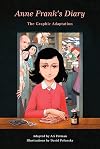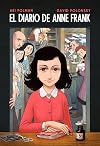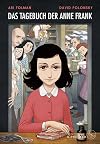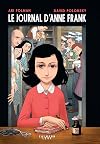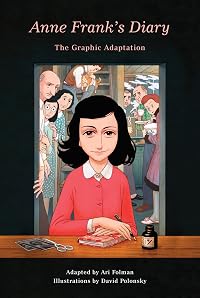
Anne Frank's Diary: The Graphic Adaptation
by Ari Folman, David Polonsky (Illustrator)
On This Page
Description
"The only graphic biography of Anne Frank's diary that has been authorized by the Anne Frank Foundation and that uses text from the diary--it will introduce a new generation of young readers to this classic of Holocaust literature. This adaptation of Anne Frank's Diary of a Young Girl into a graphic version for a young readership, maintains the integrity and power of the original work. With stunning, expressive illustrations and ample direct quotation from the diary, this edition will expand show more the readership for this important and lasting work of history and literature"-- show lessTags
Recommendations

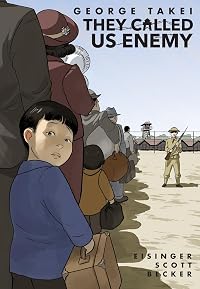
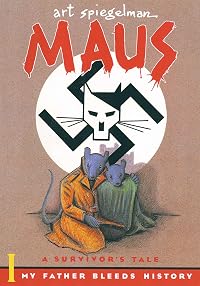
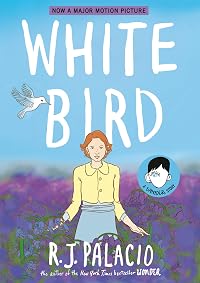
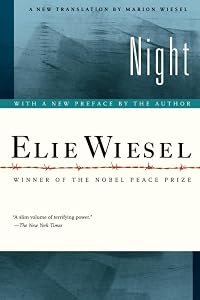




Member Recommendations

Member Reviews
This very strong adaptation of one of the most famous diaries in history works best when the creators trust their instincts and use the graphic novel format to truly visualize Anne's life, thoughts and dreams. They drop in large blocks of text from Anne's diaries a few too many times, but when they actually adapt, we are given a playful and imaginative look into a life which was rich in so much even while lived in confinement and with a scarcity of supplies.
The most moving moment for me was a portrait late in the book of a grown-up Anne surrounded by the mementos of the writing career that should have been. Devastating.
I look forward to the animated movie being produced in conjunction with this graphic adaptation.
The most moving moment for me was a portrait late in the book of a grown-up Anne surrounded by the mementos of the writing career that should have been. Devastating.
I look forward to the animated movie being produced in conjunction with this graphic adaptation.
Anne Frank may be the face of the Holocaust, and this graphic novel, by adapter Ari Folman and illustrator David Polonsky, is a beautiful adaptation of her famous diary. Adapting Frank's diary couldn't have been easy--and, as Folman and Polonsky explain in the end notes, the pressure was on to do the diary justice--but they did it with great skill. Folman chose select entries to highlight and worked closely with Polonsky to bring those to life. For entries that seemed to beg to be included in total, Folman did just that. It's an inspired take that should please all who’ve read the source material.
The illustrations are detailed and expressive, but most of all, they’re some of the most inventive I've seen in a graphic novel. I was so show more impressed by how Polonsky tackled the daunting task of taking Frank's wise-beyond-her-years observations and thoughts and translating them into a concrete depiction. He did it perfectly. Adapter and illustrator worked very well as a team, and it’s obvious that this graphic novel was a labor of love that they were determined to get right.
Folman and Polonsky emphasized just how human Frank was. What comes across over and over is that Frank was remarkably astute for her age; there’s a predestined feel to her diary, as if her pen was guided by a future that knew her diary would eventually become one of the best-selling books of all time. But Frank was also very much a typical adolescent, and her adolescent, mundane musings live alongside her mature, wiser ones. Her early entries express outrage over the--as she saw it--unrelenting criticism she received from the adults around her. She struggled to relate to her mom and felt closer to her dad. She was sometimes jealous of the positive attention Margot got and annoyed by suggestions that she emulate her. She thought about Peter van Daan and their budding romance. Later entries have a slightly different tone and focus, hinting that Frank resolved many of her past grievances.
This graphic novel isn’t solely about Frank, however, and Folman and Polonsky didn’t sugar-coat life in the attic. They showed boring, difficult life in hiding: meager food rations, lack of privacy, and general tension that comes with living in close quarters. Zooming out, they also highlighted the frequent bombings, precariousness of the living situation, terrifying close calls, and so much else.
The source material contains a lot, and as good as this graphic adaptation is, it’s very abridged. The adapter couldn't include everything in Frank’s diary, and he didn’t quote most parts in their entirety. It also has a loose chronology that may confuse those who haven't read the diary. Most importantly, it doesn’t deliver quite the same gut-punch that the diary does at the end, when it abruptly stops after the reader has gotten to know Frank so intimately. It is, however, an exceptional companion work. I also recommend the moving [b:Anne Frank: Her life in words and pictures from the archives of The Anne Frank House|6665210|Anne Frank Her life in words and pictures from the archives of The Anne Frank House|Menno Metselaar|https://i.gr-assets.com/images/S/compressed.photo.goodreads.com/books/1317792387l/6665210._SX50_.jpg|6860076], which contains lots of photos of the Frank family and succeeds in really humanizing them as a regular, normal family doing regular, normal things. These two, read alongside the diary, will provide a complete, satisfying portrait.
(Note: An animated Anne Frank movie is now available: https://forward.com/culture/472841/a-newly-animated-anne-frank-for-todays-europe... ) show less
The illustrations are detailed and expressive, but most of all, they’re some of the most inventive I've seen in a graphic novel. I was so show more impressed by how Polonsky tackled the daunting task of taking Frank's wise-beyond-her-years observations and thoughts and translating them into a concrete depiction. He did it perfectly. Adapter and illustrator worked very well as a team, and it’s obvious that this graphic novel was a labor of love that they were determined to get right.
Folman and Polonsky emphasized just how human Frank was. What comes across over and over is that Frank was remarkably astute for her age; there’s a predestined feel to her diary, as if her pen was guided by a future that knew her diary would eventually become one of the best-selling books of all time. But Frank was also very much a typical adolescent, and her adolescent, mundane musings live alongside her mature, wiser ones. Her early entries express outrage over the--as she saw it--unrelenting criticism she received from the adults around her. She struggled to relate to her mom and felt closer to her dad. She was sometimes jealous of the positive attention Margot got and annoyed by suggestions that she emulate her. She thought about Peter van Daan and their budding romance. Later entries have a slightly different tone and focus, hinting that Frank resolved many of her past grievances.
This graphic novel isn’t solely about Frank, however, and Folman and Polonsky didn’t sugar-coat life in the attic. They showed boring, difficult life in hiding: meager food rations, lack of privacy, and general tension that comes with living in close quarters. Zooming out, they also highlighted the frequent bombings, precariousness of the living situation, terrifying close calls, and so much else.
The source material contains a lot, and as good as this graphic adaptation is, it’s very abridged. The adapter couldn't include everything in Frank’s diary, and he didn’t quote most parts in their entirety. It also has a loose chronology that may confuse those who haven't read the diary. Most importantly, it doesn’t deliver quite the same gut-punch that the diary does at the end, when it abruptly stops after the reader has gotten to know Frank so intimately. It is, however, an exceptional companion work. I also recommend the moving [b:Anne Frank: Her life in words and pictures from the archives of The Anne Frank House|6665210|Anne Frank Her life in words and pictures from the archives of The Anne Frank House|Menno Metselaar|https://i.gr-assets.com/images/S/compressed.photo.goodreads.com/books/1317792387l/6665210._SX50_.jpg|6860076], which contains lots of photos of the Frank family and succeeds in really humanizing them as a regular, normal family doing regular, normal things. These two, read alongside the diary, will provide a complete, satisfying portrait.
(Note: An animated Anne Frank movie is now available: https://forward.com/culture/472841/a-newly-animated-anne-frank-for-todays-europe... ) show less
I read this book only because it’s officially approved by the Anne Frank Foundation and because it has gotten such positive reviews. Otherwise I’d have been skeptical.
There is a lovely and informative adaptor’s note on pages 148-149 in the hardcover edition at the end of the book and I decided to read it when I was part way through the book and I actually recommend reading it first, but okay to read at the end, but do read it.
It's brilliant!
The book is gorgeous! I absolutely loved the illustrations. They were perfect.
Incredibly well-done adaptation! Phenomenal! I think it’s a complete success as far as getting Anne’s own story right. In fact, even though I’ve read the diary about 4 times, I felt as though this adaptation show more gave me more information about and understanding of her.
So, Anne was such a good writer, so bright and thoughtful, and I appreciate how introspective she was at 13-15, maybe because I was too. When I first read her diary at age 11 (a year or two too early, for me, but my mother wanted me to read it while she was alive, I realized after, as it had meant a lot to her) I liked it but wasn’t wild about it. As an adult, rereading it, after reading other teens’ diaries, I realized how great it was. It’s so superior to most of the diaries I’ve read by other people that age. These excerpts from Anne’s diary and the wonderful accompanying artwork and the extra explanatory notes, made me sadder than ever that she did not survive. It’s such a huge tragedy. Her and so many others including some who will remain unknown. I’m so curious about what she would have done with her life had she not died so close to liberation. I expect she might have made herself known, likely as a writer, hopefully with a Holocaust memoir included at some point. I’ve read so many books about/by Anne. I’ve always felt we would not have been friends prior to her going into hiding but that from that point on we might have been. The story of these 8 people in this book do what other books about individuals have done: properly personalize what otherwise seems overwhelming – the suffering of millions during the Nazi era and other atrocities affecting more millions.
Highly recommended for those who want to read more about/by Anne Frank, or life in hiding during the Holocaust, those who enjoy reading graphic non-fiction books, some reluctant readers, and those who will love the artwork as much as I did. I’d say for everyone 12 & all the way up, but it depends on the person of course. Even though Anne talks about what’s going on outside their hiding place and she knew a fair amount, there was something about the visuals that make this book even more disturbing. I also found it even more amusing, so there is that. show less
There is a lovely and informative adaptor’s note on pages 148-149 in the hardcover edition at the end of the book and I decided to read it when I was part way through the book and I actually recommend reading it first, but okay to read at the end, but do read it.
It's brilliant!
The book is gorgeous! I absolutely loved the illustrations. They were perfect.
Incredibly well-done adaptation! Phenomenal! I think it’s a complete success as far as getting Anne’s own story right. In fact, even though I’ve read the diary about 4 times, I felt as though this adaptation show more gave me more information about and understanding of her.
So, Anne was such a good writer, so bright and thoughtful, and I appreciate how introspective she was at 13-15, maybe because I was too. When I first read her diary at age 11 (a year or two too early, for me, but my mother wanted me to read it while she was alive, I realized after, as it had meant a lot to her) I liked it but wasn’t wild about it. As an adult, rereading it, after reading other teens’ diaries, I realized how great it was. It’s so superior to most of the diaries I’ve read by other people that age. These excerpts from Anne’s diary and the wonderful accompanying artwork and the extra explanatory notes, made me sadder than ever that she did not survive. It’s such a huge tragedy. Her and so many others including some who will remain unknown. I’m so curious about what she would have done with her life had she not died so close to liberation. I expect she might have made herself known, likely as a writer, hopefully with a Holocaust memoir included at some point. I’ve read so many books about/by Anne. I’ve always felt we would not have been friends prior to her going into hiding but that from that point on we might have been. The story of these 8 people in this book do what other books about individuals have done: properly personalize what otherwise seems overwhelming – the suffering of millions during the Nazi era and other atrocities affecting more millions.
Highly recommended for those who want to read more about/by Anne Frank, or life in hiding during the Holocaust, those who enjoy reading graphic non-fiction books, some reluctant readers, and those who will love the artwork as much as I did. I’d say for everyone 12 & all the way up, but it depends on the person of course. Even though Anne talks about what’s going on outside their hiding place and she knew a fair amount, there was something about the visuals that make this book even more disturbing. I also found it even more amusing, so there is that. show less
I was hesitant to read this because I couldn't imagine that one of the most poignant books I have ever read would or could properly translate into a graphic novel. I was wrong. I am constantly and happily surprised by the quality of graphic novel adaptations of classic works. And the image of an Anne Frank who had the chance to grow up in one of her daydreaming Kitty entries, is not one I will forget soon.
Ari Folman and David Polonsky’s adaptation of Anne Frank’s Diary faithfully translates some of her text with illustrations depicting the scenes she described in her original writing or events that are documented in other historical records. They also drawc omparisons with other fights against facism, referencing the Danuta Danielsson’s 1985 hitting of a neo-Nazi with her handbag and setting it amid the growing resistance to the Nazis in 1940s Holland (pg. 119). When Anne describes the result of the family’s charade to hide their location from the Nazis as the enter the Annex, she mentions some of the rumors. Folman and Polonsky reference the events of The Sound of Music to visualize rumor one in which the family made it to the show more Swiss border (pg. 25).
One of their innovations was to use more imaginary imagery to evoke the mood of Anne Frank’s more depressive moments while also portraying her imaginary musings as she described them in her writing. Further, as the diary progresses and Anne became more confident in her writing, they begin to feature splash-pages that include large sections of text presented in their entirety in order to honor the power of Anne’s words, such as in her 15 July 1944 entry: “It’s utterly impossible for me to build my life on a foundation of chaos, suffering, and death. I see the world being slowly transformed into a wilderness, I hear the approaching thunder that, one day, will destroy us too. I feel the suffering of millions. And yet, when I look up at the sky, I somehow feel that everything will change for the better, that this cruelty too will end, that peace and tranquility will return once more. In the meantime, I must hold on to my ideals” (pg. 141). Anne’s text and advice continue to resonate with readers of all ages due to the powerful honesty she displayed. Readers find connections with her text when they’re young and return later in life to connect to different parts.
The work was made with the approval of the Anne Frank Fonds Basel, which Anne’s father Otto Frank founded in 1963 to oversee the publication of her diary and to ensure faithful translations that shared Anne Frank’s life with people around the world. Folman wrote the TV series Be Tipul (In Therapy) and directed the film, Waltz with Bashir. Illustrator Polonsky was the lead artist for Waltz with Bashir. Fascists in Texas and Florida including Greg Abbott, Ron DeSantis, and the extremist group Moms for Liberty have worked to try and ban this adaptation and other editions of The Diary of a Young Girl, knowing that this adaptation makes Anne Frank’s text more accessible to readers who would learn from her courage and humanity and recognize the warning signs of fascism in their states. As Cornelia Funke wrote, “When people start burning books they’ll soon burn human beings.”
Folman and Polonsky’s graphic novel adaptation does not take the place of Anne Frank’s Diary of a Young Girl, but it neatly compliments the original and can serve as an introduction to the material for students who aren’t used to reading diaries. show less
One of their innovations was to use more imaginary imagery to evoke the mood of Anne Frank’s more depressive moments while also portraying her imaginary musings as she described them in her writing. Further, as the diary progresses and Anne became more confident in her writing, they begin to feature splash-pages that include large sections of text presented in their entirety in order to honor the power of Anne’s words, such as in her 15 July 1944 entry: “It’s utterly impossible for me to build my life on a foundation of chaos, suffering, and death. I see the world being slowly transformed into a wilderness, I hear the approaching thunder that, one day, will destroy us too. I feel the suffering of millions. And yet, when I look up at the sky, I somehow feel that everything will change for the better, that this cruelty too will end, that peace and tranquility will return once more. In the meantime, I must hold on to my ideals” (pg. 141). Anne’s text and advice continue to resonate with readers of all ages due to the powerful honesty she displayed. Readers find connections with her text when they’re young and return later in life to connect to different parts.
The work was made with the approval of the Anne Frank Fonds Basel, which Anne’s father Otto Frank founded in 1963 to oversee the publication of her diary and to ensure faithful translations that shared Anne Frank’s life with people around the world. Folman wrote the TV series Be Tipul (In Therapy) and directed the film, Waltz with Bashir. Illustrator Polonsky was the lead artist for Waltz with Bashir. Fascists in Texas and Florida including Greg Abbott, Ron DeSantis, and the extremist group Moms for Liberty have worked to try and ban this adaptation and other editions of The Diary of a Young Girl, knowing that this adaptation makes Anne Frank’s text more accessible to readers who would learn from her courage and humanity and recognize the warning signs of fascism in their states. As Cornelia Funke wrote, “When people start burning books they’ll soon burn human beings.”
Folman and Polonsky’s graphic novel adaptation does not take the place of Anne Frank’s Diary of a Young Girl, but it neatly compliments the original and can serve as an introduction to the material for students who aren’t used to reading diaries. show less
“Mr. Folman’s has succeeded in capturing the humor and vitality of the diaries—the hilarious sarcasm, the passionate declarations, the contemplative self-reproach—without a trace of retrofitted sentimentality. He owes much to David Polonsky’s sublime illustrations. Every one of Anne’s flights of fancy finds a thrilling and ingenious visual representation. . . . A wonderful, full-page composite image of Anne in her many moods—dreamy, snarky, silly, pensive, outraged or lovesick—is a reminder that the diaries are less about a life’s senseless destruction than about a brilliant young woman eternally coming into being.” —The Wall Street Journal
“[A] stunning, haunting work of art. . . . The comedy of the Diary—one show more of the book’s most charming and often overlooked aspects—shines in this form. . . . There are so many wonderful juxtapositions of text and imagery that it feels cruel to focus on only a few, but another consistent standout is the way the graphic novel conveys Anne’s fantasies and emotions—so crucial to the Diary. . . . This graphic adaptation is so engaging and effective that it’s easy to imagine it replacing the Diary in classrooms and among younger readers.” —The New York Times Book Review show less
“[A] stunning, haunting work of art. . . . The comedy of the Diary—one show more of the book’s most charming and often overlooked aspects—shines in this form. . . . There are so many wonderful juxtapositions of text and imagery that it feels cruel to focus on only a few, but another consistent standout is the way the graphic novel conveys Anne’s fantasies and emotions—so crucial to the Diary. . . . This graphic adaptation is so engaging and effective that it’s easy to imagine it replacing the Diary in classrooms and among younger readers.” —The New York Times Book Review show less
A full graphic adaptation of the Diary of Anne Frank is a big undertaking, but I think this gets it done well. Illustrations add tension, dialogue, and details to the exposition, and it's interesting enough that it grabbed my 9-year-old daughter's attention. At one point Mr. vanDaan gets his hands on a calf and shows his talent for sausage-making, they string sausages all over the Annex to dry. The strung sausages make a time-lapse backdrop for Mr. Dussel's first dentist appointment conducted with no painkillers, it lends both visual framing and a funny element to a tense scene.
The source material is mature, although the Illustrations don't make it more so. There is a real coming-of-age story in here, cut short at the end; it is part show more of why this piece is so powerful. I'd recommend for any reader ready to learn about the holocaust, perhaps as a first book of two or three on the topic. show less
The source material is mature, although the Illustrations don't make it more so. There is a real coming-of-age story in here, cut short at the end; it is part show more of why this piece is so powerful. I'd recommend for any reader ready to learn about the holocaust, perhaps as a first book of two or three on the topic. show less
Members
- Recently Added By
Lists

Graphic Novels
94 works; 6 members

World War II Books
34 works; 1 member

Family Relationships
68 works; 2 members

Relationships: Boys & Girls
112 works; 1 member

European Settings
13 works; 1 member

Banned or Challenged Books
400 works; 41 members

Best Graphic Novel Nonfiction
199 works; 101 members

Youth: War & Terrorism
47 works; 1 member
Author Information

10+ Works 1,328 Members

All Editions
Awards and Honors
Awards
Distinctions
Series
Belongs to Publisher Series
Work Relationships
Has the (non-series) sequel
Is an adaptation of
Common Knowledge
- Canonical title
- Anne Frank's Diary: The Graphic Adaptation
- Original title
- Anne Frank's Diary: The Graphic Adaptation
- Original publication date
- 2017
- People/Characters
- Anne Frank; Margot Frank; Otto Frank; Edith Frank; Peter Van Daan; Peter van Pels (show all 25); Petronella Van Daan; Auguste van Pels; Hermann Van Daan; Hermann van Pels; Albert Dussel; Fritz Pfeffer; Johannes Kleiman; Victor Kugler; Elisabeth "Bep" Voskuijl; Miep Gies; Jan Gies; Johan Voskuijl; Dmitri Shostakovich; Hanneli Goslar; Sally Kimmel; Peter Schiff; Adolf Hitler; Karl Josef Silberbauer; Claus Schenk Graf von Stauffenberg
- Important places
- Amsterdam, North Holland, Netherlands; Germany; Switzerland; Alps, Switzerland; Westerbork transit camp, Westerbork, Drenthe, Netherlands; Africa (show all 11); Stalingrad, USSR (Volgograd); Frankfurt am Main, Hesse, Germany; Auschwitz II-Birkenau concentration and extermination camp, Oświęcim, Lesser Poland, Poland; Bergen-Belsen concentration camp, Bergen, Lower Saxony, Germany; Volgograd, Volgograd Oblast, Russia
- Important events
- World War II; Holocaust; 20 July plot
- First words
- Friday, June 12 - Saturday, June 20, 1942
No one would believe me, but at the age of 13, I feel totally alone in this world. - Last words
- (Click to show. Warning: May contain spoilers.)Believe me, I'd like to listen, but it doesn't work, because if I'm quiet and serious, everyone thinks I'm putting on a new act and I have to save myself with a joke, and then I'm not even talking about my own family, who assume I must be ill, stuff me with aspirins and sedatives, feel my neck and forehead to see if I have a temperature, ask about my bowel movements, and berate me for being in a bad mood, until I just can't keep it up anymore, because when everybody starts hovering over me, I get cross, then sad, and finally end up turning my heart inside out, the bad part on the outside and the good part on the inside, and keep trying to find a way to become what I'd like to be and what I could be if...if only there were no other people in the world.
Yours, Anne M. Frank
Anne's diary ends here. - Publisher's editor*
- Penguin Random House, LLC
- Original language*
- Anglès
*Some information comes from Common Knowledge in other languages. Click "Edit" for more information.
Classifications
Statistics
- Members
- 831
- Popularity
- 33,111
- Reviews
- 42
- Rating
- (4.29)
- Languages
- 14 — Dutch, English, Finnish, French, German, Hebrew, Hungarian, Italian, Korean, Portuguese, Romanian, Spanish, Swedish, Turkish
- Media
- Paper, Ebook
- ISBNs
- 28
- ASINs
- 4