On This Page
Description
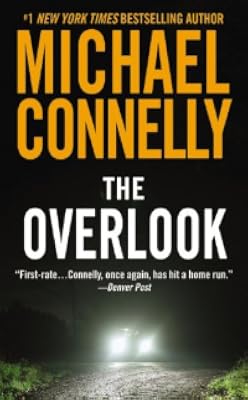
In his first case since he left the LAPD's Open Unsolved Unit for the prestigious Homicide Special squad, Harry Bosch is called out to investigate a murder that may have chilling consequences for national security. A doctor with access to a dangerous radioactive substance is found murdered in the trunk of his car. Retracing his steps, Harry learns that a large quantity of radioactive cesium was stolen shortly before the doctor's death. With the cesium in unknown hands, Harry fears the murder show more could be part of a terrorist plot to poison a major American city. Soon, Bosch is in a race against time, not only against the culprits, but also against the Department of Homeland Security and the FBI (in the form of Harry's one-time lover Rachel Walling), who are convinced that this case is too important for the likes of the LAPD. It is Bosch's job to prove all of them wrong. show lessTags
Recommendations

Member Reviews
Ugh… I didn’t expect this. A bad Bosch novel!
Well, bad is, of course, relatively speaking: “The Overlook”, instalment 13 of the ongoing Bosch series by Michael Connelly, isn’t outright bad. It’s just surprisingly and significantly mediocre.
For the first time in his new job in Robbery Homicide Division (RHD) at Homicide Special as a senior investigator looking into cases that might require long-term engagement, Harry is called out to the eponymous overlook where a murder took place.
Soon it becomes clear the case might not solely be a murder, but also a case of terrorism, and so the FBI is called in. Rachel Walling is first among them. If you remember the previous novel’s outcome with respect to Harry and Rachel, you might show more wonder at the tension between them. There’s a bit of it, but not much.
“Not much” is, in fact, something that can be said about many aspects of this novel as well as the novel in its entirety. Harry is still Harry, but even he slowly meanders along for most of the story, and, suddenly, it all comes to a rushed ending.
Harry’s new partner Ignacio “Iggy” Ferras feels like stuffing – he’s hardly around, and if and when he is, it’s as a semi-serious sidekick with much of the character and personality of a toothpick.
The investigative part also suffers from this strong imbalance: Whereas Harry follows a sound and logical train of thought, the FBI and other three-letter agencies are on a wild goose chase for domestic and international terrorists. They never really come together, nor do they clash as spectacularly as in other Bosch novels.
Similarly to earlier Bosch novels, but on the positive side, is the writing which is just as clear, dark, and gritty as always. “Overlook” certainly is an easy read, if at times a bit slow, and at its end there’s a lot of action and some suspense. It’s just like a fast food version of Bosch: Easy to devour, but not very nourishing.
»Bosch checked his watch. It was almost one. He had ridden the case from beginning to end in little more than twelve hours.«
“Overlook” reads just like that. I was also rather surprised to see an already short novel end, at less than 200 pages, at 80% of the ebook.
Three stars out of five.
Blog | Goodreads | Hardcover | Facebook | Twitter | Mastodon | Instagram | Threads | StoryGraph | LibraryThing | Medium | Matrix | Tumblr
Ceterum censeo Putin esse delendam show less
Well, bad is, of course, relatively speaking: “The Overlook”, instalment 13 of the ongoing Bosch series by Michael Connelly, isn’t outright bad. It’s just surprisingly and significantly mediocre.
For the first time in his new job in Robbery Homicide Division (RHD) at Homicide Special as a senior investigator looking into cases that might require long-term engagement, Harry is called out to the eponymous overlook where a murder took place.
Soon it becomes clear the case might not solely be a murder, but also a case of terrorism, and so the FBI is called in. Rachel Walling is first among them. If you remember the previous novel’s outcome with respect to Harry and Rachel, you might show more wonder at the tension between them. There’s a bit of it, but not much.
“Not much” is, in fact, something that can be said about many aspects of this novel as well as the novel in its entirety. Harry is still Harry, but even he slowly meanders along for most of the story, and, suddenly, it all comes to a rushed ending.
Harry’s new partner Ignacio “Iggy” Ferras feels like stuffing – he’s hardly around, and if and when he is, it’s as a semi-serious sidekick with much of the character and personality of a toothpick.
The investigative part also suffers from this strong imbalance: Whereas Harry follows a sound and logical train of thought, the FBI and other three-letter agencies are on a wild goose chase for domestic and international terrorists. They never really come together, nor do they clash as spectacularly as in other Bosch novels.
Similarly to earlier Bosch novels, but on the positive side, is the writing which is just as clear, dark, and gritty as always. “Overlook” certainly is an easy read, if at times a bit slow, and at its end there’s a lot of action and some suspense. It’s just like a fast food version of Bosch: Easy to devour, but not very nourishing.
»Bosch checked his watch. It was almost one. He had ridden the case from beginning to end in little more than twelve hours.«
“Overlook” reads just like that. I was also rather surprised to see an already short novel end, at less than 200 pages, at 80% of the ebook.
Three stars out of five.
Blog | Goodreads | Hardcover | Facebook | Twitter | Mastodon | Instagram | Threads | StoryGraph | LibraryThing | Medium | Matrix | Tumblr
Ceterum censeo Putin esse delendam show less
My first thought when I saw this book was that Connelly must have phoned it in - it is half the size of a usual book in the series. As it turns out, a very helpful author note explains that the book was serialized in 16 installments of 3K words each and even though it was somewhat rewritten for its book publication, it is still tied to the restrictions of a serialization.
At the end of the last novel, Kiz got finally fed up with Harry's antics and went back to the Chief of Police office while Harry actually got a promotion - he is now in the Homicide division, partnered with a young detective (Ignacio Ferras). It is the first novel of the series that really deals with terrorism in any way or form - this time dirty bombs seem to be show more hidden somewhere after the police finds the body of a doctor who worked with radioactive materials. That brings FBI and Rachel back into the mix as well - giving Bosch a chance to try to get his own personal life in order (as much as possible anyway).
Meanwhile Bosch is being Bosch and does not treat his new partner any better than he did the previous ones - he is a lone wolf and he is even more reckless than he usually is. The pacing of the novel is different because of the serialization, with more turns and twists which come faster than usual and with less development between them thus leaving Harry looking almost illogically reckless in places.
I enjoyed the novel in the same way I had always enjoyed B-list action movies - it is fast paced and a lot of things happen. But because of its length and pace, it is different from the series as a whole - it almost serves the same function as e-novellas serve these days - tell a shorter story in the big universe. Except that this was built as a novel - and that left it a bit lacking. Still fun if you are reading the series but don't start with it. show less
At the end of the last novel, Kiz got finally fed up with Harry's antics and went back to the Chief of Police office while Harry actually got a promotion - he is now in the Homicide division, partnered with a young detective (Ignacio Ferras). It is the first novel of the series that really deals with terrorism in any way or form - this time dirty bombs seem to be show more hidden somewhere after the police finds the body of a doctor who worked with radioactive materials. That brings FBI and Rachel back into the mix as well - giving Bosch a chance to try to get his own personal life in order (as much as possible anyway).
Meanwhile Bosch is being Bosch and does not treat his new partner any better than he did the previous ones - he is a lone wolf and he is even more reckless than he usually is. The pacing of the novel is different because of the serialization, with more turns and twists which come faster than usual and with less development between them thus leaving Harry looking almost illogically reckless in places.
I enjoyed the novel in the same way I had always enjoyed B-list action movies - it is fast paced and a lot of things happen. But because of its length and pace, it is different from the series as a whole - it almost serves the same function as e-novellas serve these days - tell a shorter story in the big universe. Except that this was built as a novel - and that left it a bit lacking. Still fun if you are reading the series but don't start with it. show less
It happens to me sometimes to catch a series of false starts with books: either these books are not my cup of tea or I’m in a picky mood and nothing seems to meet my tastes. When that happens I know the only way to get over such a gloomy outlook is to pick up a “palate cleanser” of sorts, and one of my tested and true comfort reads is a crime/thriller by Michael Connelly - I know his stories never disappoint me and they always manage to bring me back on track.
The Overlook is the shortest novel in the Harry Bosch series, only 164 pages on my e-reader, but still it managed to keep me intrigued from start to finish, also thanks to the relentless pace that helped me focus on the story despite it being one already visited in the TV show more series: it’s not the first time I’ve observed this phenomenon, and once again I must admire the author’s writing skills in this regard.
After a stint in the Open-Unsolved department Bosch is now working in the Homicide Special division and has been assigned a new partner, the young and upcoming Ignacio Ferras. The two come to work on the case of a man found murdered on an overlook on Mulholland Drive: the victim was shot in the back of the head, execution style, and is identified as a doctor working with radioactive materials. An inspection of the doctor’s house finds his wife bound and gagged and reveals that she was used to compel the husband to steal a considerable quantity of Cesium, probably with the goal of fabricating a dirty bomb.
The discovery brings the FBI in on the investigation, given the apparent terrorist nature of the crime, and Bosch’s old acquaintance Rachel Walling is part of the team charged with finding the dangerous material before it can be used in a devastating way. The FBI’s cavalier attitude toward the case, both in trying to take over every aspect of the operation and in shunting the actual murder on the sidelines, prioritizing the recovery of the Cesium, does not go well with Bosch, of course. Being who he is, the detective refuses to give in gracefully and fights what he sees as the Feds’ intrusion into his murder investigation, particularly when some details don’t seem to add up but are deemed irrelevant by the FBI.
The story itself is a compelling one - even though I was aware, thanks to the TV series, of the unexpected twist that comes at some point - but what is even more interesting is the deeper look into the siege mentality that took hold of the law enforcement agencies after the attacks on 9/11: the most evident consequence is the heightened state of reactivity of those agencies that brings them to sometimes react on insufficient or misleading information, falling prey to a sort of knee-jerk reaction that can prove more counterproductive than anything else. What comes out of this picture is a wounded, damaged society that still has to find its balance in the wake of of a terrible shock. There is a segment of the story where it’s possible to see clearly how someone invested with power, but not with enough discernment to exercise it properly, can be manipulated into actions that deepen the deterioration in the social framework - and that, in this specific case, lead the investigation on a totally false track, but since I’m now nearing spoiler territory I will say no more about it… ;-)
As for Bosch himself, while I can understand his all-encompassing desire to bring justice to the victim, and his impatience with the high-handed methods of the FBI, his usual recklessness here felt more in service to his own ego than to the investigation: it’s something I remarked in my review of the previous book, and here its presence makes itself felt more heavily. Even though in the end he’s proven to have been right, his reverting to the tactics of his younger self seems to point to an involution in Bosch’s character, and this is particularly evident in the relationship with his new partner: some of Harry’s actions are not only ill-advised, they could prove dangerous, career-wise, and his off-hand dismissal of those dangers, in the face of his partner’s objections, stresses once more how he is ultimately a lone wolf - and not necessarily one worthy of unconditional admiration. While this character development was somewhat troubling, I have to admit that the author was right in showing his creature’s “dark side” more often because it makes him more real than any shiny-armor-clad “hero”.
The story itself is fast-paced (the sensation is that everything happens in a very short time frame) and engaging despite the already quoted familiarity: this time the main event in the book mirrors exactly what I saw on TV, but Michael Connelly’s writing is such that my immersion in the story never wavered for a moment. While there was no surprise in the plot, the depiction of the investigation itself, with its twists and turns, and of the pall of fear imposed by a terrorist threat, was more than enough to offer a compelling and satisfactory read. show less
The Overlook is the shortest novel in the Harry Bosch series, only 164 pages on my e-reader, but still it managed to keep me intrigued from start to finish, also thanks to the relentless pace that helped me focus on the story despite it being one already visited in the TV show more series: it’s not the first time I’ve observed this phenomenon, and once again I must admire the author’s writing skills in this regard.
After a stint in the Open-Unsolved department Bosch is now working in the Homicide Special division and has been assigned a new partner, the young and upcoming Ignacio Ferras. The two come to work on the case of a man found murdered on an overlook on Mulholland Drive: the victim was shot in the back of the head, execution style, and is identified as a doctor working with radioactive materials. An inspection of the doctor’s house finds his wife bound and gagged and reveals that she was used to compel the husband to steal a considerable quantity of Cesium, probably with the goal of fabricating a dirty bomb.
The discovery brings the FBI in on the investigation, given the apparent terrorist nature of the crime, and Bosch’s old acquaintance Rachel Walling is part of the team charged with finding the dangerous material before it can be used in a devastating way. The FBI’s cavalier attitude toward the case, both in trying to take over every aspect of the operation and in shunting the actual murder on the sidelines, prioritizing the recovery of the Cesium, does not go well with Bosch, of course. Being who he is, the detective refuses to give in gracefully and fights what he sees as the Feds’ intrusion into his murder investigation, particularly when some details don’t seem to add up but are deemed irrelevant by the FBI.
The story itself is a compelling one - even though I was aware, thanks to the TV series, of the unexpected twist that comes at some point - but what is even more interesting is the deeper look into the siege mentality that took hold of the law enforcement agencies after the attacks on 9/11: the most evident consequence is the heightened state of reactivity of those agencies that brings them to sometimes react on insufficient or misleading information, falling prey to a sort of knee-jerk reaction that can prove more counterproductive than anything else. What comes out of this picture is a wounded, damaged society that still has to find its balance in the wake of of a terrible shock. There is a segment of the story where it’s possible to see clearly how someone invested with power, but not with enough discernment to exercise it properly, can be manipulated into actions that deepen the deterioration in the social framework - and that, in this specific case, lead the investigation on a totally false track, but since I’m now nearing spoiler territory I will say no more about it… ;-)
As for Bosch himself, while I can understand his all-encompassing desire to bring justice to the victim, and his impatience with the high-handed methods of the FBI, his usual recklessness here felt more in service to his own ego than to the investigation: it’s something I remarked in my review of the previous book, and here its presence makes itself felt more heavily. Even though in the end he’s proven to have been right, his reverting to the tactics of his younger self seems to point to an involution in Bosch’s character, and this is particularly evident in the relationship with his new partner: some of Harry’s actions are not only ill-advised, they could prove dangerous, career-wise, and his off-hand dismissal of those dangers, in the face of his partner’s objections, stresses once more how he is ultimately a lone wolf - and not necessarily one worthy of unconditional admiration. While this character development was somewhat troubling, I have to admit that the author was right in showing his creature’s “dark side” more often because it makes him more real than any shiny-armor-clad “hero”.
The story itself is fast-paced (the sensation is that everything happens in a very short time frame) and engaging despite the already quoted familiarity: this time the main event in the book mirrors exactly what I saw on TV, but Michael Connelly’s writing is such that my immersion in the story never wavered for a moment. While there was no surprise in the plot, the depiction of the investigation itself, with its twists and turns, and of the pall of fear imposed by a terrorist threat, was more than enough to offer a compelling and satisfactory read. show less
I don't often read from the fiction bestseller list and I periodically wonder what I'm missing. When a Connelly (oops, not John Connolly) book came my way, I was looking for a light headache distraction and thought it might do the trick. To absolutely no one's surprise, I discovered I'm not really missing anything that would cater to my own palate. This is the Arby's of the fast food world: seemingly meaty but rather bland (unlike Nihilist Arby's).
Harry is apparently back in action with LAPD with a new position on a special homicide team. He and his new partner are assigned an execution killing but it quickly becomes complicated when his ex-lover (I think) and FBI agent shows up on the scene on behalf of Homeland Security.
According to show more the jacket, this was originally a sixteen chapter serial story published in The New York Times Magazine and reformatted for video book-like storytelling. The rewrite wasn't at all obvious, as the story seemed to smoothly flow, lacking the occasional choppiness I associate with seriels. Writing was clear but bland lacking details that build richness of character. The most evocative image was that of the overlook and it's view of the L.A. Basin, but I can't tell if that was the book or my own memory. There was a nice little twist near the end, but it was too late to do more than give a momentary pause in my lull.
Overall, it was Storytelling Lite, easily finished in the space of an evening, even with a headache. When I looked up the history of the book, wikipedia noted that some reviewers state it lacked the depth of his other stories. So I suppose I won't write him off just yet.
Two and a half snoozes. show less
Harry is apparently back in action with LAPD with a new position on a special homicide team. He and his new partner are assigned an execution killing but it quickly becomes complicated when his ex-lover (I think) and FBI agent shows up on the scene on behalf of Homeland Security.
According to show more the jacket, this was originally a sixteen chapter serial story published in The New York Times Magazine and reformatted for video book-like storytelling. The rewrite wasn't at all obvious, as the story seemed to smoothly flow, lacking the occasional choppiness I associate with seriels. Writing was clear but bland lacking details that build richness of character. The most evocative image was that of the overlook and it's view of the L.A. Basin, but I can't tell if that was the book or my own memory. There was a nice little twist near the end, but it was too late to do more than give a momentary pause in my lull.
Overall, it was Storytelling Lite, easily finished in the space of an evening, even with a headache. When I looked up the history of the book, wikipedia noted that some reviewers state it lacked the depth of his other stories. So I suppose I won't write him off just yet.
Two and a half snoozes. show less
So far, my least favorite of the Bosch books - Walling is back again, and I wish she'd go away. This is a short one where a medical radiologist is killed and several vials of cesium are stolen. The FBI big foots the case, because it's obviously terrorism, even though it's just a wife setting up a plot to kill her husband. The whole book felt like a weak effort, almost an afterthought that Connelly couldn't let go of writing. Can we please be done with Rachel Walling!
3 1/2 stars!!!!
3 1/2 stars!!!!
Detective Harry Bosch is waiting for the first callout to a job with the LAPD’s Homicide Special squad which he has recently moved to from his previous placement. When the call comes after midnight one night it’s to a case unlike those Harry normally deals with. A man has been killed in what seems to be an execution and the authorities are worried. The dead man was a doctor who dealt with radioactive substances routinely used for cancer treatments but which could, in the wrong hands, be used for terrorism. Soon the FBI and a half-dozen other alphabet agencies are involved in back-tracking the man’s movements and when his wife is found bound and frightened in their home the race is on. Harry and his new partner Iggy Ferras struggle show more to retain any control or even involvement in the case as the various Federal Government agencies take over the witnesses and evidence.
I learned via the author interview at the end of this book that it was originally published as a serialised story in an American magazine which probably explains the length (it’s short by modern standards at 260 pages with lots of white space) and the fact that there is really only one central storyline, no detours, no sidetracks. I wouldn’t want all my books to be so straightforward but I have to admit in my current holiday mood when the other book I was reading was boring me senseless this one hit the spot. It’s a really fast read with a good, logical plot and if the twist at the end is was fairly predictable I was definitely engaged enough to see exactly how the author would resolve it. Connelly writes clearly and without pretension
I see from reviews that some existing fans of Harry Bosch didn’t like this installment of the series and I can see why that might be as there isn’t much character development in it. However for someone like me who is new to the series it was a good introduction because, presumably due to the serialisation, it provided more information about the main character’s back story than you’d normally expect to find in a book so late in a series. At this point I’m not sure I like Harry overly much, my take is that he’s an arrogant know-it-all, but I did see enough that I am interested in reading more about him. I liked the way Connelly explored Harry’s frustration with the way governments and their agents are so ready to exploit fears of terrorism these days, often to the detriment of sense and practicality. I see parallels to this in my own day job, where things like predictions of disease pandemics get blown out of all proportion, and this aspect of The Overlook had an extra ring of truth for me.
Ultimately I think I’d like something that combines the character development of [b:The Lincoln Lawyer|79885|The Lincoln Lawyer (Mickey Haller, #1)|Michael Connelly|http://photo.goodreads.com/books/1235574048s/79885.jpg|1427801] with the pace of this novel and I’m keen to read more Connelly to see if such a thing exists. I can certainly recommend this book to people like me who are interested in trying the Harry Bosch series but don’t have the energy to go back to the beginning. Regardless of any format constraints Connelly writes cleanly and crisply and this novel was a fast-paced treat.
My rating 3.5/5 show less
I learned via the author interview at the end of this book that it was originally published as a serialised story in an American magazine which probably explains the length (it’s short by modern standards at 260 pages with lots of white space) and the fact that there is really only one central storyline, no detours, no sidetracks. I wouldn’t want all my books to be so straightforward but I have to admit in my current holiday mood when the other book I was reading was boring me senseless this one hit the spot. It’s a really fast read with a good, logical plot and if the twist at the end is was fairly predictable I was definitely engaged enough to see exactly how the author would resolve it. Connelly writes clearly and without pretension
I see from reviews that some existing fans of Harry Bosch didn’t like this installment of the series and I can see why that might be as there isn’t much character development in it. However for someone like me who is new to the series it was a good introduction because, presumably due to the serialisation, it provided more information about the main character’s back story than you’d normally expect to find in a book so late in a series. At this point I’m not sure I like Harry overly much, my take is that he’s an arrogant know-it-all, but I did see enough that I am interested in reading more about him. I liked the way Connelly explored Harry’s frustration with the way governments and their agents are so ready to exploit fears of terrorism these days, often to the detriment of sense and practicality. I see parallels to this in my own day job, where things like predictions of disease pandemics get blown out of all proportion, and this aspect of The Overlook had an extra ring of truth for me.
Ultimately I think I’d like something that combines the character development of [b:The Lincoln Lawyer|79885|The Lincoln Lawyer (Mickey Haller, #1)|Michael Connelly|http://photo.goodreads.com/books/1235574048s/79885.jpg|1427801] with the pace of this novel and I’m keen to read more Connelly to see if such a thing exists. I can certainly recommend this book to people like me who are interested in trying the Harry Bosch series but don’t have the energy to go back to the beginning. Regardless of any format constraints Connelly writes cleanly and crisply and this novel was a fast-paced treat.
My rating 3.5/5 show less
In this story Harry has been transferred to Homicide Special, following the incidents described in Echo Park and is assigned an apparent execution style killing with strong terrorist overtones, which excites the interest of the FBI and old flame Rachel Walling. Despite the close attention of the FBI Harry decides to concentrate on the murder itself, dragging his new partner into his usual confrontations with senior authority and the FBI.
An original take on the contemporary terrorism plot which keeps you guessing. As always strong characterisation and excellent dialogue.
An original take on the contemporary terrorism plot which keeps you guessing. As always strong characterisation and excellent dialogue.
Members
- Recently Added By
Lists

Crime and Mysteries to Read
746 works; 31 members

Biggest Disappointments
606 works; 168 members

Books Read in 2013
1,630 works; 51 members

Books Read in 2018
4,360 works; 110 members

Books - Connolly, Michael: Bosch
44 works; 1 member
Author Information

160+ Works 154,697 Members
Michael Connelly was born in Philadelphia, Pennsylvania on July 21, 1956. He graduated from the University of Florida in 1980 where he majored in journalism and minored in creative writing. After graduation, he worked at newspapers in Daytona Beach and Fort Lauderdale, Florida, specializing in the crime beat. In 1986, he interviewed survivors of a show more plane crash with two other reporters and the magazine story subsequently written on the crash was on the short list for the Pulitzer Prize for feature writing. This story led to a job as a crime reporter for the Los Angeles Times. After three years there, he began writing his first novel. His first novel, The Black Echo, was published in 1992 and won the Edgar Award for best first novel. He is the author of the Harry Bosch series, the Jack McEvoy series, and the Mickey Haller series. He has won numerous awards including the Anthony Award, Macavity Award, Shamus Award, Dilys Award, Nero Award, Barry Award, Ridley Award, Maltese Falcon Award (Japan), .38 Caliber Award (France), Grand Prix Award (France), Premio Bancarella Award (Italy), and the Pepe Carvalho Award (Spain). (Bowker Author Biography) show less
Some Editions
Awards and Honors
Distinctions
Series


Belongs to Publisher Series
Work Relationships
Is contained in
The Closers / Chasing the Dime / Echo Park / The Overlook / The Poet / The Last Coyote / The Concrete Blonde / Lost Light / The Black Echo by Michael Connelly
Bild am Sonntag Thriller-Box: The Cold Moon / Der Kindersammler / 4th of July / Die for Me / Scavenger / The Overlook by Bild am Sonntag
Rachel Walling Appearances: The Poet / The Narrows / Echo Park / The Overlook / The Scarecrow / The Reversal / The Black Box by Michael Connelly
The Black Echo / The Black Ice / The Concrete Blonde / The Last Coyote / The Poet / Trunk Music / Blood Work / Angels Flight / Void Moon / A Darkness More Than Night / City of Bones / Lost Light / The Narrows / The Closers / The Lincoln Lawyer / Echo Park / The Overlook / The Brass Verdict / Nine Dragons / The Reversal by Michael Connelly
Is abridged in
Reader's Digest Select Editions: The Overlook • The Last Testament • Left For Dead • No Time For Goodbye by Reader's Digest
Reader's Digest Auswahlbücher 285 : Die letzte Spur. Frühstück mit Elefant. Kalter Tod. Die Engel von Morgan Hill. by Reader's Digest
Kirjavaliot - Musta kaupunki, Hiljaisuuden lapset, Sininen vyöhyke, Muistatko minut? (4-in-1) by Valitut Palat
Australian Reader's Digest Select Editions: The Overlook / No Time for Goodbye / The Last Testament / Garden Spells by Reader's Digest
Common Knowledge
- Canonical title
- The Overlook
- Original title
- The Overlook
- Original publication date
- 2007-05
- People/Characters
- Hieronymus 'Harry' Bosch; Rachel Walling; Ignacio Ferras; Alicia Kent; Stanley Kent; John 'Jack' Brenner (show all 10); Ronald Lundy; Jesse Mitford; Clifford Maxwell; Digoberto Gonzalves
- Important places
- Los Angeles, California, USA
- Dedication
- To the librarian who gave me
To Kill a Mockingbird - First words
- The call came at midnight.
- Last words
- (Click to show. Warning: May contain spoilers.)Bosch helped his partner up and out of the car and they walked to the paramedics.
- Original language
- English
- Disambiguation notice
- New final chapter added in
2008 publication
Classifications
Statistics
- Members
- 4,695
- Popularity
- 3,079
- Reviews
- 123
- Rating
- (3.62)
- Languages
- 13 — Bulgarian, Dutch, English, Finnish, French, German, Greek, Italian, Korean, Portuguese, Spanish, Swedish, Turkish
- Media
- Paper, Audiobook, Ebook
- ISBNs
- 86
- UPCs
- 1
- ASINs
- 21