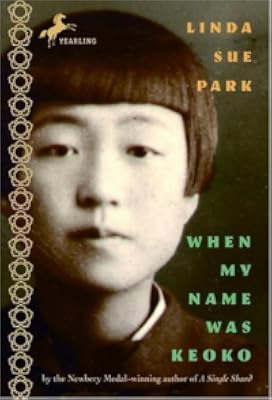
When My Name Was Keoko
by Linda Sue Park
On This Page
Description
With national pride and occasional fear, a brother and sister face the increasingly oppressive occupation of Korea by Japan during World War II, which threatens to suppress Korean culture entirely.Tags
Recommendations
Member Recommendations
Member Reviews
Newbery Medal-winning children's author Linda Sue Park, whose A Single Shard chronicled the adventures of a young potter's apprentice in 12th century Korea, turns here to the story of Korea under Japanese occupation, drawing partially on her own family background for material, and producing a powerfully moving tale of identity, cultural oppression, and family love. Opening in 1940, as Korea struggles on under an increasingly repressive regime, one which forbids the use of the Korean language, and the teaching of its history and literature, When My Name Was Keoko is told from the alternating perspectives of two young children, sister and brother Sun-hee and Tae-yul Kim, who find (the latest edict from Tokyo being handed down) that they show more must henceforth refer to themselves as "Keoko" and "Nobuo Kaneyama."
Outwardly conforming to these new restrictions, the Kim family carries on being Korean, with Omoni (mother) hiding her last Rose of Sharon tree - the national symbol of Korea, all Rose of Sharon trees were, by imperial edict, to be destroyed - in the family shed; Uncle becoming involved in dangerous underground activities that involve his printing shop; and Sun-hee eventually deciding that she would like to learn Hangul - the traditional (and banned) writing system of Korea. After all, she reasons, words must be terribly important, if the Japanese go to such trouble to proscribe them: "How could an alphabet - letters that didn't even mean anything by themselves - be important? But it was important. Our stories, our names, our alphabet. Even Uncle's newspapers. It was all about words. If words weren't important, they wouldn't try so hard to take them away." With danger on every side, and disaster never far away, the Kims struggle to survive the hardships that come to them, with Uncle going into hiding, and Omoni working to create meals from a shrinking supply of food. Tae-yul, caught between his admiration for his boisterous Uncle, and his impatience with his scholarly father, who seems disinclined to oppose the injustices of the occupation, finds that the only way to stay true to what he believes, is to appear to betray it; while Sun-hee, wracked with guilt over her role in Uncle's disappearance, turns to words (always words) for solace, recording her thoughts in a journal.
Emotionally gripping and intellectually engrossing - I found myself moved to tears on more than one occasion, and searching for additional reading material on various topics, at others - this is a marvelous book, one that will expose young readers to an aspect of WWII that is often neglected in the pages of children's literature. I cannot count the children's books I have read and seen that are devoted to the experiences of Europeans - and, to a lesser extent, Americans - in the Second World War, but those detailing the experiences of the people of Asia during this time period are far fewer. For that alone, When My Name Was Keoko is worth picking up. Fortunately, it is also worth picking up for its own sake, as a moving story of one close-knit family caught up in the horrors of occupation, cultural imperialism, and war. Highly recommended! show less
Outwardly conforming to these new restrictions, the Kim family carries on being Korean, with Omoni (mother) hiding her last Rose of Sharon tree - the national symbol of Korea, all Rose of Sharon trees were, by imperial edict, to be destroyed - in the family shed; Uncle becoming involved in dangerous underground activities that involve his printing shop; and Sun-hee eventually deciding that she would like to learn Hangul - the traditional (and banned) writing system of Korea. After all, she reasons, words must be terribly important, if the Japanese go to such trouble to proscribe them: "How could an alphabet - letters that didn't even mean anything by themselves - be important? But it was important. Our stories, our names, our alphabet. Even Uncle's newspapers. It was all about words. If words weren't important, they wouldn't try so hard to take them away." With danger on every side, and disaster never far away, the Kims struggle to survive the hardships that come to them, with Uncle going into hiding, and Omoni working to create meals from a shrinking supply of food. Tae-yul, caught between his admiration for his boisterous Uncle, and his impatience with his scholarly father, who seems disinclined to oppose the injustices of the occupation, finds that the only way to stay true to what he believes, is to appear to betray it; while Sun-hee, wracked with guilt over her role in Uncle's disappearance, turns to words (always words) for solace, recording her thoughts in a journal.
Emotionally gripping and intellectually engrossing - I found myself moved to tears on more than one occasion, and searching for additional reading material on various topics, at others - this is a marvelous book, one that will expose young readers to an aspect of WWII that is often neglected in the pages of children's literature. I cannot count the children's books I have read and seen that are devoted to the experiences of Europeans - and, to a lesser extent, Americans - in the Second World War, but those detailing the experiences of the people of Asia during this time period are far fewer. For that alone, When My Name Was Keoko is worth picking up. Fortunately, it is also worth picking up for its own sake, as a moving story of one close-knit family caught up in the horrors of occupation, cultural imperialism, and war. Highly recommended! show less
I enjoyed this book for many reasons. I loved the use of two points of view in this novel of both a young girl, Sun-hee, and her older brother, Tae-yul. I enjoyed this because it allowed me to gather more information about the story (each character is privy to different information), as well as see how other characters and plot points appear in the eyes of these two very different characters. For example, Sun-hee seems to love her father, Abuji. Her point of view always talks about him in a loving and respectful way. Tae-yul, on the other hand, holds Abuji in less high esteem. Tae-yul often views his father as a passive coward who prefers to keep his head down rather than confront the unjust Japanese occupiers. Tae-yul much prefers his show more Uncle who is a key part of the Japanese Resistance and Korean Rebellion movement. From these two points of view, I can view Abuji, the kind and thoughtful father who teaches his daughter Kanji, and the timid, passive Abuji who sits back while others lead the Japanese Resistance movement. Because there are two points of view, I also am able to see more aspects of occupied Korea during World War II. For example, Tae-yul works on the air field and is eventually a soldier. I am able to look into Japanese military operations and how they attempt to groom young men into good soldiers. When Sun-hee is the story-teller, I can see more often what life was like for young girls at school and, though this was not the focal point of the story, I can see the many ways women are treated differently than men (such as when they are permitted to talk, what jobs they are allowed to do, etc.).
I also enjoyed this book because of the well-developed characters in the text, especially the secondary characters. For example, the character of Abuji is portrayed throughout the text as a very steady, dependable, quiet man. By the end of the book, the reader realizes that Abuji was a part of the resistance movement! This man whom his own son called a "coward" was actually incredibly brave as he wrote articles for the resistance newspaper. He fooled even his own family into believing he was passive, a "push-over." This author even gives complexity to some of the Japanese characters. Throughout the book, the Japanese are not portrayed in the best light. They attempt to rob the Korean people of their national identity and culture. The Japenese authority is portrayed as cruel and mean-spirited. However, Sun-hee's friend Japanese friend Tomo is given a bit more complexity than this one-dimensional depiction. Though Tomo stops playing with Sun-hee, he risks a great deal and attempts to relay a warning to her about an upcoming collection. At the end of the novel, Sun-hee reflects on the difficulties of Tomo's life, and how he will have to flee to Tokyo with his family, a war-torn, devastated place which he has never been to before. This author allows us a glimpse into the hardships that many Japanese faced during this time of occupation. Perhaps not all of them are cruel and mean-spirited, but were kind hearted people who just happened to be Japanese, and therefore were not subject to oppression during the occupation. However, they too will have their fair-share of struggles. Linda Sue Park makes the reader aware of this in her book, and I appreciated that she gave the Japanese people multiple layers in this book.
The main message of this book is to give the reader a depiction of life for a Korean family during the Japanese occupation in World War II. The reader sees the injustice of having one's culture stripped away from them, the small acts of defiance and bravery that can make a big difference, and the devastating affects that war can have on the individuals in its wake. Above all, the reader can feel a strong sense of family bond through this novel, and how this bond can help us get through very difficult times. show less
I also enjoyed this book because of the well-developed characters in the text, especially the secondary characters. For example, the character of Abuji is portrayed throughout the text as a very steady, dependable, quiet man. By the end of the book, the reader realizes that Abuji was a part of the resistance movement! This man whom his own son called a "coward" was actually incredibly brave as he wrote articles for the resistance newspaper. He fooled even his own family into believing he was passive, a "push-over." This author even gives complexity to some of the Japanese characters. Throughout the book, the Japanese are not portrayed in the best light. They attempt to rob the Korean people of their national identity and culture. The Japenese authority is portrayed as cruel and mean-spirited. However, Sun-hee's friend Japanese friend Tomo is given a bit more complexity than this one-dimensional depiction. Though Tomo stops playing with Sun-hee, he risks a great deal and attempts to relay a warning to her about an upcoming collection. At the end of the novel, Sun-hee reflects on the difficulties of Tomo's life, and how he will have to flee to Tokyo with his family, a war-torn, devastated place which he has never been to before. This author allows us a glimpse into the hardships that many Japanese faced during this time of occupation. Perhaps not all of them are cruel and mean-spirited, but were kind hearted people who just happened to be Japanese, and therefore were not subject to oppression during the occupation. However, they too will have their fair-share of struggles. Linda Sue Park makes the reader aware of this in her book, and I appreciated that she gave the Japanese people multiple layers in this book.
The main message of this book is to give the reader a depiction of life for a Korean family during the Japanese occupation in World War II. The reader sees the injustice of having one's culture stripped away from them, the small acts of defiance and bravery that can make a big difference, and the devastating affects that war can have on the individuals in its wake. Above all, the reader can feel a strong sense of family bond through this novel, and how this bond can help us get through very difficult times. show less
I love this book and could not put it down from the moment I began reading it. It was astounding the information I learned from this book. I learned that the Japanese had taken over Korea during the war I had learned about relentlessly in school before college. I am not certain if I had learned about Korea being taken over by Japan, but it was a shock to me. By reading the perspective from a little girl growing up in a continually changing environment, it created a new understanding and perspective for the World War that was occurring at the time. It developed wonders as well, like did American involvement to help Korea affect the way Koreans thought of them or were Americans helping actually just them trying to stop Japan (who was one show more of the significant and powerful countries during the war).
I was able to follow Keoko, who actually goes by Sun-hee prior to the Japanese taking over Korea. She shares how her love for school beings to change into mindless preparations to help the war effort. The books switches between her perspective and her brother Tae-yul (Japanese name - Nobuo) who does not enjoy school as much as he loves to work with his hands by repairing printers at his uncle's printing shop and creating his bicycle, to joining the Empirical Army to become a pilot to protect his family.
The book shares the cultural practices and norms for Sun-hee’s family before, during, and a bit after the Japanese heavy control over their lives. It explores respect for certain family members, duty and honor, attitudes toward Koreans, Japanese, and Americans, as well as courage. There is a significant amount of personal growth through internal struggles with morals, duty, honor, and understanding oneself. show less
I was able to follow Keoko, who actually goes by Sun-hee prior to the Japanese taking over Korea. She shares how her love for school beings to change into mindless preparations to help the war effort. The books switches between her perspective and her brother Tae-yul (Japanese name - Nobuo) who does not enjoy school as much as he loves to work with his hands by repairing printers at his uncle's printing shop and creating his bicycle, to joining the Empirical Army to become a pilot to protect his family.
The book shares the cultural practices and norms for Sun-hee’s family before, during, and a bit after the Japanese heavy control over their lives. It explores respect for certain family members, duty and honor, attitudes toward Koreans, Japanese, and Americans, as well as courage. There is a significant amount of personal growth through internal struggles with morals, duty, honor, and understanding oneself. show less
“When My Name Was Keoko,” written by Linda Sue Park, is an amazing story. Once the story caught my attention I couldn’t put it down, although I personally had some difficulty getting into the book at first. The main messages that I found throughout this book are the importance of one’s culture and heritage, and having determination and courage can play a significant role in regaining freedom that has been cruelly and forcefully taken away. In order to convey these messages, the author incorporates different literary elements, such as point of view, characterization, character development, and a plot that follows the Kim’s, a very close-knit Korean family.
This story takes place in Korea during World War II at the time when the show more Japanese ran Korea. The author creates the plot and conveys the main messages through the characters from the Kim family. Korean families, including the Kim family, are forced to obey Japanese law; although, the Koreans are determined to have their freedom back at any cost.
The author presents the message of the importance of one's culture and heritage in various ways throughout the story. One way this message is conveyed is through the family’s open dialogue. For example, when the Japanese order the Koreans to take Japanese names, Uncle responds saying, “Let them! Let them arrest me! They will have my body but not my soul-my name is my soul!” This quote conveys to the reader how important Korean names are to the Korean people’s heritage and culture. Along with the dialogue, the author uses the mother’s character, Omoni, to help convey this message. For instance, when the Japanese order families to dig up and burn rose of Sharon trees, which are the national trees of Korea, Omoni does not obey. Without directly telling her children her plan, she instructs them to put the last rose of Sharon tree in a pot and hide it near the tool shelves. Although Japanese soldiers were going from house to house to make sure the trees were destroyed, Omoni didn’t think twice about her decision. This scene is the novel truly conveyed the author’s message of the importance of one’s heritage and culture because even though Omoni could be arrested, or worse, for breaking the law, she didn’t care one bit. This was because the national tree of Korea was a part of her culture and heritage, a part she was unwilling to let the Japanese take, no matter what the consequences might be.
Through the use of literary elements, the author is also able to effectively convey to the readers the message that even when faced with terrible circumstances and situations, determination and courage can play a significant role in regaining one’s freedom that has been taken away. To give the reader a mental image of how the Japanese were taking away the Korean’s rights, the author uses text that emphasized how bad it really was. For example, Sun-hee, the daughter of the Kim family, conveys to the reader that, “The Japanese made a lot of new laws.” In order to emphasize just how negatively the Koreans were being affected, the author provides details and examples through Sun-hee’s text. Sun-hee’s text explains that, “One of the laws was that no Korean could be the boss of anything…The person at the top had to be Japanese…Schools weren’t even allowed to teach Korean history and language…People weren’t even supposed to tell old Korean folktales. These details provided by the author, set the stage to convey how determination and courage can help regain freedom that has been taken away.
This story is told from the perspective of Sun-hee, the daughter of the family, and Tae-yul, the son of the family. This literary technique that the author uses allows the reader to get a deeper look into the courage and determination the Koreans had in an attempt to regain their freedom. For example, through Tae-yul’s character, the reader learns about the resistance, “…the illegal independence movement,” that Uncle is involved in. If the Japanese discovered someone working for the resistance, they were often taken away and not seen again. This provides the reader with a clear image of how determined the Koreans were to have their freedom at any cost. Another way the author engages the reader and conveys this message is through the characterization and development of Tae-yul. Through Sun-hee’s point of view, it seems as though Tae-yul has dishonored his family and choosing the Japanese when he decides to enlist in the Japanese army, which the reader eventually learns in untrue.
When the story switches back to Tae-yul’s point of view, the reader is shown his true intentions. When Tae-yul volunteers to be a Kamikaze, the reader gets the feeling that Tae-yul has chosen the Japanese over the Koreans. Not until the end of the story, when Tae-yul returns alive, does the author reveal what actually happened. Tae-yul explains to his family, “I had a plan all along, you know…I’d fly out with my squad and it would look like I was attempting an attack. But I knew if I were to dive my plane just a few degrees off target, I’d miss and it would still look like I tried to hit it. It would have been a double feat-I’d have done no damage to the Americans and I’d have taken out a Japanese plane.” This detailed explanation and imagery incorporated into the story allows the reader to clearly see how Tae-yul developed into a brave, courageous young man who was determined to help fight for the Korean’s freedom, even if it meant he would die in the process.
This characterization and character development effectively conveys the author’s message that even when faced with terrible circumstances, determination and courage can play a significant part in regaining one’s freedom that has been taken away. Near the end of this novel, the reader sees the Koreans’ courage and determination pay off when the Americans attack and defeat the Japanese, resulting in the Koreans having freedom once again. This powerful, moving story was extremely enjoyable and engaging to read once I got into it. I believe that author’s use of literary elements, such as point of view, characterization, and character development adequately conveys two extremely important messages. One, the importance of one’s culture and heritage; and two, determination and courage can have a significant impact on regaining freedom that has been cruelly and forcefully taken away. show less
This story takes place in Korea during World War II at the time when the show more Japanese ran Korea. The author creates the plot and conveys the main messages through the characters from the Kim family. Korean families, including the Kim family, are forced to obey Japanese law; although, the Koreans are determined to have their freedom back at any cost.
The author presents the message of the importance of one's culture and heritage in various ways throughout the story. One way this message is conveyed is through the family’s open dialogue. For example, when the Japanese order the Koreans to take Japanese names, Uncle responds saying, “Let them! Let them arrest me! They will have my body but not my soul-my name is my soul!” This quote conveys to the reader how important Korean names are to the Korean people’s heritage and culture. Along with the dialogue, the author uses the mother’s character, Omoni, to help convey this message. For instance, when the Japanese order families to dig up and burn rose of Sharon trees, which are the national trees of Korea, Omoni does not obey. Without directly telling her children her plan, she instructs them to put the last rose of Sharon tree in a pot and hide it near the tool shelves. Although Japanese soldiers were going from house to house to make sure the trees were destroyed, Omoni didn’t think twice about her decision. This scene is the novel truly conveyed the author’s message of the importance of one’s heritage and culture because even though Omoni could be arrested, or worse, for breaking the law, she didn’t care one bit. This was because the national tree of Korea was a part of her culture and heritage, a part she was unwilling to let the Japanese take, no matter what the consequences might be.
Through the use of literary elements, the author is also able to effectively convey to the readers the message that even when faced with terrible circumstances and situations, determination and courage can play a significant role in regaining one’s freedom that has been taken away. To give the reader a mental image of how the Japanese were taking away the Korean’s rights, the author uses text that emphasized how bad it really was. For example, Sun-hee, the daughter of the Kim family, conveys to the reader that, “The Japanese made a lot of new laws.” In order to emphasize just how negatively the Koreans were being affected, the author provides details and examples through Sun-hee’s text. Sun-hee’s text explains that, “One of the laws was that no Korean could be the boss of anything…The person at the top had to be Japanese…Schools weren’t even allowed to teach Korean history and language…People weren’t even supposed to tell old Korean folktales. These details provided by the author, set the stage to convey how determination and courage can help regain freedom that has been taken away.
This story is told from the perspective of Sun-hee, the daughter of the family, and Tae-yul, the son of the family. This literary technique that the author uses allows the reader to get a deeper look into the courage and determination the Koreans had in an attempt to regain their freedom. For example, through Tae-yul’s character, the reader learns about the resistance, “…the illegal independence movement,” that Uncle is involved in. If the Japanese discovered someone working for the resistance, they were often taken away and not seen again. This provides the reader with a clear image of how determined the Koreans were to have their freedom at any cost. Another way the author engages the reader and conveys this message is through the characterization and development of Tae-yul. Through Sun-hee’s point of view, it seems as though Tae-yul has dishonored his family and choosing the Japanese when he decides to enlist in the Japanese army, which the reader eventually learns in untrue.
When the story switches back to Tae-yul’s point of view, the reader is shown his true intentions. When Tae-yul volunteers to be a Kamikaze, the reader gets the feeling that Tae-yul has chosen the Japanese over the Koreans. Not until the end of the story, when Tae-yul returns alive, does the author reveal what actually happened. Tae-yul explains to his family, “I had a plan all along, you know…I’d fly out with my squad and it would look like I was attempting an attack. But I knew if I were to dive my plane just a few degrees off target, I’d miss and it would still look like I tried to hit it. It would have been a double feat-I’d have done no damage to the Americans and I’d have taken out a Japanese plane.” This detailed explanation and imagery incorporated into the story allows the reader to clearly see how Tae-yul developed into a brave, courageous young man who was determined to help fight for the Korean’s freedom, even if it meant he would die in the process.
This characterization and character development effectively conveys the author’s message that even when faced with terrible circumstances, determination and courage can play a significant part in regaining one’s freedom that has been taken away. Near the end of this novel, the reader sees the Koreans’ courage and determination pay off when the Americans attack and defeat the Japanese, resulting in the Koreans having freedom once again. This powerful, moving story was extremely enjoyable and engaging to read once I got into it. I believe that author’s use of literary elements, such as point of view, characterization, and character development adequately conveys two extremely important messages. One, the importance of one’s culture and heritage; and two, determination and courage can have a significant impact on regaining freedom that has been cruelly and forcefully taken away. show less
This chapter book was riveting. I liked the way the author used point of view. Keoko and Tae-yul showed different aspects of Koran life. Early in the book, Keoko mentions she is to be seen not heard, which provides how women were supposed to act in Korean culture. Switching point of view provided multiple view on the war itself. Tae-yul eventually went to fight for the Japanese; whereas, Keoko firmly kept her Korean culture. The next aspect I enjoyed about the book was the genre of historical fiction. I learned that Japan invaded Korea. That was something I had not known about WWII. I also liked that Keoko kept a diary, which was a symbol of the freedom she craved, “You burn the paper, but not the words. You silence the words, but not show more the thoughts. You kill the thoughts only if you kill the man. And you will find that his thoughts rise again in the minds of others - twice as strong as before.” This has become one of my favorite quotes in a novel. The message of this book was that even though people are oppressed they are still human and have valuable thoughts and feelings even if no one wants to acknowledge that fact. show less
“If words weren’t important, they wouldn’t try so hard to take them away” (pg. 107). When My Name Was Keoko has a strong central theme of loss: names, traditions, language, family. Everything has been taken away except for the words shared between those who believed in them. Secret messages, letters, and even thoughts slipped through the cracks and played a part in Sun-hee and Tae-yul’s lives during the Japanese occupation of Korea. With loss there was also the survival of little things such as the rose of Sharon tree and the dragon brooch, small pieces of hope when it seemed as though the loss was far too great. The point of view changed between the siblings constantly. However, the changing point of view was done when show more necessary in order to further emphasis the different perspectives that could be held in the same family and the importance of their overlap. At the beginning, the shift was confusing, as it was unexpected to me. show less
There are numerous reasons why I liked this book. First of all, I should say I liked this book more along the lines of it's elements, history, writing style, and overall reasons that helped establish my own opinions about this book. What I can't say I like this book because of is it's personal connections in relation to my own life. I was not alive in that time period when Keoko and Tae-yul lived, nor was I ever in the country of Korea. Yet somehow this book seemed to have me in a trance while reading it, that kept me in an ongoing suspense.
I liked how the point of view switched of within this book between Keoko and Tae-yul. I thought the dual perspectives was key to keeping me intrigued while reading. It was clear not convoluted, also, show more because after Keoko spoke, Tae-yul jumped in on the same subject, it wasn't so cut and dry. The flow was static throughout the whole book, which in my opinion is a plus.
I have no relation to the time when Korea was occupied by Japan, yet you would think that I would lose interest in the book after a while. However it was quite the contrary of that. The suspense and tension was always rising. From Uncle working for the resistance, to Tae-yul joining Japanese forces, to Keoko and her brothers secret language pattern, there was not a moment in the plot that I took as a bore.
The book also pushes readers to think about tough issues, and think about the world in a different perspective. It allows for questions like: "how would I feel in that situation", or what if my identity was taken away from me, what would I struggle with?"
The central message of this book can be looked at from different angles, in my opinion. It can take the multicultural view and portray that identity can define a human being, and that being taken away from you can alter your life drastically. Or the message can be that family is of the upmost importance. However I do feel that the main idea Linda Sue Park is trying to put out there is the one about family.
Overall, "When my name was Keoko" was a great read, and I would love to share it in my future classroom! It is educational, intriguing, and suspenseful, all in one, and that makes one valuable book after all! show less
I liked how the point of view switched of within this book between Keoko and Tae-yul. I thought the dual perspectives was key to keeping me intrigued while reading. It was clear not convoluted, also, show more because after Keoko spoke, Tae-yul jumped in on the same subject, it wasn't so cut and dry. The flow was static throughout the whole book, which in my opinion is a plus.
I have no relation to the time when Korea was occupied by Japan, yet you would think that I would lose interest in the book after a while. However it was quite the contrary of that. The suspense and tension was always rising. From Uncle working for the resistance, to Tae-yul joining Japanese forces, to Keoko and her brothers secret language pattern, there was not a moment in the plot that I took as a bore.
The book also pushes readers to think about tough issues, and think about the world in a different perspective. It allows for questions like: "how would I feel in that situation", or what if my identity was taken away from me, what would I struggle with?"
The central message of this book can be looked at from different angles, in my opinion. It can take the multicultural view and portray that identity can define a human being, and that being taken away from you can alter your life drastically. Or the message can be that family is of the upmost importance. However I do feel that the main idea Linda Sue Park is trying to put out there is the one about family.
Overall, "When my name was Keoko" was a great read, and I would love to share it in my future classroom! It is educational, intriguing, and suspenseful, all in one, and that makes one valuable book after all! show less
Members
- Recently Added By
Lists
Children's Books about World War II (1939-1945)
143 works; 12 members
A Child's Book Tour of Korea
19 works; 2 members
Childhood: Books for or about children in different cultures around the wor
345 works; 17 members
Books I Read in Middle School
18 works; 1 member
Books Read in 2022
5,164 works; 113 members
The Story of the World: Activity Book Four: The Modern Age
333 works; 2 members
Build Your Library Level 4
23 works; 1 member
AR Level 4 in cloudLibrary
244 works; 1 member
Author Information

62+ Works 23,444 Members
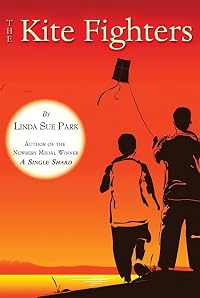
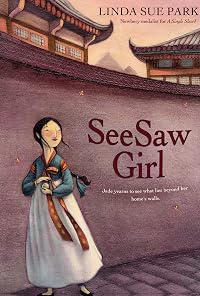
Linda Sue Park was born in Urbana, Illinois on March 25, 1960. She received a B.A. in English from Stanford University. After graduating, she worked as a public-relations writer for a major oil company for two years. She obtained advanced degrees in literature from Trinity College, Dublin in Ireland and from the University of London. Before show more becoming a full-time author, she held numerous jobs including working for an advertising agency, teaching English as a second language to college students, and working as a food journalist. Her first book, Seesaw Girl, was published in 1999. Her other books include The Kite Fighters, Tap Dancing on the Roof: Sijo (Poems), and A Single Shard, which won the 2002 Newbery Medal. She also wrote Storm Warning, which is the ninth book in the 39 Clues series. Her title A Long Walk to Water made the New York Times bestseller list. (Bowker Author Biography) show less
Some Editions
Awards and Honors
Awards
Distinctions
Work Relationships
Has as a student's study guide
Common Knowledge
- Original publication date
- 2002
- People/Characters
- Sun-hee (Keoko); Tae-Yul (Nobuo); Uncle; Abuji
- Important places
- Korea
- Important events
- Japanese occupation of Korea; World War II (1939 | 1945)
- Dedication
- To my children: Sean and Anna
and for my parents:
Eung Won/Nobuo/Ed
Joung Sook/Keoko/Susie - First words
- "It's only a rumor," Abuji said as I cleared the table.
- Last words
- (Click to show. Warning: May contain spoilers.)Then I handed Tae-yul the pencil and watched as he copied the letters in a neat row under mine.
- Publisher's editor
- Stevenson, Dinah
Classifications
Statistics
- Members
- 1,463
- Popularity
- 15,889
- Reviews
- 204
- Rating
- (4.02)
- Languages
- English
- Media
- Paper, Audiobook, Ebook
- ISBNs
- 20
- UPCs
- 1
- ASINs
- 8