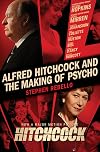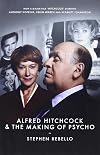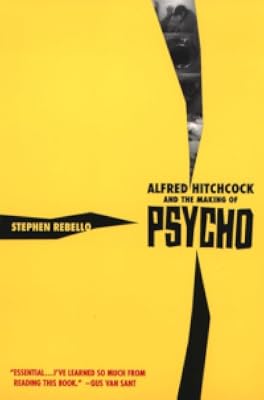
Alfred Hitchcock and the Making of Psycho
by Stephen Rebello
On This Page
Description
Here is a gripping, behind-the-scenes look inside the classic suspense shocker Psycho-and the creative genius who revolutionized filmmaking. First released in June 1960, Psycho altered the landscape of horror films forever. But just as compelling as the movie itself is the story behind it. Stephen Rebello brings to life the creation of one of Hollywood's most iconic films, from the story of Wisconsin murderer Ed Gein, the real-life inspiration for the character of Norman Bates, to show more Hitchcock's groundbreaking achievements in cinematography, sound, editing, and promotion. Packed with captivating insights from the film's stars, writers, and crew members, Hitchcock is a riveting and definitive history of a signature Hitchcock cinematic masterpiece. show lessTags
Recommendations

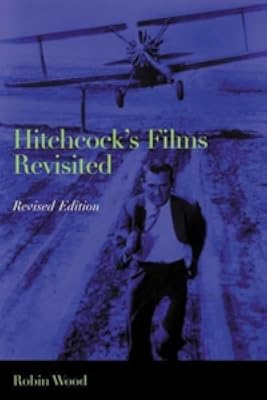

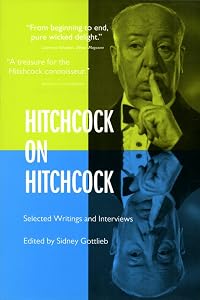
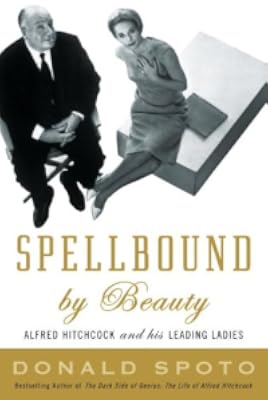











Member Reviews
Alfred Hitchcock and the Making of Psycho by Stephen Rebello opens with Ed Gein. Taxidermy, furniture and clothing made of human flesh and bone, cannibalism and run down cluttered homes. If you see any of these motifs in film you owe them to one real life monster named Ed Gein. And Psycho was the first to draw creative inspiration from his crimes. Ed Gein, though, makes Norman Bates look like a pussycat.
From the true crime this reissued book about the making of Psycho goes through all the steps that lead to the progenitor of the modern horror film. There's a chapter on Robert Bloch's novel and how it came to be purchased by Alfred Hitchcock.
Most of the book though is about the film itself. Of most interest to me was how the film was show more shot like an extended episode of Alfred Hitchcock Presents. Although there was speculation at the time that it might be used for the series, Rebello argues (quite effectively) that the approach was a cost saving measure and as well as a chance for Hitchcock to step away from the elaborate (and expensive) full color films he had been making at the time. A low budget also gave Hitchcock more creative freedom because no one was worried about where the money was going.
I read an egalley via NetGalley. show less
From the true crime this reissued book about the making of Psycho goes through all the steps that lead to the progenitor of the modern horror film. There's a chapter on Robert Bloch's novel and how it came to be purchased by Alfred Hitchcock.
Most of the book though is about the film itself. Of most interest to me was how the film was show more shot like an extended episode of Alfred Hitchcock Presents. Although there was speculation at the time that it might be used for the series, Rebello argues (quite effectively) that the approach was a cost saving measure and as well as a chance for Hitchcock to step away from the elaborate (and expensive) full color films he had been making at the time. A low budget also gave Hitchcock more creative freedom because no one was worried about where the money was going.
I read an egalley via NetGalley. show less
A terrific and readable history of the making of Psycho, Rebello's book is free from cant, jargon, theory, or outlandish stretching of his points. This is going to sound silly, but here goes: it's like someone said, "I wonder how Hitchcock made Psycho?" and Rebello said, "Read this." It's filled with concrete information, telling anecdotes, and workmanlike prose. Rebello is especially good on how Psycho--despite the reams and reams of money it made Hitchcock--proved to be a mixed blessing, at least for its director. Recommended.
I think I learned all that I wanted to know about how my favorite director made one of my favorite movies. Since Mr. Rebello writes as a journalist and a historian, not as an amateur psychologist, I also have to read what I didn’t know, such as his guesses about how Hitchcock’s repressions were played out on the screen, blah, blah. I especially enjoyed how Rebello treated the two most famous controversies: Robert Bloch, the author of the source novel, vs. Joe “Outer Limits” Stefano, the screenwriter, over who was most responsible for the film’s story; and the claims of title sequence director Saul Bass to deserve auteur credit for the shower scene. Rebello comes down on the sides of Bloch and Hitchcock, and I think he is show more right. Rebello also reminded how important the film was historically (providing the inspiration for more graphic horror movies in general and the template for slasher movies in particular). I read his account of how the film’s surprises shocked the first audiences with a little bitterness, since I had them spoiled for me a long time before I saw the film. show less
Before I started reading Stephen Rebello's "Alfred Hitchcock and the Making of Psycho," I had never seen an Alfred Hitchcock movie. There's no particular reason for that, I just never got around to it. Still, I find "behind the scenes" stories to be fascinating, and I knew "Psycho" was a rather important film in cinema history, so I thought the story behind it might be interesting - and it was. Quite interesting, in fact.
Rebollo's book was originally published in 1999, but recently there's been work underway to turn it into a movie (which I find kind of amusing - a movie about the making of a movie,) so it's been republished in hopes of gaining a new audience. I hope it does, because it's a very well written story and there are a lot of show more interesting tales about what went on behind the scenes.
The book begins by telling us about the Wisconsin serial killer Ed Gein, who was the inspiration for not only Norman Bates, but also Leatherface from "The Texas Chainsaw Murders" and Buffalo Bill from "The Silence of the Lambs." Robello tells us about why the story captivated Robert Bloch enough that he was inspired to write the novel "Psycho" and how Hitchcock managed to secretly purchase the film rights for a fairly paltry sum.
From there, it takes us through Hitchcock's difficulties in convincing the studio that the story was worth turning into a film, which led him to finance the project himself and handle the filming more like he did an episode of his eponymous TV show than a feature film. It also offers a detailed look at all of the stages of development, including casting, wardrobe, scriptwriting, scene creation - with special attention paid to the most infamous scene of all, the shower killing - Hitchcock's relationship with the studios and so on. It even examines the claim by the graphic artist that he was the one who directed the shower scene and not Hitchcock.
Robello has a very smooth writing style that makes the book a fast read, and he manages to get an incredible amount of information across in the process. The only real complaint I have with it is that he sometimes seems to jump around in the chronology of events, and occasionally I had to go back and re-read a bit to figure out where the bit I was reading fell into the timeline. I was, however, inspired to actually watch "Psycho" by the time I'd finished reading, and I think the book actually helped make the experience better, because where some of the more old-fashioned story-telling techniques that were in use in the 50's and 60's might have left me a bit flat, because I had a much better idea of the context of the times in which they were filmed and what Hitchcock was trying to do. This is a book I would recommend yo anyone interested in filmmaking, behind-the-scenes stories, biographies of famous people (as Robello spends a lot of time just telling us about Hitchcock himself) or are either Hitchcock fans or fans of the film. show less
Rebollo's book was originally published in 1999, but recently there's been work underway to turn it into a movie (which I find kind of amusing - a movie about the making of a movie,) so it's been republished in hopes of gaining a new audience. I hope it does, because it's a very well written story and there are a lot of show more interesting tales about what went on behind the scenes.
The book begins by telling us about the Wisconsin serial killer Ed Gein, who was the inspiration for not only Norman Bates, but also Leatherface from "The Texas Chainsaw Murders" and Buffalo Bill from "The Silence of the Lambs." Robello tells us about why the story captivated Robert Bloch enough that he was inspired to write the novel "Psycho" and how Hitchcock managed to secretly purchase the film rights for a fairly paltry sum.
From there, it takes us through Hitchcock's difficulties in convincing the studio that the story was worth turning into a film, which led him to finance the project himself and handle the filming more like he did an episode of his eponymous TV show than a feature film. It also offers a detailed look at all of the stages of development, including casting, wardrobe, scriptwriting, scene creation - with special attention paid to the most infamous scene of all, the shower killing - Hitchcock's relationship with the studios and so on. It even examines the claim by the graphic artist that he was the one who directed the shower scene and not Hitchcock.
Robello has a very smooth writing style that makes the book a fast read, and he manages to get an incredible amount of information across in the process. The only real complaint I have with it is that he sometimes seems to jump around in the chronology of events, and occasionally I had to go back and re-read a bit to figure out where the bit I was reading fell into the timeline. I was, however, inspired to actually watch "Psycho" by the time I'd finished reading, and I think the book actually helped make the experience better, because where some of the more old-fashioned story-telling techniques that were in use in the 50's and 60's might have left me a bit flat, because I had a much better idea of the context of the times in which they were filmed and what Hitchcock was trying to do. This is a book I would recommend yo anyone interested in filmmaking, behind-the-scenes stories, biographies of famous people (as Robello spends a lot of time just telling us about Hitchcock himself) or are either Hitchcock fans or fans of the film. show less
Horror and comedies films are the cash cows of Hollywood, the arena of cheap budgets, bad scripts and terrible actors. When Alfred Hitchcock selected to make Psycho, a financial killing was only one of his goals. Self-financing the film, he used his cheap TV production crew and cheap actors to innovate a genre and present a new form of American Gothic, about the horror lurking behind the clean facades of the American landscape, a similar venture to Vladimir Nabokov's Lolita.
Rebello's book offers a quick, genial look behind the scenes from the real life "inspiration" for the book to the screenplay, to the pre- and post-production, filming and marketing. Besides the iconic scenes and characters, the film's music and titles have entered show more public consciousness. The author also claims that Hitchcock's marketing campaign to let nobody enter after the start of the film changed moviegoers' habits. Apparently, prior to Psycho, entering and leaving during a film was customary, a practice unfortunately revived today in many multiplex movie theaters. Highly recommended. show less
Rebello's book offers a quick, genial look behind the scenes from the real life "inspiration" for the book to the screenplay, to the pre- and post-production, filming and marketing. Besides the iconic scenes and characters, the film's music and titles have entered show more public consciousness. The author also claims that Hitchcock's marketing campaign to let nobody enter after the start of the film changed moviegoers' habits. Apparently, prior to Psycho, entering and leaving during a film was customary, a practice unfortunately revived today in many multiplex movie theaters. Highly recommended. show less
ALFRED HITCHCOCK and the making of PSYCHO is an extremely interesting account of the machinations behind the genius of the man who created the movie Psycho. The story is informative and tells us those "secret" tidbits of information that make these kinds of non-fiction stories successful. Stephen Rebello takes us on a walk behind the scenes and into the minds of the people responsible for the cult classic movie, "Psycho".
The making of Psycho takes the reader to the root of the "inspiration" of the movie and shares with us who Robert Bloch is and how Alfred Hitchcock came to owning the rights to the story. We learn who Hitchcock wanted for his actors, such as, he wanted a "famous" actress to play the part of Marion Crane and after show more several considerations, he chose Janet Leigh, we are given glances at the cut scenes and the reasons how many scenes were deleted, the explanation behind the movie theater slogan, "No one is allowed to enter when the film has begun" and we are also given an in-depth look into the infamous shower scene, from different angles from the people who were present in the filming.
I enjoyed how the book read and the presentation was very informative, as well, the insights and side stories were delivered in such a way, that I found myself being lead to doing my own research. I didn't know about the cross-references of Norman Bates to Leatherface of the "Texas Chainsaw Massacre" and Buffalo Bill of the "Silence of the Lambs" fame. I would suggest this book to ALL fans of the genre, film students and anyone who enjoys good non-fiction reads, however, those weak of constitution should stay away from its pages, the chapter about the serial killer with whom Norman Bates is loosely based upon is quite graphic in nature, all in all, it was a great read.
SYNOPSIS:
Stephen Rebello has talked and interviewed virtually every surviving cast and crew member and has uncovered the hows and whys behind the movie's fascinating history. Everything about Psycho is here, in this book, in all its glorious detail. show less
The making of Psycho takes the reader to the root of the "inspiration" of the movie and shares with us who Robert Bloch is and how Alfred Hitchcock came to owning the rights to the story. We learn who Hitchcock wanted for his actors, such as, he wanted a "famous" actress to play the part of Marion Crane and after show more several considerations, he chose Janet Leigh, we are given glances at the cut scenes and the reasons how many scenes were deleted, the explanation behind the movie theater slogan, "No one is allowed to enter when the film has begun" and we are also given an in-depth look into the infamous shower scene, from different angles from the people who were present in the filming.
I enjoyed how the book read and the presentation was very informative, as well, the insights and side stories were delivered in such a way, that I found myself being lead to doing my own research. I didn't know about the cross-references of Norman Bates to Leatherface of the "Texas Chainsaw Massacre" and Buffalo Bill of the "Silence of the Lambs" fame. I would suggest this book to ALL fans of the genre, film students and anyone who enjoys good non-fiction reads, however, those weak of constitution should stay away from its pages, the chapter about the serial killer with whom Norman Bates is loosely based upon is quite graphic in nature, all in all, it was a great read.
SYNOPSIS:
Stephen Rebello has talked and interviewed virtually every surviving cast and crew member and has uncovered the hows and whys behind the movie's fascinating history. Everything about Psycho is here, in this book, in all its glorious detail. show less
Interesting story, told in the worst possible way. It's obvious Mr. Rebello researched his material carefully and thoroughly. But reading his book is like listening to a guy on an adjacent bar stool on a talking jag.
Members
- Recently Added By
Author Information

11 Works 1,001 Members
Stephen Rebello is the author of the award-winning Reel Art: Great Posters From the Golden Age of the Silver Screen, Bad Movies We Love, and three books on, the art and creation of contemporary Disney animated titles. A Playboy contributing editor, his frequently-quoted articles, on filmmakers have also appeared in GO, More, Vibe, and many other show more magazines. He has written screenplays and teleplays for such production companies as Disney and is currently at work on several film arid television projects. He lives in Los Angeles, California. show less
Some Editions
Work Relationships
Has the adaptation
Is a supplement to
Common Knowledge
- Canonical title
- Alfred Hitchcock and the Making of Psycho
- Original publication date
- 1990-04
- People/Characters
- Alfred Hitchcock; Robert Bloch; Ed Gein; Janet Leigh; Vera Miles; Patricia Hitchcock (show all 8); Anthony Perkins; Lew Wasserman
- Important places
- Phoenix, Arizona, USA
- Related movies
- Hitchcock (2012 | IMDb); Psycho (1960 | IMDb)
Classifications
- Genres
- Nonfiction, General Nonfiction, Biography & Memoir
- DDC/MDS
- 791.43 — Arts & recreation Recreation, sports, and performing arts Movies, TV, Video Motion pictures, radio, television, podcasting Motion pictures
- LCC
- PN1997 .P793 .R43 — Language and Literature Literature (General) Literature (General) Drama Motion pictures Plays, scenarios, etc.
- BISAC
Statistics
- Members
- 306
- Popularity
- 104,397
- Reviews
- 8
- Rating
- (3.82)
- Languages
- 6 — Chinese, English, French, German, Italian, Portuguese
- Media
- Paper, Audiobook, Ebook
- ISBNs
- 24
- ASINs
- 5