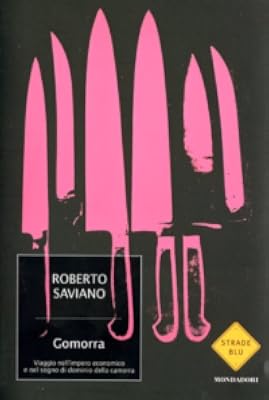
Gomorrah: A Personal Journey Into The Violent International Empire of Naples' Organized Crime System
by Roberto Saviano
On This Page
Description
A major bestseller in Italy, this is a heroic young man's impassioned account of the decline of Naples under the rule of the Camorra, an organized crime network with a large international reach and stakes in construction, high fashion, illicit drugs, and toxic-waste disposal. Known by insiders as "the System," the Camorra affects cities and villages along the Neapolitan coast, and is the deciding factor in why Campania, for instance, has the highest murder rate in all of Europe and why show more cancer levels there have skyrocketed in recent years. Author Saviano, who saw his first murder at age 14, worked under cover to investigate the Camorra's control of Chinese factories contracted to manufacture fashion goods, legally and illegally, for distribution around the world, and relates how the abusive handling of toxic waste is causing devastating pollution not only for Naples but also China and Somalia.--From publisher description. show lessTags
Recommendations
























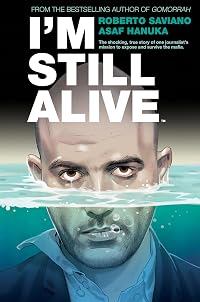
Member Recommendations
supersidvicious Un libro introvabile nelle librerie italiane (censurato ma scaricabile gratuitamente dal web, vedi la mia recensione del libro) su De Magistris e l’oscura Catanzaro, la corruzione in Calabria, ’ndrangheta, politica e massoneria deviata. Attualissimo!


Member Reviews
Its hard to see how this brave, lucid and heroic book wouldnt' get 5 stars from any reviewer. Even better, the movie version, whilst having only tenuous links with the book, is brilliant in its own right. Saviano is a journalist of an unusual type these days - prepared to get down and dirty (in this case as a manual labourer) rather than rely on press releases, gossip and twitter. He has a no nonsense style; he points the finger, backs it up with facts, and adds local colour for illumination. He can surely never live in Napoli again and in many ways this is his triumph. Should be compulsory reading not just for its exposure of of the Camorra but more disturbingly for the way it has blended into legal capitalism. In many ways, Saviano show more argues, capitalism cannot exist without the Camorra and its ilk. Soberingly he is probably right show less
I have always categorized the italian mob in my head as something that doesn't really exist any more and only lives on in movies and television. Boy was I wrong! In this wonderful non-fiction book Roberto Saviano details the many tentacles of the Cammorah, the italian mafia that is centered in the southern part of Italy. Saviano describes the manner in which the crime syndicates have worked their way into many sectors of legitimate enterprise, such as construction, waste management and the garment industry. Because Saviano, who is a native of the area he is writing about, has a philosophy degree in addition to his career as a journalist, he writes not only about the facts of the criminal gangs, but also what living in such a society show more does to the souls of the people who live there. I found this book to be a sobering antidote to violence portrayed as glamorous, as it is in so many facets of popular culture. show less
This is a study of organized crime in southern Italy, a.k.a. the Camorra, which is much bigger than the Sicilian Mafia and also somewhat less organized. And it does contain facts about the Camorra; but if you want to be informed in any methodical way—like about how they got to where they are now, or whether recent prosecutions of them have made a difference, or who the author is (other than a guy who grew up in their territory) or how he managed to investigate so much of this up close—you'll have to look elsewhere. It's not that kind of book.
Saviano isn't mainly trying to inform you, and he's not trying to entertain you (although in the few sections where he pauses for a while to give a ground-level view of one person's story, it's show more very involving; those are basically the parts that made it into the movie, which is also good). He's trying to overwhelm you. After an opening chapter that's in a more familiar style of first-person reportage and keeps the story at an easily understandable level, the book quickly escalates, rushing through one story after another or within another, and alternating between banal scams, long lists of names, and insane atrocities, so you never know what to expect; the overall impression is that it doesn't really matter where he starts, this thing is just too big and chaotic to describe rationally.
The one constant is Saviano's anger, as it gradually becomes clear how much of a personal thing this is for him: he hates these people, not just for terrorizing and exploiting everyone in his home region of Campania, but for contributing to a general acceptance of corruption throughout Italy. One guy claims that the illegal waste management industry, which basically just throws toxic waste all over Campania, was responsible for boosting Italy's economy enough to get into the European Union, so everyone should be grateful; of course it happens to be that guy's own industry, but the implication is that lots of people think that way and they're not all in the Camorra. (The rest of the world isn't exempt, as the book often points out how legitimate companies and governments elsewhere have relied on the Camorra's business ventures.) When Saviano appears in the story, he doesn't depict himself as an intrepid reporter, just someone who's so dazed and revulsed by everything he sees that he has no idea what to do but keep writing—except when at one point he decides to pee in a mob boss's abandoned villa.
But he doesn't think there's anything uniquely evil about the clans; this is just what happens when legitimate systems aren't working well and people get used to the idea that ethics will stop you from getting anywhere. A recurring theme of the book is that the Camorra doesn't have a code or a philosophy or a strategy (or really even a hierarchy, in the sense of any stable structure; bosses don't last long, and the aspiring bosses don't expect to). It's just a lot of people who want more stuff and don't care about other people. It's a disease of capitalism—not that something similar can’t arise within other systems, but this is what we're working with.
The prose style isn't really my cup of tea (that could be partly the translation, but also Saviano rarely uses one simile when five would do) and reading it is a very uneven and exhausting experience. But if you don't mind being a little bored at some times and horrified at other times, and you want to know more about parts of Italian culture that aren't well known in the US—not just the criminal parts, but what it can be like for people simply trying to get by—it's quite a thing. show less
Saviano isn't mainly trying to inform you, and he's not trying to entertain you (although in the few sections where he pauses for a while to give a ground-level view of one person's story, it's show more very involving; those are basically the parts that made it into the movie, which is also good). He's trying to overwhelm you. After an opening chapter that's in a more familiar style of first-person reportage and keeps the story at an easily understandable level, the book quickly escalates, rushing through one story after another or within another, and alternating between banal scams, long lists of names, and insane atrocities, so you never know what to expect; the overall impression is that it doesn't really matter where he starts, this thing is just too big and chaotic to describe rationally.
The one constant is Saviano's anger, as it gradually becomes clear how much of a personal thing this is for him: he hates these people, not just for terrorizing and exploiting everyone in his home region of Campania, but for contributing to a general acceptance of corruption throughout Italy. One guy claims that the illegal waste management industry, which basically just throws toxic waste all over Campania, was responsible for boosting Italy's economy enough to get into the European Union, so everyone should be grateful; of course it happens to be that guy's own industry, but the implication is that lots of people think that way and they're not all in the Camorra. (The rest of the world isn't exempt, as the book often points out how legitimate companies and governments elsewhere have relied on the Camorra's business ventures.) When Saviano appears in the story, he doesn't depict himself as an intrepid reporter, just someone who's so dazed and revulsed by everything he sees that he has no idea what to do but keep writing—except when at one point he decides to pee in a mob boss's abandoned villa.
But he doesn't think there's anything uniquely evil about the clans; this is just what happens when legitimate systems aren't working well and people get used to the idea that ethics will stop you from getting anywhere. A recurring theme of the book is that the Camorra doesn't have a code or a philosophy or a strategy (or really even a hierarchy, in the sense of any stable structure; bosses don't last long, and the aspiring bosses don't expect to). It's just a lot of people who want more stuff and don't care about other people. It's a disease of capitalism—not that something similar can’t arise within other systems, but this is what we're working with.
The prose style isn't really my cup of tea (that could be partly the translation, but also Saviano rarely uses one simile when five would do) and reading it is a very uneven and exhausting experience. But if you don't mind being a little bored at some times and horrified at other times, and you want to know more about parts of Italian culture that aren't well known in the US—not just the criminal parts, but what it can be like for people simply trying to get by—it's quite a thing. show less
When Gomorrah was firt published, it was risky investigative journalism at its finest; Saviano revealed to Italians and to the wider world the nature and extent of the Comorra's domination of Naples, Campania and beyond.
Even the best journalism loses its immediacy over time, but after 10 years and from half a world away, Gomorrah is still a riveting read. Saviano recounts a catalogue of vicious crimes and ongoing feuds that turned Campania into a bloodbath, pretty much the murder capital of the world. As well as their drug and extortion actvities, Saviano explains how the bosses extended their tentacles into the more legitimate business world, coming to dominate the garment and construction industries, waste management and others. Their show more ruthlessness enables them to spread beyond Italy to Eastern Europe, China and the UK.
The book starts off fairly matter-of-fact, but you gradually sense the author's mounting rage against the system,spilling out in a chapter where he points his finger and sets his face against the clans. They took him seriously - he's needed government protection since publication - and we should too. show less
Even the best journalism loses its immediacy over time, but after 10 years and from half a world away, Gomorrah is still a riveting read. Saviano recounts a catalogue of vicious crimes and ongoing feuds that turned Campania into a bloodbath, pretty much the murder capital of the world. As well as their drug and extortion actvities, Saviano explains how the bosses extended their tentacles into the more legitimate business world, coming to dominate the garment and construction industries, waste management and others. Their show more ruthlessness enables them to spread beyond Italy to Eastern Europe, China and the UK.
The book starts off fairly matter-of-fact, but you gradually sense the author's mounting rage against the system,spilling out in a chapter where he points his finger and sets his face against the clans. They took him seriously - he's needed government protection since publication - and we should too. show less
Gomorrah is Roberto Saviano’s nel mezzo del cammin de nostra vita into the bowels of the Neapolitan criminal System familiarly known as the Camorra and often contrasted with the Sicilian Mafia. The headquarters of the System is Naples and its environs, with international, ‘global’ enterprise links to other European and Asian cities with especial interest in the fashion industry, but with continuing control of illicit drug trafficking, extortion, and racketeering in Naples and throughout Europe.
‘The Port’ (Chapter 1) opens with the scene of a docking crane off-loading a ship’s container that accidently spills its contents of frozen human bodies, which “looked like mannequins [. . .] men, women, even a few children [. . .] show more frozen, stacked one on top of another, packed like sardines.” Chinese workers who had paid a percentage of their wages to be returned post mortem to be buried in their homeland. “Everything that exists [Saviano as narrator says] passes through [. . .] the port of Naples.” The dynamics of markets, capital, and consumer goods on a global scale coupled with greed and treachery drive the risk takers to bypass taxes and tariffs “the deadwood of profit” for more money, merchandise, and ultimate mercantile power.
“Angelina Jolie” (Chapter 2) is a portrait of a Neapolitan sweat shop where illicit ‘designer-labeled’ knock-off garments are assembled by low-paid yet skilled workers. Pasquale, adept worker with fabrics, also teaches his competitors in China by applying his craft in front of a camera (“take great are with the seams [which have] to be light but not nonexistent”) which images and simultaneous translation into Chinese are transmitted to China’s own sweat shops. Pasquale, with the face of an old man “constantly buried in fabric” knew also the ins and outs of clothing design of pants, jackets, dresses, even the exact number of washings a fabric could undergo before sagging. One evening while surfing TV channels, Pasquale froze at the image of actress Jolie at the Oscars dressed in a gorgeous white suit. He still remembered the measurements, the form of its neckline. Pasquale had made the garment to be shipped to America, as his suppliers had told him, but he was stunned and could say nothing, a “satisfaction that went uncelebrated.” Pasquale left the garment industry to drive trucks for one of the Camorra ‘families’. For our narrator Pasquale’s anonymous experience in the new global economics “seems an amended chapter of Marx’s Capital, a paragraph added to Adam Smith’s The Wealth of Nations, a new sentence in John Maynard Keynes’s General Theory of Employment, Interest and Money, a note in Max Weber’s The Protestant Ethic and the Spirit of Capitalism.”
After two long reportorial chapters on the activities of The System so-called and the decades-long Secondigliano War which since 1979 has resulted in some 3,600 murdered victims of the Camorra: “more than the Sicilian Mafia, more than the ‘Ndrangheta, more that the Russian Mafia, more than the Albanian families, more than the total number of deaths by the ETA in Spain and the IRA in Ireland [. . . .], is the fifth chapter ‘Women’ devoted to those female leaders, usually widows of murdered dons who have assumed the mantle of leadership among the Camorrista in recent years, to include one Anna Mazza, brain behind the Moccia clan for two decades, or Immacolata Capone, or Erminia Giulano. “Women [our narrator tells us] are better able to confront crime as if it were only momentary, or someone’s opinion, or a step one takes before quickly moving on. Clan women demonstrate this very clearly. They feel offended and vilified when they are called Camorristi or criminals, as if ‘criminal’ were merely a judgment of an action, not an objective way of behaving. In fact, contrary to the men, so far not one female Camorra boss has ever repented. Not one.” (p. 150)
It is in this chapter devoted to the women of the System that Saviano’s Gomorrah reaches its profound center with its beatific vision of the fourteen-year old Annalisa Durante (the original given name of Dante), killed in a cross fire shootout between warring Secondigliano factions. Annalisa is guilty only of having been born in Naples and with ambition to be with her friends listening to music and to someday marry and raise a family. Amidst grieving families, a church filled to capacity for her funeral mass, police and carabinieri, reporters and film crews, Annalisa’s white casket is carried from the church to its final resting place. En route a classmate “calls her cell phone and the ringing from the coffin “is the new requiem. Musical tones, a sweet melody, No one answers.” (p. 156) In the terraced Purgatorio, Dante, at the summit meets for the first time Beatrice, whom he loved once when both were children on earth. No longer with his guide Virgil, who as a non-Christian must remain in Limbo, it will be Beatrice who leads Dante toward his vision of Paradise.
Part Two of Gomorrah comprises six chapters each of which exhibits an aspect of the criminal System: the technology of war, ‘Kalashnikov’; the construction industry, ‘Concrete’; imagery in popular culture, ‘Hollywood’; the parish priest as hero and martyr, (and where the reader first finds the Camorra and Naples compared to the biblical Sodom and Gomorrah (Genesis 19:24-29, KJV)), ‘Don Peppino Diana’; international expansion, ‘Aberdeen, Mondragone’; and the corrupt economy of waste management, ‘Land of Fires’. Where Part One of Saviano’s novel is a descent into the underworld of crime in Naples and the System or Camorra, Part Two describes attempted purgation of the manifold underpinnings of crime in the activities of the people who are called upon to build a new conscience of ethical solidarity in their daily lives. In the end, Saviano as narrator ponders if it is even possible to withstand the power of the System. show less
‘The Port’ (Chapter 1) opens with the scene of a docking crane off-loading a ship’s container that accidently spills its contents of frozen human bodies, which “looked like mannequins [. . .] men, women, even a few children [. . .] show more frozen, stacked one on top of another, packed like sardines.” Chinese workers who had paid a percentage of their wages to be returned post mortem to be buried in their homeland. “Everything that exists [Saviano as narrator says] passes through [. . .] the port of Naples.” The dynamics of markets, capital, and consumer goods on a global scale coupled with greed and treachery drive the risk takers to bypass taxes and tariffs “the deadwood of profit” for more money, merchandise, and ultimate mercantile power.
“Angelina Jolie” (Chapter 2) is a portrait of a Neapolitan sweat shop where illicit ‘designer-labeled’ knock-off garments are assembled by low-paid yet skilled workers. Pasquale, adept worker with fabrics, also teaches his competitors in China by applying his craft in front of a camera (“take great are with the seams [which have] to be light but not nonexistent”) which images and simultaneous translation into Chinese are transmitted to China’s own sweat shops. Pasquale, with the face of an old man “constantly buried in fabric” knew also the ins and outs of clothing design of pants, jackets, dresses, even the exact number of washings a fabric could undergo before sagging. One evening while surfing TV channels, Pasquale froze at the image of actress Jolie at the Oscars dressed in a gorgeous white suit. He still remembered the measurements, the form of its neckline. Pasquale had made the garment to be shipped to America, as his suppliers had told him, but he was stunned and could say nothing, a “satisfaction that went uncelebrated.” Pasquale left the garment industry to drive trucks for one of the Camorra ‘families’. For our narrator Pasquale’s anonymous experience in the new global economics “seems an amended chapter of Marx’s Capital, a paragraph added to Adam Smith’s The Wealth of Nations, a new sentence in John Maynard Keynes’s General Theory of Employment, Interest and Money, a note in Max Weber’s The Protestant Ethic and the Spirit of Capitalism.”
After two long reportorial chapters on the activities of The System so-called and the decades-long Secondigliano War which since 1979 has resulted in some 3,600 murdered victims of the Camorra: “more than the Sicilian Mafia, more than the ‘Ndrangheta, more that the Russian Mafia, more than the Albanian families, more than the total number of deaths by the ETA in Spain and the IRA in Ireland [. . . .], is the fifth chapter ‘Women’ devoted to those female leaders, usually widows of murdered dons who have assumed the mantle of leadership among the Camorrista in recent years, to include one Anna Mazza, brain behind the Moccia clan for two decades, or Immacolata Capone, or Erminia Giulano. “Women [our narrator tells us] are better able to confront crime as if it were only momentary, or someone’s opinion, or a step one takes before quickly moving on. Clan women demonstrate this very clearly. They feel offended and vilified when they are called Camorristi or criminals, as if ‘criminal’ were merely a judgment of an action, not an objective way of behaving. In fact, contrary to the men, so far not one female Camorra boss has ever repented. Not one.” (p. 150)
It is in this chapter devoted to the women of the System that Saviano’s Gomorrah reaches its profound center with its beatific vision of the fourteen-year old Annalisa Durante (the original given name of Dante), killed in a cross fire shootout between warring Secondigliano factions. Annalisa is guilty only of having been born in Naples and with ambition to be with her friends listening to music and to someday marry and raise a family. Amidst grieving families, a church filled to capacity for her funeral mass, police and carabinieri, reporters and film crews, Annalisa’s white casket is carried from the church to its final resting place. En route a classmate “calls her cell phone and the ringing from the coffin “is the new requiem. Musical tones, a sweet melody, No one answers.” (p. 156) In the terraced Purgatorio, Dante, at the summit meets for the first time Beatrice, whom he loved once when both were children on earth. No longer with his guide Virgil, who as a non-Christian must remain in Limbo, it will be Beatrice who leads Dante toward his vision of Paradise.
Part Two of Gomorrah comprises six chapters each of which exhibits an aspect of the criminal System: the technology of war, ‘Kalashnikov’; the construction industry, ‘Concrete’; imagery in popular culture, ‘Hollywood’; the parish priest as hero and martyr, (and where the reader first finds the Camorra and Naples compared to the biblical Sodom and Gomorrah (Genesis 19:24-29, KJV)), ‘Don Peppino Diana’; international expansion, ‘Aberdeen, Mondragone’; and the corrupt economy of waste management, ‘Land of Fires’. Where Part One of Saviano’s novel is a descent into the underworld of crime in Naples and the System or Camorra, Part Two describes attempted purgation of the manifold underpinnings of crime in the activities of the people who are called upon to build a new conscience of ethical solidarity in their daily lives. In the end, Saviano as narrator ponders if it is even possible to withstand the power of the System. show less
 This review was written for LibraryThing Early Reviewers.
Amazing reportage, full of fascinating set pieces about aspects of the seemingly inescapable tentacles of economic corruption and its attendant environmental devastation in the Campania region of Italy. I'd never heard of the Camorra, and learning of their death grip on huge strands of the global economy is disheartening--but the courage of Saviano's reporting about the cancer eating away his home region is unforgettable.
Il libro è bello, agghiacciante. La voce di S. è quella che serve per ascoltare queste storie, questo mondo cosi' marziano, questo pezzo d'Italia che vorresti gettare a mare, o abbracciare. Questo pezzo di Italia che comunque anche a mare galleggerà, come da anni sta facendo, sulle proprie e altrui miserie.Il testo serve per tenerla a distanza, questa terra violenta, per potersi sentire fortunati del proprio domicilio, per sentire narrare che il futuro, in Campania, è impossibile: al massimo, la fuga. Non si può sconfiggere una cultura così selvaggia, un modo di essere che affonda le sue radici nell'ignoranza primordiale, non mediata da civiltà o società.
Tuttavia, come cantava De Andrè, per quanto noi ci crediamo assolti, show more siamo lo stesso coinvolti. Questa barbarie siamo noi allo stato puro, senza filtri.
Là si uccide a mani nude, con cattiveria inutile e impunità, data dal potere, dalle armi, dal denaro. Gli stessi mezzi che in altri luoghi geografici permettono di essere eletti a rappresentare una ‘idea’ di democrazia. Gli obiettivi, le pulsioni e le intelligenze sono le medesime: cambiano solo le modalità. S. ha usato la sua vita per raccontarlo, sapendo benissimo che il sistema ha la memoria lunga, ipotecando così il resto del suo futuro. Bisognerebbe ricordarselo, ogni tanto. show less
Là si uccide a mani nude, con cattiveria inutile e impunità, data dal potere, dalle armi, dal denaro. Gli stessi mezzi che in altri luoghi geografici permettono di essere eletti a rappresentare una ‘idea’ di democrazia. Gli obiettivi, le pulsioni e le intelligenze sono le medesime: cambiano solo le modalità. S. ha usato la sua vita per raccontarlo, sapendo benissimo che il sistema ha la memoria lunga, ipotecando così il resto del suo futuro. Bisognerebbe ricordarselo, ogni tanto. show less
Members
- Recently Added By
Published Reviews
ThingScore 100
added by jimsnopes
Lists

Top Five Books of 2015
811 works; 241 members

Non-Fiction Worth Reading
1,015 works; 255 members

Best Political Fiction
92 works; 12 members

Books Set in Italy
167 works; 19 members

Biggest Disappointments
606 works; 168 members

Italian Literature
558 works; 42 members

Non-Fiction
68 works; 1 member
Author Information

65+ Works 4,783 Members
Some Editions
Awards and Honors
Awards
Distinctions
Series
Belongs to Publisher Series
Work Relationships
Has the adaptation
Common Knowledge
- Canonical title
- Gomorrah: A Personal Journey Into The Violent International Empire of Naples' Organized Crime System
- Original title
- Gomorra: viaggio nell'impero economico e nel sogno di dominio della camorra
- Original publication date
- 2006
- People/Characters
- Roberto Saviano; Gennaro Licciardi; Pietro Licciardi; Vincenzo Esposito; Paolo Di Lauro; Cosimo Di Lauro (show all 16); Gelsomina Verde (Mina); Gennaro Marino McKay; Carmela Attrice; Anna Mazza; Salvatore Guiliano; Annalisa Durante; Mikhail Kalashnikov; Antonio Bardellino; Don Peppino Diana; Augusto La Torre
- Important places
- Naples, Campania, Italy; Casal di Principe, Italy; Aberdeen, Scotland, UK; Mondragone, Italy
- Related movies
- Gomorra (2008 | IMDb); Gomorrah (2008); Gomorra: La serie (2014 | IMDb)
- Epigraph
- Comprehension. . .means the unpremeditated, attentive facing up to, and resisting of, reality—whatever it may be.
- Hannah Arendt
Κατανόησε τι σημαίνει φρικαλεότητα, μην αρνείσαι την ύπαρξη της, αντιμετώπισε χωτίς προκατα
λήψεις την πραγματικότητα.
Winners have no shame, no matter how they win.
- Niccolo Machiavelli
Εκείνοι που νικούν με όποιο τρόπο κι αν νικούν, δε νιώθουν ποτέ ντροπή. ΝΙΚΚΟΛΟ ΜΑΚΙΑΒΕΛΛΙ
People are worms and they have to stay worms.
- from a wiretapped conversation
Οι άνθρωποι είναι σκουλήκια και πρέπει να παραμείνουν σκουλήκια. Από μια τηλεφωνική υποκλοπή.
The world is yours.
- Scarface, 1983
Ο κόσμος είναι δικός σου. Ο σημαδεμένος 1983 - Dedication
- To S., damn it
Σε σένα Σ., ανάθεμα - First words
- Το κοντέϊνερ ταλαντευοταν καθώς ο γερανός το μετέφερε στο πλοίο.
The container swayed as the crane hoisted it onto the ship. - Quotations
- Το να επενδύσεις μια σύνταξη των εξακοσίων ευρώ στην κόκα σημαίνει να πάρεις πίσω ύστερα από ένα μήνα τα διπλά. Οι φατρίες τ... (show all)ης Καμόρρα είχαν κατορθώσει να διευρύνουν τον κύκλο των επενδυτικών τους κεφαλαίων , εμπλέκοντας ακόμη και μικροαστική τάξη που απείχε με από εγκληματικούς μηχανισμούς αλλά είχε κουραστεί να εμποιοστεύεται τα αγαθά της στην τράπεζα.
Αυτή είναι η νέα εποχή των εγκληματικών οργανώσεων. Αυτή είναι η νέα ισχύς της οικονομίας: να υπερισχύεις με οποιοδήποτε κό... (show all)στος.
Η εγκληματικότητα δεν είναι εξουσία, αλλά μία από τις εξουσίες.
Προσπαθούσα να καταλάβω αν τα ανθρώπινα συναισθήματα ήταν σε θέση να αντιμετωπίσουν μια τόσο μεγάλη εξουσία. - Last words
- (Click to show. Warning: May contain spoilers.)I wanted to howl from deep down in my gut, my throat exploding with all the voice left in me: "Hey, you bastards, I'm still here!"
(Click to show. Warning: May contain spoilers.)Ήθελα να φωνάξω, να ξεσκίσω τους πνέυμονές μου, να διαλύσω την τραχεία μου όπως ο Πεταλούδας, και με όλη τη δύναμή του στομαχιού μου, με όση φωνή έβγαινε ακόμη από το λαιμό μου, να ουρλιάξω: "Καταραμένοι μπάσταρδοι, ε'ιμαι ακόμη ζωντανός!" - Original language
- Italiano; Italian
- Canonical DDC/MDS
- 364.1060945
- Canonical LCC
- HV6453.I83
Classifications
- Genres
- General Nonfiction, Nonfiction, History
- DDC/MDS
- 364.1060945 — Society, government, & culture Social problems and social services Crime Criminal offenses Organized Crime Standard subdivisions History, geographic treatment, biography
- LCC
- HV6453 .I83 — Social sciences Social pathology. Social and public welfare. Criminology Social pathology. Social and public welfare. Criminology Crimes and offenses
- BISAC
Statistics
- Members
- 3,158
- Popularity
- 5,504
- Reviews
- 95
- Rating
- (3.63)
- Languages
- 24 — Arabic, Catalan, Czech, Danish, Dutch, English, Estonian, Finnish, French, German, Greek, Hungarian, Italian, Lithuanian, Norwegian (Bokmål), Polish, Portuguese, Romanian, Russian, Serbian, Slovak, Slovenian, Spanish, Swedish
- Media
- Paper, Audiobook, Ebook
- ISBNs
- 99
- ASINs
- 19
