
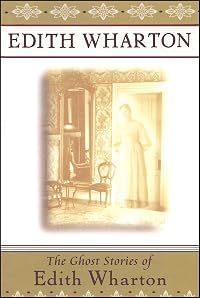
The Ghost Stories of Edith Wharton
by Edith Wharton
On This Page
Description
Edith Wharton was one of the most successful authors of the early 20th century. In 1921, she became the first woman to ever receive the Pulitzer Prize for her novel The Age of Innocence. Aside from her literary fiction, Wharton was widely respected as a writer of ghost stories. Collected here are her best tales, including 'The Duchess at Prayer', 'The Triumph of the Night', 'A Journey and many more'.Tags
Recommendations













Member Recommendations
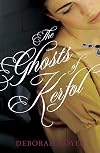
legxleg The Ghosts of Kerfol is based upon one of Edith Wharton's classic ghost stories, Kerfol.
Member Reviews
This collection is the perfect marriage of Wharton’s keen sense of human pain and suffering and the traditional gothic or supernatural tale.
The first short, The Lady’s Maid’s Bell, focuses on the malevolent spirit of a maid who seems intent on harm to her former mistress. The Eyes, chronicles a sad, lonely man, haunted by visions of his own aged and broken visage whenever he secludes himself from human contact. And Kerfol follows a vengeful pack of ghost dogs, bent on the destruction of the jealous owner who murdered them over the affections of his wife.
Some of the stories end a bit abruptly and frustratingly vague. But such endings light the imagination’s fuse. Wharton’s weaves these ghost stories with the same dexterity show more regarding human weakness and suppressed inner pain that her classic novels of society exhibit. The resulting characters should quicken any reader’s own inner demons.
Bottom Line: Wharton at her best in a genre she is not known for.
4 ½ bones!!!!! show less
The first short, The Lady’s Maid’s Bell, focuses on the malevolent spirit of a maid who seems intent on harm to her former mistress. The Eyes, chronicles a sad, lonely man, haunted by visions of his own aged and broken visage whenever he secludes himself from human contact. And Kerfol follows a vengeful pack of ghost dogs, bent on the destruction of the jealous owner who murdered them over the affections of his wife.
Some of the stories end a bit abruptly and frustratingly vague. But such endings light the imagination’s fuse. Wharton’s weaves these ghost stories with the same dexterity show more regarding human weakness and suppressed inner pain that her classic novels of society exhibit. The resulting characters should quicken any reader’s own inner demons.
Bottom Line: Wharton at her best in a genre she is not known for.
4 ½ bones!!!!! show less
Excellent stories by Edith Wharton–most of them are ghost stories or feature other supernatural events but a few are more realistic, although they tend to have an uncanny or hallucinatory atmosphere. Wharton’s dense prose is a highlight and made all the stories enjoyable – there weren’t really any bad ones, although “The Triumph of Night” seemed longer than necessary and “The Fulness of Life” was a somewhat strange way of addressing her unsatisfactory relationship with her husband.
Wharton tends to hint at things rather than outright showing them, especially in the first story, “The Lady’s Maid’s Bell”. This one is a classic haunted house story, as a new maid in an isolated country house sees her deceased show more predecessor and tries to decipher her messages. I have to admit that this one had me confused–I read it a couple times and then took to the Internet to see what everyone else thought of it. This story, along with “Kerfol” and “The Duchess at Prayer”, deals with adultery, and Wharton is highly sympathetic to possibly wayward wives. She shows the isolation and unhappiness of the wives, who have to endure their husbands leaving them for long periods of time (likely cheating themselves), and some relationships that cross over into abuse. Adultery on the male side is also a theme in “Bewitched” and “Pomegranate Seed”, although the supernatural events make these rather strange stories. Some of the other stories deal with the sad lot of various women–”Miss Mary Pask” is a lonely unmarried woman who is treated as an afterthought by her sister (this one managed to surprise me), “The Looking Glass” features an aging woman who becomes desperate as she loses her beauty, and “All Souls” is about an active, no-nonsense widow who has an eerie experience in her isolated house when she finds herself all alone. "Mr Jones" is another haunted house story, with the new owner of the house investigating the past and finding another horrible marriage. Even happy marriages are no protection: “Afterward” has a happily married woman moving to her dream house with her husband; she never pays attention to his business concerns, and eventually, some of his actions come to haunt them. Highly recommended. show less
Wharton tends to hint at things rather than outright showing them, especially in the first story, “The Lady’s Maid’s Bell”. This one is a classic haunted house story, as a new maid in an isolated country house sees her deceased show more predecessor and tries to decipher her messages. I have to admit that this one had me confused–I read it a couple times and then took to the Internet to see what everyone else thought of it. This story, along with “Kerfol” and “The Duchess at Prayer”, deals with adultery, and Wharton is highly sympathetic to possibly wayward wives. She shows the isolation and unhappiness of the wives, who have to endure their husbands leaving them for long periods of time (likely cheating themselves), and some relationships that cross over into abuse. Adultery on the male side is also a theme in “Bewitched” and “Pomegranate Seed”, although the supernatural events make these rather strange stories. Some of the other stories deal with the sad lot of various women–”Miss Mary Pask” is a lonely unmarried woman who is treated as an afterthought by her sister (this one managed to surprise me), “The Looking Glass” features an aging woman who becomes desperate as she loses her beauty, and “All Souls” is about an active, no-nonsense widow who has an eerie experience in her isolated house when she finds herself all alone. "Mr Jones" is another haunted house story, with the new owner of the house investigating the past and finding another horrible marriage. Even happy marriages are no protection: “Afterward” has a happily married woman moving to her dream house with her husband; she never pays attention to his business concerns, and eventually, some of his actions come to haunt them. Highly recommended. show less
If you like the quiet ghost stories of Henry James but could do without the run-on sentences that you have to scan three times before they become comprehensible, this collection is exactly what you're looking for. Edith Wharton was a writer of great depth and subtlety, but because she strove for clarity, she's also readable. Here you'll find masterpieces of atmosphere ("All Souls'") and of characterization ("The Triumph of Night"), as well as the occasional novelty ("Kerfol"); if you're anything like me, you'll gladly read each of them multiple times. My personal favorites are "Afterward" (generally considered Wharton's best ghost story) and "Pomegranate Seed." Laszlo Kubinyi's illustrations are eerily beautiful accompaniments to the show more tales.
Frankly, I've never understood why people are surprised that Wharton wrote ghost stories. Many authors of the first rank (Ivan Turgenev, D.H. Lawrence, F. Scott Fitzgerald) have engaged in at least a passing flirtation with the macabre, and for some--like James and Wharton--it was an abiding interest. The perception of ghost and horror stories as illegitimate or disreputable originated with small-minded literary critics, and can now be dispensed with. show less
Frankly, I've never understood why people are surprised that Wharton wrote ghost stories. Many authors of the first rank (Ivan Turgenev, D.H. Lawrence, F. Scott Fitzgerald) have engaged in at least a passing flirtation with the macabre, and for some--like James and Wharton--it was an abiding interest. The perception of ghost and horror stories as illegitimate or disreputable originated with small-minded literary critics, and can now be dispensed with. show less
Edith Wharton's ghost stories read like they're written by either someone who doesn't believe in ghosts or someone who believes so strongly in them that they're trying to avoid scaring themselves. The afterword includes an excerpt that apparently didn't make it into Wharton's autobiography in which she admits to living in terror of the supernatural after nearly dying as a child, so perhaps Wharton was fearful of wandering too deeply into the unknown. The stories weren't spine-tingling for me, and I doubt they will produce chills for those who read more supernatural or horror stories than I do. Thrill-seeking readers won't find them here. Recommended mainly for Wharton completists.
Wharton's stories feature fairly well-mannered ghosts, realistic in their inscrutability but not exactly scary. Many stories started promisingly but didn't quite deliver. I most liked "Kerfol", "The Looking Glass", and "All Souls'".
"Afterward," eternally anthologized, is indeed the standout. The others creep up on something, then retreat. Remember when you bought an LP because you liked the single, then realized the single was all you wanted to hear again?
I'm not a short story fan, nor am I a horror/ghost story fan. However, I can recommend this book. Because--it's Edith Wharton. While there were a few stories I was puzzled by, or that didn't pull me in, or that were duds, in most of the stories Wharton's prose shone, the characters were well-developed, and the plots were varied and original. My favorites were: "The Dutchess at Prayer" in which an evil husband isolates his wife at an Italian country estate and, knowingly or unknowingly, seals her lover into a tomb; "A Bottle of Perrier," which is set in the middle eastern desert castle built by a medieval crusader, where the water tastes and smells terrible; and "Kesfol" where the ghosts of murdered dogs appear once a year on a Brittany show more estate.
3 1/2 stars show less
3 1/2 stars show less
Members
- Recently Added By
Lists

Classics you know you should have read but probably haven't
421 works; 407 members

Books I've Read More Than Once
602 works; 48 members

75 Books Challenge Halloween Read "Official" Selections
71 works; 7 members

Ghosts
278 works; 18 members

Books Read in 2018
4,360 works; 110 members

Haunted Places and Ghost Stories Reading List
99 works; 4 members
Author Information

378+ Works 63,713 Members
Edith Wharton was a woman of extreme contrasts; brought up to be a leisured aristocrat, she was also dedicated to her career as a writer. She wrote novels of manners about the old New York society from which she came, but her attitude was consistently critical. Her irony and her satiric touches, as well as her insight into human character, show more continue to appeal to readers today. As a child, Wharton found refuge from the demands of her mother's social world in her father's library and in making up stories. Her marriage at age 23 to Edward ("Teddy") Wharton seemed to confirm her place in the conventional role of wealthy society woman, but she became increasingly dissatisfied with the "mundanities" of her marriage and turned to writing, which drew her into an intellectual community and strengthened her sense of self. After publishing two collections of short stories, The Greater Inclination (1899) and Crucial Instances (1901), she wrote her first novel, The Valley of Decision (1902), a long, historical romance set in eighteenth-century Italy. Her next work, the immensely popular The House of Mirth (1905), was a scathing criticism of her own "frivolous" New York society and its capacity to destroy her heroine, the beautiful Lily Bart. As Wharton became more established as a successful writer, Teddy's mental health declined and their marriage deteriorated. In 1907 she left America altogether and settled in Paris, where she wrote some of her most memorable stories of harsh New England rural life---Ethan Frome (1911) and Summer (1917)---as well as The Reef (1912), which is set in France. All describe characters forced to make moral choices in which the rights of individuals are pitted against their responsibilities to others. She also completed her most biting satire, The Custom of the Country (1913), the story of Undine Spragg's climb, marriage by marriage, from a midwestern town to New York to a French chateau. During World War I, Wharton dedicated herself to the war effort and was honored by the French government for her work with Belgian refugees. After the war, the world Wharton had known was gone. Even her Pulitzer Prize-winning novel, The Age of Innocence (1920), a story set in old New York, could not recapture the former time. Although the new age welcomed her---Wharton was both a critical and popular success, honored by Yale University and elected to The National Institute of Arts and Letters---her later novels show her struggling to come to terms with a new era. In The Writing of Fiction (1925), Wharton acknowledged her debt to her friend Henry James, whose writings share with hers the descriptions of fine distinctions within a social class and the individual's burdens of making proper moral decisions. R.W.B. Lewis's biography of Wharton, published in 1975, along with a wealth of new biographical material, inspired an extensive reevaluation of Wharton. Feminist readings and reactions to them have focused renewed attention on her as a woman and as an artist. Although many of her books have recently been reprinted, there is still no complete collected edition of her work. (Bowker Author Biography) show less
Some Editions
Series
Belongs to Publisher Series
Work Relationships
Common Knowledge
- Canonical title
- The Ghost Stories of Edith Wharton
- Original publication date
- 1973
- First words
- "Do you believe in ghosts?" is the pointless question often addressed by those who are incapable of feeling ghostly influences to - I will not say the ghost-seer, always a rare bird, but - the ghost-feeler, the ... (show all)person sensible of invisible currents of being in certain places and at certain hours. (Introduction)
- Last words
- (Click to show. Warning: May contain spoilers.)The only suggestion I can make is that the teller of supernatural tales should be well frightened in the telling; for if he is, he may perhaps communicate to his readers the sense of that strange something undreamt off in the philosophy of Horatio. (Introduction)
- Canonical DDC/MDS
- 813.52
- Canonical LCC
- PS3545.H16
Classifications
Statistics
- Members
- 1,048
- Popularity
- 24,532
- Reviews
- 31
- Rating
- (3.80)
- Languages
- 7 — Danish, English, French, German, Italian, Polish, Spanish
- Media
- Paper, Ebook
- ISBNs
- 36
- UPCs
- 1
- ASINs
- 9