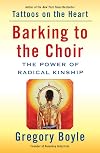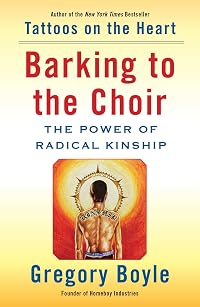
Barking to the Choir: The Power of Radical Kinship
by Gregory Boyle
On This Page
Description
"In a moving example of unconditional love in difficult times, the Jesuit priest and bestselling author of Tattoos on the Heart, Gregory Boyle, shares what three decades of working with gang members in Los Angeles has taught him about faith, compassion, and the enduring power of kinship. In his first book, ... Gregory Boyle introduced us to Homeboy Industries, the largest gang-intervention program in the world. Critics hailed that book as an 'astounding literary and spiritual feat' show more (Publishers Weekly) that is 'destined to become a classic of both urban reportage and contemporary spirituality' (Los Angeles Times). Now, after the successful expansion of Homeboy Industries, Boyle returns with Barking to the Choir to reveal how compassion is transforming the lives of gang members. In a nation deeply divided and plagued by poverty and violence, Barking to the Choir offers a snapshot into the challenges and joys of life on the margins. Sergio, arrested at nine, in a gang by twelve, and serving time shortly thereafter, now works with the substance-abuse team at Homeboy to help others find sobriety. Jamal, abandoned by his family when he tried to attend school at age seven, gradually finds forgiveness for his schizophrenic mother. New father Cuco, who never knew his own dad, thinks of a daily adventure on which to take his four-year-old son. These former gang members uplift the soul and reveal how bright life can be when filled with unconditional love and kindness. This book is guaranteed to shake up our ideas about God and about people with a glimpse at a world defined by more compassion and fewer barriers. Gently and humorously, Barking to the Choir invites us to find kinship with one another and reconvinces us all of our own goodness."--Dust jacket flaps. show lessTags
Recommendations





Member Recommendations
Member Reviews
This is the second book I've read by "G" (Jesuit priest Gregory Boyle) and it was just as good as his first, Tattoos on the Heart, which you don't need to read before reading this one. But if you like this one (and of course you will) you'll most definitely be searching out Tattoos when you finish this. I especially liked that at the beginning Father Greg says he isn't going to repeat any of the stories from the first book, which can make a memoir sequel disappointingly dull. You won't be disappointed with this book at all - it is definitely not dull.
In 1988 Father Greg founded Homeboy Industries in Southern CA, now the largest gang-intervention, rehabilitation and re-entry program in the world. This book is a moving example of show more unconditional love and filled with anecdotes written by Father Greg describing his conversations and experiences with current and former gang members, their families, and the (often miraculous) changes that take place in their lives. Father Greg is Catholic, but refers to various belief systems to support the truth and transformation he witnesses in these young people. He shares what working with gang members has taught him about faith, compassion, and the enduring power of kinship. Barking is not just a book where you read about former gang members and their lives, but it's a book that will alter your thinking, and your attitude towards others. This book can't help but make a change in your life.
As the publisher notes, "This book is guaranteed to shake up our ideas about God and about people with a glimpse at a world defined by more compassion and fewer barriers." This is a heartwarming, entertaining, sometimes humorous, sometimes sad, very special book that would make a great gift as well as a wonderful book club read. I highly recommend it. show less
In 1988 Father Greg founded Homeboy Industries in Southern CA, now the largest gang-intervention, rehabilitation and re-entry program in the world. This book is a moving example of show more unconditional love and filled with anecdotes written by Father Greg describing his conversations and experiences with current and former gang members, their families, and the (often miraculous) changes that take place in their lives. Father Greg is Catholic, but refers to various belief systems to support the truth and transformation he witnesses in these young people. He shares what working with gang members has taught him about faith, compassion, and the enduring power of kinship. Barking is not just a book where you read about former gang members and their lives, but it's a book that will alter your thinking, and your attitude towards others. This book can't help but make a change in your life.
As the publisher notes, "This book is guaranteed to shake up our ideas about God and about people with a glimpse at a world defined by more compassion and fewer barriers." This is a heartwarming, entertaining, sometimes humorous, sometimes sad, very special book that would make a great gift as well as a wonderful book club read. I highly recommend it. show less
This book radiates such loving-kindness, one wishes everyone could share in the bounty. I had not heard of Boyle’s 2009 No. 1 bestseller, called Tattoos on the Heart: The Power of Boundless Compassion, before I heard Krista Tippett interview Father Boyle for her podcast On Being. This second book is a series of true stories about the gang members, former convicts, drug dealers and addicts Father Boyle knows from his ministry, Homeboy Industries, in Los Angeles. Each anecdote carries with it a reminder of the burdens people carry, a prod to do better in our lives, and something small (or big) to meditate on.
A highlight of this book are Boyle’s pointing to and holding up some of the homies’ mangling of common phrases—phrases so show more ordinary to many of us that we rush by them, never stopping to think them through carefully. By misunderstanding phrases only heard and never read, the homies sometimes hit upon a better, deeper meaning that speaks to their experiences, e.g., “I’m at a pitchfork in my life.”
Father Boyle is following the teaching of the Dalai Lama, Pope Francis, Dorothy Day, Mother Theresa, and every other effective practitioner of faith and loving-kindness on earth by going with the exhortation to “Stay Close to the Poor.” He discusses this in his usual discursive style near the end of this book, asking
“Is God inclusive or exclusive?…In the end, though, the measure of our compassion with what Martin Luther King calls ‘the last, the least, and the lost’ lies less in our service to those on the margins, and more in our willingness to see ourselves in kinship with them.”
Radical kinship. If you’ve ever experienced a blast of radical kinship—an openhearted, limitless generosity—you will know it is transformative. And that is where Father Boyle is going.
There are no bad people, only bad actions. We’re all in a stage of becoming. We all are equally able to find grace and create the kind of environment we seek, if given a place to rest and to experience love without expectation of return.
“We are charged not with obliterating our diversity and difference but instead with heightening our connection to each other.”
This is his answer to reconciling diversity and connectedness. It is often thought that the more diverse we are, the less we have in common, the less we can come together over shared goals. This book tells a different story.
Father Boyle’s book about gang members in L.A. finding a place of peace to gather their thoughts together is the antidote to a political world in which power and money are operative goals. We’d all like a little more power, to live as we like without anybody else’s say so, but sometimes the lack of power is the key to humility, and thus to a wide and deep world of loving-kindness. But as Boyle tells Terry Gross in a Fresh Air interview: “Prayer is not going to fix our healthcare system. Stop it. Don’t think that. You actually have to do something about guns, you can’t just pray.”
This is powerful stuff, folks, and will be my gift to family and friends at this year-end. When you get your own copy, look carefully at the author photo on the inside back jacket. Have you ever seen a group of people more radiant in your lives? show less
A highlight of this book are Boyle’s pointing to and holding up some of the homies’ mangling of common phrases—phrases so show more ordinary to many of us that we rush by them, never stopping to think them through carefully. By misunderstanding phrases only heard and never read, the homies sometimes hit upon a better, deeper meaning that speaks to their experiences, e.g., “I’m at a pitchfork in my life.”
Father Boyle is following the teaching of the Dalai Lama, Pope Francis, Dorothy Day, Mother Theresa, and every other effective practitioner of faith and loving-kindness on earth by going with the exhortation to “Stay Close to the Poor.” He discusses this in his usual discursive style near the end of this book, asking
“Is God inclusive or exclusive?…In the end, though, the measure of our compassion with what Martin Luther King calls ‘the last, the least, and the lost’ lies less in our service to those on the margins, and more in our willingness to see ourselves in kinship with them.”
Radical kinship. If you’ve ever experienced a blast of radical kinship—an openhearted, limitless generosity—you will know it is transformative. And that is where Father Boyle is going.
There are no bad people, only bad actions. We’re all in a stage of becoming. We all are equally able to find grace and create the kind of environment we seek, if given a place to rest and to experience love without expectation of return.
“We are charged not with obliterating our diversity and difference but instead with heightening our connection to each other.”
This is his answer to reconciling diversity and connectedness. It is often thought that the more diverse we are, the less we have in common, the less we can come together over shared goals. This book tells a different story.
Father Boyle’s book about gang members in L.A. finding a place of peace to gather their thoughts together is the antidote to a political world in which power and money are operative goals. We’d all like a little more power, to live as we like without anybody else’s say so, but sometimes the lack of power is the key to humility, and thus to a wide and deep world of loving-kindness. But as Boyle tells Terry Gross in a Fresh Air interview: “Prayer is not going to fix our healthcare system. Stop it. Don’t think that. You actually have to do something about guns, you can’t just pray.”
This is powerful stuff, folks, and will be my gift to family and friends at this year-end. When you get your own copy, look carefully at the author photo on the inside back jacket. Have you ever seen a group of people more radiant in your lives? show less
This is the second book I've read by Gregory Boyle and he has become a hero of mine. His program working with gang members in inner city LA is outstanding. The message he teaches is all about love and worthiness and seeing people for who they truly are. This book helped me through a very hard time with husband and mother both in the hospital. I read this as comic relief, as spiritual food, as a reminder of what this life is truly about. I am indebted to this book for keeping me sane!
This is a book which changes style from Boyle’s previous book Tattoos. Rather than expounding on a few key themes, Boyle just condenses his style to rapid fire sayings and revelations from his time with his Black, White, and Brown former gangsters. This was a great idea and takes some authority to even attempt something like this. It’s not a completely new style from what had gone before but still one which from the narrative of story telling has been inverted. It works well if you understand that. This book is even better, in my opinion than the previous one (and Tattoos was already high caliber). Boyle says this book and his community of Homeboy Industries are aspirational. This was obvious to me but most books you might find in a show more bookstore under self-help, inspirational, biography, or religion are notorious for straying away from their book title or stated introductory aim. Most of the time they end up proof-texting, becoming exercises in apologetics, or worse flat-out triumphalist in tone. The library listing for Barking To The Choir is categorized by the publisher as “church work with juvenile delinquents” and “Christian life”. Both are accurate.
Boyle’s task is one of citing from all religious traditions and famous persons to gather as much agreement from the reading audience that what he says is sound from all spiritual directions, or as many as possible within the pacifist tradition. By doing this Boyle is as centrist theologically as to embrace as many people of good will as possible. This is also very flattering to the reader to see someone trying to connect with the truths of wise women and men down the centuries for a goal which is tangible, namely working together to help people heal emotionally and spiritually and thus add hope for a future world built on kindness expressed today.
Two last things about this very interesting book about life in Los Angeles (Homeboy Industries and Homegirl Café are in Chinatown right below a Metro station platform). Boyle speaks about an Irish priest (not he) who was helping Jackie Kennedy after the assassination of JFK. She was questioning where God was during the shots being fired from the Dallas School Book Depository. This was not known until that priest who had made notes of her “counseling sessions” became public when the priest’s papers were posthumously bequeathed to a university library and read by a researcher. This was not a good situation as you might imagine. Recording by notes or electronic means by priests is forbidden as this is always considered under the veil of the sacrament of confession thus forbidden to repeat anything said. Every priest is obliged under mortal sin to carry all private conversations in counseling or confession to his own grave. Therapists work under different codes and laws but priests are always instructed to not reveal names, sins, or even if a person ever expressed a desire to confess at all. Boyle does not spend much time with this scenario, thankfully.
The last thing to mention is that Boyle has become self-reflective and this has made his writing even more powerful. In this book we hear how people criticize his work, find fault with him personally, make anonymous accusations and even repeat what the former gangsters tease him about. He’s not defensive but also not in possession of limitless patience with contacts who seek him out to complain about something Boyle might only be tangentially associated with. This is very authentic and somewhat experienced by almost every priest currently working in Los Angeles. This is experienced with everyone who has a paying job in Los Angeles. No index, one photo on inside flap of dust jacket, no glossary of slang terms (some translated), 210 pp.
By skillfully keeping your attention, this is another very fast read. I’ve heard Boyle speak twice in person but never heard one of the Homeboy Inc. employees speak when he did. When I say I like this book, what I mean is that I would want to read more books by Catholics working at anything.. show less
Boyle’s task is one of citing from all religious traditions and famous persons to gather as much agreement from the reading audience that what he says is sound from all spiritual directions, or as many as possible within the pacifist tradition. By doing this Boyle is as centrist theologically as to embrace as many people of good will as possible. This is also very flattering to the reader to see someone trying to connect with the truths of wise women and men down the centuries for a goal which is tangible, namely working together to help people heal emotionally and spiritually and thus add hope for a future world built on kindness expressed today.
Two last things about this very interesting book about life in Los Angeles (Homeboy Industries and Homegirl Café are in Chinatown right below a Metro station platform). Boyle speaks about an Irish priest (not he) who was helping Jackie Kennedy after the assassination of JFK. She was questioning where God was during the shots being fired from the Dallas School Book Depository. This was not known until that priest who had made notes of her “counseling sessions” became public when the priest’s papers were posthumously bequeathed to a university library and read by a researcher. This was not a good situation as you might imagine. Recording by notes or electronic means by priests is forbidden as this is always considered under the veil of the sacrament of confession thus forbidden to repeat anything said. Every priest is obliged under mortal sin to carry all private conversations in counseling or confession to his own grave. Therapists work under different codes and laws but priests are always instructed to not reveal names, sins, or even if a person ever expressed a desire to confess at all. Boyle does not spend much time with this scenario, thankfully.
The last thing to mention is that Boyle has become self-reflective and this has made his writing even more powerful. In this book we hear how people criticize his work, find fault with him personally, make anonymous accusations and even repeat what the former gangsters tease him about. He’s not defensive but also not in possession of limitless patience with contacts who seek him out to complain about something Boyle might only be tangentially associated with. This is very authentic and somewhat experienced by almost every priest currently working in Los Angeles. This is experienced with everyone who has a paying job in Los Angeles. No index, one photo on inside flap of dust jacket, no glossary of slang terms (some translated), 210 pp.
By skillfully keeping your attention, this is another very fast read. I’ve heard Boyle speak twice in person but never heard one of the Homeboy Inc. employees speak when he did. When I say I like this book, what I mean is that I would want to read more books by Catholics working at anything.. show less
Just when I think a life of faith makes no sense, I pick up a book.
This time Greg Boyle gave me pause as he told stories and stitched them together with his own slant on faith. The theology of the original plan—look after the poor, welcome strangers, love each other, laugh and cry together—permeates the pages of this book.
So many lines and whole paragraphs were copied into my journal (because I had a library copy)
***
I don't need God to be in charge of my life. I only need Got to be at the center of it. 22
I believe that God protects me in nothing but sustains me in everything. 24
It would seem that quite possibly the ultimate measure of health in any community might well reside in our ability to stand in awe at what folks carry show more rather than in judgment of how they carry it. 51
We spend so much time asking where our suffering comes from, it leaves us little time to ask where it leads. 56
The discovery that awaits us is that paradise is contained in the here and now. We let go of the desire to expect anything beyond it. The awareness of this keeps us from the suffering generated by resisting life as it is. 74
If love is the answer, community is the context, and tenderness is the methodology. 85
We always seem to be faced with this choice: to save the world or savor it. ...savoring it is better. The good news, of course, is that when you choose to "savor" the world it gets saved. Don't set out to change the world. Set out to wonder how people are doing. 174-175
***
Father Greg never hints at the possibility of too much grace. Not a word is offered about tough love. I found this a thrilling relief as I've heard christian writers, speakers, and acquaintances (who do not work with gang members) tout both.
If you like to be reminded of what really matters, possibly (re)consider a life of faith, AND laugh out loud, keep company with Greg Boyle in the pages of this book. show less
This time Greg Boyle gave me pause as he told stories and stitched them together with his own slant on faith. The theology of the original plan—look after the poor, welcome strangers, love each other, laugh and cry together—permeates the pages of this book.
So many lines and whole paragraphs were copied into my journal (because I had a library copy)
***
I don't need God to be in charge of my life. I only need Got to be at the center of it. 22
I believe that God protects me in nothing but sustains me in everything. 24
It would seem that quite possibly the ultimate measure of health in any community might well reside in our ability to stand in awe at what folks carry show more rather than in judgment of how they carry it. 51
We spend so much time asking where our suffering comes from, it leaves us little time to ask where it leads. 56
The discovery that awaits us is that paradise is contained in the here and now. We let go of the desire to expect anything beyond it. The awareness of this keeps us from the suffering generated by resisting life as it is. 74
If love is the answer, community is the context, and tenderness is the methodology. 85
We always seem to be faced with this choice: to save the world or savor it. ...savoring it is better. The good news, of course, is that when you choose to "savor" the world it gets saved. Don't set out to change the world. Set out to wonder how people are doing. 174-175
***
Father Greg never hints at the possibility of too much grace. Not a word is offered about tough love. I found this a thrilling relief as I've heard christian writers, speakers, and acquaintances (who do not work with gang members) tout both.
If you like to be reminded of what really matters, possibly (re)consider a life of faith, AND laugh out loud, keep company with Greg Boyle in the pages of this book. show less
Gregory Boyle SJ told so many tales so well in his first book that I could not imagine this second one would be as powerful, but it is. Boyle hold up for our regard the hard earned wisdom and insights of the former gang members who form his community. In his introduction, he sets the tone when he notes that anger never leads anyone to unclench their fist but love is the only thing that can unclench a fist.
The book was grossly frustrating to read. The format and transition of stories were so incredibly distracting that I started skimming through pages to find an interesting anecdote to read; and, when I did find a story, it was always cut short where I was never able to find out how X homie loved through their abuse.
The focus of each chapter was mildly focused where in there looking for the meaning of each chapter.
Positives:
-the stories were engrossing
-eye opening on how some people live
-recognizing the fortune I have in my life
Negative:
-the format!!!
-writers voice didn’t translate well into written word. He may be a fantastic speaker but it didn’t work for a book
The focus of each chapter was mildly focused where in there looking for the meaning of each chapter.
Positives:
-the stories were engrossing
-eye opening on how some people live
-recognizing the fortune I have in my life
Negative:
-the format!!!
-writers voice didn’t translate well into written word. He may be a fantastic speaker but it didn’t work for a book
Members
- Recently Added By
Lists

Top Five Books of 2019
387 works; 111 members
Author Information

5 Works 1,871 Members
Common Knowledge
- Original title
- Barking to the Choir: The Power of Radical Kinship
- Original publication date
- 2017-11
- People/Characters
- Dalai Lama; Martin Scorsese; Diane Keaton; Pope Francis
- Important places
- Los Angeles, California, USA
- Dedication
- For Mike Hennigan, Marge Sauer, and Kathleen Conway Boyle
- First words
- Start with a title.
- Last words
- (Click to show. Warning: May contain spoilers.)This is indeed the place we go from.
- Blurbers
- Lamott, Anne; Kornfield, Jack; Edelman, Marian Wright
- Original language
- English
Classifications
- Genres
- Nonfiction, Religion & Spirituality
- DDC/MDS
- 277.94 — Religion History of Christianity Christianity in North America West Coast U.S. California
- LCC
- BV4464.5 .B69 — Philosophy, Psychology and Religion Practical Theology Practical Theology Pastoral theology Practical church work. Social work. Work of the layman
- BISAC
Statistics
- Members
- 328
- Popularity
- 97,374
- Reviews
- 13
- Rating
- (4.36)
- Languages
- English, Spanish
- Media
- Paper, Audiobook, Ebook
- ISBNs
- 9
- ASINs
- 2