A Long Way From Home
by Peter Carey
On This Page
Description
"The two-time Booker Prize-winning author now gives us a wildly exuberant, wily new novel that circumnavigates 1954 Australia, revealing as much about the country-continent as it does about three audacious individuals who take part in the infamous 10,000 mile race, the Redex Trial. Irene Bobs loves fast driving. Her husband is the best car salesman in south eastern Australia. Together they enter the Redex Trial, a brutal race around the ancient continent, over roads no car will ever quite show more survive. With them is their lanky fair-haired navigator, Willie Bachhuber, a quiz show champion and failed school teacher who calls the turns and creeks crossings on a map that will remove them, without warning, from the white Australia they all know so well. This is a thrilling high speed story that starts in one way, and then takes you some place else. It is often funny, more so as the world gets stranger, and always a page-turner even as you learn a history these characters never knew themselves. Set in the 1950s, this a world every American will recognize: black, white, who we are, how we got here, and what we did to each other along the way. A Long Way from Home is Peter Carey's late style masterpiece"-- show lessTags
Recommendations









Member Reviews
The main setting of A long way from home is - perversely enough - precisely where Carey grew up: Bacchus Marsh, Victoria in the early 1950s. Like Carey's parents, Irene and Titch Bobs are in the motor trade, and have a Holden dealership in Bacchus Marsh. As a publicity stunt to launch their new business, they take part in the Redex Challenge, an endurance competition which involves driving around the whole continent in a production car. When they discover that their neighbour, disgraced schoolteacher and professional quiz competitor Willie Bachhuber, has an astonishing affinity for maps, he gets roped in to the adventure as their navigator...
But this isn't your ordinary road novel with a bunch of colourful characters pitted against the show more elements, nor is it a remake of Voss with internal combustion engines - although you could probably read it either of those ways if you wanted to. As you might expect from Carey, he uses the framework of the journey to have a critical dig into the less attractive elements of Australian history, in particular this time looking at some of the many abuses suffered by Aboriginal Australians at the hands of white colonisers, notably the well-known scandal of the forced adoption (read: kidnapping) of mixed-race children. But he also brings out the lesser-known story of cultural resistance through the rewriting of colonial history from the Aboriginal side. All very interesting, and of course told with Carey's usual verve and humour. show less
But this isn't your ordinary road novel with a bunch of colourful characters pitted against the show more elements, nor is it a remake of Voss with internal combustion engines - although you could probably read it either of those ways if you wanted to. As you might expect from Carey, he uses the framework of the journey to have a critical dig into the less attractive elements of Australian history, in particular this time looking at some of the many abuses suffered by Aboriginal Australians at the hands of white colonisers, notably the well-known scandal of the forced adoption (read: kidnapping) of mixed-race children. But he also brings out the lesser-known story of cultural resistance through the rewriting of colonial history from the Aboriginal side. All very interesting, and of course told with Carey's usual verve and humour. show less
There are at least 2 books nestled here, perhaps even 3. In the first book, Irene Bobs meets her husband Titch, they attempt to set up a Ford and then a Holden dealership in the rural Victorian town of Bacchus Marsh and to escape the baleful influence of Titch's father "Dangerous Dan" Bobs, a character based at least partially on Carey's own aviator grandfather and partially on "Gelignite" Jack Murray.
In the second, they partner with their neighbour Willem Bachuber, the schoolteacher son of a Lutheran pastor, running away from his own past, and compete in the 1954 Redex Trial, a real "reliability test" putting automobiles through their paces on a 10,000 km round Australia rally, through dangerous and primitive road conditions, mainly show more in the outback of Northern Queensland, Northern Territory and Western Australia
In the third, Bachuber finds himself on a pastoral station in the north of Western Australia, trying to absorb a completely different concept of place and country as understood by the local Aboriginal population.
The story is primarily told in the strong and unique voices of Irene Bobs and Willem Bachuber; and as the story progresses Bobs' voice fades and Bachuber's becomes more dominant. So what is this all about? Don't believe the blurb about this being a rollicking story of a car race. It is... but its so much more than that. In many ways you could argue that the Redex trial is just a narrative device, albeit an entertaining one, to get Bachuber from Bacchus Marsh to the Kimberley.
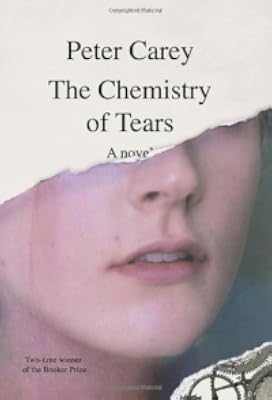
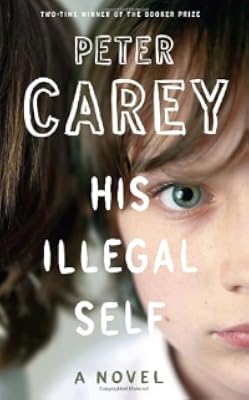
Readers who have been slightly underwhelmed by some of Carey's recent work - such as His Illegal Self, Amnesia or The Chemistry of Tears (which I know I've read but can't remember a thing about) - will immediately feel he's back on familiar ground; he recreates the voices and mores of 1950s Australia perfectly. But yet its how he brings 1950s Aboriginal Australia to life that feels deft and sure.
Carey has mentioned that he needed to find a way to talk about Aboriginal experience in Australia, and that the Redex trials of the 1950s gave him that entry point. You can see why; the basic premise of the Redex, that outback Australia needs to be mapped, tamed and conquered, is in complete contrast to how the Aboriginal population perceive and experience country. Ultimately its these contrasts that Carey wants to bring to life; and alongside it, the sheer invisibility, to southern Australians, of Aboriginals and the casual racism that leads to their destruction of their systems, values and ways of life, not least the horrors of kids being removed from their parents, leading to what is known in Australia as "The Stolen Generation".
So this both an entertaining and a powerful book. Minus half a star because I am not sure about the resolution, but still very highly recommended show less
In the second, they partner with their neighbour Willem Bachuber, the schoolteacher son of a Lutheran pastor, running away from his own past, and compete in the 1954 Redex Trial, a real "reliability test" putting automobiles through their paces on a 10,000 km round Australia rally, through dangerous and primitive road conditions, mainly show more in the outback of Northern Queensland, Northern Territory and Western Australia
In the third, Bachuber finds himself on a pastoral station in the north of Western Australia, trying to absorb a completely different concept of place and country as understood by the local Aboriginal population.
The story is primarily told in the strong and unique voices of Irene Bobs and Willem Bachuber; and as the story progresses Bobs' voice fades and Bachuber's becomes more dominant. So what is this all about? Don't believe the blurb about this being a rollicking story of a car race. It is... but its so much more than that. In many ways you could argue that the Redex trial is just a narrative device, albeit an entertaining one, to get Bachuber from Bacchus Marsh to the Kimberley.
Readers who have been slightly underwhelmed by some of Carey's recent work - such as His Illegal Self, Amnesia or The Chemistry of Tears (which I know I've read but can't remember a thing about) - will immediately feel he's back on familiar ground; he recreates the voices and mores of 1950s Australia perfectly. But yet its how he brings 1950s Aboriginal Australia to life that feels deft and sure.
Carey has mentioned that he needed to find a way to talk about Aboriginal experience in Australia, and that the Redex trials of the 1950s gave him that entry point. You can see why; the basic premise of the Redex, that outback Australia needs to be mapped, tamed and conquered, is in complete contrast to how the Aboriginal population perceive and experience country. Ultimately its these contrasts that Carey wants to bring to life; and alongside it, the sheer invisibility, to southern Australians, of Aboriginals and the casual racism that leads to their destruction of their systems, values and ways of life, not least the horrors of kids being removed from their parents, leading to what is known in Australia as "The Stolen Generation".
So this both an entertaining and a powerful book. Minus half a star because I am not sure about the resolution, but still very highly recommended show less
The Mess Made by Mixing Politics and Storytelling
I usually do not read novels to learn about the world. But "A Long Way From Home" is explicitly about some truths of Aboriginal life and history. Carey gave several energetic interviews (one I heard on Irish radio in January 2018), speaking about how he had finally found a way to write about the obliviousness of his fellow White Australians. The book has been heralded as a brave and honest attempt to think what it was like -- and still is like -- for White Australians to continue not to notice what has been done to Aboriginal culture.
The entire first half of the book has nothing to do with that subject. There are in my count three very brief mentions of Aborigines in the first 161 pages show more of the book. Five pages later one of the narrators finds the skull of an Aboriginal child who has been murdered, and cries. Two pages after that (p. 168) is the first mention of racism.
As the book goes on, we are instructed on Aboriginal life, history, and culture. We're told about their antipathy to maps in a set-piece that allows Carey to say some very general things about Aboriginal sense of the land. We're told about forcible relocation, we're given names and documents (including A.P. Elkin, the assimilationist), we're told about Ted Strehlow's underlying racism, about rapes and homicides by White ranchers and policemen, about the reasons fences disrupt Aboriginal life. For all this to work the obliviousness of the White characters has to be complete. When an Aborigine man finds that one of the characters has kept the infant's skull, he walks off in shock and anger, and the narrator muses, "Who knew this was personal to him?" (p. 217) When characters learn the truth, we're told so: "And of course I had finally seen that all Aboriginal culture was based on country," one character says, "they were exiles, denied the meaning of their lives." (p. 299)
When a novel aims so directly at confession, reparation, and education, I try to imagine its ideal reader. In this case that is depressing exercise, especially if I'm imagining an ideal Australian reader. I am sad to think that Carey probably judged this well enough, and there will be Australians who feel this novel taught them something, opened their eyes to something. To the extent that is true, it points to an obliviousness much deeper than anything that can be usefully addressed by a novel as superficial and abbreviated about its subject as this one is.
- - -
But I don't read to find out about people, ethnicities, nationalities, or history. As a novel, this is weak. Carey fills the book with his kind of manic, kaleidoscopic narrative, whose principal strategies seem to be: never slow down, and pack each short paragraph with as much detail as possible. The relentless present of the narratives is repeatedly momentarily stalled by moments in past retrospective mood: "I didn't realize then that...." but those moments fleeting, like touches on the brakes. The narrators who think these thoughts plunge immediately back into their present.
This breakneck pace also runs across narrators: the book alternates chapters told from several points of view, but there's one style, one voice, one mood, even one way of making jokes and allusions, for all the characters. For me, the chapters putatively narrated by different people are obtrusively similar, as if Carey was intentionally writing against the basic advice of any writing workshop. (If you change narrators, change tone, change detail... change something.)
As in any 350 page novel by an experienced writer, there are moments that are quite good. For me the book's center is the (female) narrator's sense of her husband, whom she loves and admires, but who is hopelessly dependent on his sadistic father. When his father dies, he cries, because "there was nowhere left to hide his relentless secret love." (p. 178)
More could be said about that part of the narrative, but that would misrepresent a novel that is fundamentally not under its author's control. Carey wanted to write a serious, brave, well-researched novel about some Aboriginal experiences and about Australia's history, but he ended up with a book about a mid-century family in Melbourne, a famous road race, and a sprinkling of supposedly deeply revealing facts about Aboriginal culture. Maybe in the end this is what is interesting about "A Long Way From Home": not its history, not its facts, not the road race, not the principal characters, but the fact that even after a lifetime of writing novels, it can prove to be impossible to control the text.
There are many ways this novel could have regained control: the first half, in which Aborigines aren't mentioned, could have dramatized and dwelled on that absence; the first half could have been cut, in order to spend time on one of Carey's original ideas (as he said in an interview), the race around the continent; the factual material on Aboriginal cultures could have been radically expanded, as William Vollmann has done; or it could have been truncated, so that the book lectured less and hinted at more. But it isn't any of those things: it's the mess it was in the author's mind. show less
I usually do not read novels to learn about the world. But "A Long Way From Home" is explicitly about some truths of Aboriginal life and history. Carey gave several energetic interviews (one I heard on Irish radio in January 2018), speaking about how he had finally found a way to write about the obliviousness of his fellow White Australians. The book has been heralded as a brave and honest attempt to think what it was like -- and still is like -- for White Australians to continue not to notice what has been done to Aboriginal culture.
The entire first half of the book has nothing to do with that subject. There are in my count three very brief mentions of Aborigines in the first 161 pages show more of the book. Five pages later one of the narrators finds the skull of an Aboriginal child who has been murdered, and cries. Two pages after that (p. 168) is the first mention of racism.
As the book goes on, we are instructed on Aboriginal life, history, and culture. We're told about their antipathy to maps in a set-piece that allows Carey to say some very general things about Aboriginal sense of the land. We're told about forcible relocation, we're given names and documents (including A.P. Elkin, the assimilationist), we're told about Ted Strehlow's underlying racism, about rapes and homicides by White ranchers and policemen, about the reasons fences disrupt Aboriginal life. For all this to work the obliviousness of the White characters has to be complete. When an Aborigine man finds that one of the characters has kept the infant's skull, he walks off in shock and anger, and the narrator muses, "Who knew this was personal to him?" (p. 217) When characters learn the truth, we're told so: "And of course I had finally seen that all Aboriginal culture was based on country," one character says, "they were exiles, denied the meaning of their lives." (p. 299)
When a novel aims so directly at confession, reparation, and education, I try to imagine its ideal reader. In this case that is depressing exercise, especially if I'm imagining an ideal Australian reader. I am sad to think that Carey probably judged this well enough, and there will be Australians who feel this novel taught them something, opened their eyes to something. To the extent that is true, it points to an obliviousness much deeper than anything that can be usefully addressed by a novel as superficial and abbreviated about its subject as this one is.
- - -
But I don't read to find out about people, ethnicities, nationalities, or history. As a novel, this is weak. Carey fills the book with his kind of manic, kaleidoscopic narrative, whose principal strategies seem to be: never slow down, and pack each short paragraph with as much detail as possible. The relentless present of the narratives is repeatedly momentarily stalled by moments in past retrospective mood: "I didn't realize then that...." but those moments fleeting, like touches on the brakes. The narrators who think these thoughts plunge immediately back into their present.
This breakneck pace also runs across narrators: the book alternates chapters told from several points of view, but there's one style, one voice, one mood, even one way of making jokes and allusions, for all the characters. For me, the chapters putatively narrated by different people are obtrusively similar, as if Carey was intentionally writing against the basic advice of any writing workshop. (If you change narrators, change tone, change detail... change something.)
As in any 350 page novel by an experienced writer, there are moments that are quite good. For me the book's center is the (female) narrator's sense of her husband, whom she loves and admires, but who is hopelessly dependent on his sadistic father. When his father dies, he cries, because "there was nowhere left to hide his relentless secret love." (p. 178)
More could be said about that part of the narrative, but that would misrepresent a novel that is fundamentally not under its author's control. Carey wanted to write a serious, brave, well-researched novel about some Aboriginal experiences and about Australia's history, but he ended up with a book about a mid-century family in Melbourne, a famous road race, and a sprinkling of supposedly deeply revealing facts about Aboriginal culture. Maybe in the end this is what is interesting about "A Long Way From Home": not its history, not its facts, not the road race, not the principal characters, but the fact that even after a lifetime of writing novels, it can prove to be impossible to control the text.
There are many ways this novel could have regained control: the first half, in which Aborigines aren't mentioned, could have dramatized and dwelled on that absence; the first half could have been cut, in order to spend time on one of Carey's original ideas (as he said in an interview), the race around the continent; the factual material on Aboriginal cultures could have been radically expanded, as William Vollmann has done; or it could have been truncated, so that the book lectured less and hinted at more. But it isn't any of those things: it's the mess it was in the author's mind. show less
In A Long Way From Home Peter Carey returns to his hometown of Bacchus Marsh during his childhood in the 1950s. Irene and Titch Bobs decide to enter the Redex Round Australia Reliability Trial to promote their nascent Holden dealership. Titch invites their next-door-neighbour Willy to come along as navigator, in deference to Willy's map-making skills. Willy, who has just lost his job as a radio quiz show contestant, agrees.
As the Bobs and Willy head north in their quest to drive around Australia they are pursued by Dangerous Dan, Titch's daredevil father, who is perennially determined to screw up anything that Titch and Irene attempt.
Carey uses the Redex trial as a vehicle (sorry) to contrast the relationship with the Australian show more countryside held by the indigenous Australians and the white colonialists that occupy and seek to dominate it. It's a pacy read where the narrative focus switches rapidly between Irene's and Willy's viewpoint, and the plot allows Carey to drill down into some uncomfortable truths about racial discrimination and the relationship with country. This is Carey back at the top of his game. show less
As the Bobs and Willy head north in their quest to drive around Australia they are pursued by Dangerous Dan, Titch's daredevil father, who is perennially determined to screw up anything that Titch and Irene attempt.
Carey uses the Redex trial as a vehicle (sorry) to contrast the relationship with the Australian show more countryside held by the indigenous Australians and the white colonialists that occupy and seek to dominate it. It's a pacy read where the narrative focus switches rapidly between Irene's and Willy's viewpoint, and the plot allows Carey to drill down into some uncomfortable truths about racial discrimination and the relationship with country. This is Carey back at the top of his game. show less
Melbourne, Australia being my second home, I always love to read Peter Carey. This one does a good job of telling the story of 1950s era Oz, with an interesting take on the issues of Aboriginal relations and gender equality as they inform Australian identity. (Brian)
This is a book about a race and racism. Set in Australia in the 1950s, the plot revolves around a couple, Irene and Titch Bobs, entering the Redex Trial, a car race around the perimeter of Australia, starting and ending in Sydney. They add a navigator, Willie Bachhuber, their neighbor, teacher, and trivia quiz master. The story is told by Irene and Willie, in alternating segments.
The first half of the book focuses on the setup for entering the race and the first part of the race itself. It then takes a significant detour to recount issues related to family secrets. As the drivers enter the backcountry, the race recedes in importance and Australia’s brutal treatment of the Aboriginal people takes center stage.
I can see what the show more author was trying to do, and I can say I liked it; however, I think the narrative loses steam when the plot shifts so dramatically. I suggest reading it as representative of Australia’s colonial past, but I am not sure this is going to work well for readers interested in the Redex. I listened to the audio book, capably read by Colin McPhillamy, Craig Baldwin, and Saskia Maarleveld. show less
The first half of the book focuses on the setup for entering the race and the first part of the race itself. It then takes a significant detour to recount issues related to family secrets. As the drivers enter the backcountry, the race recedes in importance and Australia’s brutal treatment of the Aboriginal people takes center stage.
I can see what the show more author was trying to do, and I can say I liked it; however, I think the narrative loses steam when the plot shifts so dramatically. I suggest reading it as representative of Australia’s colonial past, but I am not sure this is going to work well for readers interested in the Redex. I listened to the audio book, capably read by Colin McPhillamy, Craig Baldwin, and Saskia Maarleveld. show less
This is a book about a race and racism. Set in Australia in the 1950s, the plot revolves around a couple, Irene and Titch Bobs, entering the Redex Trial, a car race around the perimeter of Australia, starting and ending in Sydney. They add a navigator, Willie Bachhuber, their neighbor, teacher, and trivia quiz master. The story is told by Irene and Willie, in alternating segments.
The first half of the book focuses on the setup for entering the race and the first part of the race itself. It then takes a significant detour to recount issues related to family secrets. As the drivers enter the backcountry, the race recedes in importance and Australia’s brutal treatment of the Aboriginal people takes center stage.
I can see what the show more author was trying to do, and I can say I liked it; however, I think the narrative loses steam when the plot shifts so dramatically. I suggest reading it as representative of Australia’s colonial past, but I am not sure this is going to work well for readers interested in the Redex. I listened to the audio book, capably read by Colin McPhillamy, Craig Baldwin, and Saskia Maarleveld. show less
The first half of the book focuses on the setup for entering the race and the first part of the race itself. It then takes a significant detour to recount issues related to family secrets. As the drivers enter the backcountry, the race recedes in importance and Australia’s brutal treatment of the Aboriginal people takes center stage.
I can see what the show more author was trying to do, and I can say I liked it; however, I think the narrative loses steam when the plot shifts so dramatically. I suggest reading it as representative of Australia’s colonial past, but I am not sure this is going to work well for readers interested in the Redex. I listened to the audio book, capably read by Colin McPhillamy, Craig Baldwin, and Saskia Maarleveld. show less
Members
- Recently Added By
Published Reviews
In reconstructing the race politics on which this nation is founded, Carey has created an important novel and a compelling read. The question that remains unanswered, however, is: is this his story to tell?
added by rodneyvc
Lists

Top Five Books of 2018
802 works; 265 members

Review 1
30 works; 1 member

Kirkus Starred Fiction Reviews of Books Published in 2018
330 works; 3 members

Amazon best fictional genre picks monthly for 2018
418 works; 9 members

Walter Scott Prize Winners and Shortlist
66 works; 6 members

Fiction : Australia
17 works; 1 member

Clues about Australia
38 works; 1 member
Author Information

42+ Works 24,726 Members
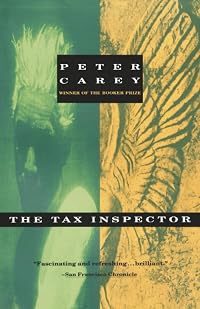
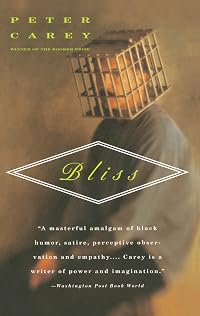
Peter Carey was born on May 7, 1943 in Bacchus Marsh, Victoria, Australia. His first two books, The Fat Man in History (1974) and War Crimes (1979), were short story collections. His first novel, Bliss, was published in 1982. At the time he was balancing his writing career with the operation of an advertising agency in Sydney, and his books were show more not generally known outside of Australia. He began to receive international attention when Illywhacker was published in 1985. He won the Booker Prize in 1988 for Oscar and Lucinda and in 2001 for True History of the Kelly Gang. His other works include The Tax Inspector, Parrot and Olivier in America, and The Chemistry of Tears. He also won the Miles Franklin Award three times. In 2015 he made the Australian Book Designers Association Award shortlist for his title Amnesia. This title also made the 2015 Prime Minister's Literary Awards shortlist. (Bowker Author Biography) show less
Some Editions
Awards and Honors
Awards
Distinctions
Common Knowledge
- Canonical title
- A Long Way From Home
- Original publication date
- 2018
- People/Characters
- Titch Bobs
- Important places
- Australia; Bacchus Marsh, Victoria, Australia
- Dedication
- FOR FRANCES COADY
Classifications
- Genres
- General Fiction, Fiction and Literature, Historical Fiction
- DDC/MDS
- 823.914 — Literature & rhetoric English & Old English literatures English fiction 1900- 1901-1999 1945-1999
- LCC
- PR9619.3 .C36 .L66 — Language and Literature English English Literature English literature: Provincial, local, etc.
- BISAC
Statistics
- Members
- 450
- Popularity
- 68,229
- Reviews
- 28
- Rating
- (3.31)
- Languages
- 6 — Dutch, English, French, German, Greek, Portuguese
- Media
- Paper, Audiobook, Ebook
- ISBNs
- 35
- ASINs
- 4