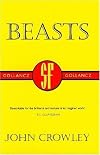
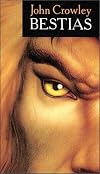
Beasts
by John Crowley
On This Page
Description
Painter is a leo - part man, part lion - the result of one of man's genetic experiments, a powerful, beautiful, enigmatic creature deemed a 'failure' to be be hunted down. But Painter has two advantages in this world of small bickering nation states and political accommodation and compromise: his own strength and integrity, and the guile of Reynard, another of man's experiments, a subtle and potent intriguer, a king-maker...Tags
Recommendations













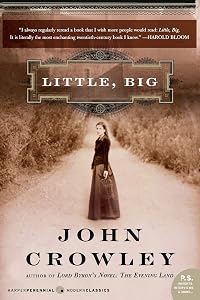
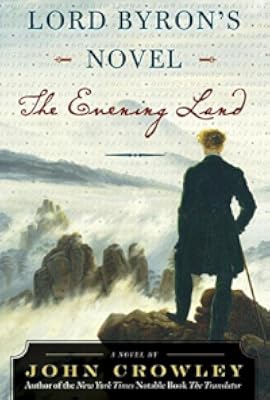
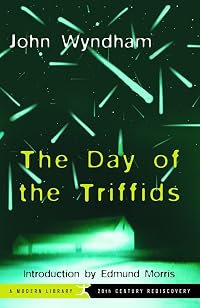

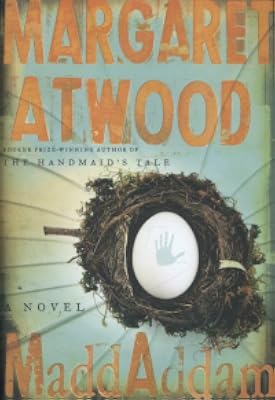







Member Recommendations
paradoxosalpha Haraway discusses the need to better understand relationships between humans and other sorts of animals, and the contributions of science fiction to this understanding.
Member Reviews
When I started reading John Crowley's 1976 novel Beasts, I felt inadequately informed by the manimal vein of science fiction. I have not read Wells' Island of Dr. Moreau nor Stapledon's Sirius. It may be that those works and other science fiction were alluded to in Crowley's tale, but the overt references are to T. H. White's Book of Merlyn and the Christian gospels. Beasts is persuasively science-fictional, and possibly moreso now than when it was written, but it draws on medieval allegory and explores some of the philosophical territory since proposed in Haraway's Staying with the Trouble.
The setting is the Northern Autonomy in a balkanized America after the dissolution of the US into a number of such "independencies." It adjoins the show more Federal remnant that is ambitious to reunite the country. An inchoate popular need for a king serves as the political backdrop against which the tale dramatizes the persecution of the lion-human hybrids called "leos." Besides the leo Painter, key characters include the ethologist Loren, a destitute girl Caddie, the fox hybrid Reynard, and the videographer Meric.
The pace throughout is measured and the focus is interior, with Crowley's admirable prose giving the reader access to the characters' varied perspectives. The book is quite short by today's genre standards; a mere eight chapters averaging little more than twenty pages each. It was short enough that the whole story would fit into a feature film. (I was even reminded a little of the thematic interests shown by director Alex Garland.)
Crowley was already onto themes that he would explore at greater length in later work. He assigns the narrative voice to a bird at the start of the last chapter, foreshadowing Ka. The notions of neurodiversity and perspectivism so important to the Ægypt cycle are in high relief here. There is even an intimation of the Robbie plot from Love & Sleep.
In contrast to his prior book The Deep, I found this one easy to follow. It is an evocative blend of fable, speculation, and reflection, with a solid storytelling sensibility. It explores ideas of sovereignty, dependency, control, liberty, and humanity, in unique voices that sound their intimate substrata. show less
The setting is the Northern Autonomy in a balkanized America after the dissolution of the US into a number of such "independencies." It adjoins the show more Federal remnant that is ambitious to reunite the country. An inchoate popular need for a king serves as the political backdrop against which the tale dramatizes the persecution of the lion-human hybrids called "leos." Besides the leo Painter, key characters include the ethologist Loren, a destitute girl Caddie, the fox hybrid Reynard, and the videographer Meric.
The pace throughout is measured and the focus is interior, with Crowley's admirable prose giving the reader access to the characters' varied perspectives. The book is quite short by today's genre standards; a mere eight chapters averaging little more than twenty pages each. It was short enough that the whole story would fit into a feature film. (I was even reminded a little of the thematic interests shown by director Alex Garland.)
Crowley was already onto themes that he would explore at greater length in later work. He assigns the narrative voice to a bird at the start of the last chapter, foreshadowing Ka. The notions of neurodiversity and perspectivism so important to the Ægypt cycle are in high relief here. There is even an intimation of the Robbie plot from Love & Sleep.
In contrast to his prior book The Deep, I found this one easy to follow. It is an evocative blend of fable, speculation, and reflection, with a solid storytelling sensibility. It explores ideas of sovereignty, dependency, control, liberty, and humanity, in unique voices that sound their intimate substrata. show less
This is my first John Crowley, but on this basis alone it will not be my last.
Beasts is a bit of a strange book in that it doesn't have a clearly defined story and weaves together various narratives that converge throughout and are told from different perspectives of the main characters involved, all the while avoiding much exposition. The main setting is a future America which has broken down from civil unrest into large city autonomies which the Federal Government is trying to unify. This separation has caused progressive stagnation, isolationism and the recovery of the natural environment, with some help from various projects within the autonomies.
At the centre of all this are the Leos - a genetic experiment which bred a hybrid show more species from humans and lions - and another more mysterious creature manipulating events known as Reynard (it doesn't take much to guess what he is if you know your fables). The Leos wish to live in peace, but the Federal Government finds them a self-made aberration to be removed from society as part of their reunification and clean up programs, which intend to reassert human dominance over the country and natural resources; all enforced by an eerily prescient federally endorsed enforcement unit.
It's the consequences of all this that plays out through the surface level of the story. But Crowley's writing is intricate and far deeper in terms of layered subjects and symbolism. He portrays the Leos with a beautiful and uncanny grace that accentuates them as being spiritually apart from the humans around them; their "king of the beasts" personality affects all who come into contact with them - man or animal. It's easy to find sympathy with their plight as they are persecuted by the authorities, even more so when you draw parallels between the written events and what is happening with ICE in the real world. The fact that they feel a genuinely unique race is also a testament to Crowley's writing and is something not enough SF writers seem to capture.
The Leos are fulcrum for everything and as they draw others players in, we get to see and feel their individual stories as they become whipped up into it all. Within that, there's a uniquely thought out city state of zero resource waste, a pack of dogs affected by the civil unrest, and a group of humans whose story of friendship, family and (queer) love is beautifully told; albeit there were some uncomfortable moments between two of different generations (it's not quite Heinlein, but it wanders close enough to at least call it out, even if only implied). Oh and some very cool, authentic falconry scenes whose connection is a lot more subtle and plays into the symbolism prevalent throughout the book.
This symbolism and suggestion underlies the carefully constructed passages in the book and there's metaphors for racism, natural world destruction, messianic religion, monarchism etc everywhere. Without a straight story and no clear timeline, it leaves a lot open to explore and interpret for oneself; it forces a more thoughtful approach. One also wonders by the end who the title is aimed at; are the "Beasts" the carefree, harmonious Leos or the more chaotic humans who are driven by their impulses - often to the destruction of others and themselves? It's perhaps not a hard question to answer, yet Crowley does work hard to blur it at times.
Overall, this is a slow, yet brilliant and cerebral piece of literature which I am surprised isn't talked about more, but perhaps the lack of exposition and leaving the reader to decide the narrative being told is not one that is going to attract a lot of people; I admit there were times I wondered if this was going anywhere or if a singular point was trying to made. In the end though, it's the powerful writing and the magnetic charm of the Leos that lift this above the pack and make it something I will think about for a while. show less
Beasts is a bit of a strange book in that it doesn't have a clearly defined story and weaves together various narratives that converge throughout and are told from different perspectives of the main characters involved, all the while avoiding much exposition. The main setting is a future America which has broken down from civil unrest into large city autonomies which the Federal Government is trying to unify. This separation has caused progressive stagnation, isolationism and the recovery of the natural environment, with some help from various projects within the autonomies.
At the centre of all this are the Leos - a genetic experiment which bred a hybrid show more species from humans and lions - and another more mysterious creature manipulating events known as Reynard (it doesn't take much to guess what he is if you know your fables). The Leos wish to live in peace, but the Federal Government finds them a self-made aberration to be removed from society as part of their reunification and clean up programs, which intend to reassert human dominance over the country and natural resources; all enforced by an eerily prescient federally endorsed enforcement unit.
It's the consequences of all this that plays out through the surface level of the story. But Crowley's writing is intricate and far deeper in terms of layered subjects and symbolism. He portrays the Leos with a beautiful and uncanny grace that accentuates them as being spiritually apart from the humans around them; their "king of the beasts" personality affects all who come into contact with them - man or animal. It's easy to find sympathy with their plight as they are persecuted by the authorities, even more so when you draw parallels between the written events and what is happening with ICE in the real world. The fact that they feel a genuinely unique race is also a testament to Crowley's writing and is something not enough SF writers seem to capture.
The Leos are fulcrum for everything and as they draw others players in, we get to see and feel their individual stories as they become whipped up into it all. Within that, there's a uniquely thought out city state of zero resource waste, a pack of dogs affected by the civil unrest, and a group of humans whose story of friendship, family and (queer) love is beautifully told; albeit there were some uncomfortable moments between two of different generations (it's not quite Heinlein, but it wanders close enough to at least call it out, even if only implied). Oh and some very cool, authentic falconry scenes whose connection is a lot more subtle and plays into the symbolism prevalent throughout the book.
This symbolism and suggestion underlies the carefully constructed passages in the book and there's metaphors for racism, natural world destruction, messianic religion, monarchism etc everywhere. Without a straight story and no clear timeline, it leaves a lot open to explore and interpret for oneself; it forces a more thoughtful approach. One also wonders by the end who the title is aimed at; are the "Beasts" the carefree, harmonious Leos or the more chaotic humans who are driven by their impulses - often to the destruction of others and themselves? It's perhaps not a hard question to answer, yet Crowley does work hard to blur it at times.
Overall, this is a slow, yet brilliant and cerebral piece of literature which I am surprised isn't talked about more, but perhaps the lack of exposition and leaving the reader to decide the narrative being told is not one that is going to attract a lot of people; I admit there were times I wondered if this was going anywhere or if a singular point was trying to made. In the end though, it's the powerful writing and the magnetic charm of the Leos that lift this above the pack and make it something I will think about for a while. show less
Intriguing premise is carried through a well plotted story stocked with memorable characters, both human and animal. John Crowley's prose carries the reader through a story that is episodic but not choppy and manages to surprise you when you find yourself reading from the point of view of an animal suddenly. The central character of Painter, the leo, one of a race of genetically created human/lion hybrids, is the standout character, along with his relationship with the human, Caddie. Crowley's descriptions of his movements and quiet but authoritative voice paint a compelling picture of lion man that can't help to remind me of the Beast from the 80s CBS series Beauty and the Beast. Reynard the one-of-a-kind fox creature is a perfect far show more future version of the classic Renard of classic yore. His motivations are a constant mystery throughout the book and even to the end, he remains an enigma, defying those who don't realize that he is simply a creature slave to his nature. Crowley elicits a simple beauty from the manner in which the animal characters, despite any human manipulation or enhancements, maintain a slavish adherence to whatever is their essential nature; lions roam and hunt, foxes cunningly plot and escape, etc. The plight of Sweets and the other dogs in this slightly dystopian future was one of the standout chapters in this book, a complete surprise in a novel that kept refreshing itself with each new section with a scenario that was as different as the last. The section on the Mountain and the Genesis Preserve provided the best insight into this future world that was on the mend from some great wars clearly, but Crowley chooses to only give the reader the bare minimum as to what has happened. Some of the politics of the time do rear its head through Reynard and the story of Sten and Loren as they deal with the increasing reach of the Union for Social Engineering who serve well as the heavies for the book. The perils of humans tampering with nature on all levels is the undercurrent theme to the novel and adds elegiac quality as even the best intentioned of the humans, such as those in the Mountain, are seen to clash with the enhanced forces of nature unleashed, such as the leos. Beasts is a read with broad appeal to sci-fi readers and even those who generally reject science fiction might want to give this a try. show less
This was a rather odd and somewhat disappointing book. I enjoyed reading it - Crowley's characters are compelling, and he is, as always, amazingly good at capturing complex emotions in simple prose. I found the Leos - half-man, half-lion creatures that are the result of genetic engineering experiments - to be really fascinating, and very vivid. Crowley explores the intersection of human and animal on several levels: the story portrays at interactions between humans and animals from both points of view, and also examines the mindset of human-animal hybrids whose minds have both human and animal characteristics. This exploration is quite interesting.
However, it feels like Crowley wrote for a while, got tired of writing the book, and then show more suddenly on the last few pages turned the whole thing into a Biblical allegory and called it quits right before the actual events the book has been leading towards all along. The Biblical parallels don't work very well (if Meric is John the Baptist, Reynard is Judas, and Painter is Christ, where is the sacrifice?), nor do they, as far as I could tell, add any meaning to the story because they are underdeveloped. Maybe I missed something or just didn't think about the book as hard as I should have, but the allegory really felt like a cop-out. show less
However, it feels like Crowley wrote for a while, got tired of writing the book, and then show more suddenly on the last few pages turned the whole thing into a Biblical allegory and called it quits right before the actual events the book has been leading towards all along. The Biblical parallels don't work very well (if Meric is John the Baptist, Reynard is Judas, and Painter is Christ, where is the sacrifice?), nor do they, as far as I could tell, add any meaning to the story because they are underdeveloped. Maybe I missed something or just didn't think about the book as hard as I should have, but the allegory really felt like a cop-out. show less
Through a number of different eyes, Beasts tells of the beginning of a myth, of how the hybrid man-lion or "leo" Painter, with the Machiavellian assistance of the wily hybrid man-fox Reynard, sets on the road to become the king of all beasts, human and otherwise. Charismatic in the extreme, Painter is no Aslan; his nature is far closer to his animal origins and his motivation throughout is merely to survive. Leos, a result of successful genetic experimentation, are being hunted down to extinction. In a post-apocalyptic America, where the United States has fractured into separate autonomies, the stub of a still powerful federal government works to put what was broken back together through politics and science with a view to managing the show more country's resources for the benefit of man, reversing an earlier time's sentimental view of the environment. Erasing the mistakes of the past, such as ones that blurred the line between man and beast, is one of the means adopted to further their aims though their Union for Social Engineering.
For all that Painter is at the centre of the story, he is somewhat aloof within it, perhaps appropriately for a mythic figure. Painter is a future king but his journey here is a physical one. He goes from place to place and things happen, but what's in the mind of Painter is consistent from beginning to end and there's a sense that it will always be so. Painter would see power as a mere extension of the will to survive, if he thought about it at all, which is unlikely. It's the kingmaker, Reynard, who sets this in motion, having recognized Painter as a figure from which legends can be made. Unlike Painter, Reynard is one of a kind, a sterile creature of immense intelligence and political astuteness. He works to an end for his own motives, revealed at the end of the tale.
It is the other characters, human and animal, who are seen more clearly as they cross paths with Painter, whether via Reynard's manipulations or naturally. Each is affected fundamentally, supporting the messianic appeal of the lion-man: Loren Casaubon, a cynical and solitary ethologist who is drawn into the circle by love for a boy he tutored; Sten Gregorius, the son of the president of the Northern Autonomy and a celebrity child, already designated a prince of men by the general populous; Meric Landseer, a maker of films for environmentally "perfect" Candy's Mountain who grasps for understanding of his unspoken doubts about his sterile home; Sweets, the dog made nearly sentient by another of man's experiments; Hawk, a once-tamed, now wild peregrine falcon.
The book is beautifully written. I loved the concept of Candy's Mountain, the antithesis of the Fed's ambitions: "The mountain was designed not to intrude in any way upon the earth, to do no damage, none, to her body and the membrane of life stretched across it... Utterly self-contained, it replaced what it used of Earth's body exactly, borrowing and returning water and food by a nice reckoning." I felt deeply for Loren as he watched the geese he had been studying fly south for winter: "All the wild things fly away from me, he thought now, in the crook of the tree by the empty river. Every wild thing that I love. If they don't know how to fly, I teach them."
Experts, such as the editors who selected Crowley's early novel for the Gollancz Classic SF Series in the late 1980s, will tell you that this ticks all the boxes for classification as a piece of science fiction but "Beasts" is one of those liquid tales that could slide into many subsets. I'd recommend it to anyone who enjoys lyrical writing and thought-inducing prose. One word of warning: some of the scenes are a little graphic for those who avoid natural history programmes. show less
For all that Painter is at the centre of the story, he is somewhat aloof within it, perhaps appropriately for a mythic figure. Painter is a future king but his journey here is a physical one. He goes from place to place and things happen, but what's in the mind of Painter is consistent from beginning to end and there's a sense that it will always be so. Painter would see power as a mere extension of the will to survive, if he thought about it at all, which is unlikely. It's the kingmaker, Reynard, who sets this in motion, having recognized Painter as a figure from which legends can be made. Unlike Painter, Reynard is one of a kind, a sterile creature of immense intelligence and political astuteness. He works to an end for his own motives, revealed at the end of the tale.
It is the other characters, human and animal, who are seen more clearly as they cross paths with Painter, whether via Reynard's manipulations or naturally. Each is affected fundamentally, supporting the messianic appeal of the lion-man: Loren Casaubon, a cynical and solitary ethologist who is drawn into the circle by love for a boy he tutored; Sten Gregorius, the son of the president of the Northern Autonomy and a celebrity child, already designated a prince of men by the general populous; Meric Landseer, a maker of films for environmentally "perfect" Candy's Mountain who grasps for understanding of his unspoken doubts about his sterile home; Sweets, the dog made nearly sentient by another of man's experiments; Hawk, a once-tamed, now wild peregrine falcon.
The book is beautifully written. I loved the concept of Candy's Mountain, the antithesis of the Fed's ambitions: "The mountain was designed not to intrude in any way upon the earth, to do no damage, none, to her body and the membrane of life stretched across it... Utterly self-contained, it replaced what it used of Earth's body exactly, borrowing and returning water and food by a nice reckoning." I felt deeply for Loren as he watched the geese he had been studying fly south for winter: "All the wild things fly away from me, he thought now, in the crook of the tree by the empty river. Every wild thing that I love. If they don't know how to fly, I teach them."
Experts, such as the editors who selected Crowley's early novel for the Gollancz Classic SF Series in the late 1980s, will tell you that this ticks all the boxes for classification as a piece of science fiction but "Beasts" is one of those liquid tales that could slide into many subsets. I'd recommend it to anyone who enjoys lyrical writing and thought-inducing prose. One word of warning: some of the scenes are a little graphic for those who avoid natural history programmes. show less
A compassionate exploration of alienation and the rational/instinctive dichotomy. The story centers on a leo (mix of man/lion) named Painter and his struggle to survive. When we reject the beast, we also reject our humanity.
Would have worked better as a trilogy. Too much political intrigue and too many ideas left not enough room for thorough world-building or hardly any character-building. Too quiet - was intended to be penetrating but I just didn't feel it.
Members
- Recently Added By
Lists

Top Five Books of 2024
795 works; 264 members
Author Information

46+ Works 12,780 Members
John Crowley was a recipient of the American Academy & Institute of Arts & Letters Award for Literature. He lives in the hills above the Connecticut River in northern Massachusetts with his wife & twin daughters. (Bowker Author Biography)
Some Editions
Series
Belongs to Publisher Series
Work Relationships
Common Knowledge
- Canonical title
- Beasts
- Original title
- Beasts
- Original publication date
- 1976
- People/Characters
- Painter; Reynard; Caddie; Loren Casaubon; Sten Gregorius; Mika Gregorius (show all 12); Hawk [of John Crowley's Beasts]; Meric Landseer; Bree Landseer; Emma Roth; Barron; Sweets
- Important places
- The Northern Autonomy; Candy's Mountain; Genesis Preserve; USA; New York, New York, USA; Washington, D.C., USA
- Epigraph
- If thou wert the lion, the fox would beguile thee; if thou wert the lamb, the fox would eat thee; if thou wert the fox, the lion would suspect thee, when peradventure thou wert accused by the ass: if thou wert the ass, thy du... (show all)llness would torment thee, and still thou livedst but as a breakfast to the wolf ... What beast couldst thou be, that were not subject to a beast?
Timon of Athens, IV, iii - Dedication
- For my mother
- First words
- Loren Casaubon thought of himself as a lover of solitude.
- Last words
- (Click to show. Warning: May contain spoilers.)"Shall we begin?" Reynard said.
- Original language*
- Englisch
*Some information comes from Common Knowledge in other languages. Click "Edit" for more information.
Classifications
Statistics
- Members
- 523
- Popularity
- 57,226
- Reviews
- 13
- Rating
- (3.62)
- Languages
- 5 — Dutch, English, French, German, Spanish
- Media
- Paper, Ebook
- ISBNs
- 14
- ASINs
- 14