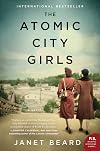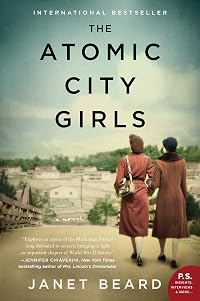
The Atomic City Girls
by Janet Beard
On This Page
Description
In the bestselling tradition of Hidden Figures and The Wives of Los Alamos, comes this riveting novel of the everyday people who worked on the Manhattan Project during World War II."What you see here, what you hear here, what you do here, let it stay here."
In November 1944, eighteen-year-old June Walker boards an unmarked bus, destined for a city that doesn't officially exist. Oak Ridge, Tennessee has sprung up in a matter of months—a town of trailers and segregated houses, 24-hour show more cafeterias, and constant security checks. There, June joins hundreds of other young girls operating massive machines whose purpose is never explained. They know they are helping to win the war, but must ask no questions and reveal nothing to outsiders.
The girls spend their evenings socializing and flirting with soldiers, scientists, and workmen at dances and movies, bowling alleys and canteens. June longs to know more about their top-secret assignment and begins an affair with Sam Cantor, the young Jewish physicist from New York who oversees the lab where she works and understands the end goal only too well, while her beautiful roommate Cici is on her own mission: to find a wealthy husband and escape her sharecropper roots. Across town, African-American construction worker Joe Brewer knows nothing of the government's plans, only that his new job pays enough to make it worth leaving his family behind, at least for now. But a breach in security will intertwine his fate with June's search for answers.
When the bombing of Hiroshima brings the truth about Oak Ridge into devastating focus, June must confront her ideals about loyalty, patriotism, and war itself.
. show less
Tags
Recommendations








Member Reviews
To say that The Atomic City Girls is disappointing is to mildly understand the sentiment. I had high hopes of an intimate glimpse into life in Oak Ridge with its layers of secrets. I thought it would be another war novel that is both educational and entertaining. Unfortunately, it is neither of those things, in my opinion, which only compounds my longing for what could have been instead of what is.
For the amount of time we see June and her girlfriends actually working, the story could literally take place anywhere. Seriously, we see June at her station doing mysterious things for all of a page or two. That is all that ties June to the Manhattan Project. She shows curiosity but only after she meets and begins to date the physicist. Even show more then, we do not get specifics on what these so-called Atomic City girls were actually doing for the project. To me, it makes the title feel like a misnomer in a way because we don’t get to see what they are doing to help win the war.
Instead, Ms. Beard chooses to focus on what happens when the girls do not work. There is a lot of flirting, more dancing, shopping, going to movies, and really living the high life. In a way, it is a bit disturbing just how much June enjoys her life in Oak Ridge and the luxuries to which she has access while the rest of the country is on strict rationing. Cici, the roommate, proves to be a money-grubbing socialite wannabe who is willing to do just about whatever it takes to find herself a wealthy husband. She is the cold-hearted bitch to Jane’s country girl wholesomeness, and both are more than a little sickening in their self-righteousness.
Because focusing on the girls’ social life is not enough apparently, Ms. Beard also throws in the addition of Joe Brewer. If I were a cynical person – and I am – I would surmise that Joe appears in the book in an effort to diversify it and so she can show that while the girls were living large, the African-American workers were stuck in little more than cardboard shanties with fewer available amenities and much more difficult labor. He provides an opportunity to show the racial divide in Tennessee in the 1940s, which is neither a surprise nor shocking in its ugliness. While there is an attempt to connect all of the characters, the connection is flimsy at best and is a convenient plot device at worst.
The Atomic City Girls is supposed to show the morality issues associated with building the first nuclear weapon and the lengths to which the government was willing to go to not only keep it a secret but also to keep its workers happy so that they would stay on the job and finish the task. The morality though comes across as very black and white. You have those who celebrate the weapon, once it becomes public knowledge, knowing it is the best way to end the war. Then you have those who are so appalled at what they built that they struggle live with the guilt. Ms. Beard shows almost nothing in-between the two opinions, even though you would think that is where most of the workers on the Manhattan Project would fall into that middle gray area.
The whole story comes across as soap operatic, complete with fights over men and women backstabbing each other. The connections between all characters remain nebulous no matter how much Ms. Beard tries to bring them together into a cohesive cast. Any connections make no difference because no of the characters are ones that tug on your emotions. They are all flat, relatively insipid and uninteresting. Worst of all though is the utter lack of information I learned from reading this novel. I wanted to learn what these Atomic City girls did for the project and learned nothing. Instead, I got a doomed, wartime love story crossed with a forced morality tale about the dangers of blindly following orders with an added glimpse at the racial injustices that existed in the day. Were it well-written with compelling characters, it might be easier to overlook the lack of atomic anything in The Atomic City Girls. Instead, I closed the last page knowing this is one I should have DNF’d but was too stubborn to do so. show less
For the amount of time we see June and her girlfriends actually working, the story could literally take place anywhere. Seriously, we see June at her station doing mysterious things for all of a page or two. That is all that ties June to the Manhattan Project. She shows curiosity but only after she meets and begins to date the physicist. Even show more then, we do not get specifics on what these so-called Atomic City girls were actually doing for the project. To me, it makes the title feel like a misnomer in a way because we don’t get to see what they are doing to help win the war.
Instead, Ms. Beard chooses to focus on what happens when the girls do not work. There is a lot of flirting, more dancing, shopping, going to movies, and really living the high life. In a way, it is a bit disturbing just how much June enjoys her life in Oak Ridge and the luxuries to which she has access while the rest of the country is on strict rationing. Cici, the roommate, proves to be a money-grubbing socialite wannabe who is willing to do just about whatever it takes to find herself a wealthy husband. She is the cold-hearted bitch to Jane’s country girl wholesomeness, and both are more than a little sickening in their self-righteousness.
Because focusing on the girls’ social life is not enough apparently, Ms. Beard also throws in the addition of Joe Brewer. If I were a cynical person – and I am – I would surmise that Joe appears in the book in an effort to diversify it and so she can show that while the girls were living large, the African-American workers were stuck in little more than cardboard shanties with fewer available amenities and much more difficult labor. He provides an opportunity to show the racial divide in Tennessee in the 1940s, which is neither a surprise nor shocking in its ugliness. While there is an attempt to connect all of the characters, the connection is flimsy at best and is a convenient plot device at worst.
The Atomic City Girls is supposed to show the morality issues associated with building the first nuclear weapon and the lengths to which the government was willing to go to not only keep it a secret but also to keep its workers happy so that they would stay on the job and finish the task. The morality though comes across as very black and white. You have those who celebrate the weapon, once it becomes public knowledge, knowing it is the best way to end the war. Then you have those who are so appalled at what they built that they struggle live with the guilt. Ms. Beard shows almost nothing in-between the two opinions, even though you would think that is where most of the workers on the Manhattan Project would fall into that middle gray area.
The whole story comes across as soap operatic, complete with fights over men and women backstabbing each other. The connections between all characters remain nebulous no matter how much Ms. Beard tries to bring them together into a cohesive cast. Any connections make no difference because no of the characters are ones that tug on your emotions. They are all flat, relatively insipid and uninteresting. Worst of all though is the utter lack of information I learned from reading this novel. I wanted to learn what these Atomic City girls did for the project and learned nothing. Instead, I got a doomed, wartime love story crossed with a forced morality tale about the dangers of blindly following orders with an added glimpse at the racial injustices that existed in the day. Were it well-written with compelling characters, it might be easier to overlook the lack of atomic anything in The Atomic City Girls. Instead, I closed the last page knowing this is one I should have DNF’d but was too stubborn to do so. show less
 This review was written for LibraryThing Early Reviewers.
This was a interesting slice of WWII history. The story is about the plant and town that grew in the later days of WWII to work on separating uranium for the bombs later used in Japan. For many local farm families in Tennessee, it was a boon to their economy to have family members go work at the plant. Secrecy was a must, and I thought the historical parts about loose lips and what would happen if they even wrote something in a letter very interesting. June Walker follows her sister to Oak Ridge, but I thought it was strange they didn't have much interaction. June lives with roommates who do work similar to her new job, watching needles and dials in a big factory setting. One of her roommates, Cici, is there to find a husband among the show more many eligible Army men. A black man from Alabama provides the viewpoint from their side of the town, and the jobs that are available to them. Rounding out the main cast is a somewhat disillusioned professor from California. While I thought the bones of the story were very interesting, I didn't connect much with the characters because I had trouble believing that they would all interact so conveniently. show less
This review was written for LibraryThing Early Reviewers.During WWII, a small farming town in Tennessee was quietly demolished and a government facility popped up nearly overnight. The facility at Oak Ridge hired many young woman to spin dial and push levers, but none of the young women knew what they were working on, only that they received decent pay and housing. Among the young women were scientists, military and families all living and working under tight security and keeping secrets. Many people working there didn't know what they were working on or the consequences. One of the women working at Oak Ridge is eighteen year old June, a local girl whose grandfather once lived where Oak Ridge now sits. June and her roommate Cici quickly become acclimated to the strange life at Oak Ridge. show more Cici's goal while at Oak Ridge is simple to strip away her penniless background and emerge as a well-bred young woman who can catch the eye of an affluent man. June, on the other hand would like to move on from the death of her fiance, Ronnie and enjoy life again. June may find the answer in physicist, Dr. Samuel Cantor. However, as their relationship grows, Sam shares the secrets of what exactly everyone at Oak Ridge is working on and the mental toll of what they are doing begins to trouble Sam more and more.
This is a fictionalized account of the historic town of Oak Ridge that captures a small piece of several employee's stories. The Atomic City Girls is a lighter story than the non-fiction The Girls of Atomic City; however, it is still just as important in the sense that it brings to light the important work that was done during the war by a variety of people. Throughout the book, we follow the stories of June, Cici, Samuel and Joe. So, I did find the title a little bit of a misnomer, although, all of their stories are important. One aspect that is very well highlighted are the stories of Ralph, Joe and Shirley, the African-American workers at Oak Ridge. While working, they were segregated and discriminated against and worked towards as well as gained some equal rights while at Oak Ridge. June's story was the most compelling to me as we learned about the tight security and how the young women were trained as well as the diverse social life offered at Oak Ridge. Sam's point of view offered a look at the mental struggle of the people who knew exactly what they were building and what it would accomplish. The story was accompanied by actual photos of Oak Ridge, which helped to beef up the historical aspects, however I do wish there was just a little more history in my historical fiction.
This book was received in exchange for an honest review. show less
This is a fictionalized account of the historic town of Oak Ridge that captures a small piece of several employee's stories. The Atomic City Girls is a lighter story than the non-fiction The Girls of Atomic City; however, it is still just as important in the sense that it brings to light the important work that was done during the war by a variety of people. Throughout the book, we follow the stories of June, Cici, Samuel and Joe. So, I did find the title a little bit of a misnomer, although, all of their stories are important. One aspect that is very well highlighted are the stories of Ralph, Joe and Shirley, the African-American workers at Oak Ridge. While working, they were segregated and discriminated against and worked towards as well as gained some equal rights while at Oak Ridge. June's story was the most compelling to me as we learned about the tight security and how the young women were trained as well as the diverse social life offered at Oak Ridge. Sam's point of view offered a look at the mental struggle of the people who knew exactly what they were building and what it would accomplish. The story was accompanied by actual photos of Oak Ridge, which helped to beef up the historical aspects, however I do wish there was just a little more history in my historical fiction.
This book was received in exchange for an honest review. show less
This is a pleasant enough romance, but the only thing that lifts it above the usual is its background – the Oak Ridge research facility during WWII’s Manhattan Project. It focuses on two young women workers there – June and Cici, who become roommates. Both are from poor backgrounds but Cici has invented a moonlight and magnolia history for herself which, she hopes, will let her land a successful husband and transcend her lower-class beginnings. June meanwhile finds herself increasingly attracted to one of the physicists there – a man who is nearly twice her age and almost her polar opposite in background, education, and religion.
There’s also a third plot thread, which is really the most affecting, dealing with the Black show more laborers who worked at Oak Ridge. It’s unfortunate that Beard chose to concentrate on the romance stories rather than on the racial tensions which never really were subsumed in the war efforts. The Black work force lived and labored under truly dreadful conditions, and the efforts of some of them to attain equal pay and housing in many ways fueled the anger and the drive for equal rights that would erupt 20 years later.
I had two major quibbles, even with the romance threads. First, as June and Sam’s romance heats up, they become sexually active but worry about her becoming pregnant. It’s the 1940s – why the hell didn’t Sam just buy some condoms? And second, the shallowly-sophisticated Cici has taken country girl June under her wing, taught her to use makeup and urged her to date, but she suddenly turns a cold shoulder to June when she and Sam become an item. Her inexplicable animosity ultimately leads her to a vicious betrayal which makes no sense at all. Cici by this time has her hooks into an Army officer; it’s not like she should be jealous of June, whose romance is floundering in any case by that time.
The book ends with a totally unnecessary epilogue outlining the lives of the major characters after the war, and is another odd choice. One might expect such a summary had the characters been represented as historical figures, but they are fictional constructs, one and all.
Oddly enough, this is the second book I’ve read recently about scientists working on the project who began to have serious ethical conflicts about it. ([Hanna’s War] by Jan Eliasberg was the other.) Beard does make good use of this internal conflict within the technical team, and provides secondary characters who express a wide range of opinions on the necessity and morality of creating such a devastating weapon. show less
There’s also a third plot thread, which is really the most affecting, dealing with the Black show more laborers who worked at Oak Ridge. It’s unfortunate that Beard chose to concentrate on the romance stories rather than on the racial tensions which never really were subsumed in the war efforts. The Black work force lived and labored under truly dreadful conditions, and the efforts of some of them to attain equal pay and housing in many ways fueled the anger and the drive for equal rights that would erupt 20 years later.
I had two major quibbles, even with the romance threads. First, as June and Sam’s romance heats up, they become sexually active but worry about her becoming pregnant. It’s the 1940s – why the hell didn’t Sam just buy some condoms? And second, the shallowly-sophisticated Cici has taken country girl June under her wing, taught her to use makeup and urged her to date, but she suddenly turns a cold shoulder to June when she and Sam become an item. Her inexplicable animosity ultimately leads her to a vicious betrayal which makes no sense at all. Cici by this time has her hooks into an Army officer; it’s not like she should be jealous of June, whose romance is floundering in any case by that time.
The book ends with a totally unnecessary epilogue outlining the lives of the major characters after the war, and is another odd choice. One might expect such a summary had the characters been represented as historical figures, but they are fictional constructs, one and all.
Oddly enough, this is the second book I’ve read recently about scientists working on the project who began to have serious ethical conflicts about it. ([Hanna’s War] by Jan Eliasberg was the other.) Beard does make good use of this internal conflict within the technical team, and provides secondary characters who express a wide range of opinions on the necessity and morality of creating such a devastating weapon. show less
My family visited Oak Ridge, TN on one of our family vacations--probably in the 1970s or 1980s. At first, I thought the book might be more like "Hidden Figures", focusing on real people who worked at Oak Ridge and the fact that women were hired there during the war effort since so many men were away fighting, but this is more of a novel (fiction but with some historical facts). The novel focuses on several groups of people: people who came to work at Oak Ridge with little knowledge of what their jobs were working toward; people who came to work at Oak Ridge knowing that they were working toward something big; and support people like construction workers and janitors.
June Walker is a Tennessee country girl who follows her older sister to show more the area after losing her soldier fiance in the war. Cecelia Roberts is a girl who taught herself to behave like the rich in order to land a well-to-do husband. At the start, neither really knows what the job they are trained to do is about.
Joe Brewer is an African-American man from Alabama, who, along with his friend Ralph, came up from Alabama to take advantage of the better paying construction jobs Oak Ridge could offer. They live in a segregated part of Oak Ridge. Ralph meets Shirley Crawford who encourages him to get involved in efforts to improve the African-American conditions. Joe is more content to let things be. After construction slows, Joe is given a janitorial job and is able to find a position for his wife so that she and his family can move to the area. They are able to live together as a family thanks to the efforts of Shirley and Ralph and others like them.
Dr. Sam Cantor is a physicist brought in to work on the project. He's one of the few who has an idea of what the plant is working toward. He's a very unhappy man at his core. He struggles with his Jewish family in Europe probably being killed because of their beliefs. He struggles with knowing that what he's helping to create will have horrific effects, including possibly killing innocent people. When he meets June, being with her seems to stave off some of his unhappiness and he enjoys being able to teach her about things like physics and science, but the effect doesn't last forever and soon he's back to drinking.
I liked that the epilogue told us what happened to the characters after they left Oak Ridge. I'm glad June found someone to love her (and whom I hope she loved) and that she was able to surprise others with her love of and understanding of science at a time when the scientific world probably wasn't as popular with women. CeCe got what she wanted--she got to be part of high-society--though she didn't fool her mother-in-law one bit with her act. But she may have found that wanting is not the same as having. Ralph sacrificed himself for his beliefs. Joe and Moriah lived out their lives and raised their children. Sam discovered too late that he really had loved June.
It was an interesting look into history and into how secretive the atomic bomb project was at the time. I did think it was odd that after all the secrecy, the President just announced it after the first bomb was dropped on Hiroshima--but it was a different time, perhaps a more trusting time. It just seemed odd to go from secrecy to being able to discuss many aspects all in a day's time. It made it doubly odd that June was dismissed for saying the word "bomb" and being overheard by others a day or so before it became known to the world. show less
June Walker is a Tennessee country girl who follows her older sister to show more the area after losing her soldier fiance in the war. Cecelia Roberts is a girl who taught herself to behave like the rich in order to land a well-to-do husband. At the start, neither really knows what the job they are trained to do is about.
Joe Brewer is an African-American man from Alabama, who, along with his friend Ralph, came up from Alabama to take advantage of the better paying construction jobs Oak Ridge could offer. They live in a segregated part of Oak Ridge. Ralph meets Shirley Crawford who encourages him to get involved in efforts to improve the African-American conditions. Joe is more content to let things be. After construction slows, Joe is given a janitorial job and is able to find a position for his wife so that she and his family can move to the area. They are able to live together as a family thanks to the efforts of Shirley and Ralph and others like them.
Dr. Sam Cantor is a physicist brought in to work on the project. He's one of the few who has an idea of what the plant is working toward. He's a very unhappy man at his core. He struggles with his Jewish family in Europe probably being killed because of their beliefs. He struggles with knowing that what he's helping to create will have horrific effects, including possibly killing innocent people. When he meets June, being with her seems to stave off some of his unhappiness and he enjoys being able to teach her about things like physics and science, but the effect doesn't last forever and soon he's back to drinking.
I liked that the epilogue told us what happened to the characters after they left Oak Ridge. I'm glad June found someone to love her (and whom I hope she loved) and that she was able to surprise others with her love of and understanding of science at a time when the scientific world probably wasn't as popular with women. CeCe got what she wanted--she got to be part of high-society--though she didn't fool her mother-in-law one bit with her act. But she may have found that wanting is not the same as having. Ralph sacrificed himself for his beliefs. Joe and Moriah lived out their lives and raised their children. Sam discovered too late that he really had loved June.
It was an interesting look into history and into how secretive the atomic bomb project was at the time. I did think it was odd that after all the secrecy, the President just announced it after the first bomb was dropped on Hiroshima--but it was a different time, perhaps a more trusting time. It just seemed odd to go from secrecy to being able to discuss many aspects all in a day's time. It made it doubly odd that June was dismissed for saying the word "bomb" and being overheard by others a day or so before it became known to the world. show less
The Atomic City Girls is an exceptionally detailed historical fiction novel. It follows the lives of several fictitious individuals living in Oak Ridge working, unknowingly, on helping to create the Atomic bomb. The first half of the novel is pure imagery - setting the stage, portraying the lives of people living through the war and just trying to get by any way they can. I loved the included pictures of Oak Ridge, which really set the foundation for this historical novel. But, the characters were lacking an essential element - I simply did not like them. With the one exception of Joe, the only character who did not lie his way through the story, every other character was someone I would not have wanted to bump into on the street. The show more one redeeming quality was the very end of the book, as the characters begin to deal with the implications of what they have done, in participating in the creation of a bomb that killed so many people. They suddenly became real people, well-rounded, while up until this point they were very flat and unlikable. I really wanted to like this book, even if simply for the fact that it was depicting a little-known facet of American history, but in the end I was disappointed. show less
This review was written for LibraryThing Early Reviewers.Oak Ridge, TN was created by the army during WII as a secret facility to aid in the development of the first atomic bomb. Young women came to work there with the promise of high wages, but they didn’t know what they were working on, and were not allowed to talk to anyone about their jobs. I enjoyed learning about the facility, but had a hard time engaging in the story. I just didn’t want to keep picking up the novel. The vintage pictures, however, were delightful. I’m so glad they were included.
This review was written for LibraryThing Early Reviewers.Members
- Recently Added By
Lists

Books Read in 2025
4,091 works; 97 members
Author Information

3 Works 891 Members
Some Editions
Common Knowledge
- Canonical title
- The Atomic City Girls
- Original publication date
- 2018
- People/Characters
- June Walker; Dr. Samuel “Sam” A. Cantor; Joe Brewer; Cici (Cecilia) Roberts (Cecilia); Mary Walker; Bill (show all 67); Rose Walker; Frank Walker; Jericho Foster; Moriah Brewer; Elly Brewer; Becky Brewer; Ben Brewer; Ralph Hitchens; Shirley Crawford; Otis; Sarah; Charlie Stone; Ann Stone; Max Kingsley; Dr. Armstrong; Will Kellerman; Artie Collins; Ernest Lawrence; Lizbeth; Tom Wolcott; Eleanor Wolcott; Bobby; Ronnie Lawson; Maggie Lawson; Evie Lawson; Leonard McMahon; Ollie Jackson; Solomon Cantor; Dworja Cantor; Jon Cantor; Sarah Cantor; Rachel Cantor; Miss Collins; Mrs. Ransom; Doug Newman; Private John Bagger; Homer Clabough; Captain Greeley; Mrs. Greeley; Mike Greeley; Jerry Greeley; Lucy Greeley; Jason Greeley; Robert Wales; Colonel Hodgson; Sergeant Johnson; Miss Andrews; Mr. Geary; Douglas Milton; Pete; Sophie; Barbara; Jerry; Aunt Lillian; Aunt Gladys; Esther Lieberman; Jonathan Cantor; Dr. Timothy Houston; Annie Houston; Peter Houston; John Hendrix
- Important places
- Oak Ridge, Tennessee, USA; Knoxville, Tennessee, USA; Gatlinburg, Tennessee, USA; Los Alamos, New Mexico, USA
- Important events
- World War II; Surrender of Germany in World War II; Atomic bombing of Hiroshima; Atomic bombing of Nagasaki; Japanese surrender after World War II
- Dedication
- In memory of my grandmother Eunice Beard
- First words
- The news that June’s grandfather was being evicted had come from her older sister Mary, who worked in town at Langham’s Drug Store.
- Quotations
- Her mother had always told her that working hard would get her anything she wanted, but her hardworking mother’s body was worn out at forty, and her mother’s future held nothing but more work. — p. 62
But being a parent meant always being nostalgic for how your children used to be. — p. 104
When he looked at his children, he felt love like he’d never known before, but also this suffocating weight. It was the terror of knowing that even if Joe dedicated the rest of his life to doing right by them, it wouldn’t... (show all) be enough. He couldn’t protect them from life. He always told his children he would keep them safe, but he couldn’t really. — p. 128
“We’re no better. What’s our excuse for not fighting?”
“Our brilliant minds. With any luck, we can kill far more people by thinking over here than by fighting over there.” — p. 144
“A mind like yours shouldn’t be wasted on the battlefield. You’re doing important work here.” — p. 175
“You’re always telling me to be careful. Shirley ain’t dangerous!”
“All women are dangerous.” — p. 190 - Last words
- (Click to show. Warning: May contain spoilers.)All she could say was that she had entered the atomic age just a moment before the rest of the world.
- Blurbers
- Jennifer Chiaverini; Maggie Leffler; Madeline Miller
- Original language
- English
Classifications
Statistics
- Members
- 811
- Popularity
- 34,032
- Reviews
- 68
- Rating
- (3.35)
- Languages
- English
- Media
- Paper, Audiobook, Ebook
- ISBNs
- 10
- ASINs
- 2