On This Page
Description
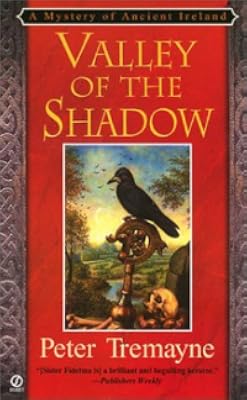
Sister Fidelma and her companion, Brother Eadulf, journey to a remote Irish valley whose inhabitants still adhere to ancient Druidic traditions, only to become embroiled in an investigation into the deaths of thirty-three young men, who may have been thevictims of pagan sacrifice.Tags
Recommendations

Member Reviews
There is much improved character development for both Fidelma and Eadulf here (in contrast to The Subtle Serpent (Book #4)). Still, there are some issues of editing. The same EXACT sentence is used to describe a woman on two occasions: “face was slightly rounded, almost heart-shaped and not unattractive.” (P.4, then again on 33-34). If not for the big reveal at the end, this might be dismissed as just poor editing, but in light of the conclusion, it is even more aggravating.
Also tiresome is Eadulf’s hangover. The less said about that the better.
While I realize there is an attempt to make each book readable without the series chronology, there are far too many mentions of Fidelma’s status as a dálaigh qualified to the level of show more anruth, and all that entails. It becomes tiresome over the course of a single book.
Still, the mystery here is bold and complex. The twists and turns wind their way to the edge of our frustration, yet we continue to turn the page in the hopes that it will all make sense when our sleuth unravels the Celtic knot. There is a worthwhile subtext as well, regarding religion, that is as relevant to our current times as it was in 7th-century Ireland. Fans of Fidelma will enjoy the deep shadows and dark secrets, and can swiftly move past the bits of repetition. show less
Also tiresome is Eadulf’s hangover. The less said about that the better.
While I realize there is an attempt to make each book readable without the series chronology, there are far too many mentions of Fidelma’s status as a dálaigh qualified to the level of show more anruth, and all that entails. It becomes tiresome over the course of a single book.
Still, the mystery here is bold and complex. The twists and turns wind their way to the edge of our frustration, yet we continue to turn the page in the hopes that it will all make sense when our sleuth unravels the Celtic knot. There is a worthwhile subtext as well, regarding religion, that is as relevant to our current times as it was in 7th-century Ireland. Fans of Fidelma will enjoy the deep shadows and dark secrets, and can swiftly move past the bits of repetition. show less
When Sister Fidelma is sent as delegate for her brother and the Bishop of Imleach to negotiate the establishment of a church and school in the pagan-controlled valley of Gleann Geis, she and Brother Eadulf stumble across what appears to be a pagan human sacrifice with thirty-three victims. Her efforts to investigate and her main mission pull her in different directions until another visiting cleric is murdered and Fidelma herself is accused of killing him.
Another very enjoyable investigation into murders with political and religious ramifications in 7th century AD Ireland.
Another very enjoyable investigation into murders with political and religious ramifications in 7th century AD Ireland.
For those who haven't read any of the Sister Fidelma mysteries, she is a religieuse and former member of the community of St. Brigid of Kildare and a qualified dalaigh, or advocate of the ancient court laws, her life and times are explained in detail before you read any of the books. These books take place in 666 AD Ireland at a time when there were five kingdoms. The Four provincial kings of Ulaidh, Connacht, Muman, and of Laigin all of which gave their allegiance to the High King of the fifth province, which is ruled from Tara, and which is an honorary title that rotates among the various kingdoms when each High King dies. Among the provincial kingdoms there were also smaller clan territories.
The Brehon Laws rule the land. It is quite show more a system. Women are able to hold any position they wish, including political positions, warriors, doctors, magistrates, lawyers, and judges. They could divorce their husbands and receive part of the property and could inherit property. They were protected from rape and sexual harassment. This land was the most feminist era until today.
Fidelma was born at Cashel, capital of the kingdom of Muman. Her brother is their king. At the age of fourteen, the Age of Choice, she chose to study the law and became one of the highest ranking members of the courts, a dalaigh. The schools of Ireland were quite famous and people from all over Europe attended, since the rest of it was going through the Dark Ages. A serious debate is going on between those who believe in being "Irish Christians" and Roman Christians. Irish Christian priests could marry, be women (there was even a female bishop), and the monasteries and nunneries could be co-habituated with the religious marrying and raising their children in these places. Roman Christians were now leaning toward making priests remain celibate, though that wouldn't be made a rule until around the 11th century. In the 9th century, Ireland will convert to the Roman way of doing things, but they keep the Brehon Laws until the 17th century, when the British outlaw them.
Having set the stage, the book begins with Fedelma's brother, Colgu of Cashel asks her to go to the remote valley of Gleann Geis whose people were mostly still practicing the Druid ways and talk to the chieftain, who has decided to build a school and a church for the growing number of Christians in his realm. Fedelma sets out with her friend Brother Eadulf, a practitioner of the Roman ways, who works under the Bishop of Canterbury. When they get close to their destination, they find thirty-three naked bodies in a sunwise circle and bearing the marks of the ancient threefold death, where the body is strangled, knifed, and bludgeoned, of pagan times.
Fedelma is duty bound to investigate, but knows she must first go and greet Laisre, and attend her duty to her brother. Olga, the chieftain's twin sister meets them and is shocked to find the bodies. She gives her an escort into their nearly impregnable estate, that has only one way in and one way out and is against a mountain. When she arrives, she discovers Brother Solin of Armagh of the Northern Kingdom, who believes he should be the religious leader of Ireland, and his scribe there under mysterious circumstances.
The negotiations get off to a rocky start and become interrupted when one night Fedelma hears Brother Solin say that Cashel will fall by the end of the summer. She leaves the hostel and follows him to the stable where she sees Olga, in a dark cloak leaving the stables and the dead body of Brother Solin within. As she leans over the body to hear his last words, one of the sentries finds her and accuses her of murder. Now Fedelma finds herself on the other end of the law and must trust her friend Eadulf to secure her release from prison in order to catch the thief herself. Olga has the believable testimony of her husband that she was in bed that night, but Fedelma knows what she saw, even if it doesn't make sense.
This will not be the first death in this land and a larger, more fiendish plot is at work in Gleann Geis involving people from other kingdoms who wish to unite Ireland under one king's rule. This is a really great series and I'm not just saying that because Fedelma is both Irish and a redhead. There's always this undercurrent between her and Eadulf, who has sort of believes those who hold positions in the faith should be celibate. Fedelma has found herself in a hostile land, made even more hostile after the death of Solin and her accusation of Olga. Though there are some Christians, most of the people follow the old way and look at her with great suspicion. You truly wonder if she will get out of this book alive and be able to stop an incredible plot and a murderer before the end is near. This is one of the best of the series. show less
The Brehon Laws rule the land. It is quite show more a system. Women are able to hold any position they wish, including political positions, warriors, doctors, magistrates, lawyers, and judges. They could divorce their husbands and receive part of the property and could inherit property. They were protected from rape and sexual harassment. This land was the most feminist era until today.
Fidelma was born at Cashel, capital of the kingdom of Muman. Her brother is their king. At the age of fourteen, the Age of Choice, she chose to study the law and became one of the highest ranking members of the courts, a dalaigh. The schools of Ireland were quite famous and people from all over Europe attended, since the rest of it was going through the Dark Ages. A serious debate is going on between those who believe in being "Irish Christians" and Roman Christians. Irish Christian priests could marry, be women (there was even a female bishop), and the monasteries and nunneries could be co-habituated with the religious marrying and raising their children in these places. Roman Christians were now leaning toward making priests remain celibate, though that wouldn't be made a rule until around the 11th century. In the 9th century, Ireland will convert to the Roman way of doing things, but they keep the Brehon Laws until the 17th century, when the British outlaw them.
Having set the stage, the book begins with Fedelma's brother, Colgu of Cashel asks her to go to the remote valley of Gleann Geis whose people were mostly still practicing the Druid ways and talk to the chieftain, who has decided to build a school and a church for the growing number of Christians in his realm. Fedelma sets out with her friend Brother Eadulf, a practitioner of the Roman ways, who works under the Bishop of Canterbury. When they get close to their destination, they find thirty-three naked bodies in a sunwise circle and bearing the marks of the ancient threefold death, where the body is strangled, knifed, and bludgeoned, of pagan times.
Fedelma is duty bound to investigate, but knows she must first go and greet Laisre, and attend her duty to her brother. Olga, the chieftain's twin sister meets them and is shocked to find the bodies. She gives her an escort into their nearly impregnable estate, that has only one way in and one way out and is against a mountain. When she arrives, she discovers Brother Solin of Armagh of the Northern Kingdom, who believes he should be the religious leader of Ireland, and his scribe there under mysterious circumstances.
The negotiations get off to a rocky start and become interrupted when one night Fedelma hears Brother Solin say that Cashel will fall by the end of the summer. She leaves the hostel and follows him to the stable where she sees Olga, in a dark cloak leaving the stables and the dead body of Brother Solin within. As she leans over the body to hear his last words, one of the sentries finds her and accuses her of murder. Now Fedelma finds herself on the other end of the law and must trust her friend Eadulf to secure her release from prison in order to catch the thief herself. Olga has the believable testimony of her husband that she was in bed that night, but Fedelma knows what she saw, even if it doesn't make sense.
This will not be the first death in this land and a larger, more fiendish plot is at work in Gleann Geis involving people from other kingdoms who wish to unite Ireland under one king's rule. This is a really great series and I'm not just saying that because Fedelma is both Irish and a redhead. There's always this undercurrent between her and Eadulf, who has sort of believes those who hold positions in the faith should be celibate. Fedelma has found herself in a hostile land, made even more hostile after the death of Solin and her accusation of Olga. Though there are some Christians, most of the people follow the old way and look at her with great suspicion. You truly wonder if she will get out of this book alive and be able to stop an incredible plot and a murderer before the end is near. This is one of the best of the series. show less
6th in the Sister Fidelma series.
I have complained in reviews of Tremayne’s characterization of Fidelma, which is the really serious flaw in this series. She comes across as a more or less wooden figure when she’s not angry. There’s almost nothing about her that is likeable, actually because there’s no real person there. All the characters are more or less awkward, but she, the star of the series, is the worst portrayed. What has saved the series is the excellent plotting and the setting—7th century Ireland, with it unique system of laws and anything but unique bloody conflicts.
In this book, thankfully Tremayne does not do much with Fidelma except to have her act, and therefore it’s one of the best installments in the show more series.
The plot is intriguing. At this point in Ireland’s history, the Christian faith has pretty much spread throughout Ireland but naturally, Christians being Christians, there are two sharply different views as to what form that faith should take, and these differences are at times expressed in conflict and murder.
There are pockets of the Old Faith, however, and Fidelma is sent as her king brother’s ambassador to the nearly inaccessible land of one of the sub-chieftains, who wishes to negotiate terms for the construction of a Christian church and school. Nearly at her destination, Fidelma and Brother Eadulf encounter what is clearly a ritual slaughter of 33 young men, arranged in a manner to suggest a pagan rite.
The ensuing encounter with the chieftain and his Druid counselor, and the hostility of the chieftain’s council to the whole idea of bringing in a church and school of the new faith, make fidlema’s visit uncomfortable. Then Fidelma is found in a compromising situation that points to her being the murderer of a cleric from the other sect of the Christian faith.
The plot is well done and moves fast. As usual, there is a great deal of interesting detail about Irish customs, law and the clash between the Roman and Celtic rites of the new Christian faith.
Unfortunately, Tremayne seems to love the Nero Wolfe style of capturing murderers, since there is the now-standard gathering of all the suspects where Fidlema recounts her investigation and conclusions and then dramatically points out the culprit. Perry Mason without the courtroom scene. Still, it’s good.
This is not my favorite series but this book is one of the better ones in it. show less
I have complained in reviews of Tremayne’s characterization of Fidelma, which is the really serious flaw in this series. She comes across as a more or less wooden figure when she’s not angry. There’s almost nothing about her that is likeable, actually because there’s no real person there. All the characters are more or less awkward, but she, the star of the series, is the worst portrayed. What has saved the series is the excellent plotting and the setting—7th century Ireland, with it unique system of laws and anything but unique bloody conflicts.
In this book, thankfully Tremayne does not do much with Fidelma except to have her act, and therefore it’s one of the best installments in the show more series.
The plot is intriguing. At this point in Ireland’s history, the Christian faith has pretty much spread throughout Ireland but naturally, Christians being Christians, there are two sharply different views as to what form that faith should take, and these differences are at times expressed in conflict and murder.
There are pockets of the Old Faith, however, and Fidelma is sent as her king brother’s ambassador to the nearly inaccessible land of one of the sub-chieftains, who wishes to negotiate terms for the construction of a Christian church and school. Nearly at her destination, Fidelma and Brother Eadulf encounter what is clearly a ritual slaughter of 33 young men, arranged in a manner to suggest a pagan rite.
The ensuing encounter with the chieftain and his Druid counselor, and the hostility of the chieftain’s council to the whole idea of bringing in a church and school of the new faith, make fidlema’s visit uncomfortable. Then Fidelma is found in a compromising situation that points to her being the murderer of a cleric from the other sect of the Christian faith.
The plot is well done and moves fast. As usual, there is a great deal of interesting detail about Irish customs, law and the clash between the Roman and Celtic rites of the new Christian faith.
Unfortunately, Tremayne seems to love the Nero Wolfe style of capturing murderers, since there is the now-standard gathering of all the suspects where Fidlema recounts her investigation and conclusions and then dramatically points out the culprit. Perry Mason without the courtroom scene. Still, it’s good.
This is not my favorite series but this book is one of the better ones in it. show less
This was a great read. As a mystery it was well laid out. Actually there were a couple of mysteries to solve.
Sister Fedelma and her companion Brother Aedulf think they are on a mission to negotiate a Christian Church and School in a pagan corner of the realm. They come upon a scene of pagan ritual human sacrifice and that is the start of a pretty good read.
I enjoy these books. The clues are presented in a fashion that has the reader trying to fit the pieces of the puzzle together. I figured out the main culprit in the last 100 pages (no spoilers here) and as is the case with most of these novels, Sister Fedelma spends the last 5 or so pages presenting her findings... some of which confirm your thoughts, others are a bit of a surprise show more but are very logically presented.
I constantly search for the next of the series... as a result you see the slow development of the relationship between Brother Eadulf and Sister Fidelma show less
Sister Fedelma and her companion Brother Aedulf think they are on a mission to negotiate a Christian Church and School in a pagan corner of the realm. They come upon a scene of pagan ritual human sacrifice and that is the start of a pretty good read.
I enjoy these books. The clues are presented in a fashion that has the reader trying to fit the pieces of the puzzle together. I figured out the main culprit in the last 100 pages (no spoilers here) and as is the case with most of these novels, Sister Fedelma spends the last 5 or so pages presenting her findings... some of which confirm your thoughts, others are a bit of a surprise show more but are very logically presented.
I constantly search for the next of the series... as a result you see the slow development of the relationship between Brother Eadulf and Sister Fidelma show less
The simple task of negotiating for a Christian presence in Gleann Geis turns ugly with the discovery bodies of 33 young males murdered by a Druid-like ritual. Fidelma is accused of murder Eadulf must turn advocate to enable Fidelma to investigate. Several more deaths occur before Sister Fidelma sorts it out with legal knowledge and impeccable logic.
Sor Fidelma recibe el encargo de acudir al poblado de Gleann Geis para negociar con su jefe, el temible Laisre,el permiso para construir en su territorio una iglesia cristiana y una escuela que reemplacen los santuarios paganos de los druidas. Sólo llegar, encuentra a la entrada del pueblo los cadáveres de treinta y tres jóvenes en lo que parece el producto de un macabro rito. A partir de este momento, su estancia en el poblado se hace peligrosa, y la investigación que emprende con el misterioso entramado de relaciones entre los habitantes de Grenn Geis.
Dec 25, 2010Spanish
Members
- Recently Added By
Lists

al.vick-parents books
301 works; 1 member
Author Information

148+ Works 15,040 Members
Peter Tremayne is the fiction writing pseudonym of the Celtic scholar and author Peter Berresford Ellis, who was born in Coventry, Warwickshire, England on March 10, 1943. Even though he received a BA and an MA in Celtic Studies, he decided to become a journalist and worked at numerous weekly newspapers throughout England and Ireland. In 1968, he show more published is first book, Wales: A Nation Again, about the Welsh struggle for political independence. He became a full-time writer in 1975 and has published over 90 books under his own name and the pseudonyms Peter Tremayne and Peter MacAlan. One of his best known works under his real name is The Cornish Language and its Literature, which is considered the definitive history of the language. In 1988, he received an Irish Post Award in recognition of his services to Irish historical studies. Under the pseudonym Peter Tremayne, he writes the Sister Fidelma Mystery series. He received the French Prix Historia for the best historical mystery novel of 2010 for Le Concile des Maudits (The Council of the Cursed). (Bowker Author Biography) show less
Some Editions
Series

Belongs to Publisher Series
Aufbau Taschenbuch (2211)
Work Relationships
Is contained in
Common Knowledge
- Canonical title
- Valley of the Shadow
- Original publication date
- 1998
- People/Characters
- Sister Fidelma (dalaigh); Brother Eadulf (Saxon); Artgal (warrior | blacksmith); Bairsech; Colgu of Cashel (King); Colla (tanist) (show all 24); Cruinn (hostel keeper); Brother Dianach (scribe); Mael Duin (king); Esnad; Ibor; Laisre (chieftain); Marga (apothecary); Mel (scribe); Mer (messenger); Murgal (Druid | Brehon); Nemon (sex worker); Orla; Ronan (warrior | farmer); Rudgal (warrior | wagon-maker); Sechnassuch (High King); Segdae (bishop); Brother Solin (cleric); Ultan (bishop)
- Important places
- Cashel, County Tipperary, Ireland; Gleann Geis, County Kerry, Ireland; Ireland
- First words
- Hunters were coming.
Classifications
Statistics
- Members
- 465
- Popularity
- 65,738
- Reviews
- 8
- Rating
- (3.99)
- Languages
- 5 — Dutch, English, French, German, Spanish
- Media
- Paper, Audiobook, Ebook
- ISBNs
- 19
- ASINs
- 7