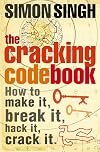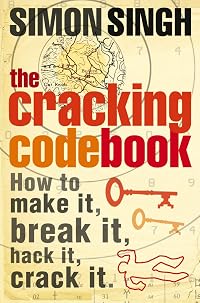
The Code Book: How to Make It, Break It, Hack It, Crack It
by Simon Singh
On This Page
Description
A history of codes and the methodologies for forming and breaking them, from ancient times to modern computers. It's known as the science of secrecy. Cryptography: the encoding and decoding of private information. And it is history's most fascinating story of intrigue and cunning. From Julius Caesar and his Caesar Cipher to the code used by Mary Queen of Scots and her conspiracy to the use of the Engima machine during the Second World War, Simon Singh follows the evolution of secret writing. show more Accessible, compelling, and timely, this international bestseller, now adapted for young people, is sure to make readers see the past-and the future-in a whole new way. show lessTags
Recommendations
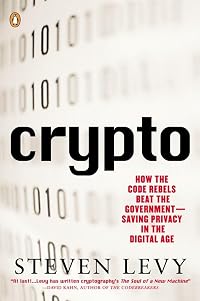
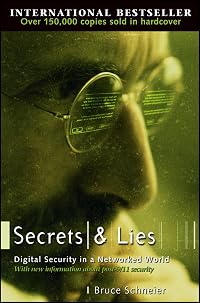
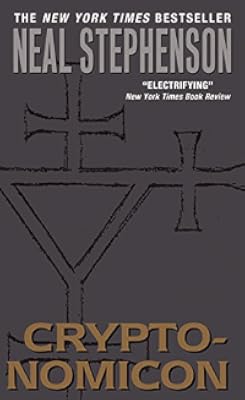
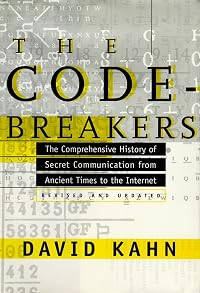





Member Recommendations
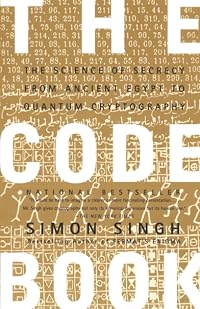
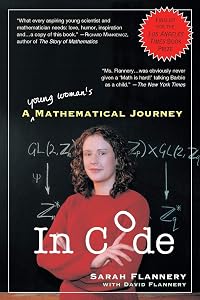
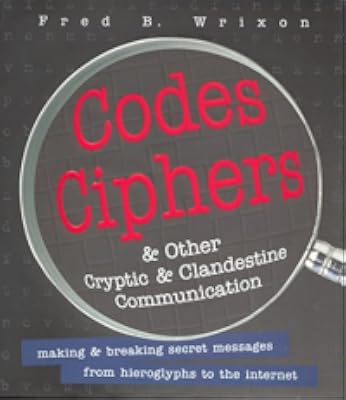
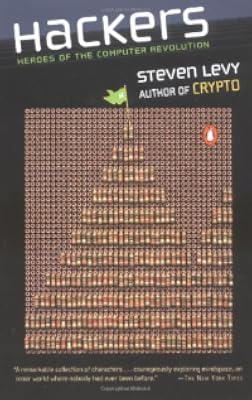
themulhern The Leavitt biography might give this book some additional interest, but even more importantly this book will render much of what was muddled and unclear in Leavitt's presentation of code breaking entirely comprehensible.
Member Reviews
Although this is intended as an introduction to crypto for younger readers, I really enjoyed romping through it. Singh is a great storyteller and a fantastic explainer of often-complex technical setups, and feeling good and inspired to get back into ciphers after this. Not sure how it compares to the Code Book, which I'll probably skim through to see what I've missed.
This is the short version of Singh's "The Code Book" and is roughly half the length. So far it's quite good. It gives an explanation of Babbage's method for cracking the Vigeniere cipher which is entirely comprehensible.
Good intro to cryptography and cryptographic history. Very readable
Ratings
Members
- Recently Added By
Author Information

18+ Works 15,507 Members
Simon Singh was born in Great Britain in 1964 and educated at Imperial College and the University of Cambridge (where he received a Ph. D. in particle physics). He worked at the European Centre for Particle Physics and the BBC's science department. At the BBC, he worked on Tomorrow's World. Singh and John Lynch produced and directed an show more award-winning documentary on Fermat's Last Theory. He later published a book on the same topic. (Bowker Author Biography) show less
Work Relationships
Is an abridged version of
Common Knowledge
- Disambiguation notice
- This is an adapted version of The Code Book for younger readers. Please do not combine with the original work.
Classifications
- Genres
- Nonfiction, Technology
- DDC/MDS
- 652.8 — Applied science & technology Management & public relations Processes of written communication Cryptography
- LCC
- TK5102.92 .S56 — Technology Electrical engineering. Electronics. Nuclear engineering Electrical engineering. Electronics. Nuclear Telecommunication
- BISAC
Statistics
- Members
- 216
- Popularity
- 151,263
- Reviews
- 3
- Rating
- (4.03)
- Languages
- English
- Media
- Paper, Ebook
- ISBNs
- 6
- ASINs
- 2