The Man Who Knew Too Much: Alan Turing and the Invention of the Computer
by David Leavitt
On This Page
Description
A "skillful, literate" (New York Times Book Review) biography of the persecuted genius who helped create the modern computer.To solve one of the great mathematical problems of his day, Alan Turing proposed an imaginary computer. Then, attempting to break a Nazi code during World War II, he successfully designed and built one, thus ensuring the Allied victory. Turing became a champion of artificial intelligence, but his work was cut short. As an openly gay man at a time when homosexuality was show more illegal in England, he was convicted and forced to undergo a humiliating "treatment" that may have led to his suicide.With a novelist's sensitivity, David Leavitt portrays Turing in all his humanity-his eccentricities, his brilliance, his fatal candor-and elegantly explains his work and its implications. show lessTags
Recommendations







Member Recommendations
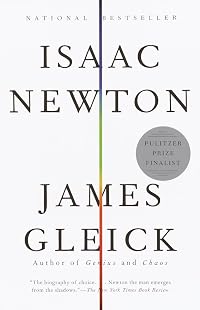
themulhern Alan Turing is a significant character in both. He is a friend of a protagonist in Cryptonomicon from his time at Princeton until his work on encryption of voice. And of course he is the subject of the biography. Many events and concepts turn up in both works. In both books, he seems a rather appealing person, someone you would like to know even though he might tire you out w/ his eccentricities.
themulhern Both are Turing-lite, although one pretends to be a mystery novel.
themulhern The Leavitt biography might give this book some additional interest, but even more importantly this book will render much of what was muddled and unclear in Leavitt's presentation of code breaking entirely comprehensible.
Member Reviews
This is a game effort by a novelist to write a somewhat mathematical biography of a mathematician. The novelist is a gay novelist, and the subject was a gay mathematician; the biography argues for a strong connection between Turing's homosexuality and his mathematical research. I can't get behind this idea too strongly, but I couldn't claim that it was wrong, either.
There is an excellent quotation about Turing's attitude to a profound mathematical question: "Turing was probably in neither group. His isolation (not to mention his homosexuality) disinclined him to over identify with larger collectives." My stance is probably similar.
The initial discussion of set theory and the paradox of the set which can neither be a member of itself or show more a member of its complement is well-presented, but the discussion of Godel's work communicates very little. It is possible to blame Godel for this, though. His construction is a lot of work.
The first Turing machine, on page 68, doesn't work for any right-side operand other than 11 (2). That is, it gives the right answer only if the right operand is 2. It would have made more sense if it had just been a +2 machine. The machine on page 71 works as advertised. As the chapter, "The Universal Machine" winds on its way, the Turing machines become less clearly defined and the paradox is so rushed as to be incomprehensible. I longed to read a more technical discussion that would actually convince.
(Note I had fun entering the first Turing machine in https://turing9000.com, a really visually attractive Turing machine simulator. But for serious work, I would still have to go with JFLAP.)
The next chapter, "God is Slick", discusses Turing's hiatus at Princeton, where he had been sent by his advisor at Cambridge in order to pursue his work on computable numbers with Alonzo Church. At this time, Turing also dipped back into pure, rather than meta-mathematics, working on the Riemann hypothesis, but considering it in a mechanical way. This chapter is less technical, hence less frustrating.
The following chapter, "The Tender Peel", takes Turing to Bletchley Park. Again, it flounders in the technical detail, attempting some discussion but lacking the necessary precision. (The bit about Babbage's approach to the Vigeniere cipher is almost comprehensible.) But the chapter sets the stage effectively, and again leaves me wanting a more rigorous mathematical treatment. "the tender peel" is a quotation from the witch's song in the Disney film, "Sleeping Beauty". Turing takes a bite at the apple which will leave him a person of interest to the British government for the rest of his life.
In "The Electronic Athlete" Turing moves on from Bletchley Park and begins work on voice encryption and, at the National Physics Laboratory, the construction of the ACE computer. It is not really clear how much the ACE was real, and how Turing's ideas were really so different.
In "The Imitation Game" Turing moves to Manchester to work on a new machine with his former advisor, Newman. The chair of the department of neurosurgery at Manchester, Sir Geoffrey Jefferson, gives a lecture preemptively refuting machine intelligence. The talk was humorous in parts, but smug in a way that would have gone over poorly with Turing, who, like Darwin, felt that the constant, implicit assumption that humans were superior because the qualities humans ascribe to themselves are the ones that they insist are the superior qualities, was boring and ignorant. Turing publishes his eerie "Computing Machinery and Intelligence" paper in the journal "Mind". This paper takes a tender and very sympathetic attitude toward machines. He continues to try to solve a variety of problems on his new machine: calculations to disprove the Riemann hypothesis but also, by one of his colleagues, a clever hack to make it play "God Save the King".
"Price's Buoy" is the endgame. Turing is elected to the Royal Society, becomes interested in morphogenesis, is arrested and charged with "gross indecency", writes a short story about his unfortunate experience, and dies. The general consensus is suicide, although some of his friends prefer to believe that the death is accidental. The author gives one paragraph to the possibility that the government might have decided to kill him off as a security threat, or rather to the fact that this possibility didn't seem to occur to anyone who knew him at that time.
Although it does fall down on the mathematical side, not only w/ the bad Turing machine but also with a bunch of typos in the discussion of Mersenne primes, and wanders off into the weeds with some of its mathematical explanation, this book is worth the read. It presents a coherent, individual, and sympathetic view of Turing's life. show less
There is an excellent quotation about Turing's attitude to a profound mathematical question: "Turing was probably in neither group. His isolation (not to mention his homosexuality) disinclined him to over identify with larger collectives." My stance is probably similar.
The initial discussion of set theory and the paradox of the set which can neither be a member of itself or show more a member of its complement is well-presented, but the discussion of Godel's work communicates very little. It is possible to blame Godel for this, though. His construction is a lot of work.
The first Turing machine, on page 68, doesn't work for any right-side operand other than 11 (2). That is, it gives the right answer only if the right operand is 2. It would have made more sense if it had just been a +2 machine. The machine on page 71 works as advertised. As the chapter, "The Universal Machine" winds on its way, the Turing machines become less clearly defined and the paradox is so rushed as to be incomprehensible. I longed to read a more technical discussion that would actually convince.
(Note I had fun entering the first Turing machine in https://turing9000.com, a really visually attractive Turing machine simulator. But for serious work, I would still have to go with JFLAP.)
The next chapter, "God is Slick", discusses Turing's hiatus at Princeton, where he had been sent by his advisor at Cambridge in order to pursue his work on computable numbers with Alonzo Church. At this time, Turing also dipped back into pure, rather than meta-mathematics, working on the Riemann hypothesis, but considering it in a mechanical way. This chapter is less technical, hence less frustrating.
The following chapter, "The Tender Peel", takes Turing to Bletchley Park. Again, it flounders in the technical detail, attempting some discussion but lacking the necessary precision. (The bit about Babbage's approach to the Vigeniere cipher is almost comprehensible.) But the chapter sets the stage effectively, and again leaves me wanting a more rigorous mathematical treatment. "the tender peel" is a quotation from the witch's song in the Disney film, "Sleeping Beauty". Turing takes a bite at the apple which will leave him a person of interest to the British government for the rest of his life.
In "The Electronic Athlete" Turing moves on from Bletchley Park and begins work on voice encryption and, at the National Physics Laboratory, the construction of the ACE computer. It is not really clear how much the ACE was real, and how Turing's ideas were really so different.
In "The Imitation Game" Turing moves to Manchester to work on a new machine with his former advisor, Newman. The chair of the department of neurosurgery at Manchester, Sir Geoffrey Jefferson, gives a lecture preemptively refuting machine intelligence. The talk was humorous in parts, but smug in a way that would have gone over poorly with Turing, who, like Darwin, felt that the constant, implicit assumption that humans were superior because the qualities humans ascribe to themselves are the ones that they insist are the superior qualities, was boring and ignorant. Turing publishes his eerie "Computing Machinery and Intelligence" paper in the journal "Mind". This paper takes a tender and very sympathetic attitude toward machines. He continues to try to solve a variety of problems on his new machine: calculations to disprove the Riemann hypothesis but also, by one of his colleagues, a clever hack to make it play "God Save the King".
"Price's Buoy" is the endgame. Turing is elected to the Royal Society, becomes interested in morphogenesis, is arrested and charged with "gross indecency", writes a short story about his unfortunate experience, and dies. The general consensus is suicide, although some of his friends prefer to believe that the death is accidental. The author gives one paragraph to the possibility that the government might have decided to kill him off as a security threat, or rather to the fact that this possibility didn't seem to occur to anyone who knew him at that time.
Although it does fall down on the mathematical side, not only w/ the bad Turing machine but also with a bunch of typos in the discussion of Mersenne primes, and wanders off into the weeds with some of its mathematical explanation, this book is worth the read. It presents a coherent, individual, and sympathetic view of Turing's life. show less
Alan Turing was one of the most fascinating figures of 20th century history. His theoretical mathematical work that led to the invention of the computer, his key role in breaking the Nazis' Enigma code during WW II, and his acceptance of his own homosexuality at a time when most of society still considered it unnatural, all put him ahead of his time.
David Leavitt is a gay writer who writes both fiction and nonfiction. He has a narrative style which is easy to read. That is a definite asset in this book, since he addresses some mathematical concepts which might not be easy for everyone to understand.
Leavitt gives a great deal of attention to Turing's sexuality, and argues for two points in particular. One is not very controversial. He show more points out that other mathematicians who disagreed with Turing's theoretical views used an incorrect syllogism to dismiss those views: "Turing thinks that machines can think. Turing sleeps with men. Therefore, machines cannot think."
The other point Leavitt brings up is more controversial. He makes the case that Turing's homosexuality made him a better mathematical thinker. Basically, the argument is that Turing knew from his own experience that being gay was perfectly natural and that the majority of society was wrong on the issue; that made him a more original thinker in general, which led to his revolutionary ideas that laid the foundation for the invention of the computer. This idea was very intriguing to me, since I frequently hear a similar idea brought up in connection to gay artists and writers, but rarely in connection to gay mathematicians or scientists. show less
David Leavitt is a gay writer who writes both fiction and nonfiction. He has a narrative style which is easy to read. That is a definite asset in this book, since he addresses some mathematical concepts which might not be easy for everyone to understand.
Leavitt gives a great deal of attention to Turing's sexuality, and argues for two points in particular. One is not very controversial. He show more points out that other mathematicians who disagreed with Turing's theoretical views used an incorrect syllogism to dismiss those views: "Turing thinks that machines can think. Turing sleeps with men. Therefore, machines cannot think."
The other point Leavitt brings up is more controversial. He makes the case that Turing's homosexuality made him a better mathematical thinker. Basically, the argument is that Turing knew from his own experience that being gay was perfectly natural and that the majority of society was wrong on the issue; that made him a more original thinker in general, which led to his revolutionary ideas that laid the foundation for the invention of the computer. This idea was very intriguing to me, since I frequently hear a similar idea brought up in connection to gay artists and writers, but rarely in connection to gay mathematicians or scientists. show less
This is a tough book for me to review, because at least 50% of it went in one ear and out the other. Don't get me wrong, it was interesting, it's just that I couldn't follow a lot of it.
Part of the problem was the diagrams. I'm pretty sure there were a lot of them, especially in the first half of the book, and the poor narrator had to read all of it out loud. I have a feeling that, even if I weren't a more visual learner, I still would have had trouble following the various long series of letters or numbers used to demonstrate Turing's ideas.
The other problem was that the first half of the book didn't seem to have a solid organizational structure. The author would discuss people or ideas that didn't seem to have much connection to show more Turing, then move onto another subject, and then another. It was interesting stuff, but I had trouble seeing how it all connected.
Thankfully, the latter half was much less confusing. I enjoyed the sections on Turing's cryptography work during World War II, and I loved the sections near the end on Turing's ideas about machine learning and artificial intelligence. While I didn't always agree with his theories about how a machine might best be taught, which were based on old-fashioned child rearing techniques (and which I recognize would not necessarily have been considered old-fashioned from his perspective), I found his way of thinking about machines to be fascinating.
He questioned the prevailing tendency to take human superiority for granted. Others repeatedly stated that machines could never be equal to or more superior than humans for various reasons: they would never enjoy the taste of strawberries and cream, never write a sonnet, never listen to a piece of music and feel moved, and never fall in love or cause someone else to fall in love with them. Turing refuted many of these statements and questioned the importance of others. For example, someone probably could create a machine that could enjoy the taste of strawberries and cream, but why would anyone want to do that? The bit about sonnets inspired one of my favorite quotes: “A sonnet written by a machine will be better appreciated by a machine.” To his mind, machines would have a way of viewing and appreciating the world that would likely be different from, rather than inferior to, the way humans would view and appreciate it.
He was also adamant that, when judging machines' intelligence and ability to think, they not be held to higher standards than humans. Humans require training and education before they can properly perform new tasks, and it's accepted that humans will occasionally make mistakes. Why shouldn't machines be given a similar amount of leeway?
I did think that Turing's “imitation game,” which has come to be called the Turing test, contradicted some of his other ideas, since it was based on a machine's ability to convince a human interrogator that it was human. Rather than accepting the idea that a machine's thought processes and ability to appreciate the world would probably be different from a human's, the Turing test brings us back to the idea of human superiority – a machine could only be said to “think” if it could imitate a human being enough to be mistaken for one.
I had thought this book would contain more biographical information than it did, but it was really more about Turing's ideas. The one aspect of Turing's personal life that the author did frequently write about was his homosexuality. The book briefly mentioned that he might not have been permitted to do cryptanalysis work at Bletchley Park if the government had known he was gay, and I was a little amazed that they didn't know, since he seemed to be fairly open about it. I have a feeling that the only reason he kept out of trouble for so long was because he was quiet, shy, and socially awkward. Although I knew from the start of the book that things wouldn't end well for Turing, the final section of the book, on his ill-fated relationship with Arnold Murray, his conviction for gross indecency, the estrogen injections that he was given to “cure” him of his homosexuality, and his eventual suicide (the author also briefly brings up the possibility that Turing was assassinated), was heartbreaking.
And here I thought this was going to be a short review. Anyway, the first half of this book was a mess and would probably have been better in paper or e-book form. The second half of the book was much better and made up for the first half somewhat. According to several reviews, Andrew Hodges' Alan Turing: The Enigma is overall a much better book, so I may see about reading it (or, more likely, listening to it) at some point in the future.
Additional Comments:
I enjoyed Paul Michael Garcia's narration, but the audio quality was very uneven, sometimes noticeably changing in the middle of a sentence.
(Original review posted on A Library Girl's Familiar Diversions.) show less
Part of the problem was the diagrams. I'm pretty sure there were a lot of them, especially in the first half of the book, and the poor narrator had to read all of it out loud. I have a feeling that, even if I weren't a more visual learner, I still would have had trouble following the various long series of letters or numbers used to demonstrate Turing's ideas.
The other problem was that the first half of the book didn't seem to have a solid organizational structure. The author would discuss people or ideas that didn't seem to have much connection to show more Turing, then move onto another subject, and then another. It was interesting stuff, but I had trouble seeing how it all connected.
Thankfully, the latter half was much less confusing. I enjoyed the sections on Turing's cryptography work during World War II, and I loved the sections near the end on Turing's ideas about machine learning and artificial intelligence. While I didn't always agree with his theories about how a machine might best be taught, which were based on old-fashioned child rearing techniques (and which I recognize would not necessarily have been considered old-fashioned from his perspective), I found his way of thinking about machines to be fascinating.
He questioned the prevailing tendency to take human superiority for granted. Others repeatedly stated that machines could never be equal to or more superior than humans for various reasons: they would never enjoy the taste of strawberries and cream, never write a sonnet, never listen to a piece of music and feel moved, and never fall in love or cause someone else to fall in love with them. Turing refuted many of these statements and questioned the importance of others. For example, someone probably could create a machine that could enjoy the taste of strawberries and cream, but why would anyone want to do that? The bit about sonnets inspired one of my favorite quotes: “A sonnet written by a machine will be better appreciated by a machine.” To his mind, machines would have a way of viewing and appreciating the world that would likely be different from, rather than inferior to, the way humans would view and appreciate it.
He was also adamant that, when judging machines' intelligence and ability to think, they not be held to higher standards than humans. Humans require training and education before they can properly perform new tasks, and it's accepted that humans will occasionally make mistakes. Why shouldn't machines be given a similar amount of leeway?
I did think that Turing's “imitation game,” which has come to be called the Turing test, contradicted some of his other ideas, since it was based on a machine's ability to convince a human interrogator that it was human. Rather than accepting the idea that a machine's thought processes and ability to appreciate the world would probably be different from a human's, the Turing test brings us back to the idea of human superiority – a machine could only be said to “think” if it could imitate a human being enough to be mistaken for one.
I had thought this book would contain more biographical information than it did, but it was really more about Turing's ideas. The one aspect of Turing's personal life that the author did frequently write about was his homosexuality. The book briefly mentioned that he might not have been permitted to do cryptanalysis work at Bletchley Park if the government had known he was gay, and I was a little amazed that they didn't know, since he seemed to be fairly open about it. I have a feeling that the only reason he kept out of trouble for so long was because he was quiet, shy, and socially awkward. Although I knew from the start of the book that things wouldn't end well for Turing, the final section of the book, on his ill-fated relationship with Arnold Murray, his conviction for gross indecency, the estrogen injections that he was given to “cure” him of his homosexuality, and his eventual suicide (the author also briefly brings up the possibility that Turing was assassinated), was heartbreaking.
And here I thought this was going to be a short review. Anyway, the first half of this book was a mess and would probably have been better in paper or e-book form. The second half of the book was much better and made up for the first half somewhat. According to several reviews, Andrew Hodges' Alan Turing: The Enigma is overall a much better book, so I may see about reading it (or, more likely, listening to it) at some point in the future.
Additional Comments:
I enjoyed Paul Michael Garcia's narration, but the audio quality was very uneven, sometimes noticeably changing in the middle of a sentence.
(Original review posted on A Library Girl's Familiar Diversions.) show less
British mathematician Alan Turing laid many of the foundations of computer science. He also played a significant role in winning WWII with his work on breaking German codes, only to eventually be driven to suicide by the society he had helped to save, which proved incapable of tolerating his homosexuality. It's an important, fascinating story of genius, triumph and tragedy.... and this book, alas, does not do it justice. As a biography of Turing, it just feels lacking. In fact, the earliest sections are downright annoying, as Leavitt keeps going off on tangents, generally literary ones, that have very little to do with Turing. For a while, I felt as if I were reading an English term paper by someone making a desperate attempt to impress show more the teacher with his reading, not to mention his ability to find sexual subtext in everything up to and including abstract mathematics. It does sort of settle down after that, and portions of it were actually pretty interesting, but I still don't feel as if I've come away from it with much more of an understanding of Turing the person than I had when I started. I think that's largely because Leavitt tells us a lot about Turing -- or rather, about his ideas about Turing -- but shows us very little. And so much of what he has to say is speculation that seldom seems to be particularly well grounded. It's rather one-note speculation, too; Leavitt never does stop with that sexual subtext thing. It is at least rather more successful as an explanation of Turing's work, especially if you're interested in the gritty mathematical details. Although, really, I think it goes into quite a bit more gritty mathematical detail than most readers are likely to want or need.
In other words, this is yet another book with lots of interesting potential that turned out to be disappointing. I've been reading too many of those lately. It's made me grumpy, and inclined to rate this one lower than I otherwise might. show less
In other words, this is yet another book with lots of interesting potential that turned out to be disappointing. I've been reading too many of those lately. It's made me grumpy, and inclined to rate this one lower than I otherwise might. show less
"Certainly it would have been a comfort to him to imagine that Christopher Morcom's spirit, in some sense, had not just outlived his body but remained in the same "universe" as Turing."
Yeah, okay, so... damn. If anything, this book sure confirmed my deep love for Alan Turing. Because I really do. He was truly a wonderful man, and quite cool in his own weird way.
As for the book, I did feel a bit peeved that it focused so much not only on Turing's work but also the work of others within his field. I do understand why this was partly necessary but while it's interesting, it takes up most of the book in a way that introduces Turing only like, twenty pages into the book. If I purely wanted to learn about his work, I would've gone for one of show more his reports or any paper discussing his works. Because as much as a book about Alan Turing wouldn't be complete without it... a person is more than just their hobby/interest and Leavitt seemed to have forgotten that. I felt as if he got carried away when he realised he probably would have to explain some of the basics surrounding Turing's work... and ended up with a book partly made up by the work and research by other people. That'd be like spending half a Tolkien biography purely on examples of linguistics and the creation of complex fictional languages.
But there were a lot of glimpses that made the read more than worth it; and I certainly did get to know Turing better by the end of it. As complex as he was, he was quite beautiful and his refusal to be anyone but himself made me feel more safe in refusing to be anyone but myself too. show less
Yeah, okay, so... damn. If anything, this book sure confirmed my deep love for Alan Turing. Because I really do. He was truly a wonderful man, and quite cool in his own weird way.
As for the book, I did feel a bit peeved that it focused so much not only on Turing's work but also the work of others within his field. I do understand why this was partly necessary but while it's interesting, it takes up most of the book in a way that introduces Turing only like, twenty pages into the book. If I purely wanted to learn about his work, I would've gone for one of show more his reports or any paper discussing his works. Because as much as a book about Alan Turing wouldn't be complete without it... a person is more than just their hobby/interest and Leavitt seemed to have forgotten that. I felt as if he got carried away when he realised he probably would have to explain some of the basics surrounding Turing's work... and ended up with a book partly made up by the work and research by other people. That'd be like spending half a Tolkien biography purely on examples of linguistics and the creation of complex fictional languages.
But there were a lot of glimpses that made the read more than worth it; and I certainly did get to know Turing better by the end of it. As complex as he was, he was quite beautiful and his refusal to be anyone but himself made me feel more safe in refusing to be anyone but myself too. show less
I'm a huge fan of Alan Turing's. A FAN. And god, if he isn't completely tragic.
I liked this biography especially because the author sat down and worked out some of the math, and spent time explaining decoding. But really, the important part was that they didn't gloss over the fact that--shock--Turing was gay.
Even for someone that likes to read nonfiction anyway, I was REALLY into this book. Only reason it took so long to get to it was school (since I bought this in the summer).
Great biography. Really.
I liked this biography especially because the author sat down and worked out some of the math, and spent time explaining decoding. But really, the important part was that they didn't gloss over the fact that--shock--Turing was gay.
Even for someone that likes to read nonfiction anyway, I was REALLY into this book. Only reason it took so long to get to it was school (since I bought this in the summer).
Great biography. Really.
Turing was a fellow at King's College, Cambridge, in 1936, when he confronted what might be called the mathematician's nightmare: the possibility of blindly devoting your life to what, unbeknownst to anyone but God, is an unsolvable problem. If only there were a way to know beforehand, a procedure for sifting out and discarding the uncrackable nuts.
Turing's stroke of genius was to recast the issue - mathematicians call it the decision problem - in mechanical terms. A theorem and the instructions for proving it, he realized, could be thought of as input for a machine. If there was a solution, Turing's imaginary device would eventually come to a stop and print the answer. Otherwise it would grind away forever. Although it was not his show more primary intention, he had discovered, in passing, the idea of the programmable computer. show less
Turing's stroke of genius was to recast the issue - mathematicians call it the decision problem - in mechanical terms. A theorem and the instructions for proving it, he realized, could be thought of as input for a machine. If there was a solution, Turing's imaginary device would eventually come to a stop and print the answer. Otherwise it would grind away forever. Although it was not his show more primary intention, he had discovered, in passing, the idea of the programmable computer. show less
Members
- Recently Added By
Lists

My Wishlist
40 works; 1 member

al.vick-wishlist-science and nature
83 works; 1 member

Cryptology - non-fiction and fiction
57 works; 4 members

Books Read in 2016
4,666 works; 199 members

In Our Time books
4,934 works; 2 members

Books Read in 2006
421 works; 8 members
Author Information

59+ Works 8,782 Members
David Leavitt's first collection of stories, "Family Dancing," was a finalist for both the National Book Critics Circle Award & the PEN/Faulkner Prize. "The Lost Language of Cranes" was made into a BBC film, & "While England Sleeps" was shortlisted for the Los Angeles Times Fiction Prize. Leavitt is also the author of "Equal Affections," "A Place show more I've Never Been," "Arkansas," & "The Page Turner." With Mark Mitchell, he coedited "The Penguin Book of Short Stories" & "The Pages Passed from Hand to Hand" & cowrote "Italian Pleasures." He is recipient of fellowships from the John Simon Guggenheim Foundation & the National Endowment for the Arts. He divides his time between Italy and Florida. (Bowker Author Biography) show less
Some Editions
Series
Belongs to Publisher Series
Common Knowledge
- Canonical title
- The Man Who Knew Too Much: Alan Turing and the Invention of the Computer
- Original publication date
- 2006
- People/Characters
- Alan Turing
- Important places
- Bletchley Park, Bletchley, Buckinghamshire, England, UK
- Dedication
- For Mark - friend, comrade, partner
- First words
- In Alexander Mackendrick's 1951 Ealing comedy The Man in the White Suit, Alec Guinness plays Sidney Stratton, a dithery, even childlike chemist who creates a fabric that will never wear out or get dirty.
- Last words
- (Click to show. Warning: May contain spoilers.)In the fairy tale the apple into which Snow White bites does not kill her; it puts her to sleep until the Prince wakes her up with a kiss.
Classifications
Statistics
- Members
- 728
- Popularity
- 38,863
- Reviews
- 19
- Rating
- (3.49)
- Languages
- 8 — Czech, English, French, Italian, Korean, Portuguese, Serbian, Spanish
- Media
- Paper, Audiobook, Ebook
- ISBNs
- 24
- ASINs
- 7