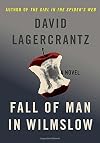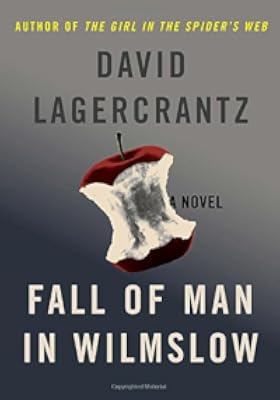
Fall of Man in Wilmslow
by David Lagercrantz
On This Page
Description
"An electrifying thriller that opens with Alan Turing's suicide, and then opens out to take in a young detective's awakening to painful secrets about his own life and the life of his country. It's 1954. Several English nationals have defected to the USSR, while a witch-hunt for homosexuals rages across Britain. In these circumstances, no one is surprised when a mathematician by the name of Alan Turing, is found dead in his home: it is widely assumed that he committed suicide, unable to cope show more with the humiliation of a criminal conviction for homosexuality. But young Detective Sergeant Leonard Corell, who had always dreamt of a career in higher mathematics, suspects greater forces are involved. In the face of opposition from his superiors, he begins to assemble the pieces of a puzzle that lead him to one of the most closely guarded secrets of the war: the Bletchley Park operation to crack the Nazis' Enigma Code. But he is also about to be rocked by two startling developments in his own life, one of which will find him being pursued as a threat to national security.."-- show lessTags
Recommendations



























Member Recommendations
Jannes En aningens friare (dvs. hittepå-igare) beskrivning av Turings liv och verk. Innehåller även kryptografi, japaner, krig, dot.com-are, konspirationsteorier, diagram, och mycket mer. En teknothriller för paranoida mattenördar (på ett bra sätt).
themulhern Both are Turing-lite, although one pretends to be a mystery novel.
Member Reviews
Lagercrantz excellently captures the fearful thinking, homophobic culture and larger than life personalities of England during WWII
His brilliant descriptions of Alan Turing made me feel I was there seeing and hearing Turing. Amazing!
But reading endlessly about Leonard Corell's every thought or feeling; large or small, was irritating and tedious.
His brilliant descriptions of Alan Turing made me feel I was there seeing and hearing Turing. Amazing!
But reading endlessly about Leonard Corell's every thought or feeling; large or small, was irritating and tedious.
Honestly, I spent the entirety of this book fully convinced I was reading a nonfiction book about Alan Turing from the point of view of the policeman who found his body. Good job, David Lagercrantz! You totally fooled me! The book in question is Fall of Man in Wilmslow and it's the fictionalized story of Alan Turing's suicide and his contribution to the war effort and to numerous academic disciplines. Over the last year or more, I've been pretty much obsessed with all things A.I. and as a result I've learned a great deal about Alan Turing (and I've talked about him a few times here if you remember) who is considered the father of the modern computer AND Artificial Intelligence. What a guy! As a result, I'm pretty familiar with the show more biographical points of his life and his death. That's partially why I thought this was a work of nonfiction because all of those facts were laid out...which is the perfect way to build a fantastic piece of historical fiction. Lagercrantz used just enough of the truth to weave a convincing story about what might have happened had the policeman who found him been somewhat like Turing himself. Detective Constable Leonard Corell is the first officer on the scene and at first he is disgusted by not only the act of suicide itself but the man who committed it. This disgust turns into a kind of rage when he discovers that Turing was convicted of homosexuality. Even his initial aversion doesn't tamp down his horror at the punishment meted out by the government however. (He was chemically castrated which many believe was the main reason he chose to end his life as it led to severe depression.) Corell is an odd character. He flip flops between being overconfident in his abilities to allowing himself to be railroaded by his peers and bosses. He's also constantly daydreaming which I found tiring by the end of the novel. Speaking of the end of the novel, I didn't like it. It felt like the book was building and building and then the end was such a letdown. I can't say more about it without giving away huge spoilers but let's just say it was closely tied into Corell's daydreams. If you're completely unfamiliar with Turing and his work then this is an interesting way to get clued in because as I said much of the story is completely factual. Excepting the end, I really did enjoy this book. Lagercrantz is an excellent storyteller and he fooled me into thinking this was entirely plausible. 8/10 because that ending bummed me out. show less
I came to this after reading several other recent novels which feature/discuss Alan Turing (Murmurs, Machines Like Me, Frankissstein, for example). But actually this really isn't about Turing at all. OK, it starts with his suicide and towards the end of the book there are a couple of scenes set in Bletchley during the war, but otherwise this is a quiet, introspective novel which centres on the fictional character of Leonard Corell, the first policeman to arrive at the scene of Turing's suicide.
Corell, a young and disillusioned policeman, finds himself digging into Turing's past and seems to understand his character. Corell himself becomes the focus of investigations as his research takes him deeper and deeper into the murky world of show more coding and espionage.
An enjoyable, if slow, read, this is definitely *not* an 'electrifying thriller'. The figure of Alan Turing haunts the book, but from the shadows, at the margins. It's more of a character study of the young Corell, but also about how one man's legacy has been shaped and reshaped over time. A worthy read, for sure, but perhaps a little too slow for some. show less
Corell, a young and disillusioned policeman, finds himself digging into Turing's past and seems to understand his character. Corell himself becomes the focus of investigations as his research takes him deeper and deeper into the murky world of show more coding and espionage.
An enjoyable, if slow, read, this is definitely *not* an 'electrifying thriller'. The figure of Alan Turing haunts the book, but from the shadows, at the margins. It's more of a character study of the young Corell, but also about how one man's legacy has been shaped and reshaped over time. A worthy read, for sure, but perhaps a little too slow for some. show less
I enjoyed this book. It wasn't meant to be realistic. It was a book of popular science disguised as a novel of postwar England. The realism lay all in the post-war setting. Besides that, there was an almost Virginia Woolf-like focus on the internal life of the main character, and numerous entirely unlikely discussions of Turing's work and thoughts, and when that was too preposterous even for this book, flashbacks. I am eager to read a serious biography of Turing, though.
This book is fantastic. Historical-Fiction is one of the best genres! Making history colorful fun and more accessible to the masses. I always feel I lose something with translations, but this one is worth the read. A tortured detective, a dead-too-soon maligned and lost hero. We don't need much more for a well written book.
The main events (with few appropriately placed flashbacks) take place immediately following Alan Turing's suicide on June 7, 1954. A genius, who won WWI for the West (fuck Churchill he sunk the Lusitania – go read 'Dead Wake'. Erik Larson might not have the balls to 'speculate' but it's not a big leap to make. Churchill was a dick.), dead at 41 from suicide. Pure unadulterated tragedy. Mostly/probably because he show more was gay? At any rate, a tragedy for the ages. I wish we could have known him longer. I wish humanity could have benefited from his beneficent genius longer. I wish, I wish.
Honestly! I could barely get thru the first few chapters. The amount of pathetic subservient moronic derision that Detective Constable Leonard Corell must deal with from his colleagues, simply regarding the sexual preferences of his current case, the suicide of Alan Turing, will be unbearable for some. But! It's historical fiction. Remember, it's 1954. It's not 2016 in the book. Suck it up. Alan deserves your attention. Good writing deserves your attention. And your respect.
To get thru the first few brutalizing chapters I had to take a breath and re-realize that people change, society changes, cultures change (AND THAT'S OKAY - Hopefully for the better. Like when Alan basically won WWII for us ingrates). I was reminded of Mark Twain's most famous works. We aren't in the world of those characters, of any characters we read. We are simply observing them. We cannot judge. We can only experience the view. Their experiences are their own, they are not ours. Judge not... and all that.
The epilogue is cathartic. It spoke to all of us. Who hasn't at some point thought about time travel, about alternate endings, mostly to make the world a better place? Well, Alan did. In real life. For all of us.
Before I wrap up, whose business is it how each of us prefers to achieve orgasm? Orgasm's are great. Whatever position or preference you choose, great. None, of, my, business. Live your life. Be a good person. Win WWII for humanity. Etc.
If Alan Turing was still alive. I'd like to think he'd be in a nursing home in Missouri, somewhere near Hannibal, MO (because Twain, and because accessible to the masses via centralized location in the Midwest). Alan would have an intermittent group of Sci-Fi writers, mathematicians, chess masters, physicists, astronomers and the like all visiting him. Sharing celestial observations and various new theories. Some sharing current breakthroughs based on modern computers. Most of them coming to Alan for advice, for guidance. For the unique view he had to the world. I might cry. I might ask for a hug. More likely I would have nothing to say, shy my way out, and pass by his room having not deigned to enter. As his door is shut to the world.
We, in 1954 post-war England chose to turn our backs on him. We will never know what we lost. At least we may console ourselves with our laptops and cellphones and English speaking fascist-free nations in the meantime. Thank you Alan. We'll all see you soon.
*I received this book free for an unbiased review* show less
The main events (with few appropriately placed flashbacks) take place immediately following Alan Turing's suicide on June 7, 1954. A genius, who won WWI for the West (fuck Churchill he sunk the Lusitania – go read 'Dead Wake'. Erik Larson might not have the balls to 'speculate' but it's not a big leap to make. Churchill was a dick.), dead at 41 from suicide. Pure unadulterated tragedy. Mostly/probably because he show more was gay? At any rate, a tragedy for the ages. I wish we could have known him longer. I wish humanity could have benefited from his beneficent genius longer. I wish, I wish.
Honestly! I could barely get thru the first few chapters. The amount of pathetic subservient moronic derision that Detective Constable Leonard Corell must deal with from his colleagues, simply regarding the sexual preferences of his current case, the suicide of Alan Turing, will be unbearable for some. But! It's historical fiction. Remember, it's 1954. It's not 2016 in the book. Suck it up. Alan deserves your attention. Good writing deserves your attention. And your respect.
To get thru the first few brutalizing chapters I had to take a breath and re-realize that people change, society changes, cultures change (AND THAT'S OKAY - Hopefully for the better. Like when Alan basically won WWII for us ingrates). I was reminded of Mark Twain's most famous works. We aren't in the world of those characters, of any characters we read. We are simply observing them. We cannot judge. We can only experience the view. Their experiences are their own, they are not ours. Judge not... and all that.
The epilogue is cathartic. It spoke to all of us. Who hasn't at some point thought about time travel, about alternate endings, mostly to make the world a better place? Well, Alan did. In real life. For all of us.
Before I wrap up, whose business is it how each of us prefers to achieve orgasm? Orgasm's are great. Whatever position or preference you choose, great. None, of, my, business. Live your life. Be a good person. Win WWII for humanity. Etc.
If Alan Turing was still alive. I'd like to think he'd be in a nursing home in Missouri, somewhere near Hannibal, MO (because Twain, and because accessible to the masses via centralized location in the Midwest). Alan would have an intermittent group of Sci-Fi writers, mathematicians, chess masters, physicists, astronomers and the like all visiting him. Sharing celestial observations and various new theories. Some sharing current breakthroughs based on modern computers. Most of them coming to Alan for advice, for guidance. For the unique view he had to the world. I might cry. I might ask for a hug. More likely I would have nothing to say, shy my way out, and pass by his room having not deigned to enter. As his door is shut to the world.
We, in 1954 post-war England chose to turn our backs on him. We will never know what we lost. At least we may console ourselves with our laptops and cellphones and English speaking fascist-free nations in the meantime. Thank you Alan. We'll all see you soon.
*I received this book free for an unbiased review* show less
Anyone who picks up Fall of Man in Wilmslow believing it to have the lightning pace and other qualities befitting a thriller is in for a shock. I've seen snails move faster than the pace of this book, and although it satisfies a bit here and there, it certainly doesn't in most areas.
There are biographies of Alan Turing that will tell you more about this fascinating and cruelly treated man than Lagercrantz's novel. Instead it's more of an exploration of the character of Leonard Corell, a young, dissatisfied man who feels as though he's never lived up to his childhood dreams and potential. During the course of the book, Corell will learn just as much about himself as he will about Turing.
As he begins to investigate, his beliefs are show more colored by witch hunters who firmly believe all homosexuals are evil Communist spies; however, his opinions change the more he learns about the dead man.
It was a fight to keep my interest in this book. There are just too many deadly dull pages of math, theory, and philosophy-- and I will be the first to admit that those subjects work better for me as personal cures for insomnia. So yes, I skimmed. The book only truly came to life when Corell spoke to people who actually knew Turing, but that didn't happen often enough.
As an exploration of a young man's character, Fall of Man in Wilmslow is a very modest success. On almost every other score, it came up lacking. show less
There are biographies of Alan Turing that will tell you more about this fascinating and cruelly treated man than Lagercrantz's novel. Instead it's more of an exploration of the character of Leonard Corell, a young, dissatisfied man who feels as though he's never lived up to his childhood dreams and potential. During the course of the book, Corell will learn just as much about himself as he will about Turing.
As he begins to investigate, his beliefs are show more colored by witch hunters who firmly believe all homosexuals are evil Communist spies; however, his opinions change the more he learns about the dead man.
It was a fight to keep my interest in this book. There are just too many deadly dull pages of math, theory, and philosophy-- and I will be the first to admit that those subjects work better for me as personal cures for insomnia. So yes, I skimmed. The book only truly came to life when Corell spoke to people who actually knew Turing, but that didn't happen often enough.
As an exploration of a young man's character, Fall of Man in Wilmslow is a very modest success. On almost every other score, it came up lacking. show less
This is a really excellent book. We have come to know something about the life of Alan Turing from the play by Hugh Whitemore - Breaking The Code and the film - The Imitation Game. But this very clever retelling of his story from the viewpoint of a young police constable investigating his suicide in 1953 took me much further into the story. The protagonist is not a particularly appealing character, but I gradually empathised with him as he peeled away the layers, partly through investigation and partly through his own thought processes. He left me with the the conviction that Turing was one of the key players, not only in WW2 [where the significance of the work done at Bletchley Park is now appreciated], but in the development of the show more computer. It is one of those translated works, where the translator seems to have achieved a complete understand of the writer's intention as to mood and feeling. I had previously hesitated over David Lagercrantz's continuation of the Millenium trilogy, but now I want to read the two books soon. show less
Members
- Recently Added By
Author Information

31 Works 11,997 Members
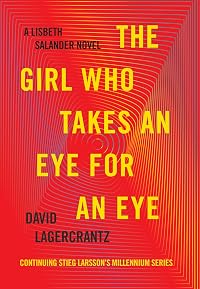
David Lagercrantz was born on September 4, 1962 in Solna Municipality, Sweden. He was a crime reporter for Expressen, a national daily paper, where he covered some major crime stories including an infamous triple murder in the cemetery in the northern Swedish town of Amsele in 1988. His first book, Ultimate High, was published in 1997. His other show more works include A Swedish Genius, The Sky over Everest, Fall of Man in Wilmslow, and I am Zlatan Ibrahimovic. A Swedish Genius provided inspiration for the critically acclaimed documentary film Patent 986. In 2013, Lagercrantz was selected to write a new instalment in Stieg Larsson's Millennium series. The Girl in the Spider's Web was published in 2015. It was followed by The Girl Who Takes an Eye for an Eye, published in 2017. (Bowker Author Biography) show less
Some Editions
Common Knowledge
- Canonical title
- Fall of Man in Wilmslow
- Original title
- Syndafall i Wilmslow
- Original publication date
- 2009; 2016 (dutch) (dutch)
- People/Characters
- Alan Turing
- Important places*
- Wilmslow, UK
- Important events
- 1954
- Epigraph*
- Opinion is not worth a rush;
In this altar-piece the knight,
Who grips his long spear so to push
That dragon through the fading light,
- W.B. YEATS, Michael Robartes and the Dancer - Dedication*
- Voor Anne, Signe, Nelly en Hjalmar
- First words*
- Wanneer nam hij het besluit?
- Last words*
- (Click to show. Warning: May contain spoilers.)En dan, mijn vrienden, als ik dat tegen Alan Turing zeg, dan glimlacht hij. Dan zie ik hem eindelijk lachen.
- Original language*
- Zweeds
*Some information comes from Common Knowledge in other languages. Click "Edit" for more information.
Classifications
- Genres
- Fiction and Literature, LGBTQ+, Historical Fiction, Mystery
- DDC/MDS
- 839.73 — Literature & rhetoric German & related literatures Other Germanic literatures Swedish literature Swedish fiction
- LCC
- PT9877.22 .A44 .S9613 — Language and Literature German, Dutch and Scandinavian literatures Swedish literature Individual authors or works 2001-
- BISAC
Statistics
- Members
- 299
- Popularity
- 107,394
- Reviews
- 18
- Rating
- (3.77)
- Languages
- 9 — Danish, Dutch, English, French, German, Italian, Portuguese, Spanish, Swedish
- Media
- Paper, Audiobook, Ebook
- ISBNs
- 46
- ASINs
- 9