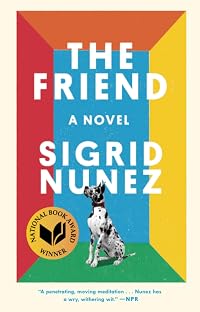
The Friend
by Sigrid Nunez
On This Page
Description
A moving story of love, friendship, grief, healing, and the magical bond between a woman and her dog. When a woman unexpectedly loses her lifelong best friend and mentor, she finds herself burdened with the unwanted dog he has left behind. Her own battle against grief is intensified by the mute suffering of the dog, a huge Great Dane traumatized by the inexplicable disappearance of its master, and by the threat of eviction: dogs are prohibited in her apartment building. While others worry show more that grief has made her a victim of magical thinking, the woman refuses to be separated from the dog except for brief periods of time. Isolated from the rest of the world, increasingly obsessed with the dog's care, determined to read its mind and fathom its heart, she comes dangerously close to unraveling. But while troubles abound, rich and surprising rewards lie in store for both of them. Elegiac and searching, The Friend is both a meditation on loss and a celebration of human-canine devotion. show lessTags
Recommendations
Member Recommendations
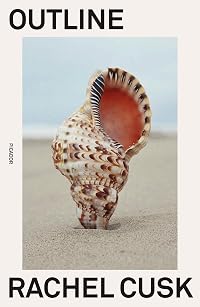
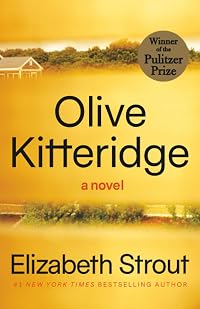
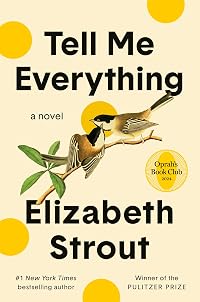
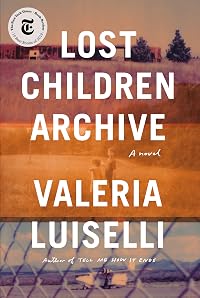
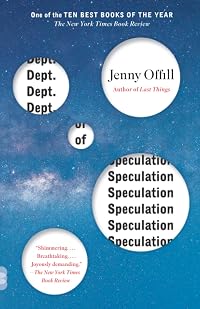
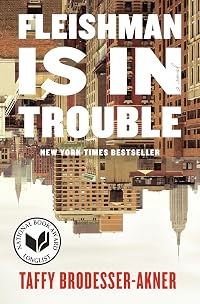
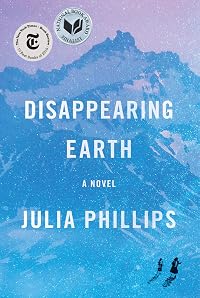
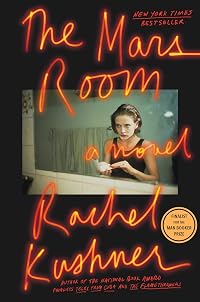
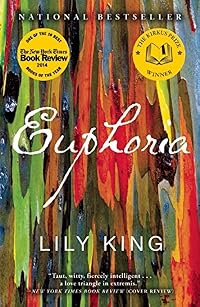
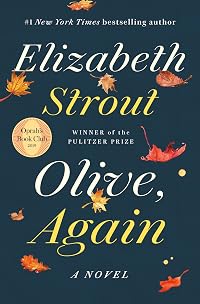
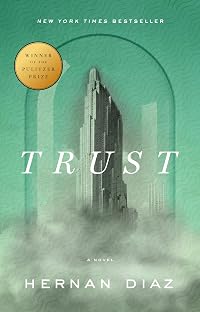
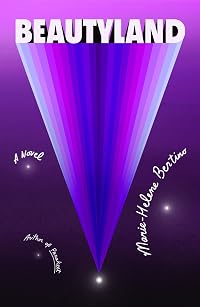
jscape2000 Grief is the irrational engine that drives these books.
Member Reviews
The title is a double entendre -- is "the friend" the longtime close acquaintance of the narrator, or is it that acquaintance's great dane, who is left behind after the man's death and given over to the narrator. Though the narrator is hesitant to take up the task of dog ownership, she quickly falls in love with the aging beast.
The book is perhaps less a novel than it is a journal-cum-essay. About a third of the book consists of relevant quotes and anecdotes from other authors. "The Friend" is the closest that most of us will ever get to having a drink with a learned sage who has spent much of her life absorbing the wisdom of the written word. There is perhaps more wisdom in these 212 pages than in any other book I've read in the past show more ten years. I long for such depth of conversation with another human in the real world.
Though "The Friend" is an act of mourning for a lost friend (and the eventual loss of another), it is also quite funny. As the narrator quips, "it's because a person has a sense of humor that we feel we can trust them."
Now that I have finished reading this book, I can't help but feel that I have entered into a state of mourning myself. show less
The book is perhaps less a novel than it is a journal-cum-essay. About a third of the book consists of relevant quotes and anecdotes from other authors. "The Friend" is the closest that most of us will ever get to having a drink with a learned sage who has spent much of her life absorbing the wisdom of the written word. There is perhaps more wisdom in these 212 pages than in any other book I've read in the past show more ten years. I long for such depth of conversation with another human in the real world.
Though "The Friend" is an act of mourning for a lost friend (and the eventual loss of another), it is also quite funny. As the narrator quips, "it's because a person has a sense of humor that we feel we can trust them."
Now that I have finished reading this book, I can't help but feel that I have entered into a state of mourning myself. show less
'The Friend' was a remarkable listening experience. It's an intimate six-hour long monologue, spoken to a dead friend. That probably sounds a little dull, perhaps even a bit of chore to listen to but that wasn't my experience at all. To me it felt like one of those rare occaisions when you meet someone new and fascinating so you spend the whole day and long into the night listening to them talk, building a picture of them. lost in who they are becoming in your mind.
'The Friend' is such a wonderful, effortless flow of remembrance and reflection that, at first, it hardly felt like grief, except that it was being spoken into a void, a presence lost and now, at best, imagined. I loved the narrator's taken-for-granted erudition, her show more seamlessly integrated wit, and her self-awareness which refused to let self-deception hold sway but insisted on trying to say only what was true.
The premise of the story seems simple enough. A man dies and bequeaths his harlequin great dane not to his wife but to the narrator, a woman he has known for far longer than his (third) wife. A woman he knows to be a cat person. A woman he knows is not allowed to have a dog in her Manhattan apartment. A woman he knows loves him enough to take the dog anyway. The bequest transforms the woman's life both by changing her here-and-now experience and by causing her to re-examine the truths embedded in her long-term relationship with the dead man.
In other hands, this could be the set-up for a Hallmark movie about a life redeemed by the love of a large dog. In Sigrid Nunez's hands, it becomes an excavation of a life, of choices made and lived with, of people living complex, sometimes over-examined lives, of the effects of time and age on passion and friendship and on how our identity is shaped by our memory of the past and our expectations of the future.
I was immersed in the story mostly because it didn't feel like a story. This wasn't a linear narrative designed to lead the reader to a climax through a three-act plot. This was about being in the narrator's head as she worked out what the man's death meant to her. In the process, I learned as much, maybe more, about her than about him. I learned how she came to be who she is and how she sees herself. She is an academic, prone to analysis and used to using literary references to frame her understanding of situations. She has a dry wit that often keeps her at a distance from others. She is mired so deeply in grief that it taints every thought and every memory. She can't forgive the dead man for being dead. She can't imagine the path of her life, free from the gravitational pull of his personality.
Sigrid Nunez's prose is wonderful. Not a word is wasted. Phrases that at first seem casual become charge with meaning as they are repeated or their context is revealed. I've already re-listened to the start of the book and I can see that the experience of the text, when you already know what the narrator knows, is different: richer, deeper but the truth of the narrative remains the same.
There was one section of the story that didn't work for me. It was an extended discussion between the narrator and the dead man about literature an publishing, about cultural appropriation and self-censorship and so on. It was a good discussion but I found it jarring. It took me out of the flow. It also seemed like lecture notes reconfigured into dialogue. Fortunately, it was a short section.
I haven't mentioned the dog. He is, of course, adorable. If you've lived with a dog as a family member you'll recognise the emerging relationship and the emotional attachment.
At the end of the book, I found myself thinking about the title. It has the same complex simplicity as the story. It's up to the reader to work out who the friend is and what being a friend means.
I recommend listening to the audiobook version of 'The Friend'. Hilary Huber's narration perfectly captures the tone of the monologue. Click on the SoundCloud link below to hear a sample.
https://soundcloud.com/hachetteaudiouk/the-friend-by-sigrid-nunez-read-by-hillar... show less
'The Friend' is such a wonderful, effortless flow of remembrance and reflection that, at first, it hardly felt like grief, except that it was being spoken into a void, a presence lost and now, at best, imagined. I loved the narrator's taken-for-granted erudition, her show more seamlessly integrated wit, and her self-awareness which refused to let self-deception hold sway but insisted on trying to say only what was true.
The premise of the story seems simple enough. A man dies and bequeaths his harlequin great dane not to his wife but to the narrator, a woman he has known for far longer than his (third) wife. A woman he knows to be a cat person. A woman he knows is not allowed to have a dog in her Manhattan apartment. A woman he knows loves him enough to take the dog anyway. The bequest transforms the woman's life both by changing her here-and-now experience and by causing her to re-examine the truths embedded in her long-term relationship with the dead man.
In other hands, this could be the set-up for a Hallmark movie about a life redeemed by the love of a large dog. In Sigrid Nunez's hands, it becomes an excavation of a life, of choices made and lived with, of people living complex, sometimes over-examined lives, of the effects of time and age on passion and friendship and on how our identity is shaped by our memory of the past and our expectations of the future.
I was immersed in the story mostly because it didn't feel like a story. This wasn't a linear narrative designed to lead the reader to a climax through a three-act plot. This was about being in the narrator's head as she worked out what the man's death meant to her. In the process, I learned as much, maybe more, about her than about him. I learned how she came to be who she is and how she sees herself. She is an academic, prone to analysis and used to using literary references to frame her understanding of situations. She has a dry wit that often keeps her at a distance from others. She is mired so deeply in grief that it taints every thought and every memory. She can't forgive the dead man for being dead. She can't imagine the path of her life, free from the gravitational pull of his personality.
Sigrid Nunez's prose is wonderful. Not a word is wasted. Phrases that at first seem casual become charge with meaning as they are repeated or their context is revealed. I've already re-listened to the start of the book and I can see that the experience of the text, when you already know what the narrator knows, is different: richer, deeper but the truth of the narrative remains the same.
There was one section of the story that didn't work for me. It was an extended discussion between the narrator and the dead man about literature an publishing, about cultural appropriation and self-censorship and so on. It was a good discussion but I found it jarring. It took me out of the flow. It also seemed like lecture notes reconfigured into dialogue. Fortunately, it was a short section.
I haven't mentioned the dog. He is, of course, adorable. If you've lived with a dog as a family member you'll recognise the emerging relationship and the emotional attachment.
At the end of the book, I found myself thinking about the title. It has the same complex simplicity as the story. It's up to the reader to work out who the friend is and what being a friend means.
I recommend listening to the audiobook version of 'The Friend'. Hilary Huber's narration perfectly captures the tone of the monologue. Click on the SoundCloud link below to hear a sample.
https://soundcloud.com/hachetteaudiouk/the-friend-by-sigrid-nunez-read-by-hillar... show less
"The Friend" is a very good novel. Let me rephrase that. "The Friend is a good novel despite the fact that its main character is an academic who liberally quotes major twentieth-century writers and thinkers. But even if you're sort of reader who recoils when they read about yet another main character who teaches at some MFA program at some Midwestern university, thereby proving that the oft-repeated dictum that you should write what you know is demonstrably wrong, you should give this one a chance. Even if you don't like dogs -- and trust me, I don't -- you should give give it a try.
The friend that is referred to in the title is both the central protagonist's former mentor, recently found dead by his own hand,, and man's best friend, in show more this case a Great Dane who, though he doesn't yet suffer the indignities of age, is rapidly getting on in (dog) years. There are other deaths here, too. The dog in question cannot process the death of its owner, while the main character, a teacher of creative writing at the university level, worries about the death of literature. I feel fairly confident that the awful and hilarious stories she tells about her newest students -- all of whom are digital natives who can barely remember a world without smartphones and barely seem to know what literature is even for -- are true.
We don't always expect to lose our friends in middle age: it's clear that our narrator did not, and neither, for that matter, did the Great Dane: it waited faithfully by the door for its departed master until his widow could take no more. If deaths that are chosen are especially heartbreaking, an enormous dog that she must take care of but whose presence she cannot fully explain in her life proves a remarkably apt metaphor for the enormous, irrational shock that a death like this can deliver. At the same time, the dog also represents a strange persistence here: we witness the Great Dane's dogged (oh, ha) insistence on surviving despite the genetically-determined odds, its vet's cold-eyed yet somehow comforting realism, and the very real and slightly ridiculous physicality of a canine that's bigger and heavier than many human beings. In another sort of book, the narrator might have been left with an elephant or giraffe that she didn't know how to care for.
Grief and grieving seem to be hot topics these days, and perhaps in the wake of a pandemic that killed more than a million Americans, that's hardly a surprise. But our narrator's delicate yet steadily improving attempts to adjust and appreciate her new roommate -- or life partner? -- also serve as a splendid metaphor for the slow, unwilling adjustments we are forced to make to death and finality, even though our narrator knows that her relationship with the "Dogge" will necessarily be a short one. Her introduction of Wittgenstein's definition of love "two solitudes that protect and border and greet each other" and the dog's genuinely affecting death scene -- which reminded me of nothing so much as the elegant, melancholy, beachy setting of "To the Lighthouse" -- suggests that the author knows how to borrow from the greats without seeming at all pretentious. This one's a worthy recipient of whatever prizes it might have been awarded. show less
The friend that is referred to in the title is both the central protagonist's former mentor, recently found dead by his own hand,, and man's best friend, in show more this case a Great Dane who, though he doesn't yet suffer the indignities of age, is rapidly getting on in (dog) years. There are other deaths here, too. The dog in question cannot process the death of its owner, while the main character, a teacher of creative writing at the university level, worries about the death of literature. I feel fairly confident that the awful and hilarious stories she tells about her newest students -- all of whom are digital natives who can barely remember a world without smartphones and barely seem to know what literature is even for -- are true.
We don't always expect to lose our friends in middle age: it's clear that our narrator did not, and neither, for that matter, did the Great Dane: it waited faithfully by the door for its departed master until his widow could take no more. If deaths that are chosen are especially heartbreaking, an enormous dog that she must take care of but whose presence she cannot fully explain in her life proves a remarkably apt metaphor for the enormous, irrational shock that a death like this can deliver. At the same time, the dog also represents a strange persistence here: we witness the Great Dane's dogged (oh, ha) insistence on surviving despite the genetically-determined odds, its vet's cold-eyed yet somehow comforting realism, and the very real and slightly ridiculous physicality of a canine that's bigger and heavier than many human beings. In another sort of book, the narrator might have been left with an elephant or giraffe that she didn't know how to care for.
Grief and grieving seem to be hot topics these days, and perhaps in the wake of a pandemic that killed more than a million Americans, that's hardly a surprise. But our narrator's delicate yet steadily improving attempts to adjust and appreciate her new roommate -- or life partner? -- also serve as a splendid metaphor for the slow, unwilling adjustments we are forced to make to death and finality, even though our narrator knows that her relationship with the "Dogge" will necessarily be a short one. Her introduction of Wittgenstein's definition of love "two solitudes that protect and border and greet each other" and the dog's genuinely affecting death scene -- which reminded me of nothing so much as the elegant, melancholy, beachy setting of "To the Lighthouse" -- suggests that the author knows how to borrow from the greats without seeming at all pretentious. This one's a worthy recipient of whatever prizes it might have been awarded. show less
In a metaphor I believe Nunez herself would appreciate, I’ve come to think of The Friend as a layer cake, an artifice of layers bound together by quantities of deft lyric frosting. The kind of cake that's meant to look effortless but that never quite lets you forget the amount of painstaking labor that went into every confectionary furbelow.
By all means, pause long enough to enjoy the surface layer of this confection, in which Nunez relates the tale of a female writer struggling to come to terms with her grief over the suicide of her mentor/friend with the help of a preternaturally wise and empathetic Great Dane. The author does an artful job of portraying the dolor of grief, the crippling confusion that often accompanies death by show more suicide, and the incalculable comfort to be derived from the mindfully interdependent relationships we form with our pets. I suspect many readers will choose to stop there, either because that’s all they need from the book or possibly (as Nunez ruminates at one point) because of the ubiquity of careless reading. (In my imagination, this layer tastes like tea – reassuring and restorative.)
Beneath this, however, there’s another fully realized layer in which Nunez explores the craft of writing. Brace yourself for many, many, many literary references exploring whether writers are monsters, hypocrites, charlatans, selfish, narcissists, lonely, vicious, self-absorbed, shameful, seducers, betrayers, or witnesses. You’ll need to penetrate to at least this layer to identify a major theme of the novel, which is that writers have a duty to bear witness, and that if writing wasn’t painful, it would not be worth doing. (I picture this layer as lemon curd – tasty but tart.)
Descend a bit further and you get to the layer I think of as the “New Yorker” level. Anyone who has partaken of this periodical will instantly recognize the tang of it here, in Nunez’s deliberately artful metaphors, narrative constructs, political & cultural references, art-film allusions, and puns. The way she references Coetzee’s Disgrace in one of the early chapters, only to circle around and lead us up to the novel’s back door chapters later, when our suicidal author confesses feeling “disgraced.” The way she buries “Defeat the blank page!” in a diatribe against James Patterson, so that it's available for use as an ironic device chapters later. These serve as deliberately planted reminders not to be fooled by the story’s stream-of-consciousness vibe into forgetting that this chaos is 100% controlled and contrived for maximum literary effect; also, they work as Easter eggs wittingly planted to reward the patience and attention of those compulsive enough to unearth them. (Carrot cake – because you get to enjoy all the indulgence of cake while experiencing the self-satisfaction of knowing you’re eating your vegetables.)
And there, beneath all the others, a final layer that one might call “foundational truths,” upon which all the other layers rest, in which the author borrows liberally from literature, poetry and philosophy to tackle such rich, fudgy themes as the hypocrisy of aspiration (“do what is difficult precisely because it is difficult” ), the essence of grief (“the dead dwell in the conditional, tense of the unreal”), and the definition of love (“two solitudes that protect and border and greet each other”). (I picture this layer as dense and a little bitter, like dark chocolate.)
To conclude: If you prefer your "feels" with a hefty dose of intellectual rumination, if you're the type of person that always stuffs the latest issue of The New Yorker into their hipster manbag as soon as it arrives, and if you don't mind the mild aftertaste of extensive literary workshopping, then Nunez's The Friend is ready and waiting to deliver the goods. show less
By all means, pause long enough to enjoy the surface layer of this confection, in which Nunez relates the tale of a female writer struggling to come to terms with her grief over the suicide of her mentor/friend with the help of a preternaturally wise and empathetic Great Dane. The author does an artful job of portraying the dolor of grief, the crippling confusion that often accompanies death by show more suicide, and the incalculable comfort to be derived from the mindfully interdependent relationships we form with our pets. I suspect many readers will choose to stop there, either because that’s all they need from the book or possibly (as Nunez ruminates at one point) because of the ubiquity of careless reading. (In my imagination, this layer tastes like tea – reassuring and restorative.)
Beneath this, however, there’s another fully realized layer in which Nunez explores the craft of writing. Brace yourself for many, many, many literary references exploring whether writers are monsters, hypocrites, charlatans, selfish, narcissists, lonely, vicious, self-absorbed, shameful, seducers, betrayers, or witnesses. You’ll need to penetrate to at least this layer to identify a major theme of the novel, which is that writers have a duty to bear witness, and that if writing wasn’t painful, it would not be worth doing. (I picture this layer as lemon curd – tasty but tart.)
Descend a bit further and you get to the layer I think of as the “New Yorker” level. Anyone who has partaken of this periodical will instantly recognize the tang of it here, in Nunez’s deliberately artful metaphors, narrative constructs, political & cultural references, art-film allusions, and puns. The way she references Coetzee’s Disgrace in one of the early chapters, only to circle around and lead us up to the novel’s back door chapters later, when our suicidal author confesses feeling “disgraced.” The way she buries “Defeat the blank page!” in a diatribe against James Patterson, so that it's available for use as an ironic device chapters later. These serve as deliberately planted reminders not to be fooled by the story’s stream-of-consciousness vibe into forgetting that this chaos is 100% controlled and contrived for maximum literary effect; also, they work as Easter eggs wittingly planted to reward the patience and attention of those compulsive enough to unearth them. (Carrot cake – because you get to enjoy all the indulgence of cake while experiencing the self-satisfaction of knowing you’re eating your vegetables.)
And there, beneath all the others, a final layer that one might call “foundational truths,” upon which all the other layers rest, in which the author borrows liberally from literature, poetry and philosophy to tackle such rich, fudgy themes as the hypocrisy of aspiration (“do what is difficult precisely because it is difficult” ), the essence of grief (“the dead dwell in the conditional, tense of the unreal”), and the definition of love (“two solitudes that protect and border and greet each other”). (I picture this layer as dense and a little bitter, like dark chocolate.)
To conclude: If you prefer your "feels" with a hefty dose of intellectual rumination, if you're the type of person that always stuffs the latest issue of The New Yorker into their hipster manbag as soon as it arrives, and if you don't mind the mild aftertaste of extensive literary workshopping, then Nunez's The Friend is ready and waiting to deliver the goods. show less
“What we miss - what we lose and what we mourn - isn't it this that makes us who, deep down, we truly are. To say nothing of what we wanted in life but never got to have.”
“There's a certain type of person who, having read this far, is anxiously wondering: Does something bad happen to the dog?”
“Consider rereading, how risky it is, especially when the book is one that you loved. Always the chance that it won't hold up, that you might, for whatever reason, not love it as much. When this happens, and to me it happens all the time (and more and more as I get older), the effect is so disheartening that I now open old favorites warily.”
The set-up of this novel is pretty straight-forward- A woman loses her best friend to suicide show more and
ends up caring for his massive Great Dane, in her tiny apartment. The dog is also shell-shocked, with the loss of his beloved owner. How this unlikely pairing draw together, bringing each other support and comfort, is the heart of this story. A meditation on grief, companionship and survival. The writing is rich and beautiful. Book lovers and pet owners, will especially enjoy the deep collage of references. This one won the National Book Award and I see no problem with that. show less
“There's a certain type of person who, having read this far, is anxiously wondering: Does something bad happen to the dog?”
“Consider rereading, how risky it is, especially when the book is one that you loved. Always the chance that it won't hold up, that you might, for whatever reason, not love it as much. When this happens, and to me it happens all the time (and more and more as I get older), the effect is so disheartening that I now open old favorites warily.”
The set-up of this novel is pretty straight-forward- A woman loses her best friend to suicide show more and
ends up caring for his massive Great Dane, in her tiny apartment. The dog is also shell-shocked, with the loss of his beloved owner. How this unlikely pairing draw together, bringing each other support and comfort, is the heart of this story. A meditation on grief, companionship and survival. The writing is rich and beautiful. Book lovers and pet owners, will especially enjoy the deep collage of references. This one won the National Book Award and I see no problem with that. show less
I really wanted to like this book. I really tried. I didn't like it, but more than that, I don't think it's well-written. I'm not sure, but I think this might be the worst book I ever read—not only in terms of my enjoyment, but even just as a thing unto itself, and in terms of its technical execution, this really disappoints.
However, I can see that a lot of people really like this one. Clearly I'm in the minority. Maybe I'm missing something. So first of all, before you read any further, please recognize that these are only my own opinions. That said, here are my thoughts:
As I was reading it, I thought, "Somebody's full of herself, but I don't know whether it's the character or the author." This novel is written in the first person show more from the point of view of an elitist author, and I'm trying like heck to make sure that I'm not conflating the author (the character) with the author (the real one). The character is an awful hypocrite, but since flawed characters are interesting and often necessary, I'm leaving that aside for a little bit. But I found even the writing to be lacking. The style is vaguely reminiscent of Woolfe, only more watered down. The pacing is nonexistant. The characters are not nuanced or complex. There aren't really a lot of characters here, since most of the people talked about in the story are real people. The more I read, the more I got the impression that by throwing in so many oblique references to such a vast host of real people, Sigrid Nunez wouldn't need to be bothered to come up with fictional characters for her novel. And how they're used! A quick sentence or two expressly misquoting Flannery O'Connor, and maybe a line here or there that misrepresents Toni Morrison, and—hey, why not?—throw in a random comment about Ted Bundy. The more the merrier! The bulk of the narrative seems to be designed around that classic Creative Writing adage, "Tell, don't show." (Oh, wait! Did someone get that backward?) Even the main character, for all her mental chatter, doesn't really become introspective until about the last third of the book, and it's still pretty lacking. How can we have 200 pages of first-person narration and still never reach a personality? (I mean, a nuanced personality. She has character traits, but not much complexity.)
Another problem: I have read many books that told powerful stories, and for the most part, those books' power lies in the strength of their storytelling: their plot, cadence, style, characters. I have also found that most of the really good books don't rely on gruesome bits for shock value. (Maybe it's necessary in a horror novel, or if you're trying to show the grisly nature of war, or something.) But all too often, scenes that pass the threshold of decency are often used to disguise a lack of content. What is the point of the graphic description of the man keeping his intact, female dog cooped up inside while she's in heat, and then using his hand on her genitalia while she "thrusts"? Is that necessary to the plot? Or is it just there to distract me from the fact that this book isn't very good?
I have a theory. I think it’s the latter.
It gets worse.
I remember when I was an undergrad, and one of the professors was trying to explain the importance of research, saying that we will always have more research than that which gets used in our papers. We can't just look up a bunch of facts and then attempt to shoehorn them all into the essay. They won't all fit. This book kind of has that vibe, as though there were so many random historical authors and suicides, and the author had Wikipedia'd them all and didn't want those 20 minutes to be wasted.
Okay, I admit, that was harsh of me.
But please, try to consider how you'd feel if you grew up loving these authors mentioned here, and then you read a novel whose plot intertwines the lives and writings of so many of them . . . and gets the facts wrong. Is it the character being too lazy fact-check herself? If so, it's a character trait that never goes anywhere or leads to anything interesting. Or is it the author who wasn't being careful? (I know, right? It's fiction, so research is optional, right? Please.)
Some of this, I am sure, is deliberate. The main character loathes all writing that doesn't follow correct grammar and punctuation, and yet this novel, told from that character's POV, doesn't use correct grammar and punctuation. Okay, so she's a bit of a hypocrite. That's almost interesting, potentially. But then she talks about other authors (real authors) whose works didn't follow the rules of punctuation, but it's not clear whether she likes these authors or not. She's talking about Toni Morrison, and it's not clear whether the main character is a fan or not. Or maybe Nunez just didn't know that Morrison sometimes didn't always follow the standard textbook rules? (Has she read her books? Or maybe just one, so that she can say she’s read something by Morrison? Maybe she just doesn't think Morrison counts as literature? Is Nunez crazy?)
On top of all this, I found the main character’s whiny, self-pitying tone to be off-putting. She goes on and on about how much writers suffer. She teaches a writing course for therapy for sex-trafficking victims, and she whines about how much writers suffer. Writers write, and sometimes—the horror, the horror!—the readers aren’t smart enough to make the writer feel understood. Or worse, readers will dare to criticize the writer. Did I mention that there are some rape victims and human trafficking victims in this book? I’m pretty sure any one of them would have happily traded places with her.
This problem is further complicated by the plot twist. **minor spoiler** Okay, still with me? Good. There is a plot twist near the end in which there is a second first-person narrator who reveals that the one narrator is merely a character written by the other. This is similar toIan McEwan’s twist in Atonement , except that HIS book has such richly detailed characters that when the twist happens, readers are invested. They care about the characters and the plot, and the twist changes everything. It hits them right in the feels—it is a moving, poignant moment. Not so here. Here, it felt almost like an afterthought, and it didn’t change anything, really. I’m not sure why Nunez stuck it in. The generous side of me is saying that she did it to make the book more interesting, which I grudgingly admit it does. That chapter, the next-to-last, is my favorite chapter of the book. It’s also a warmer perspective: up to that point, the friend is dead, and the dog is dying, and now suddenly, they’re both alive and healthy. It’s almost as if the author is saying that real life is often not quite as bleak as fiction. It’s the only sunbeam in a cloudy, dismal story. On the other hand, my cynical side is telling me that the author only wrote that into the story so that she wouldn’t have to spend time fact-checking any of her “facts.” Now, the main character’s abysmal mistakes with regard to the real lives of actual authors don’t matter so much: she’s not really a character; she’s only a character’s made-up character. I’m not buying it. Regardless of how she’s framed, she’s still the main voice of the story, and the story is still severely wanting in terms of characters and plot, and if the only interesting thing in most of the novel is a series of (real) author quotes, then those quotes—regardless of the character quoting them—should be legit. My cynical side is also telling me that Nunez knew that plot twists sell, and that she couldn’t resist the cliché.
But come on! Even if your main character is written by another one of your characters, that doesn’t excuse lazy writing!
Another example of this author not letting facts get in the way of a good story comes in the main character’s constant references to suicide. The theme of suicide runs through this book, which makes sense, since it the friend's death by suicide that prompts the rest of the story. But here, too, the examples of suicides in history feel crammed in, as though they don't all quite fit right. For example, the main character states, “. . . despite Christianity’s absolute prohibition against committing suicide . . . nowhere in the Bible is there any explicit condemnation of it” (p. 153). It sounds as though the author threw this in to make her character sound smart, or deep, or heck, at this point, I’d settle for interesting. But here’s the thing: There IS explicit condemnation of it in the Bible. Off the top of my head, I can think of a few examples, including Scripture from both the Old Testament and the New. So here are some things: #1) There is someone in the New Testament who says he wants to die and be with Christ. If Nunez were trying to appeal to Christians by bringing the Bible into an otherwise secular novel, why didn’t she do something with this? The apostle wasn’t suicidal, but Nunez might have still been able to drop a quote or two imply more depth for her main character. #2) The main character references “Heaven” a few times. Then she says she doesn’t believe in it, but she still finds herself thinking about it. Is this supposed to be introspection? Am I supposed to feel something? Is this a character who is struggling with spirituality? Here, too, Nunez failed, since I’m I’m not really sure how to respond to this. I mean, this character doesn’t seem to have a solid handle on any religion. She is so poorly developed that I don’t know what she believes. Okay, so she’s not religious. Fine. But she also seems to lack even a basic understanding of what it is she’s denying, which is the result of either an ignorant character or a lazy author. And this ties into my next point: #3) This main character, who is “explaining” how centuries of Christianity have gotten the Bible wrong, has never actually read the Bible herself. Or else, perhaps, it is the author who has never read it. (Or both! Why not?) Misrepresenting texts that are central to major religions for the sake of selling a novel seems cheap to me. Having a character criticize one of these religions out of her own ignorance seems even worse. If Nunez had used this for character development, there might have been potential. Something, perhaps, along the lines of a prejudiced, cantankerous person who gradually learns to think more carefully before judging others. Ebenezer Scrooge is that way; he is selfish and uncaring in the beginning, but he learns from it. No one reads A Christmas Carol and thinks that the book is condoning the character traits of early Scrooge. But people do read it and think that the book is condoning kindness and generosity. So it’s clear that a book can have a message. What does that say about the message of this book? How should readers react when great authors like Toni Morrison are misquoted, or classic authors like Flannery O’Connor are twisted to the point of misrepresenting their original claim, or personal tragedies in authors’ private lives are repurposed here to create some pseudo-drama. What is the message? You can have a character who is too lazy to do research, but the fact remains that this character is still a character in a novel written by a human, and at some point, Sigrid Nunez has to take ownership of that.
I’m going to end this review with a quote from the novel. In this scene, the main character (an author) is complaining about people who criticize books. This main character has shown herself to be elitist, even racist. She is self-centered. She mourns for her friend the way she’d mourn an extension of herself, as if she is the only real thing in her universe, and the rest of the world only exists as it relates to her. She misses him because he was one of the few people as intelligent as she, at least in her eyes. She can’t bear the thought of lesser people who don’t understand their work criticizing it. She even goes so far as to imply the only way their work could be criticized is if the ignorant readers don’t understand it. (Truly, this is character. I’m not directing this at the author.) The character says, “Even those aspiring writers your students seemed never to judge a book on how well it fulfilled the author’s intentions but solely on whether it was the kind of book that they liked. And so you got papers stating things like ‘I hate Joyce, he’s so full of himself,’ or ‘I don’t see why I should have to read about white people problems’” (p. 118). This is the single most intelligent thing that this author does in the entire book. Here, she foresees all the criticism that could be leveled against her own book. She doesn’t counter it, probably because there is no way to do so. She knows that the readers are right, and that her tone IS pretentious, and that her main character IS boring, and rather than make the effort to write better, she decides to distract her would-be critics. Now, all of a sudden, it is they who have the problem, not she. (Again, there’s no real reason for this. She simply says that it isn’t a fair argument. She doesn’t explain why. She doesn’t counter this legit criticism. She seems to rest secure in the fact that she predicted it, as though that makes it any less true.) Manipulative, to be sure.
I am not a famous writer. I am not a great teacher. But I am a reader, and as such, my opinion isn’t any less valid than that of any other reader. As I said, lots of people loved this book, and that’s fine. I have no quarrel with them. But I am entitled to my opinion. Incidentally, when I judge a book, I do so in two ways. First is my enjoyment, which is, believe it or not, an incredibly small criterion. (I read a lot of nonfiction, and some of the best stuff out there is painful to read.) The main thing I look at is how well-written it is. How does it stand on its own? Authorial intent never enters into it, nor should it. An author creates a story, but then that story must be able to stand alone, or else there’s no point. Reader-response criticism has been around a while, so this isn’t anything new. I read a book once that perfectly met every intention of the author, both in content and clarity. It was the phone book. It fulfilled the intent, but it was hardly great literature. I read The Friend by Sigrid Nunez. I didn’t like it. (No kidding, right?) But more than that, I think it just doesn’t hold up. It’s too contrived, too poorly-written, too insubstantial to be any good. Again, that’s all my opinion. But I’m posting it here on Goodreads, and maybe someone else might see it. I would have loved it if someone had warned me off this one. I can’t think of a single good thing about it.
So, for whatever my opinion is worth, there it is. Run fast. Run far. show less
However, I can see that a lot of people really like this one. Clearly I'm in the minority. Maybe I'm missing something. So first of all, before you read any further, please recognize that these are only my own opinions. That said, here are my thoughts:
As I was reading it, I thought, "Somebody's full of herself, but I don't know whether it's the character or the author." This novel is written in the first person show more from the point of view of an elitist author, and I'm trying like heck to make sure that I'm not conflating the author (the character) with the author (the real one). The character is an awful hypocrite, but since flawed characters are interesting and often necessary, I'm leaving that aside for a little bit. But I found even the writing to be lacking. The style is vaguely reminiscent of Woolfe, only more watered down. The pacing is nonexistant. The characters are not nuanced or complex. There aren't really a lot of characters here, since most of the people talked about in the story are real people. The more I read, the more I got the impression that by throwing in so many oblique references to such a vast host of real people, Sigrid Nunez wouldn't need to be bothered to come up with fictional characters for her novel. And how they're used! A quick sentence or two expressly misquoting Flannery O'Connor, and maybe a line here or there that misrepresents Toni Morrison, and—hey, why not?—throw in a random comment about Ted Bundy. The more the merrier! The bulk of the narrative seems to be designed around that classic Creative Writing adage, "Tell, don't show." (Oh, wait! Did someone get that backward?) Even the main character, for all her mental chatter, doesn't really become introspective until about the last third of the book, and it's still pretty lacking. How can we have 200 pages of first-person narration and still never reach a personality? (I mean, a nuanced personality. She has character traits, but not much complexity.)
Another problem: I have read many books that told powerful stories, and for the most part, those books' power lies in the strength of their storytelling: their plot, cadence, style, characters. I have also found that most of the really good books don't rely on gruesome bits for shock value. (Maybe it's necessary in a horror novel, or if you're trying to show the grisly nature of war, or something.) But all too often, scenes that pass the threshold of decency are often used to disguise a lack of content. What is the point of the graphic description of the man keeping his intact, female dog cooped up inside while she's in heat, and then using his hand on her genitalia while she "thrusts"? Is that necessary to the plot? Or is it just there to distract me from the fact that this book isn't very good?
I have a theory. I think it’s the latter.
It gets worse.
I remember when I was an undergrad, and one of the professors was trying to explain the importance of research, saying that we will always have more research than that which gets used in our papers. We can't just look up a bunch of facts and then attempt to shoehorn them all into the essay. They won't all fit. This book kind of has that vibe, as though there were so many random historical authors and suicides, and the author had Wikipedia'd them all and didn't want those 20 minutes to be wasted.
Okay, I admit, that was harsh of me.
But please, try to consider how you'd feel if you grew up loving these authors mentioned here, and then you read a novel whose plot intertwines the lives and writings of so many of them . . . and gets the facts wrong. Is it the character being too lazy fact-check herself? If so, it's a character trait that never goes anywhere or leads to anything interesting. Or is it the author who wasn't being careful? (I know, right? It's fiction, so research is optional, right? Please.)
Some of this, I am sure, is deliberate. The main character loathes all writing that doesn't follow correct grammar and punctuation, and yet this novel, told from that character's POV, doesn't use correct grammar and punctuation. Okay, so she's a bit of a hypocrite. That's almost interesting, potentially. But then she talks about other authors (real authors) whose works didn't follow the rules of punctuation, but it's not clear whether she likes these authors or not. She's talking about Toni Morrison, and it's not clear whether the main character is a fan or not. Or maybe Nunez just didn't know that Morrison sometimes didn't always follow the standard textbook rules? (Has she read her books? Or maybe just one, so that she can say she’s read something by Morrison? Maybe she just doesn't think Morrison counts as literature? Is Nunez crazy?)
On top of all this, I found the main character’s whiny, self-pitying tone to be off-putting. She goes on and on about how much writers suffer. She teaches a writing course for therapy for sex-trafficking victims, and she whines about how much writers suffer. Writers write, and sometimes—the horror, the horror!—the readers aren’t smart enough to make the writer feel understood. Or worse, readers will dare to criticize the writer. Did I mention that there are some rape victims and human trafficking victims in this book? I’m pretty sure any one of them would have happily traded places with her.
This problem is further complicated by the plot twist. **minor spoiler** Okay, still with me? Good. There is a plot twist near the end in which there is a second first-person narrator who reveals that the one narrator is merely a character written by the other. This is similar to
But come on! Even if your main character is written by another one of your characters, that doesn’t excuse lazy writing!
Another example of this author not letting facts get in the way of a good story comes in the main character’s constant references to suicide. The theme of suicide runs through this book, which makes sense, since it the friend's death by suicide that prompts the rest of the story. But here, too, the examples of suicides in history feel crammed in, as though they don't all quite fit right. For example, the main character states, “. . . despite Christianity’s absolute prohibition against committing suicide . . . nowhere in the Bible is there any explicit condemnation of it” (p. 153). It sounds as though the author threw this in to make her character sound smart, or deep, or heck, at this point, I’d settle for interesting. But here’s the thing: There IS explicit condemnation of it in the Bible. Off the top of my head, I can think of a few examples, including Scripture from both the Old Testament and the New. So here are some things: #1) There is someone in the New Testament who says he wants to die and be with Christ. If Nunez were trying to appeal to Christians by bringing the Bible into an otherwise secular novel, why didn’t she do something with this? The apostle wasn’t suicidal, but Nunez might have still been able to drop a quote or two imply more depth for her main character. #2) The main character references “Heaven” a few times. Then she says she doesn’t believe in it, but she still finds herself thinking about it. Is this supposed to be introspection? Am I supposed to feel something? Is this a character who is struggling with spirituality? Here, too, Nunez failed, since I’m I’m not really sure how to respond to this. I mean, this character doesn’t seem to have a solid handle on any religion. She is so poorly developed that I don’t know what she believes. Okay, so she’s not religious. Fine. But she also seems to lack even a basic understanding of what it is she’s denying, which is the result of either an ignorant character or a lazy author. And this ties into my next point: #3) This main character, who is “explaining” how centuries of Christianity have gotten the Bible wrong, has never actually read the Bible herself. Or else, perhaps, it is the author who has never read it. (Or both! Why not?) Misrepresenting texts that are central to major religions for the sake of selling a novel seems cheap to me. Having a character criticize one of these religions out of her own ignorance seems even worse. If Nunez had used this for character development, there might have been potential. Something, perhaps, along the lines of a prejudiced, cantankerous person who gradually learns to think more carefully before judging others. Ebenezer Scrooge is that way; he is selfish and uncaring in the beginning, but he learns from it. No one reads A Christmas Carol and thinks that the book is condoning the character traits of early Scrooge. But people do read it and think that the book is condoning kindness and generosity. So it’s clear that a book can have a message. What does that say about the message of this book? How should readers react when great authors like Toni Morrison are misquoted, or classic authors like Flannery O’Connor are twisted to the point of misrepresenting their original claim, or personal tragedies in authors’ private lives are repurposed here to create some pseudo-drama. What is the message? You can have a character who is too lazy to do research, but the fact remains that this character is still a character in a novel written by a human, and at some point, Sigrid Nunez has to take ownership of that.
I’m going to end this review with a quote from the novel. In this scene, the main character (an author) is complaining about people who criticize books. This main character has shown herself to be elitist, even racist. She is self-centered. She mourns for her friend the way she’d mourn an extension of herself, as if she is the only real thing in her universe, and the rest of the world only exists as it relates to her. She misses him because he was one of the few people as intelligent as she, at least in her eyes. She can’t bear the thought of lesser people who don’t understand their work criticizing it. She even goes so far as to imply the only way their work could be criticized is if the ignorant readers don’t understand it. (Truly, this is character. I’m not directing this at the author.) The character says, “Even those aspiring writers your students seemed never to judge a book on how well it fulfilled the author’s intentions but solely on whether it was the kind of book that they liked. And so you got papers stating things like ‘I hate Joyce, he’s so full of himself,’ or ‘I don’t see why I should have to read about white people problems’” (p. 118). This is the single most intelligent thing that this author does in the entire book. Here, she foresees all the criticism that could be leveled against her own book. She doesn’t counter it, probably because there is no way to do so. She knows that the readers are right, and that her tone IS pretentious, and that her main character IS boring, and rather than make the effort to write better, she decides to distract her would-be critics. Now, all of a sudden, it is they who have the problem, not she. (Again, there’s no real reason for this. She simply says that it isn’t a fair argument. She doesn’t explain why. She doesn’t counter this legit criticism. She seems to rest secure in the fact that she predicted it, as though that makes it any less true.) Manipulative, to be sure.
I am not a famous writer. I am not a great teacher. But I am a reader, and as such, my opinion isn’t any less valid than that of any other reader. As I said, lots of people loved this book, and that’s fine. I have no quarrel with them. But I am entitled to my opinion. Incidentally, when I judge a book, I do so in two ways. First is my enjoyment, which is, believe it or not, an incredibly small criterion. (I read a lot of nonfiction, and some of the best stuff out there is painful to read.) The main thing I look at is how well-written it is. How does it stand on its own? Authorial intent never enters into it, nor should it. An author creates a story, but then that story must be able to stand alone, or else there’s no point. Reader-response criticism has been around a while, so this isn’t anything new. I read a book once that perfectly met every intention of the author, both in content and clarity. It was the phone book. It fulfilled the intent, but it was hardly great literature. I read The Friend by Sigrid Nunez. I didn’t like it. (No kidding, right?) But more than that, I think it just doesn’t hold up. It’s too contrived, too poorly-written, too insubstantial to be any good. Again, that’s all my opinion. But I’m posting it here on Goodreads, and maybe someone else might see it. I would have loved it if someone had warned me off this one. I can’t think of a single good thing about it.
So, for whatever my opinion is worth, there it is. Run fast. Run far. show less
This was so awful that I actually googled the National Book Awards to see what the ever-loving-blue-eyed-heck the criteria for winning were. I seriously wondered if this were an award that "sounded" like a legit one, but was actually something Ms. Nunez created and then awarded to herself.
What I found was this criticism of the NBA: "...the fiction award has become a Newbery Medal for adults: Good for you whether you like it or not. ...the impression has arisen that already-successful titles are automatically sidelined in favor of books that the judges feel deserve an extra boost of attention. the nominated books [often] exhibit qualities – a poetic prose style, elliptical or fragmented storytelling – that either don't matter much show more to nonprofessional readers, or even put them off....the NBA has become irrelevant to average readers and of more interest to professional writers..."the National Book Awards [are] known for this sort of thing. They're awards for insiders."
YES! "The Friend" is a perfect example of "Awards For Insiders". A chance for them to form a circle and--um--pat each other on the back.
The book is self-absorbed navel-gazing from beginning to --- whatever you would call the final page. So unbearably pretentious!
I'm smacking myself on the forehead repeatedly, and mumbling, "Why? Why? WHY didn't I listen to my instincts and ditch this thing earlier?" I combined (1) the hope that maybe it would have something to do with the dog (and not just her egocentric musings about how the dog's presence affects HER), with (2) the book award winner stamp on the cover--surely eventually this would become worth reading, wouldn't it?? Spoiler Alert: No. Thank goodness for the public library! show less
What I found was this criticism of the NBA: "...the fiction award has become a Newbery Medal for adults: Good for you whether you like it or not. ...the impression has arisen that already-successful titles are automatically sidelined in favor of books that the judges feel deserve an extra boost of attention. the nominated books [often] exhibit qualities – a poetic prose style, elliptical or fragmented storytelling – that either don't matter much show more to nonprofessional readers, or even put them off....the NBA has become irrelevant to average readers and of more interest to professional writers..."the National Book Awards [are] known for this sort of thing. They're awards for insiders."
YES! "The Friend" is a perfect example of "Awards For Insiders". A chance for them to form a circle and--um--pat each other on the back.
The book is self-absorbed navel-gazing from beginning to --- whatever you would call the final page. So unbearably pretentious!
I'm smacking myself on the forehead repeatedly, and mumbling, "Why? Why? WHY didn't I listen to my instincts and ditch this thing earlier?" I combined (1) the hope that maybe it would have something to do with the dog (and not just her egocentric musings about how the dog's presence affects HER), with (2) the book award winner stamp on the cover--surely eventually this would become worth reading, wouldn't it?? Spoiler Alert: No. Thank goodness for the public library! show less
Members
- Recently Added By
Lists
Recommend the 20 best books you've read in the last five years
2,168 works; 601 members
National Book Award - Fiction
78 works; 9 members
Pleasant Surprises: Books That Exceeded Our Expectations
418 works; 143 members
Top Five Books of 2018
802 works; 264 members
Favorite Animal Fiction
359 works; 156 members
Top Five Books of 2022
736 works; 272 members
Kirkus Starred Fiction Reviews of Books Published in 2018
330 works; 3 members
Amazon best fictional genre picks monthly for 2018
418 works; 9 members
Books Read in 2018
4,360 works; 110 members
Books Read in 2019
4,052 works; 110 members
National Book Award winners
65 works; 11 members
Books Read in 2021
5,361 works; 114 members
NYT 100 best books of 21st C
100 works; 31 members
Books Read in 2025
4,090 works; 97 members
Author Information
Awards and Honors
Awards
Distinctions
Common Knowledge
- Canonical title
- The Friend
- Original title
- The friend
- Original publication date
- 2018
- People/Characters
- Unnamed female narrator; Apollo the Great Dane; Wife One; Wife Two; Wife Three
- Important places
- New York, New York, USA; Germany
- Epigraph
- You have to realize that you cannot hope to console yourself for your grief by writing.
Natalia Ginzburg, “My Vocation”
—
You will see a large chest, standing in the middle of the floor, and upon it a dog seate... (show all)d, with a pair of eyes as large as teacups. But you need not be at all afraid of him.
Hans Christian Andersen, “The Tinderbox”
—
The question any novel is really trying to answer is, Is life worth living?
Nicholson Baker, “The Art of Fiction No. 212,” The Paris Review - First words
- During the 1980s, in California, a large number of Cambodian women went to their doctors with the same complaint: they could not see.
- Last words
- (Click to show. Warning: May contain spoilers.)Oh, my friend, my friend!
- Blurbers
- Schine, Cathleen
- Original language
- English
- Canonical DDC/MDS
- 813.54
- Canonical LCC
- PS3564.U485
Classifications
Statistics
- Members
- 1,881
- Popularity
- 11,353
- Reviews
- 113
- Rating
- (3.79)
- Languages
- 14 — Bosnian, Catalan, Chinese, Dutch, English, Finnish, French, German, Galician, Italian, Polish, Spanish, Swedish, Portuguese (Portugal)
- Media
- Paper, Audiobook, Ebook
- ISBNs
- 39
- ASINs
- 12