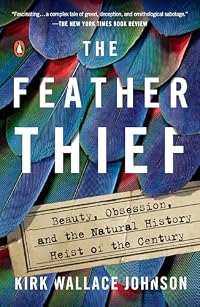
The Feather Thief: Beauty, Obsession, and the Natural History Heist of the Century
by Kirk Wallace Johnson
On This Page
Description
As heard on NPR's This American Life "Absorbing . . . Though it's non-fiction, The Feather Thief contains many of the elements of a classic thriller." --Maureen Corrigan, NPR's Fresh Air "One of the most peculiar and memorable true-crime books ever." --Christian Science Monitor A rollicking true-crime adventure and a captivating journey into an underground world of fanatical fly-tiers and plume peddlers, for readers of The Stranger in the Woods, The Lost City of Z, and The Orchid show more Thief. On a cool June evening in 2009, after performing a concert at London's Royal Academy of Music, twenty-year-old American flautist Edwin Rist boarded a train for a suburban outpost of the British Museum of Natural History. Home to one of the largest ornithological collections in the world, the Tring museum was full of rare bird specimens whose gorgeous feathers were worth staggering amounts of money to the men who shared Edwin's obsession: the Victorian art of salmon fly-tying. Once inside the museum, the champion fly-tier grabbed hundreds of bird skins--some collected 150 years earlier by a contemporary of Darwin's, Alfred Russel Wallace, who'd risked everything to gather them--and escaped into the darkness. Two years later, Kirk Wallace Johnson was waist high in a river in northern New Mexico when his fly-fishing guide told him about the heist. He was soon consumed by the strange case of the feather thief. What would possess a person to steal dead birds? Had Edwin paid the price for his crime? What became of the missing skins? In his search for answers, Johnson was catapulted into a years-long, worldwide investigation. The gripping story of a bizarre and shocking crime, and one man's relentless pursuit of justice, The Feather Thief is also a fascinating exploration of obsession, and man's destructive instinct to harvest the beauty of nature. show lessTags
Recommendations
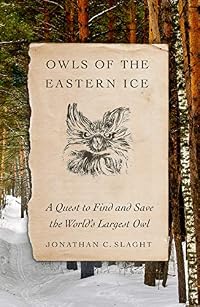
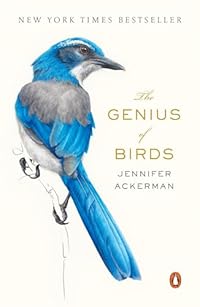
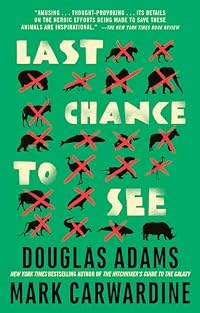
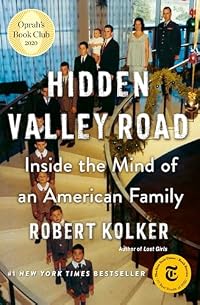





Member Recommendations
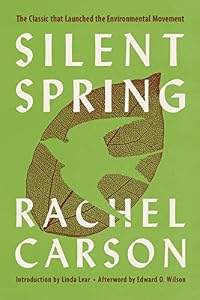
schmootc This is another non-fiction book about natural history. It basically sketches out how a lot of those birds ended up being so scarce/extinct to begin with and scared the crap out of me at least about what's going to happen next.
Member Reviews
As a fly fisherman, fly tier, and former policeman, I found this book to be an absolute home run!
A young "savant", Edwin Rist, had everything going for him. A brilliant flautist, he and his brother (also a savant), discovered the art of tying Atlantic Salmon flies. Throwing themselves into the hobby, they soon discovered the extreme costs and rarity of some of the required feathers.
These feathers come from some of the rarest birds in the world, such as the Resplendent Quetzal, the King Bird of Paradise, the Flame Bowerbird, and the Blue Chatterer. Due to the rarity of the birds, the world came together and enacted a treaty to protect them, and other rare and endangered species. It became known as the "CITES" treaty (Convention on show more International Trade in Endangered Species of Wild Fauna and Flora). It's the basis for the laws prohibiting trade in ivory, for example, as well as many other animals and plants.
Rather than simply using substitute feathers (which the majority of us make do with), Edwin concocts a scheme to break into the British Natural History Museum. The museum housed a vast collection of the birds that Rist needed feathers from. The bird carcasses were collected over hundreds of years, and were being stored for scientific purposes.
To not give the entire book away, Rist burglarizes the museum, and makes away with hundreds of the rare birds. It seems that he has committed the perfect crime, as he gets away with it for quite a while. Eventually, people become suspicious of Rist, as he seems to have an unending suppy of the feathers for sale (the feathers can be sold, if it can be proven that they were obtained before the CITES treaty went into effect). He is arrested, but is given a slap on the wrist and released.
Along comes the author. A fascinating man in his own right, Johnson is a modern day Sherlock Holmes. He personifies the word persistent. Through an unending, multi-year investigation, Johnson uncovers much more information. The investigation, and it's revelations, really is quite a fascinating story in itself. Again, I don't want to spoil the book for any readers, so I will stop here!
Not only a story of Rist and his exploits, the book covers many other subjects. Early explorers searching for unknown species, the whole phenomenon of "feather fashion", the history of salmon fly tying, and the fly tying community itself. The author melds these subjects into the story seamlessly.
The entire book flows along very well. You cannot help but learn a great deal about many, varied subjects, painlessly. You will find yourself at times pulling for Rist, and yet at times disgusted by his greed. You wonder how the author found the willpower to keep going on in his investigation, when he hits so many dead ends.
All in all, I highly recommend this book. To sportsmen, to crime buffs, to pyschology students, and to anyone else who loves a good mystery.
Thank you to Edelweiss, who provided me a copy of this book in exchange for a fair review. show less
A young "savant", Edwin Rist, had everything going for him. A brilliant flautist, he and his brother (also a savant), discovered the art of tying Atlantic Salmon flies. Throwing themselves into the hobby, they soon discovered the extreme costs and rarity of some of the required feathers.
These feathers come from some of the rarest birds in the world, such as the Resplendent Quetzal, the King Bird of Paradise, the Flame Bowerbird, and the Blue Chatterer. Due to the rarity of the birds, the world came together and enacted a treaty to protect them, and other rare and endangered species. It became known as the "CITES" treaty (Convention on show more International Trade in Endangered Species of Wild Fauna and Flora). It's the basis for the laws prohibiting trade in ivory, for example, as well as many other animals and plants.
Rather than simply using substitute feathers (which the majority of us make do with), Edwin concocts a scheme to break into the British Natural History Museum. The museum housed a vast collection of the birds that Rist needed feathers from. The bird carcasses were collected over hundreds of years, and were being stored for scientific purposes.
To not give the entire book away, Rist burglarizes the museum, and makes away with hundreds of the rare birds. It seems that he has committed the perfect crime, as he gets away with it for quite a while. Eventually, people become suspicious of Rist, as he seems to have an unending suppy of the feathers for sale (the feathers can be sold, if it can be proven that they were obtained before the CITES treaty went into effect). He is arrested, but is given a slap on the wrist and released.
Along comes the author. A fascinating man in his own right, Johnson is a modern day Sherlock Holmes. He personifies the word persistent. Through an unending, multi-year investigation, Johnson uncovers much more information. The investigation, and it's revelations, really is quite a fascinating story in itself. Again, I don't want to spoil the book for any readers, so I will stop here!
Not only a story of Rist and his exploits, the book covers many other subjects. Early explorers searching for unknown species, the whole phenomenon of "feather fashion", the history of salmon fly tying, and the fly tying community itself. The author melds these subjects into the story seamlessly.
The entire book flows along very well. You cannot help but learn a great deal about many, varied subjects, painlessly. You will find yourself at times pulling for Rist, and yet at times disgusted by his greed. You wonder how the author found the willpower to keep going on in his investigation, when he hits so many dead ends.
All in all, I highly recommend this book. To sportsmen, to crime buffs, to pyschology students, and to anyone else who loves a good mystery.
Thank you to Edelweiss, who provided me a copy of this book in exchange for a fair review. show less
In 2009, a 20-year-old music student broke into a branch of the British Museum of Natural History in the small town of Tring and stole nearly 300 bird specimens, some of which had been collected 150 years before by the great naturalist Alfred Russel Wallace, the man co-credited with Charles Darwin as the discoverer of evolution by natural selection.
Why? To use their feathers in the practice of Victorian fly-tying, an artform based on fishing lures that was popularized at a time when exotic birds were enthusiastically being hunted to the brink of extinction for their feathers. These days, fly-tiers looking for an "authentic" and "historical" experience will pay fantastic sums for skins and feathers from now-protected species, often show more without asking any questions about where they come from.
Kirk Wallace Johnson writes here about the heist and its aftermath, the scientific importance of the specimens, the impressive and life-threatening lengths Wallace went to to collect and preserve them, the history of human greed for these birds' feathers, the painstaking and often beautiful hobby/art of fly-tying, the people and personalities involved, and the author's own growing obsession with the case and his somewhat irrational conviction that he could be the one to return the many still-missing skins and feathers to the museum (and never mind the fact that the museum didn't really care at this point, because their scientific value had already been irrecoverably destroyed).
I started this book thinking it would be interestingly quirky little story about an interestingly quirky little crime, but I ended up becoming much, much more engrossed in it than I expected. I think because, like many really good works of non-fiction, it touches on so many topics that reach far beyond its ostensible subject matter. In this case: the role of museums in preserving scientific knowledge through the centuries, colonialism, the human exploitation of nature, criminal justice, obsession, neurodiversity, and the way in which any odd hobby can turn into a dark little rabbit hole if you just dive into it far enough. Thoroughly fascinating stuff! show less
Why? To use their feathers in the practice of Victorian fly-tying, an artform based on fishing lures that was popularized at a time when exotic birds were enthusiastically being hunted to the brink of extinction for their feathers. These days, fly-tiers looking for an "authentic" and "historical" experience will pay fantastic sums for skins and feathers from now-protected species, often show more without asking any questions about where they come from.
Kirk Wallace Johnson writes here about the heist and its aftermath, the scientific importance of the specimens, the impressive and life-threatening lengths Wallace went to to collect and preserve them, the history of human greed for these birds' feathers, the painstaking and often beautiful hobby/art of fly-tying, the people and personalities involved, and the author's own growing obsession with the case and his somewhat irrational conviction that he could be the one to return the many still-missing skins and feathers to the museum (and never mind the fact that the museum didn't really care at this point, because their scientific value had already been irrecoverably destroyed).
I started this book thinking it would be interestingly quirky little story about an interestingly quirky little crime, but I ended up becoming much, much more engrossed in it than I expected. I think because, like many really good works of non-fiction, it touches on so many topics that reach far beyond its ostensible subject matter. In this case: the role of museums in preserving scientific knowledge through the centuries, colonialism, the human exploitation of nature, criminal justice, obsession, neurodiversity, and the way in which any odd hobby can turn into a dark little rabbit hole if you just dive into it far enough. Thoroughly fascinating stuff! show less
A true crime story about the theft of hundreds of rare bird specimens from a British natural history museum by an American college student with an obsession with the art of fly tying. Now that is—if you will pardon the pun—a hook.
Of course, as intriguing as that hook is, I'm not convinced that it deserved book-length treatment—at least, not in the way that Kirk Wallace Johnson approaches the story of Edwin Rist, the felonious flautist. Johnson devotes much of the first half of The Feather Thief to exploring the Victorian origins of elaborate fly-tying and the career of the renowned naturalist Alfred Russel Wallace, who collected many of the specimens stolen by Rist. This is not necessarily uninteresting, but it seems to me not show more the most relevant context for understanding why Rist acted the way he did. For that, you need to think about entitlement.
A shorter, tighter exploration of Edwin Rist as a product of, and exploiter of, a system that privileges upper middle class white men would, I think, have been more successful. It's clearly not an obsessive hobby which drives Rist; it's a sense of entitlement. How else to explain how someone who, with premeditation, stole hundreds of thousands of pounds worth of rare items in order to profit from their destruction; who lied his way to a suspended sentence by pretending to be autistic (and using ableist slurs); who tried to set up someone else as a fall guy—how else to explain how he not only gets a suspended sentence and a reduced fine, but still gets to graduate from a prestigious musical programme, avoid deportation from the U.K., and then apparently secure a visa to work in the EU despite having a criminal record?
And all this while not only failing to show remorse, but demonstrating an active, selfish disdain for others! Perhaps he comes by this naturally. After all, Rist's parents also seem to be a piece of work, having last year landed on the American Humane Society’s “Horrible Hundred” list of puppy mills. But their business still seems to be in operation, just as Rist is still working as a musician in Germany. (Johnson refrains from saying where, but Rist's not that difficult to find—he intermittently uses his middle name as his surname.)
In other words, there's no reassuring, triumph-of-justice ending here. This makes reading The Feather Thief in 2020—when the global consequences of self-serving greed have never been more plain—an especially enraging experience, but maybe an even more fitting one. show less
Of course, as intriguing as that hook is, I'm not convinced that it deserved book-length treatment—at least, not in the way that Kirk Wallace Johnson approaches the story of Edwin Rist, the felonious flautist. Johnson devotes much of the first half of The Feather Thief to exploring the Victorian origins of elaborate fly-tying and the career of the renowned naturalist Alfred Russel Wallace, who collected many of the specimens stolen by Rist. This is not necessarily uninteresting, but it seems to me not show more the most relevant context for understanding why Rist acted the way he did. For that, you need to think about entitlement.
A shorter, tighter exploration of Edwin Rist as a product of, and exploiter of, a system that privileges upper middle class white men would, I think, have been more successful. It's clearly not an obsessive hobby which drives Rist; it's a sense of entitlement. How else to explain how someone who, with premeditation, stole hundreds of thousands of pounds worth of rare items in order to profit from their destruction; who lied his way to a suspended sentence by pretending to be autistic (and using ableist slurs); who tried to set up someone else as a fall guy—how else to explain how he not only gets a suspended sentence and a reduced fine, but still gets to graduate from a prestigious musical programme, avoid deportation from the U.K., and then apparently secure a visa to work in the EU despite having a criminal record?
And all this while not only failing to show remorse, but demonstrating an active, selfish disdain for others! Perhaps he comes by this naturally. After all, Rist's parents also seem to be a piece of work, having last year landed on the American Humane Society’s “Horrible Hundred” list of puppy mills. But their business still seems to be in operation, just as Rist is still working as a musician in Germany. (Johnson refrains from saying where, but Rist's not that difficult to find—he intermittently uses his middle name as his surname.)
In other words, there's no reassuring, triumph-of-justice ending here. This makes reading The Feather Thief in 2020—when the global consequences of self-serving greed have never been more plain—an especially enraging experience, but maybe an even more fitting one. show less
In 2009 an unassuming 20-year-old flute player broke into the British Museum of Natural History and stole hundreds of bird specimens. It took the museum months to notice anything was wrong, due to lax inventory practices and ignorance that a bunch of 150-year-old birds would be of interest to anyone outside of their field. Edwin Rist was eventually tracked down, but by that point he only had a few birds left. Why did he do it, and what happened to the rest of the birds?
This is a standard true crime story about a theft but it’s also about the early modern internet. Edwin Rist and the other feather dealers technically conducted all of their business fully out in the open … if you knew where to look. But the museum didn’t know much show more about forums or ebay, and didn’t know that they needed to know, and so were unaware of the barely-underground market for fishing lure feathers. It’s also about the entitlement of young white men, who think that their “appreciation” of the feathers is more important than public display and preservation. It’s an unsatisfying story, with few real answers and very little justice, but I enjoyed thinking about it nonetheless. I did think the author inserted himself into the narrative a bit too much, though. show less
This is a standard true crime story about a theft but it’s also about the early modern internet. Edwin Rist and the other feather dealers technically conducted all of their business fully out in the open … if you knew where to look. But the museum didn’t know much show more about forums or ebay, and didn’t know that they needed to know, and so were unaware of the barely-underground market for fishing lure feathers. It’s also about the entitlement of young white men, who think that their “appreciation” of the feathers is more important than public display and preservation. It’s an unsatisfying story, with few real answers and very little justice, but I enjoyed thinking about it nonetheless. I did think the author inserted himself into the narrative a bit too much, though. show less
Really, really enjoyed this book. It's one of those that's a deep dive into a worldwide subculture that you never even knew existed. But if you're like me, you'll come away with some very strong opinions about it.
The subculture in question are salmon-fly tyers, but the book delves into questions of authenticity, imperialism, the co-opting of natural resources, the conflict between science and art (which really had never occurred to me before), and more. A lot of people seem to have been captivated with the mystery the author is trying to solve; for me that was interesting, but not nearly the most interesting aspect of the book. Not because that pursuit isn't compelling, but because the discussions engendered along the way are even more show more so.
Overall, in any case, I really recommend it. show less
The subculture in question are salmon-fly tyers, but the book delves into questions of authenticity, imperialism, the co-opting of natural resources, the conflict between science and art (which really had never occurred to me before), and more. A lot of people seem to have been captivated with the mystery the author is trying to solve; for me that was interesting, but not nearly the most interesting aspect of the book. Not because that pursuit isn't compelling, but because the discussions engendered along the way are even more show more so.
Overall, in any case, I really recommend it. show less
In 2009, a twenty-year-old gifted American flautist breaks into the British Natural History Museum at Tring, 30 miles northwest of London, and steals three hundred rare birds whose exotic feathers are in demand in the fly-tying community. This young man does not fish. He ties flies as a hobby and an art form. Exotic feathers are used by fly tiers to replicate 19th century designs. These feathers are increasingly rare and, thus, extremely valuable. It sounds like outlandish fiction, but this is a true crime. The author, a journalist, hears about the theft from his fly-fishing guide and decides to find out more.
“But the more I found out, the greater the mystery grew, and with it, my own compulsion to solve it. Little did I know, my show more pursuit of justice would mean journeying deep into the feather underground, a world of fanatical fly-tiers and plume peddlers, cokeheads and big game hunters, ex-detectives and shady dentists. From the lies and threats, rumors and half-truths, revelations and frustrations, I came to understand something about the devilish relationship between man and nature and his unrelenting desire to lay claim to its beauty, whatever the cost. It would be five consuming years before I finally discovered what happened to the lost birds of Tring.”
What a bizarre story! In equal parts history, science, law, and environmentalism, this book is a riveting detective story and a tale of obsession. It is told in three sections. In the first, we hear about Alfred Russel Wallace’s adventures in collecting specimens of these beautiful birds from the jungles of New Guinea and Malaysia in the mid-19th century, the fashion industry’s lavish use of feathers that nearly resulted in several bird species' extinction, and the origins of the craft of fly tying. In the second, we find out how the robbery was accomplished and what transpired in the aftermath. In the third, we hear about the author’s further pursuit of the missing bird skins. The author makes a case for the ongoing value of natural history collections to ecology and scientific inquiry. I found this intriguing mystery both absorbing and educational. show less
“But the more I found out, the greater the mystery grew, and with it, my own compulsion to solve it. Little did I know, my show more pursuit of justice would mean journeying deep into the feather underground, a world of fanatical fly-tiers and plume peddlers, cokeheads and big game hunters, ex-detectives and shady dentists. From the lies and threats, rumors and half-truths, revelations and frustrations, I came to understand something about the devilish relationship between man and nature and his unrelenting desire to lay claim to its beauty, whatever the cost. It would be five consuming years before I finally discovered what happened to the lost birds of Tring.”
What a bizarre story! In equal parts history, science, law, and environmentalism, this book is a riveting detective story and a tale of obsession. It is told in three sections. In the first, we hear about Alfred Russel Wallace’s adventures in collecting specimens of these beautiful birds from the jungles of New Guinea and Malaysia in the mid-19th century, the fashion industry’s lavish use of feathers that nearly resulted in several bird species' extinction, and the origins of the craft of fly tying. In the second, we find out how the robbery was accomplished and what transpired in the aftermath. In the third, we hear about the author’s further pursuit of the missing bird skins. The author makes a case for the ongoing value of natural history collections to ecology and scientific inquiry. I found this intriguing mystery both absorbing and educational. show less
As a birder and someone lost in admiration of Alfred Russell Wallace, I'm a captive audience right off the shelf. Throw in a wonderful, funny, heartbreaking cameo appearance by Richard Prum (ornithologist, evolutionary scholar, and author of the lovely and important "Evolution of Beauty"), and I'm sold. And even as the daughter of a lifelong trout fisherman, I had no clue about the existence of the obsessive-to-the-point-of-menacing underworld of salmon fly-tiers, so I learned (gulp) a lot.
Johnson writes briskly, vividly and skillfully in his tale of a strange, brilliant young man, Edwin Rist. Rist is a gifted flautist, studying at London's Royal Academy of Music. He has also been a rock star in the fly-tying world since he was in his show more teens. The world, it would seem, lay open before him. But he wants money to buy a $20,000 gold flute. So he takes a rock and a suitcase, busts through a window at the Tring Museum, home to one of the finest and most important ornithology collections in the world, walks out with nearly 300 bird skins (a number of which had been collected by Wallace himself - which made me nearly weep with helpless fury), gets on a train and goes home. And proceeds to start cutting up and selling feathers from these irreplaceable, rare, endangered and stunningly beautiful birds on eBay. To these amoral jerks for whom dyed turkey feathers aren't good enough to tie flies... which salmon will either bite on or not, depending on their mood and the weather... but it doesn't really matter because these guys (and it does seem they are all guys) don't fish anyway. They just tie flies. Admittedly, the flies themselves are absolutely beautiful: works of art, really - see some of photos in the book or a few samples at http://ronnlucassr.com/fly-gallaries/edwin-anton-rist/.
Edwin is caught quite quickly. He still has many of the specimens he stole, and almost immediately admits what he's done. A handful of his buyers return the skins they bought from him, but damaged and unlabeled, so are a total loss in the context of scientific knowledge and analysis. Edwin has good lawyers. And a hired psychologist who says he has Asperger's syndrome. [SPOILER ALERT!] So he walks on a suspended sentence and a fine. He goes home, his life as a musician resumes and that's it.
It's infuriating. In the remainder of the book, Johnson focuses more on his own obsession: he wants to find the rest of the missing skins. He doesn't. He does get to spend most of a day in a German hotel room, interviewing Rist, an unrepentant, clever, charming bullshitter. After years of hunting and brooding and interviewing and more trolling the internet than most people could bear, Johnson has to let it go. And returns to a cold New Mexican trout stream to cleanse his spirit. This is perhaps the less successful part of the book (except for the Prum interview) and could have been a summary chapter instead of nearly 100 pages.
Fascinating, fast-moving, weird, colorful, and disturbing. Definitely recommended. show less
Johnson writes briskly, vividly and skillfully in his tale of a strange, brilliant young man, Edwin Rist. Rist is a gifted flautist, studying at London's Royal Academy of Music. He has also been a rock star in the fly-tying world since he was in his show more teens. The world, it would seem, lay open before him. But he wants money to buy a $20,000 gold flute. So he takes a rock and a suitcase, busts through a window at the Tring Museum, home to one of the finest and most important ornithology collections in the world, walks out with nearly 300 bird skins (a number of which had been collected by Wallace himself - which made me nearly weep with helpless fury), gets on a train and goes home. And proceeds to start cutting up and selling feathers from these irreplaceable, rare, endangered and stunningly beautiful birds on eBay. To these amoral jerks for whom dyed turkey feathers aren't good enough to tie flies... which salmon will either bite on or not, depending on their mood and the weather... but it doesn't really matter because these guys (and it does seem they are all guys) don't fish anyway. They just tie flies. Admittedly, the flies themselves are absolutely beautiful: works of art, really - see some of photos in the book or a few samples at http://ronnlucassr.com/fly-gallaries/edwin-anton-rist/.
Edwin is caught quite quickly. He still has many of the specimens he stole, and almost immediately admits what he's done. A handful of his buyers return the skins they bought from him, but damaged and unlabeled, so are a total loss in the context of scientific knowledge and analysis. Edwin has good lawyers. And a hired psychologist who says he has Asperger's syndrome. [SPOILER ALERT!] So he walks on a suspended sentence and a fine. He goes home, his life as a musician resumes and that's it.
It's infuriating. In the remainder of the book, Johnson focuses more on his own obsession: he wants to find the rest of the missing skins. He doesn't. He does get to spend most of a day in a German hotel room, interviewing Rist, an unrepentant, clever, charming bullshitter. After years of hunting and brooding and interviewing and more trolling the internet than most people could bear, Johnson has to let it go. And returns to a cold New Mexican trout stream to cleanse his spirit. This is perhaps the less successful part of the book (except for the Prum interview) and could have been a summary chapter instead of nearly 100 pages.
Fascinating, fast-moving, weird, colorful, and disturbing. Definitely recommended. show less
Members
- Recently Added By
Lists

Top Five Books of 2020
982 works; 348 members

Top Five Books of 2022
736 works; 272 members

Top Five Books of 2021
604 works; 181 members

2019 Notable Books for Adults
26 works; 3 members

Litsy Awards 2018
248 works; 9 members

Book Club Suggestions for 2020
27 works; 2 members

Books Read in 2021
5,361 works; 114 members

Books Read in 2022
5,164 works; 111 members

So You Want to Run a Museum...
8 works; 1 member

Book Riot Read Harder 2026
80 works; 1 member

Unhinged History
14 works; 1 member
Author Information

3+ Works 1,455 Members
Some Editions
Awards and Honors
Awards
Distinctions
Notable Lists
Common Knowledge
- Canonical title*
- Le voleur de plumes. Où l'on traite de la beauté, d'une obsession, et du vol du siècle en matière d'histoire naturelle
- Original title
- The Feather Thief : Beauty, Obsession, and the Natural History Heist of the Century
- Original publication date
- 2018 (1e édition originale américaine, Viking) (1e édition originale américaine, Viking); 2020-09-30 (1e traduction et édition française, Marchialy éditions) (1e traduction et édition française, Marchialy éditions)
- People/Characters*
- Edwin Rist; Alfred Russel Wallace; paradijsvogel; blue chatterer; roodkraagvruchtenkraai; halsbandcotinga (show all 7); quetzal
- Important places*
- National History Museum Tring near Londen
- Epigraph
- Man in seldom content to witness beauty. He must possess it. -- Grand Chief Sir Michael Somare, Prime Minister of Papua New Guinea 1979
- Dedication
- For Marie-Josée: C'était tout noir et blanc avant que tu aies volé et atterri dans mon arbre
- First words
- By the time Edwin Rist stepped off the train onto the platform at Tring, forty miles north of London, it was already quite late.
- Last words
- (Click to show. Warning: May contain spoilers.)The Norwegian delivery was placed inside, and the cabinet doors closed with a quiet thump.
- Original language*
- Anglais (Etats-Unis) (Etats-Unis)
- Canonical DDC/MDS
- 364.1628598
*Some information comes from Common Knowledge in other languages. Click "Edit" for more information.
Classifications
- Genres
- General Nonfiction, Nonfiction
- DDC/MDS
- 364.1628598 — Society, Government, and Culture Social problems and social services Crime Criminal offenses Crimes of property Theft
- LCC
- HV6665 .G72 .J64 — Social sciences Social pathology. Social and public welfare. Criminology Social pathology. Social and public welfare. Criminology Crimes and offenses
- BISAC
Statistics
- Members
- 1,343
- Popularity
- 17,732
- Reviews
- 62
- Rating
- (4.04)
- Languages
- 8 — Chinese, Dutch, English, Finnish, French, German, Korean, Swedish
- Media
- Paper, Audiobook, Ebook
- ISBNs
- 22
- ASINs
- 6