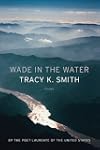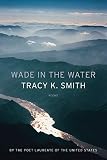
Wade in the Water: Poems
by Tracy K. Smith
On This Page
Description
In Wade in the Water, Tracy K. Smith boldly ties America's contemporary moment both to our nation's fraught founding history and to a sense of the spirit, the everlasting. These are poems of sliding scale: some capture a flicker of song or memory; some collage an array of documents and voices; and some push past the known world into the haunted, the holy. Smith's signature voice - inquisitive, lyrical, and wry - turns over what it means to be a citizen, a mother, and an artist in a culture show more arbitrated by wealth, men, and violence. Here, private utterance becomes part of a larger choral arrangement as the collection widens to include erasures of The Declaration of Independence and the correspondence between slave owners, a found poem comprised of evidence of corporate pollution and accounts of near-death experiences, a sequence of letters written by African Americans enlisted in the Civil War, and the survivors' reports of recent immigrants and refugees. Wade in the Water is a potent and luminous book by one of America's essential poets. show lessTags
Recommendations





Member Reviews
"History is a ship forever setting sail. On either shore: mountains of men, Oceans of bone, an engine whose teeth shred all that is not our name."
Tracy K Smith was the poet laureate for the United States when this was published, and it's easy to see why. Her control over the form and emotion of her writing is fantastic, and she manages to seem playful in her poetry without losing the power and steadiness of message. The most compelling thematic content is definitely the examination of race in America, historically and beyond simple concepts of slavery. The extended poem that focused in on marginalized black soldiers in the Union army of the civil war... damn!
Sometimes she started to lose me a bit-- part of me wishes that she had show more followed a bit more restriction on some of these poems. Not for lack of meaning, but just for the sake of coherence and accessibility. I feel like non-poetry fans (of which I am friends with many) would only appreciate about 30% of this book. Which is fine, but a bit of a disappointment.
All in all, pretty damn good. One of the better contemporary poetry collections I've seen. A solid read for poetry fans. show less
Tracy K Smith was the poet laureate for the United States when this was published, and it's easy to see why. Her control over the form and emotion of her writing is fantastic, and she manages to seem playful in her poetry without losing the power and steadiness of message. The most compelling thematic content is definitely the examination of race in America, historically and beyond simple concepts of slavery. The extended poem that focused in on marginalized black soldiers in the Union army of the civil war... damn!
Sometimes she started to lose me a bit-- part of me wishes that she had show more followed a bit more restriction on some of these poems. Not for lack of meaning, but just for the sake of coherence and accessibility. I feel like non-poetry fans (of which I am friends with many) would only appreciate about 30% of this book. Which is fine, but a bit of a disappointment.
All in all, pretty damn good. One of the better contemporary poetry collections I've seen. A solid read for poetry fans. show less
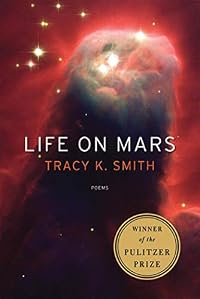
This is the best book yet from our poet laureate [[Tracy K. Smith]], even better than her Pulitzer Prize-winning [Life on Mars]. Trumpsters will want to avoid it, as she burns the pages with tales of racism and dismay with the current regime.
The worst in us having taken over
And broken the rest utterly down.
(From "An Old Story).
They plundered her youth, then moved on.
These awful, awful men. The ones
Whose wealth is a kind of filth.
(From "The World is Your Beautiful Younger Sister"). Her amazing "Angels" poem, with two "grizzled" angels in "leather biker gear", is one you're going to want to read.. This book also features a number of found poems based on heavily researched letters and other documents from African-American Civil War show more soldiers and their families (complete with original spellings).
From, "I Will Tell You the Truth About This":
Mr abarham lincon
I wont to know sir if you please
whether I can have my son relest
from the arme he is all the subport
I have now his father is Dead
and his brother that wase all
the help I had he has been wonded
twise he has not had nothing to send me yet
now I am old and my head is blossaming
for the grave and if you do I hope
the lord will bless you and me
tha say that you will simpethise
with the poor he be long to the
eight rigmat colard troops
he is a sarjent
mart welcom is his name
Some poems are wonders from her childhood, including this one, "Urban Youth", that ends with her learning to ride a bike:
But it was you and Dad and Mike teaching me to ride,
Running along beside until you didn't have to hold on.
Who was afraid? The hedge thrummed with bees
That only sang. Every happy thing I've known,
You held, or ran alongside not having to hold.
****
This is a beautifully composed book; I loved it. show less
The worst in us having taken over
And broken the rest utterly down.
(From "An Old Story).
They plundered her youth, then moved on.
These awful, awful men. The ones
Whose wealth is a kind of filth.
(From "The World is Your Beautiful Younger Sister"). Her amazing "Angels" poem, with two "grizzled" angels in "leather biker gear", is one you're going to want to read.. This book also features a number of found poems based on heavily researched letters and other documents from African-American Civil War show more soldiers and their families (complete with original spellings).
From, "I Will Tell You the Truth About This":
Mr abarham lincon
I wont to know sir if you please
whether I can have my son relest
from the arme he is all the subport
I have now his father is Dead
and his brother that wase all
the help I had he has been wonded
twise he has not had nothing to send me yet
now I am old and my head is blossaming
for the grave and if you do I hope
the lord will bless you and me
tha say that you will simpethise
with the poor he be long to the
eight rigmat colard troops
he is a sarjent
mart welcom is his name
Some poems are wonders from her childhood, including this one, "Urban Youth", that ends with her learning to ride a bike:
But it was you and Dad and Mike teaching me to ride,
Running along beside until you didn't have to hold on.
Who was afraid? The hedge thrummed with bees
That only sang. Every happy thing I've known,
You held, or ran alongside not having to hold.
****
This is a beautifully composed book; I loved it. show less
Poet Laureate of the United States, Tracy K. Smith. She addresses a variety of topics in her poems, but the section I found most moving was the section of the collection devoted to erasure poems. Most of these erasure poems were based on first person letters and accounts of slaves and former slaves during the U.S. Civil War. She also has an erasure poem drawn from the text of the Declaration of Independence. I liked that she used the actual words of these people gave voice to the desperation these former slaves who put their lives on the line for our country and yet, had to survive in a world that did not treat them fairly. It really brought their history alive and presented them as the real people they were rather than just statistics show more in a history book. She also included notes at the end of the collection with citations for the sources of the materials she used to write these poems. show less
Five days a week, I love to open my email and read and hear the poetry that Tracy K. Smith has chosen for the listeners of her Slowdown podcast. Each segment is five minutes long and includes a most personal and thoughtful introduction to the day’s poem by poets living and dead. Like watching a band who looks like they’re having a great time playing, you can feel Smith’s enthusiasm coming through in her smooth, soothing voice.
All that said, I would say that I appreciated the way she did the podcast a little more than I did this latest collection of her poetry. Maybe my lifelong whiteness didn’t relate well to her poetry about slaves relating to Lincoln. Someday, I will read her previous collection, Life on Mars, which won the show more Pulitzer Prize and garnered almost universal praise. Looking at 250 years of the American experience and how that relates to the black experience could just be more than I’m looking for in some poetry. Though I’m sure to read more of her work, having the joy of poetry through the Slowdown is a wonderful fallback position.
Update:
1) She grew up in nearby Fairfield, California and has spoken about it several times on the podcast.
2) With great sadness, I report that Tracy K. Smith has stopped doing her excellent work on the Slowdown, and the podcast has been on a hiatus for many months. Hopefully, it will resume with another spokesperson at some future date. I miss her sensitivity, humor, and voice greatly. [For those interested, all the podcasts are still available on the Slowdown site online.] show less
All that said, I would say that I appreciated the way she did the podcast a little more than I did this latest collection of her poetry. Maybe my lifelong whiteness didn’t relate well to her poetry about slaves relating to Lincoln. Someday, I will read her previous collection, Life on Mars, which won the show more Pulitzer Prize and garnered almost universal praise. Looking at 250 years of the American experience and how that relates to the black experience could just be more than I’m looking for in some poetry. Though I’m sure to read more of her work, having the joy of poetry through the Slowdown is a wonderful fallback position.
Update:
1) She grew up in nearby Fairfield, California and has spoken about it several times on the podcast.
2) With great sadness, I report that Tracy K. Smith has stopped doing her excellent work on the Slowdown, and the podcast has been on a hiatus for many months. Hopefully, it will resume with another spokesperson at some future date. I miss her sensitivity, humor, and voice greatly. [For those interested, all the podcasts are still available on the Slowdown site online.] show less
Broken into three parts; this stunning collection of poetry is lyrical and deep in intensity. From motherhood to slavery to contemplation each poem sucks the reader in and deserves to be savored. Tracey K. Smith is master of contemplation and care and this slim volume of poetry conveys deep meanings. Fans of poetry will eat this up and those new to prose will find themselves in love with the written word anew.
This is a very powerful poetry collection touching on important social issues. Some my favorite pieces are the various erasure poems, though the pieces Smith wrote about motherhood are also very evocative.
Current poet laureate of the United States, Tracy K. Smith's poems are food for the soul for 2018 in our current political climate. Her erasure poems are so beautiful.
Members
- Recently Added By
Author Information

18+ Works 2,187 Members
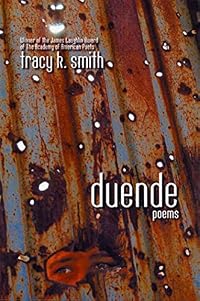
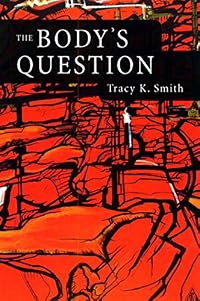
Tracy K. Smith is the author of three previous books of poetry, including Life on Mars, winner of the Pulitzer Prize; Duende, winner of the James Laughlin Award; and The Body's Question, winner of the Cave Canem Poetry Prize. She is also the editor of an anthology, American Journal: Fifty Poems for Our Time, and the author of a memoir, Ordinary show more Light, which was a finalist for the National Book Award. In 2017, Smith was appointed Poet Laureate of the United States. She teaches at Princeton University. show less
Awards and Honors
Awards
Distinctions
Common Knowledge
- Original publication date
- 2018
Classifications
Statistics
- Members
- 364
- Popularity
- 86,089
- Reviews
- 14
- Rating
- (4.11)
- Languages
- English
- Media
- Paper, Audiobook, Ebook
- ISBNs
- 7
- ASINs
- 2