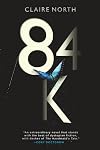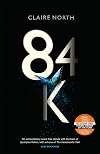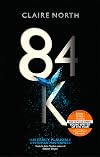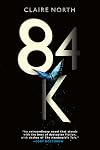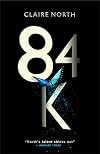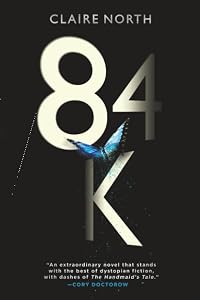
84K
by Claire North
On This Page
Description
A powerful dystopian vision of a world where money reigns supreme, from a World Fantasy Award-winning author."An extraordinary novel that stands with the best of dystopian fiction, with dashes of The Handmaid's Tale." — -Cory Doctorow
The penalty for Dani Cumali's murder: $84,000.
Theo works in the Criminal Audit Office. He assesses each crime that crosses his desk and makes sure the correct debt to society is paid in full.
These days, there's no need to go to prison — provided that show more you can afford to pay the penalty for the crime you've committed. If you're rich enough, you can get away with murder.
But Dani's murder is different. When Theo finds her lifeless body, and a hired killer standing over her and calmly calling the police to confess, he can't let her death become just an entry on a balance sheet.
Someone is responsible. And Theo is going to find them and make them pay.
Perfect for fans of 1984 and Never Let Me Go, Claire North's moving and unnerving new novel will resonate with readers around the world.. show less
Tags
Recommendations





Member Reviews
Neither an easy or a cheerful read, Claire North's 84K is a dystopian thriller set in a near-future England which has surrendered itself entirely to the attractions of business. In a Faustian pact, the Government has handed over all its functions to The Company, and given it a free hand in how it carries those functions out. The Company collects taxes, and hands back to Government what it sees fit. Citizens are judged by how much they are fiscally worth and how much insurance they carry. Any crime can be bought off, if you have the money or the insurance cover. Victimhood is assessed on the victim's worth to society; so murder may attract an indemnity of hundreds of thousands of pounds - or a lesser sum, like the £84,000 of the title. show more If your cover is good enough, of course, you can meet that indemnity easily. But if you're poorer, then incurring an indemnity for some minor or petty infringement could break you. Imagine that you were suddenly landed with a bill for, say, £7,500 out of nowhere. People on moderate incomes might struggle to meet that; people with low or no income would find it beyond them, and so the alternative - indentured servitude, or 'the patty line' - is imposed.
By the time of this novel, the system is well entrenched, and opposition to it appears both pointless and ineffective. Our protagonist - let's call him "Theo Miller" - had humble origins but now works in the Criminal Audit Office, assessing the value of lives taken or indemnities due. But when a childhood friend is murdered, and her £84,000 indemnity is paid by a corporate assassin almost out of petty cash, Miller feels obliged for a number of reasons to follow up the case, even when his superiors disapprove.
The story is told in multiple timelines and in a stream of consciousness style which can be unsettling, as most of the characters don't have well-formed consciousnesses to begin with and never seem to be able to complete a train of thought. We are stuck with the awful reality of a (vey well-realised) society which allows the 1% all the luxuries they could want, at the expense of making the 99% live in a dystopia. "Theo Miller" moves uneasily through this world - he is a well-drawn but ineffective character - until about two-thirds of the way through when the tone of the novel changes abruptly and instead of moving amongst the 99%, we are dealing with the 1%. The non-linear narrative adds another dimension and keeps the reader alert as the pieces fall into place.
About half-way through this book, I considered what I had learned about the society we were being shown. The "patty line" - which started out preparing burgers for fast food, but has since expanded to cover any menial labour that supports the economy - provides the basis for all of society. Those on the patty line cannot get off, as they never earn enough to repay their indemnity. They can be bought and sold, so the indentured servitude is actually slavery. And slaves are dispensable - either thrown out when they become too expensive to employ, or discarded if they fall victim to one of the many failures of (non-existent) health and safety rules - because such things were dropped by The Company long ago as being uneconomic. Everybody knows that this is the case, but no-one takes any notice and conveniently brushes it under the carpet
So - a society whose economic activity is built on disposable slave labour, and whose citizens know but look the other way. The parallels to Nazi Germany are unmistakeable. Yet the ghastly corporatism was arrived at through high-placed individuals feathering their own nests at the expense of everyone else. 84K should be widely read, because there are those who would see it as a utopia rather than a dystopia, who would see in the attitudes of the 1% values that they would consider admirable. The rest of us should read this book, and take its lessons, especially as to the ease that the slippery slope can offer. The style of the novel may put some off - it is not straightforward - but the picture is too important to ignore. show less
By the time of this novel, the system is well entrenched, and opposition to it appears both pointless and ineffective. Our protagonist - let's call him "Theo Miller" - had humble origins but now works in the Criminal Audit Office, assessing the value of lives taken or indemnities due. But when a childhood friend is murdered, and her £84,000 indemnity is paid by a corporate assassin almost out of petty cash, Miller feels obliged for a number of reasons to follow up the case, even when his superiors disapprove.
The story is told in multiple timelines and in a stream of consciousness style which can be unsettling, as most of the characters don't have well-formed consciousnesses to begin with and never seem to be able to complete a train of thought. We are stuck with the awful reality of a (vey well-realised) society which allows the 1% all the luxuries they could want, at the expense of making the 99% live in a dystopia. "Theo Miller" moves uneasily through this world - he is a well-drawn but ineffective character - until about two-thirds of the way through when the tone of the novel changes abruptly and instead of moving amongst the 99%, we are dealing with the 1%. The non-linear narrative adds another dimension and keeps the reader alert as the pieces fall into place.
About half-way through this book, I considered what I had learned about the society we were being shown. The "patty line" - which started out preparing burgers for fast food, but has since expanded to cover any menial labour that supports the economy - provides the basis for all of society. Those on the patty line cannot get off, as they never earn enough to repay their indemnity. They can be bought and sold, so the indentured servitude is actually slavery. And slaves are dispensable - either thrown out when they become too expensive to employ, or discarded if they fall victim to one of the many failures of (non-existent) health and safety rules - because such things were dropped by The Company long ago as being uneconomic. Everybody knows that this is the case, but no-one takes any notice and conveniently brushes it under the carpet
So - a society whose economic activity is built on disposable slave labour, and whose citizens know but look the other way. The parallels to Nazi Germany are unmistakeable. Yet the ghastly corporatism was arrived at through high-placed individuals feathering their own nests at the expense of everyone else. 84K should be widely read, because there are those who would see it as a utopia rather than a dystopia, who would see in the attitudes of the 1% values that they would consider admirable. The rest of us should read this book, and take its lessons, especially as to the ease that the slippery slope can offer. The style of the novel may put some off - it is not straightforward - but the picture is too important to ignore. show less
https://fromtheheartofeurope.eu/84k-by-claire-north/
I’m a big fan of Claire North’s work anyway, but this is a bit different – a well-realised near-future dystopian England, where crime and social transgression have been transformed into accounting units (along with the privatisation of most public services) and the underclass is oppressed by cosy collusion between big business and government. Our protagonist, a minor cog in the bureaucracy of punitive taxation, is moved by a shadow from his own past to begin fighting back against the system. A couple of interlocking plot lines, so that you can look at the story from slightly different angles. Grim but convincing.
I’m a big fan of Claire North’s work anyway, but this is a bit different – a well-realised near-future dystopian England, where crime and social transgression have been transformed into accounting units (along with the privatisation of most public services) and the underclass is oppressed by cosy collusion between big business and government. Our protagonist, a minor cog in the bureaucracy of punitive taxation, is moved by a shadow from his own past to begin fighting back against the system. A couple of interlocking plot lines, so that you can look at the story from slightly different angles. Grim but convincing.
Between Jarman’s visions of a post-Thatcherite UK and North’s vision of a post-Austerity UK, I’m not sure I can either tell the difference or see much that distinguishes them. That the Tories have been systematically robbing the UK since 1979 is historical fact. How genre writers have responded to that – at least, the few that actually bothered – is a different matter. UK sf writers of the 1970s built the government’s incompetence into their worlds; later sf writers had plainly drunk too much Tory Kool-Aid (bar a few notable exceptions). But that’s an argument for another time. 84K reads like a cross between 1984 refashioned for a twenty-first century audience and a 1970s consumerism-gone-made satire. Which, sadly, makes show more it feel like a book out of its time. It has a point to make, and it tells its story well, but it feels mostly like the target at which it’s aimed no longer exists. North is a writer to be treasured, and if not every book she produces hits its mark, she has the virtue of actually aiming at something. I thought The Sudden Appearance of Hope much the better book, for all that 84K ought to be the more relevant book and so more impactful. I will however read more books by North because she is clearly worth it. show less
This book is a Dementor in text form; it basically sucked the joy out of my life while I was reading it, and most of the time it felt like a punishment. It’s well written enough, and I enjoyed one of North’s past books enough, that I pushed on through to the end, hoping for something that might make reading this feel worth it. That did not happen, and, quite honestly, I now wonder if anything could.
Certainly the characters couldn’t. When your main character is a man whose entire personality, life, and history is built around fading into the background and not reacting to things, you’ve got an uphill battle already in terms of engaging your readers, and the rest of the characters appear as they cross the main character’s path, show more and then disappear, often fatally. All but one of the interesting characters dies. (A lot of people die. So, so many people. Also some animals, if animal harm bothers you. Sure bothered me.)
I was interested in this book because I read an interview with the author about worldbuilding, and worldbuilding is the one thing that can make me love a book even if the characters and plot both repel me. But that didn’t happen here, because the worldbuilding is — honestly not great. It’s too close to reality to be a worthwhile extrapolation, it’s overly simplistic, and it feels not quite fully realized.
There’s not really a best part of the book that I can highlight; for me, the best part of it is that I’m done with it.
However, I’m giving it two stars, not one, because while the writing style was sometimes annoying, the nonlinear narrative did fit together neatly, and the timeline of this book is fractured enough that that’s pretty impressive. But basically that makes this a puzzle, not a book. A really grim, depressing puzzle that you watch someone else fit together, even though you realize 1/4 of the way in what the puzzle will turn out to be. And then you regret having done that.
Or at least I do. show less
Certainly the characters couldn’t. When your main character is a man whose entire personality, life, and history is built around fading into the background and not reacting to things, you’ve got an uphill battle already in terms of engaging your readers, and the rest of the characters appear as they cross the main character’s path, show more and then disappear, often fatally. All but one of the interesting characters dies. (A lot of people die. So, so many people. Also some animals, if animal harm bothers you. Sure bothered me.)
I was interested in this book because I read an interview with the author about worldbuilding, and worldbuilding is the one thing that can make me love a book even if the characters and plot both repel me. But that didn’t happen here, because the worldbuilding is — honestly not great. It’s too close to reality to be a worthwhile extrapolation, it’s overly simplistic, and it feels not quite fully realized.
There’s not really a best part of the book that I can highlight; for me, the best part of it is that I’m done with it.
However, I’m giving it two stars, not one, because while the writing style was sometimes annoying, the nonlinear narrative did fit together neatly, and the timeline of this book is fractured enough that that’s pretty impressive. But basically that makes this a puzzle, not a book. A really grim, depressing puzzle that you watch someone else fit together, even though you realize 1/4 of the way in what the puzzle will turn out to be. And then you regret having done that.
Or at least I do. show less
I enjoyed *84K*, with some caveats. Its central dystopian mechanism is very strong: a society in which justice has been converted into accounting, and human injury can be priced, processed, and absorbed as a cost of doing business. North delineates that world clearly, and that clarity is probably the novel’s main strength.
However the book felt somewhat simple to me in its moral architecture. I had hoped for a little more ambiguity or depth, more sense of the harder questions beneath the indictment.
The “consumerism gone mad” aspect is also a bit well worn, much as cyberpunk’s corporate dystopias can still be relevant while feeling overexposed. Still, as an American reader, I found *84K* disturbingly timely. It reads less like a show more warning about Britain alone than about any society willing to let “good for business” drown out questions of justice, social cruelty, inequality, and moral responsibility. A flawed but worthwhile novel, and one with a real target. show less
However the book felt somewhat simple to me in its moral architecture. I had hoped for a little more ambiguity or depth, more sense of the harder questions beneath the indictment.
The “consumerism gone mad” aspect is also a bit well worn, much as cyberpunk’s corporate dystopias can still be relevant while feeling overexposed. Still, as an American reader, I found *84K* disturbingly timely. It reads less like a show more warning about Britain alone than about any society willing to let “good for business” drown out questions of justice, social cruelty, inequality, and moral responsibility. A flawed but worthwhile novel, and one with a real target. show less
How much is a life worth? Theo Miller knows something about that. He works at the Criminal Audit Office assessing the cost of things like theft, arson, battery, murder. To assess the cost of a murder, for example, you have to see how much the life taken was worth, discounting for things like criminal history, prospects for future productiveness, drug habits, etc. Some lives just aren’t worth all that much. Not in Theo Miller’s society at least. Not since nearly all companies got subsumed by The Company and the government contracted out most of its responsibilities to The Company as well. It’s a nice tight fit — the government and The Company — and if it means a large amount of collateral wastage of human life, well, that show more doesn’t matter so much if those lives weren’t all that valuable to begin with, or more precisely, not that valuable once The Company got through with them. It’s a society begging to be blown up and, strangely, it looks like Theo Miller might just have to be the one to do it. Well, if he really were Theo Miller that is…
This slightly futuristic dystopian Britain is both frighteningly plausible and laughably implausible. The trouble is that it’s rather difficult to ascertain which is which. And it may be too much for the complex interweaving plot lines to accommodate. Because, very unusually for Claire North, this story takes an inordinate amount of time to get airborne. I would say nearly a hundred pages. Of course once it does find its wings, it soars. But there is a troubling weightiness to the pacing and a certain ponderousness to the characterization of this distasteful near-Britain. Rather than becoming a high-concept thriller, the novel is pulled down by belaboured comparison to a world which, frankly, might not be that much better. It’s as though the social message took precedence over the tightness of the story or the need to generate sympathy for some of the characters.
Despite reservations on this novel, I still find North’s writing electrifying. She can be so deft. So I’m still going to gently recommend it even though I wasn’t completely whelmed. It’s still worth it to be in Claire North’s company for a time. show less
This slightly futuristic dystopian Britain is both frighteningly plausible and laughably implausible. The trouble is that it’s rather difficult to ascertain which is which. And it may be too much for the complex interweaving plot lines to accommodate. Because, very unusually for Claire North, this story takes an inordinate amount of time to get airborne. I would say nearly a hundred pages. Of course once it does find its wings, it soars. But there is a troubling weightiness to the pacing and a certain ponderousness to the characterization of this distasteful near-Britain. Rather than becoming a high-concept thriller, the novel is pulled down by belaboured comparison to a world which, frankly, might not be that much better. It’s as though the social message took precedence over the tightness of the story or the need to generate sympathy for some of the characters.
Despite reservations on this novel, I still find North’s writing electrifying. She can be so deft. So I’m still going to gently recommend it even though I wasn’t completely whelmed. It’s still worth it to be in Claire North’s company for a time. show less
I really had to debate between giving this a full five stars or the four, but ultimately it all boils down to whether or not the heavily ambitious tale was pulled off in spectacular flavor or whether it must remain a disquieting tale with an end that will either leave a bittersweet taste in your mouth or leave you anxious.
I personally think it'll be a bit of both.
I'm reminded of a bit of Les Miserables and a bit of Charles Dickens in this one, which is either odd or awesome when you consider that this is a high-concept SF dystopia where everything boils down to a price tag.
Lives, crimes... ANYTHING can be paid for. If you're unproductive, it's much easier just to liquidate the asset. Namely, you. Pay the blood price. And if you're rich show more enough, then anything can be had. It's the ultimate capitalist nightmare.
Fine. We've had stories like this before. Even recently. But here's where Claire North really shines. She never rests on any kind of concept. She dives deep, retaining a lyrical air with complex and satisfying novel structures that focus more on telling highly personal and emotional thematic threads for her characters. Linear storytelling is not a high priority.
And in that respect, she has a lot of giant storytellers' shoulders to stand on. She's carrying on a very creative and complex tradition and owning it for the SF community. For that, I must applaud. :)
For this tale, however, we go from apathy and invisibility to the realization that the MC has had it all wrong the entire time, that missed opportunities and reveals such as his high-school flame having his child and he never even knew... and especially in this world... would have truly nasty consequences. Especially when that old flame is murdered. She was worth only a measly 84k.
After that, it's a tale worthy of a mighty revenge couched in the simple statement that he will find his daughter.
Usher in some truly horrific worldbuilding, degradation, gruesome deaths, and revolution, all the while seeing how the other side lives... and dies... and we've got something quite epic. Without quite feeling epic.
The MC's quest is monomythical. Nothing else matters. The pendulum has swung.
The resolution is fascinating and complex and not easily digestible. Everyone seems to have a hard time living in this world. There are no easy fixes. This is not a place for heroes.
I would not expect any readers to come away feeling happy... but that's not the purpose of this tale. It's meant to make you think. And it does that in spades.
Not a traditional blockbuster, right? Right. And that may be its ultimate strength. show less
I personally think it'll be a bit of both.
I'm reminded of a bit of Les Miserables and a bit of Charles Dickens in this one, which is either odd or awesome when you consider that this is a high-concept SF dystopia where everything boils down to a price tag.
Lives, crimes... ANYTHING can be paid for. If you're unproductive, it's much easier just to liquidate the asset. Namely, you. Pay the blood price. And if you're rich show more enough, then anything can be had. It's the ultimate capitalist nightmare.
Fine. We've had stories like this before. Even recently. But here's where Claire North really shines. She never rests on any kind of concept. She dives deep, retaining a lyrical air with complex and satisfying novel structures that focus more on telling highly personal and emotional thematic threads for her characters. Linear storytelling is not a high priority.
And in that respect, she has a lot of giant storytellers' shoulders to stand on. She's carrying on a very creative and complex tradition and owning it for the SF community. For that, I must applaud. :)
For this tale, however, we go from apathy and invisibility to the realization that the MC has had it all wrong the entire time, that missed opportunities and reveals such as his high-school flame having his child and he never even knew... and especially in this world... would have truly nasty consequences. Especially when that old flame is murdered. She was worth only a measly 84k.
After that, it's a tale worthy of a mighty revenge couched in the simple statement that he will find his daughter.
Usher in some truly horrific worldbuilding, degradation, gruesome deaths, and revolution, all the while seeing how the other side lives... and dies... and we've got something quite epic. Without quite feeling epic.
The MC's quest is monomythical. Nothing else matters. The pendulum has swung.
The resolution is fascinating and complex and not easily digestible. Everyone seems to have a hard time living in this world. There are no easy fixes. This is not a place for heroes.
I would not expect any readers to come away feeling happy... but that's not the purpose of this tale. It's meant to make you think. And it does that in spades.
Not a traditional blockbuster, right? Right. And that may be its ultimate strength. show less
Members
- Recently Added By
Lists

2018 New SF Releases
24 works; 1 member

2019 Hugo Eligible Novels
40 works; 12 members

To Read
617 works; 7 members
Author Information

37+ Works 12,525 Members
Some Editions
Awards and Honors
Awards
Distinctions
Common Knowledge
- Original publication date
- 2018-05
- Important places
- London, England, UK
- First words
- At the beginning and ending of all things...
- Quotations
- The lift, as it climbed to the fifth floor, rattled and bumped against the shaft. Sometimes you heard bits falling: a bolt or a piece of chain, vanishing down into an unknown abyss below, but whatever the component was it cle... (show all)arly wasn't that important. Theo took the stairs.
But as the years went by, anger had faded. Most things faded, given time.
We lost a lot of lecturers, though, when the new system came in. They said that the criteria meant they had to be nice to their students, instead of making them learn. They said that the less homework they gave, the better th... (show all)eir overall assessments. The better their overall assessments the more money they could make. Everyone's gotta eat.
Protect us, Lord, from the evils that come in the dark protect us from the world that claws at our edges protect us from change and from pain and from evil and from … After, they went home to play Xbox.
When my son sold the government tax service to the Company, a lot of people got extremely rich. I'd say there were over a hundred people who became billionaires overnight, and another thousand or more who are now millionaires... (show all) courtesy of their shrewd investments. But that's all. A thousand people enriched and the Company now owns the country. A single stroke of the pen and they own everything. They own the law, the judges, the hospitals, the schools, the roads, the police, the army and the government. They own it all, and maybe that's good, maybe that's what we need, to be efficient to be … But it's not.
We all knew, of course. Everyone knows, but no one looks. We don't look because if we look it makes us evil because we aren't doing something about it, or it makes us sad because we can't do anything about it, or it proves th... (show all)at we're monsters when we always thought we were righteous because we won't do anything about it. Either way, safer not to look.
My evils have been ordinary evils. My sins against the world are daily, little sins that no one would question. I am a normal man, and have done no wrong, and there is a place in hell waiting for me. That's that's what I have... (show all) decided. That's what I think. - Last words
- (Click to show. Warning: May contain spoilers.)Later, it started to snow.
- Publisher's editor
- Jackson, Anna
- Blurbers
- Mandel, Emily St. John
- Original language
- English
- Canonical DDC/MDS
- 823.92
- Canonical LCC
- PR6114.O777
Classifications
Statistics
- Members
- 511
- Popularity
- 58,743
- Reviews
- 20
- Rating
- (3.23)
- Languages
- English, French, Polish
- Media
- Paper, Audiobook, Ebook
- ISBNs
- 14
- ASINs
- 8