
On This Page
Description
A paladin, an assassin, a forger, and a scholar ride out of town. It’s not the start of a joke, but rather an espionage mission with deadly serious stakes. T. Kingfisher’s new novel begins the tale of a murderous band of criminals (and a scholar), thrown together in an attempt to unravel the secret of the Clockwork Boys, mechanical soldiers from a neighboring kingdom that promise ruin to the Dowager’s city.If they succeed, rewards and pardons await, but that requires a long journey show more through enemy territory, directly into the capital. It also requires them to refrain from killing each other along the way! At turns darkly comic and touching, Clockwork Boys puts together a broken group of people trying to make the most of the rest of their lives as they drive forward on their suicide mission.
. show less
Tags
Recommendations





















Member Recommendations

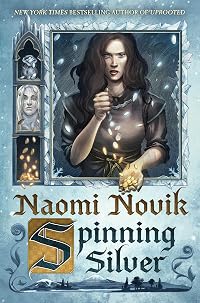
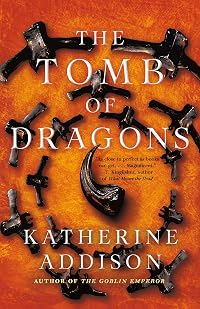
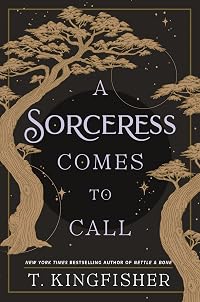
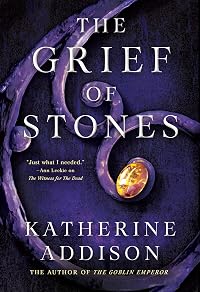
humouress Similar characters (a paladin, a demon-ridden soul, a learned cleric) but different story
20
MyriadBooks Heck yes, pen-wielding heroines who will kill and/or defeat you with paperwork.
humouress Really, it's because the style of humour in 'Clockwork Boys' is very reminiscent of Pratchett's irreverent style in the 'Discworld' (amongst others) books
Member Reviews
It's hard to come up with something fresh to start a sword and sorcery fantasy quest with a rag-tag bunch of misfits going on a suicide mission but T. Kingfisher makes it look easy.
She writes engaging characters without necessarily making them nice characters. Her heroine is a forger convicted of treason who has teamed up with an assassin who enjoys the hunt more than the kill, a disgraced knight, locked up for life for murdering nuns while he was possessed by a demon and a brilliant but young scholar who regards women as biologically subversive. The forger, smart, brave, witty, is the easiest to like. The knight proud but guilt-ridden, looking to atone, is the easiest to forgive. Kingfisher shows us the world through their eyes. show more Watching them misunderstand and confuse each other is part of the fun.
Kingfisher is also adept at twisting tropes until something original is squeezed out from the familiar. For example, the forger, the knight and the assassin aren't the typical type of noble questers, ready to sacrifice themselves for the greater good. They only take on the suicide mission of travelling to a foreign city, through a war zone, to find and destroy the Clockwork Boys, fearsome creatures who are part machine and part something else, because they have been offered full pardons in the unlikely event that they succeed. They are kept on mission by each having a magical tattoo placed on their right arm. If they abandon the mission, the tattoo will eat them.
The world all of this is happening is well-thought-through but isn't pushed down the reader's throat in info-dumps. Instead, it's glimpsed as if through the latticework window of a moving carriage, making every detail seem tantalising.
Kingfisher takes the time to develop the main characters and to build relationships between them as they prepare for their quest and then set out for the city where they're likely to die - assuming they're not killed by something else on the way. The journey is long and sometimes slow but never tedious. The actions scenes are exciting. The carnage wrought by the monstrous Clockwork Boys happens off-screen but we're left in no doubt about how the deadly, heartless violence that they deliver to everyone they meet.
There's a surprising amount of ironic, self-deprecating, how-do-I-keep.getting-myself-into-these-situations type of humour in the book, that I thought worked well.
The only thing that came as an unwelcome surprise is that 'Clockwork Boys' is really just the first forty percent or so of a single book, 'The Clocktaur War', which was published in two parts, some months apart. 'The Clockwork Boys' pulls the team together, drags them through some interesting and difficult challenges and then comes to an abrupt halt when the team make it through the war zone to the city.
Fortunately, the second part of the story is instantly available as 'The Wonder Engine' which. apart from a brief 'Previously, on Clocktaur Wars' prologue, carries straight on from the arrival at the city gates.
I recommend the audiobook version of 'Clockwork Boys' because it's narrated by Khristine Hvam whose voice I know well from the Jane Yellowrock books. As usual, she does a great job. Click on the SoundCloud link below to hear a sample.
https://soundcloud.com/brilliance-audio/clockwork-boys-by-t-kingfisher?utm_sourc... show less
I wasn’t sure if I’d like this -- a group of criminals sent on a suicidal mission doesn’t sound quite like my sort of thing -- but I finished it and the sequel within 24 hours.
A convicted forger with allergies, an assassin who is her ex, a disgraced paladin whose mistakes killed a lot of people and a young scholar are sent to stop the army of clockwork boys marching out of Anuket City.
None of them expect to succeed, let alone survive (except for the scholar, who is nineteen and volunteered, not realising that a woman would be in charge).
I loved this. It isn’t as grim and cynical as it could be. There’s banter and teamwork -- and amusing commentary on the uncomfortable realities of travelling on horseback, camping and working show more with people who don’t always along. Fantasy tends to focus more on the difficulties posed by the group’s dynamics, and there’s something very satisfying about the way Kingfisher also acknowledges the physical discomforts of fantasy quests. I think this is one of her strengths: taking something typically fantasy and blending it with something prosaic.
(I don’t have the sort of severe allergies Slate has, but I found her frequent need for handkerchiefs nevertheless very relatable.)
Another one of Kingfisher’s strengths is writing non-human characters who are quirky and appealing without being sentimentally cute. As for her human characters, I found I cared about them and their survival more than I expected to.
“I will never understand,” said Learned Edmund, apparently to Caliban, “why I was not placed in charge of this expedition.”
“Because you look about twelve,” said Slate, too tired to be diplomatic. “Do you even have to shave yet.”
The dedicate flushed scarlet. “I am nineteen!”
“I am thirty-seven,” said Caliban, “and if I can accept Mistress Slate’s leadership, so can you.”
“She hasn’t been leading!” said Learned Edmund. “She’s been drinking poppy and falling off her horse! You’re the one finding the inns and choosing the route.”
Caliban locked eyes with Slate. “She has delegated,” he said, his voice a low rumble, in sharp contrast to Learned Edmund’s. “Mistress Slate’s talents lie elsewhere, I assure you, they are considerable.”
“Damn straight they are,” said Brenner, snickering.
“Shut up, Brenner.” show less
A convicted forger with allergies, an assassin who is her ex, a disgraced paladin whose mistakes killed a lot of people and a young scholar are sent to stop the army of clockwork boys marching out of Anuket City.
None of them expect to succeed, let alone survive (except for the scholar, who is nineteen and volunteered, not realising that a woman would be in charge).
I loved this. It isn’t as grim and cynical as it could be. There’s banter and teamwork -- and amusing commentary on the uncomfortable realities of travelling on horseback, camping and working show more with people who don’t always along. Fantasy tends to focus more on the difficulties posed by the group’s dynamics, and there’s something very satisfying about the way Kingfisher also acknowledges the physical discomforts of fantasy quests. I think this is one of her strengths: taking something typically fantasy and blending it with something prosaic.
(I don’t have the sort of severe allergies Slate has, but I found her frequent need for handkerchiefs nevertheless very relatable.)
Another one of Kingfisher’s strengths is writing non-human characters who are quirky and appealing without being sentimentally cute. As for her human characters, I found I cared about them and their survival more than I expected to.
“I will never understand,” said Learned Edmund, apparently to Caliban, “why I was not placed in charge of this expedition.”
“Because you look about twelve,” said Slate, too tired to be diplomatic. “Do you even have to shave yet.”
The dedicate flushed scarlet. “I am nineteen!”
“I am thirty-seven,” said Caliban, “and if I can accept Mistress Slate’s leadership, so can you.”
“She hasn’t been leading!” said Learned Edmund. “She’s been drinking poppy and falling off her horse! You’re the one finding the inns and choosing the route.”
Caliban locked eyes with Slate. “She has delegated,” he said, his voice a low rumble, in sharp contrast to Learned Edmund’s. “Mistress Slate’s talents lie elsewhere, I assure you, they are considerable.”
“Damn straight they are,” said Brenner, snickering.
“Shut up, Brenner.” show less
Paladin’s Grace and its sequels made me a fan of anything set in T. Kingfisher’s world of the five gods. Clockwork Boys and its close sequel, The Wonder Engine, are the earliest books with paladins of the Dreaming God.
The Dowager is worried about attacks from a magical army of mechanicals. It is not your usual band of heroes. Instead, we have a paladin possessed by a dead demon, an assassin, and a forger who can smell magic. The forger is smitten with the paladin, who thinks he has no business with love, because of his dead demon and the fact that his god has abandoned him. There is also a scholar from the Temple of the White Rat who can read any handy technical documents. A little magic, a little romance, and a lot of questing show more adventure—you can tell Kingfisher was playing a lot of role-playing games while the story was gestating.
Kingfisher has the drollest style since Peter S. Beagle: “My mother was a very high-class courtesan who counted her fertile days by the moon. Her beauty was impeccable, her math skills were not.” She swept a hand at herself. “And here I am.” show less
The Dowager is worried about attacks from a magical army of mechanicals. It is not your usual band of heroes. Instead, we have a paladin possessed by a dead demon, an assassin, and a forger who can smell magic. The forger is smitten with the paladin, who thinks he has no business with love, because of his dead demon and the fact that his god has abandoned him. There is also a scholar from the Temple of the White Rat who can read any handy technical documents. A little magic, a little romance, and a lot of questing show more adventure—you can tell Kingfisher was playing a lot of role-playing games while the story was gestating.
Kingfisher has the drollest style since Peter S. Beagle: “My mother was a very high-class courtesan who counted her fertile days by the moon. Her beauty was impeccable, her math skills were not.” She swept a hand at herself. “And here I am.” show less
“A paladin, an assassin, a forger, and a scholar ride out of town. It’s not the start of a joke—”
Sold.
I think I’ve already developed a soft spot for T. Kingfisher, and at this point, I’ll probably give everything she writes a minimum of four stars, because I've grown biased. Reading her books feels like taking the first bite of your favorite cake: familiar, comforting, and absolutely delightful.
I love how Kingfisher plays with the characters she creates in such an inventiveand incomparable way. They feel grounded, different, and somehow effortlessly real. The dynamic between the four main characters—chaotic in the best “raccoon energy” kind of way—juxtaposed with the bleak, depression-fueled atmosphere of the show more blight-infected world, pulled me in from the very first chapter.
Let’s talk characters:
Brenner. The love of my life. 10/10 would let him stab me. The first time I unleashed my proclamations of love for him on my best friend, she just went, 'Yep, I knew it.'.
Slate— an accountant and a forger with a very inconveniently convenient ability. She’s easily earned her place in the room where my favorite FMCs live.
Caliban, cutie-patootie. I love him too (but not in a Brenner kind of way—Caliban is in a whole other category).
And finally, Learned Edmund, the cherry on top and the last member of this glorious A-Team.
Now, off I go to The Wonder Engine. show less
Sold.
I think I’ve already developed a soft spot for T. Kingfisher, and at this point, I’ll probably give everything she writes a minimum of four stars, because I've grown biased. Reading her books feels like taking the first bite of your favorite cake: familiar, comforting, and absolutely delightful.
I love how Kingfisher plays with the characters she creates in such an inventiveand incomparable way. They feel grounded, different, and somehow effortlessly real. The dynamic between the four main characters—chaotic in the best “raccoon energy” kind of way—juxtaposed with the bleak, depression-fueled atmosphere of the show more blight-infected world, pulled me in from the very first chapter.
Let’s talk characters:
Brenner. The love of my life. 10/10 would let him stab me. The first time I unleashed my proclamations of love for him on my best friend, she just went, 'Yep, I knew it.'.
Slate— an accountant and a forger with a very inconveniently convenient ability. She’s easily earned her place in the room where my favorite FMCs live.
Caliban, cutie-patootie. I love him too (but not in a Brenner kind of way—Caliban is in a whole other category).
And finally, Learned Edmund, the cherry on top and the last member of this glorious A-Team.
Now, off I go to The Wonder Engine. show less
Written in response to overly broody video game paladins, this story features a wonderfully lovable variety of characters... most of them criminals. As with the other T. Kingfisher books I've read and enjoyed recently, this one has a wonderful blend of action and humor. It is solidly in the realm of fantasy (complete with carnivorous tattoos and mysterious magic and demons and other non-human characters) but the character growth feels completely real.
I highly recommend this book! Just be ready to grab the second book in the duology right away. This one doesn't end on a cliffhanger exactly, but the plot doesn't get resolved in book one.
I highly recommend this book! Just be ready to grab the second book in the duology right away. This one doesn't end on a cliffhanger exactly, but the plot doesn't get resolved in book one.
Moving backwards through the works of an author whose latest books I greatly enjoyed can sometimes be a disappointing journey, because I might not encounter the same level of storytelling of the later books, but this is definitely NOT the case with T. Kingfisher’s earlier novels, and I’m glad to report that I had a wonderful time with her Clocktaur War duology, which compelled me to read both books back to back, something I don’t usually do.
The Clockwork Boys starts with your typical quest undertaken by a group of people of disparate origin, but soon deviates from the usual narrative norm because both the quest and the characters are not what one would expect: Anuket City is waging war against its neighbors and does so not with show more conventional troops but through an unstoppable army of centaur-like mechanical constructs which lay waste to everything they find on their path, so that the ruler of the nearest realm recruits three convicted criminals for what amounts to a suicide mission to Anuket City - their goal is to learn where and how the clocktaurs are built and to obliterate the impending menace, even at the cost of their lives.
The unlikely trio is composed by Slate, a master forger and the only woman of the band; Brenner, an assassin-for-hire, and Caliban, a disgraced paladin who became a mass murderer when the demon he was exorcising took possession of him. To ensure that the three complete their mission, they are marked with a special kind of tattoo which will literally devour them if they deviate from their assignment. The fourth member of the group is no criminal, but a volunteer - Learned Edmund, a nineteen-year old scholar from a very misogynistic religious order who fears that prolonged contact with Slate will shrivel his private parts and liquefy his bowels. The four mismatched companions’ journey to Anuket City takes them through expected dangers and unexpected surprise encounters, while the personal dynamics between them shift and change, slowly but surely turning them into the cohesive group needed to unravel the clocktaurs’ mystery - and possibly to survive another day…
As is the case with all the Kingfisher novels I read so far, the characters are the unquestionable pillars of the story, particularly Slate and Caliban whose POVs take the readers through the risky journey, one where the perils of the roads go hand in hand with various discomforts, like Slate’s and Brenner’s unfamiliarity with horse riding, which offers the opportunity for some very amusing scenes. Their different personalities often clash, which doesn’t bode well for the success of the mission but on the other hand enables the author to develop her characters well through a few deft touches. At the start of the adventure, each of them is wrapped up in their own self-centered troubles: Slate feels like a dead woman walking, having fatalistically accepted that her demise might come either because of the mission or because of the past unfinished business awaiting for her in Anuket City; Caliban struggles under the weight of guilt for his actions and the loss of his god’s presence, while the remnants of the demon that possessed him still occasionally stir in the back of his mind; Learned Edmund teeters between lore-gathering and his fear of Slate’s proximity. As for Brenner… well, he’s something of a dangerously inscrutable presence and there’s always a not-so-faint air of menace hanging over him.
I warmed quite quickly toward Slate: her competence as a forger and her self-reliance go hand in hand with a fatalistic attitude that made her stand out immediately - that is, when she was not explosively sneezing from one of her many allergies. I knew from the start that her aversion to Caliban’s chivalrous attempts at protection (he’s still a paladin, after all) would put these two into an antagonistic relationship destined to transform into something quite different along the way: the slow-burn of it was handled with the usual dose of humorous incidents and misunderstandings that I’ve come to appreciate in T. Kingfisher’s romances, and in this particular case she also introduced the potentiality of a triangle thanks to Brenner and Slate’s past affiliation and the former’s constant, sneaky innuendo delivered with rapier-like subtlety.
Caliban is another intriguing character: he’s been cut off from the only life he knew after being subjected to the horrific control of a demon that compelled him to kill a number of people, and he’s looking, if not for redemption, for a way to atone for those actions. There are many layers to Caliban, and this first book in the duology only starts to peel a few of them off, but the best will be revealed only later on; what I found fascinating here, having encountered other paladins in the author’s subsequent novels, is the deconstruction of one of them as he’s presented after everything that made him a holy warrior has been stripped away from him.
Brenner remains quite enigmatic throughout this first book, and he reveals fairly little of himself, which sounds appropriate given his “profession” and the need to be invisible to be effective in his chosen line of work, while Learned Edmund is given more narrative space, particularly in his oh-so-difficult dealings with Slate as she never misses an opportunity to send barbed comments his way.
This was probably the most entertaining Kingfisher novel I read so far, peppered as it was with many giggle-worthy sentences: luckily for me, I read it only while at home, otherwise I might have risked looking like a crazy person when I burst out laughing in some of those instances. The only negative element I can think of is the abrupt conclusion of the book as the foursome reaches Anuket City, and I imagine how that would have annoyed me if I had encountered The Clockwork Boys at the time of its publication, but being able to move immediately to the second volume I did not have to suffer needlessly…. show less
The Clockwork Boys starts with your typical quest undertaken by a group of people of disparate origin, but soon deviates from the usual narrative norm because both the quest and the characters are not what one would expect: Anuket City is waging war against its neighbors and does so not with show more conventional troops but through an unstoppable army of centaur-like mechanical constructs which lay waste to everything they find on their path, so that the ruler of the nearest realm recruits three convicted criminals for what amounts to a suicide mission to Anuket City - their goal is to learn where and how the clocktaurs are built and to obliterate the impending menace, even at the cost of their lives.
The unlikely trio is composed by Slate, a master forger and the only woman of the band; Brenner, an assassin-for-hire, and Caliban, a disgraced paladin who became a mass murderer when the demon he was exorcising took possession of him. To ensure that the three complete their mission, they are marked with a special kind of tattoo which will literally devour them if they deviate from their assignment. The fourth member of the group is no criminal, but a volunteer - Learned Edmund, a nineteen-year old scholar from a very misogynistic religious order who fears that prolonged contact with Slate will shrivel his private parts and liquefy his bowels. The four mismatched companions’ journey to Anuket City takes them through expected dangers and unexpected surprise encounters, while the personal dynamics between them shift and change, slowly but surely turning them into the cohesive group needed to unravel the clocktaurs’ mystery - and possibly to survive another day…
As is the case with all the Kingfisher novels I read so far, the characters are the unquestionable pillars of the story, particularly Slate and Caliban whose POVs take the readers through the risky journey, one where the perils of the roads go hand in hand with various discomforts, like Slate’s and Brenner’s unfamiliarity with horse riding, which offers the opportunity for some very amusing scenes. Their different personalities often clash, which doesn’t bode well for the success of the mission but on the other hand enables the author to develop her characters well through a few deft touches. At the start of the adventure, each of them is wrapped up in their own self-centered troubles: Slate feels like a dead woman walking, having fatalistically accepted that her demise might come either because of the mission or because of the past unfinished business awaiting for her in Anuket City; Caliban struggles under the weight of guilt for his actions and the loss of his god’s presence, while the remnants of the demon that possessed him still occasionally stir in the back of his mind; Learned Edmund teeters between lore-gathering and his fear of Slate’s proximity. As for Brenner… well, he’s something of a dangerously inscrutable presence and there’s always a not-so-faint air of menace hanging over him.
I warmed quite quickly toward Slate: her competence as a forger and her self-reliance go hand in hand with a fatalistic attitude that made her stand out immediately - that is, when she was not explosively sneezing from one of her many allergies. I knew from the start that her aversion to Caliban’s chivalrous attempts at protection (he’s still a paladin, after all) would put these two into an antagonistic relationship destined to transform into something quite different along the way: the slow-burn of it was handled with the usual dose of humorous incidents and misunderstandings that I’ve come to appreciate in T. Kingfisher’s romances, and in this particular case she also introduced the potentiality of a triangle thanks to Brenner and Slate’s past affiliation and the former’s constant, sneaky innuendo delivered with rapier-like subtlety.
Caliban is another intriguing character: he’s been cut off from the only life he knew after being subjected to the horrific control of a demon that compelled him to kill a number of people, and he’s looking, if not for redemption, for a way to atone for those actions. There are many layers to Caliban, and this first book in the duology only starts to peel a few of them off, but the best will be revealed only later on; what I found fascinating here, having encountered other paladins in the author’s subsequent novels, is the deconstruction of one of them as he’s presented after everything that made him a holy warrior has been stripped away from him.
Brenner remains quite enigmatic throughout this first book, and he reveals fairly little of himself, which sounds appropriate given his “profession” and the need to be invisible to be effective in his chosen line of work, while Learned Edmund is given more narrative space, particularly in his oh-so-difficult dealings with Slate as she never misses an opportunity to send barbed comments his way.
This was probably the most entertaining Kingfisher novel I read so far, peppered as it was with many giggle-worthy sentences: luckily for me, I read it only while at home, otherwise I might have risked looking like a crazy person when I burst out laughing in some of those instances. The only negative element I can think of is the abrupt conclusion of the book as the foursome reaches Anuket City, and I imagine how that would have annoyed me if I had encountered The Clockwork Boys at the time of its publication, but being able to move immediately to the second volume I did not have to suffer needlessly…. show less
'“Would you like to go on a suicide mission?” she asked instead.
He smiled. It was the first genuine smile she’d seen all day.
“I would be honored,” he said.'
This fantasy tale really hit the spot for me - an angst-ridden paladin, a forger, an assassin and a misogynistic cleric are sent on a suicide mission (not entirely by choice for the most part) to discover a way to defeat the strange and apparently unstoppable army of creatures known as the Clockwork Boys who are attacking their land. There's a lot more joy and humour in the story than the plot makes it sound and a dash of romance but this is definitely only part one of the story (apparently the author split this into two novels due to the length). The second and show more concluding part, [The Wonder Engine] is already downloaded and on my kindle.
In terms of similar authors this reminded me of Bujold's books, especially the Penric stories and [The Curse of Chalion] (in fact one of the reasons I bought this was because Bujold gave it a positive review) and also Adrian Tchaikovsky's [Spiderlight] in the way the book riffs on typical fantasy tropes. show less
He smiled. It was the first genuine smile she’d seen all day.
“I would be honored,” he said.'
This fantasy tale really hit the spot for me - an angst-ridden paladin, a forger, an assassin and a misogynistic cleric are sent on a suicide mission (not entirely by choice for the most part) to discover a way to defeat the strange and apparently unstoppable army of creatures known as the Clockwork Boys who are attacking their land. There's a lot more joy and humour in the story than the plot makes it sound and a dash of romance but this is definitely only part one of the story (apparently the author split this into two novels due to the length). The second and show more concluding part, [The Wonder Engine] is already downloaded and on my kindle.
In terms of similar authors this reminded me of Bujold's books, especially the Penric stories and [The Curse of Chalion] (in fact one of the reasons I bought this was because Bujold gave it a positive review) and also Adrian Tchaikovsky's [Spiderlight] in the way the book riffs on typical fantasy tropes. show less
Members
- Recently Added By
Lists

Female Author
1,234 works; 67 members

Books Read in 2019
4,052 works; 108 members

Books Read in 2020
4,379 works; 123 members

Books Read in 2021
5,361 works; 114 members

Books Read in 2022
5,226 works; 115 members

hypatian_kat to-read
429 works; 3 members
Author Information

100+ Works 38,549 Members
Ursula Vernon is a freelance writer, artist and illustrator. She received an undergraduate degree in anthropology at Macalester College in Saint Paul, Minnesota. She took several art classes in college. Her first children's book, Nurk: The Strange Surprising Adventures of a (Somewhat) Brave Shrew, was published in 2008. Her other works include show more Black Dogs: The House of Diamond and the Dragonbreath series. She also writes and illustrates the webcomic Digger and the creator of The Biting Pear of Salamanca. (Bowker Author Biography) show less
Some Editions
Series


Common Knowledge
- Canonical title
- Clockwork Boys
- Original title
- Clockwork Boys
- Original publication date
- 2017-11-21
- People/Characters
- Slate; Brenner; Sir Caliban; Learned Edmund
- Important places*
- Anuket City
- Epigraph
- Weasel Invicti!
- First words
- There are a number of smells one expects to encounter in a dungeon.
- Quotations
- “Would you like to go on a suicide mission?” she asked instead.
He smiled. It was the first genuine smile she’d seen all day.
“I would be honored,” he said. - Last words
- (Click to show. Warning: May contain spoilers.)Slate rode looking up at the gates, and slowly, step by step, the city reached out and swallowed them.
- Blurbers*
- Khaw, Cassandra
- Original language
- English
*Some information comes from Common Knowledge in other languages. Click "Edit" for more information.
Classifications
Statistics
- Members
- 1,003
- Popularity
- 26,097
- Reviews
- 40
- Rating
- (3.99)
- Languages
- English
- Media
- Paper, Audiobook, Ebook
- ISBNs
- 9
- ASINs
- 4